Easy Baked Brie with Garlic and Herbs (20-Minute Appetizer!)

If you’re searching for an elegant appetizer that makes you look like a gourmet chef but requires almost zero effort, this Baked Brie with Garlic is about to become your entertaining secret weapon! Imagine slicing into a warm, golden wheel of brie cheese—the creamy, melted interior oozing out while aromatic roasted garlic and fresh herbs perfume the air. It’s pure magic, and it’s honestly one of the easiest impressive dishes you’ll ever make.
This easy baked brie recipe has become a Pinterest sensation for all the right reasons. It’s the ultimate crowd-pleaser that works beautifully for holiday parties, romantic date nights, wine and cheese gatherings, New Year’s Eve celebrations, or any occasion where you want to serve something special without spending hours in the kitchen. The combination of buttery, creamy brie infused with sweet roasted garlic creates an irresistible flavor profile that pairs perfectly with crusty bread, crackers, or fresh fruit.
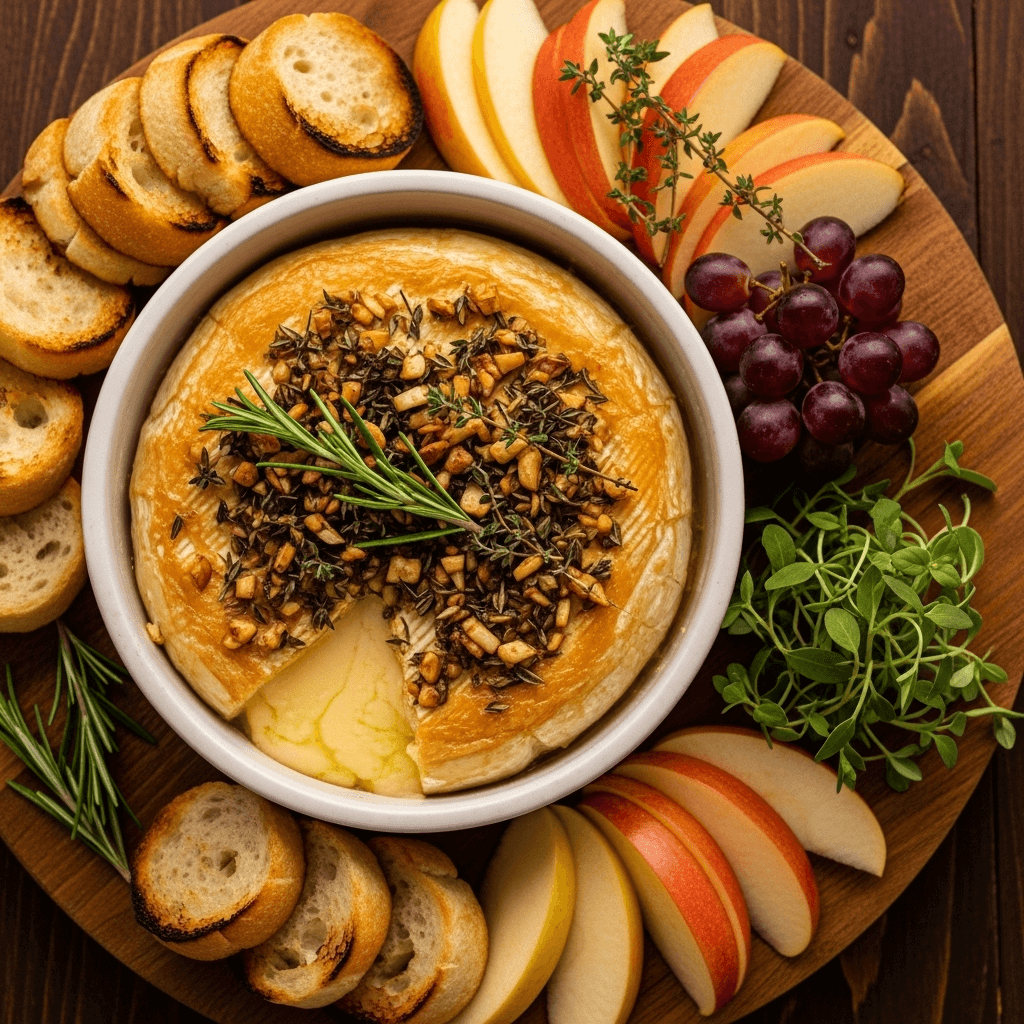
What makes this garlic herb baked brie so appealing is its stunning presentation—that gorgeous golden wheel of cheese crowned with caramelized garlic cloves and herbs looks like it came straight from a French bistro. Yet it takes just 5 minutes of prep and 15 minutes in the oven. Whether you’re hosting a sophisticated cocktail party or a casual game day gathering, this warm baked brie with garlic delivers restaurant-quality results that’ll have your guests asking for the recipe every single time!
History / Background
Brie cheese has a rich history dating back to the 8th century in the Brie region of northern France, located east of Paris. Named after the region where it originated, this soft, creamy cheese was enjoyed by French royalty and became known as “The Queen of Cheeses.” Legend has it that Charlemagne first tasted Brie at a monastery in the region and was so enchanted that he ordered regular deliveries to his palace. Later, King Louis XVI was reportedly eating Brie when he was captured during the French Revolution—such was his devotion to this luxurious cheese!
Brie’s reputation spread throughout Europe during the Congress of Vienna in 1815, where diplomats from various countries held a cheese competition. Brie was declared the winner, earning its title as “Le Roi des Fromages” (The King of Cheeses). The cheese’s popularity eventually crossed the Atlantic, and American cheesemakers began producing domestic versions in the 1970s and 1980s, making this once-exclusive delicacy accessible to home cooks across the United States.
The tradition of baking brie is a more modern innovation that emerged in American and French home cooking during the late 20th century. While the French historically served brie at room temperature on cheese boards, American cooks discovered that gently warming the cheese transformed its texture into a luxuriously creamy, fondue-like consistency perfect for dipping. The practice gained momentum in the 1980s and 1990s alongside the rise of entertaining culture and dinner parties.
Baking brie with garlic specifically draws inspiration from French cuisine’s love affair with garlic—think of classic dishes like chicken with 40 cloves of garlic or garlic confit. When garlic is roasted, its pungent raw flavor mellows into sweet, caramelized notes that complement brie’s buttery richness perfectly. This combination represents the beautiful simplicity of French cooking: taking a few quality ingredients and transforming them into something extraordinary through technique.
Today, baked brie with garlic has become a staple at American gatherings, holiday tables, and wine tastings. Food bloggers and Pinterest users have embraced it enthusiastically, sharing countless variations that honor the French tradition while adding American creativity—from cranberry-topped versions to bacon-wrapped wheels to this classic garlic and herb preparation.
Why You’ll Love This Recipe
This garlic baked brie recipe truly represents entertaining at its finest—maximum impact with minimum effort. The warm, gooey cheese paired with sweet roasted garlic creates a flavor combination that’s both sophisticated and comforting, making it perfect for any occasion from casual to elegant.
Here’s why this baked brie with garlic deserves a permanent spot in your recipe collection:
- Ridiculously Simple: Just 5 ingredients and 5 minutes of prep—if you can unwrap cheese and peel garlic, you can make this!
- Lightning Fast: From start to finish in under 25 minutes, making it perfect for last-minute entertaining
- Seriously Impressive: Looks and tastes like a dish from an upscale restaurant, yet requires almost no cooking skills
- Make-Ahead Friendly: Prep everything in advance, then pop it in the oven when guests arrive for warm, melty perfection
- Budget-Conscious: While brie seems fancy, it’s actually quite affordable, and a single wheel serves 8-12 people
- Crowd-Pleaser: I’ve never met anyone who doesn’t love warm, gooey cheese—this appeals to virtually every palate
- Versatile for Any Occasion: Works for holidays, date nights, parties, wine tastings, or casual weeknight treats
- Customizable: Easy to adapt with different herbs, toppings, or accompaniments to match your preferences
- Minimal Cleanup: One baking dish and a knife—that’s all you’ll need to wash!
- Naturally Gluten-Free: Perfect for guests with gluten sensitivities (just serve with GF crackers)
- Keto-Friendly: High in fat, low in carbs—fits beautifully into low-carb eating plans
Ingredient Notes
The beauty of this recipe lies in its simplicity—just a handful of quality ingredients that shine together. Here’s what you need to know:
Brie Cheese: The star of the show! Look for a wheel of brie in your grocery store’s specialty cheese section. An 8-ounce wheel (about 4-5 inches in diameter) serves 6-8 people as an appetizer. For larger gatherings, use a 13-16 ounce wheel. Choose a brie that feels soft and slightly springy when gently pressed—overly firm brie is underripe and won’t have that luscious creamy texture. The rind is completely edible and actually adds a pleasant earthy flavor, so leave it on! Some people prefer to slice off the top rind before baking for easier access to the melted cheese, but this is purely optional. Domestic brie from brands like President or Ile de France works beautifully and is more affordable than imported French varieties.
Fresh Garlic: Essential for that sweet, mellow roasted flavor! Use 6-8 whole cloves for one wheel of brie. Fresh garlic cloves are vastly superior to pre-minced jarred garlic here—roasting transforms fresh garlic into sweet, caramelized nuggets of flavor that jarred garlic simply cannot replicate. Peel the cloves but leave them whole for the best texture and presentation. If you’re short on time, you can use pre-peeled garlic cloves from the produce section.
Extra Virgin Olive Oil: The carrier for all those delicious flavors! Good quality extra virgin olive oil adds richness and helps the garlic and herbs infuse the cheese. You’ll need about 2-3 tablespoons. The oil also prevents the garlic from burning during baking. If you prefer, you can substitute with melted butter for an even richer, more decadent result.
Fresh Herbs: Fresh rosemary and thyme are classic choices that pair beautifully with brie and garlic. The herbs add aromatic complexity and visual appeal. Fresh herbs are far superior to dried in this application—they look prettier and have brighter, more pronounced flavors. You can also use fresh sage, oregano, or a combination. If you absolutely must use dried herbs, use about one-third the amount and add them to the oil before drizzling.
Salt and Black Pepper: Simple seasonings that enhance all the other flavors. Since brie is already somewhat salty, you need very little additional salt—just a light sprinkle. Freshly cracked black pepper adds a pleasant bite that cuts through the richness.
Optional Add-Ins: While not in the basic recipe, consider adding a drizzle of honey, a handful of chopped walnuts or pecans, dried cranberries, or a splash of white wine for additional flavor dimensions.
Equipment Needed
This recipe requires minimal equipment, making it accessible for any home cook:
- Small oven-safe baking dish or pie plate: Should be just slightly larger than your brie wheel—this keeps the cheese from spreading too much as it melts
- Sharp knife: For scoring the brie (if desired) and peeling garlic
- Cutting board: For prep work
- Measuring spoons: For oil and seasonings
- Aluminum foil (optional): For covering during baking if the garlic browns too quickly
- Oven: Preheated to 350°F
Optional but helpful:
- Small baking sheet: Placed under the baking dish to catch any potential drips
- Serving platter or board: For presenting your beautiful baked brie
- Small serving knife or cheese spreader: For guests to serve themselves
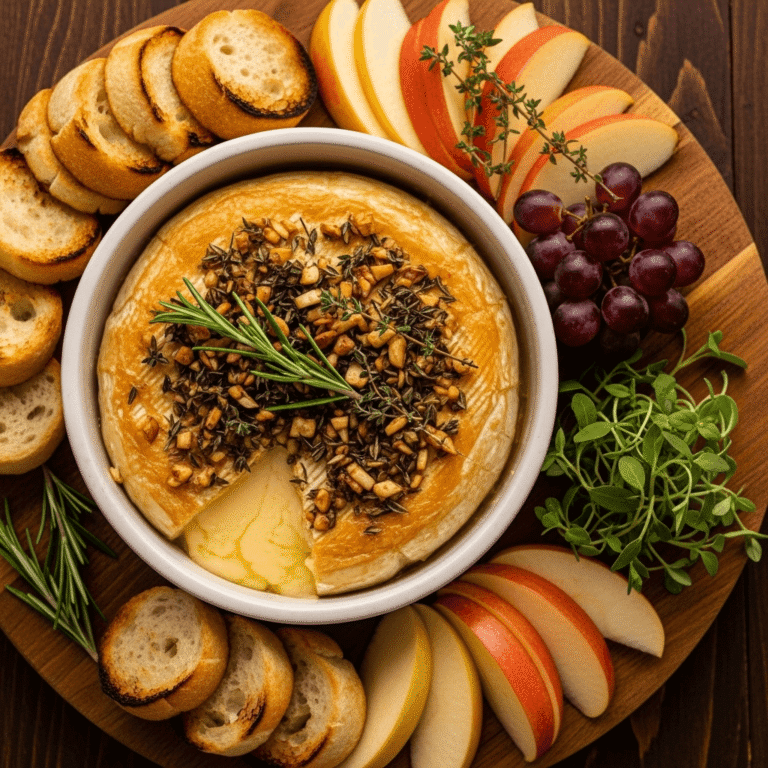
Baked Brie with Garlic and Herbs
Warm, gooey baked brie infused with sweet roasted garlic and fresh herbs. This elegant 5-ingredient appetizer takes just 20 minutes and is perfect for entertaining!
- Total Time: 20-23 minutes
- Yield: 8 servings 1x
Ingredients
- 1 wheel (8 oz) brie cheese
- 6-8 whole garlic cloves, peeled
- 2-3 tablespoons extra virgin olive oil
- 2 sprigs fresh rosemary
- 4-5 sprigs fresh thyme
- ¼ teaspoon sea salt
- ¼ teaspoon freshly cracked black pepper
- Optional: 1 tablespoon honey for drizzling
For Serving:
- Sliced baguette or crackers
- Fresh fruit (grapes, apple slices, figs)
- Additional fresh herbs for garnish
Instructions
- Preheat your oven: Set your oven to 350°F and let it fully preheat while you prepare the brie. Position a rack in the center of the oven for even heating.
- Prepare the brie: Remove the brie from its packaging and any plastic wrapping. If desired, use a sharp knife to score the top rind in a crosshatch pattern—this helps the garlic and herbs infuse the cheese, though it’s completely optional. Place the brie wheel in a small oven-safe baking dish, pie plate, or cast iron skillet that’s just slightly larger than the cheese wheel.
- Prepare the garlic and herbs: Peel your garlic cloves if you haven’t already. Scatter the whole peeled garlic cloves around and on top of the brie. Strip the leaves from the rosemary and thyme sprigs (or leave small sprigs whole if you prefer) and arrange them over and around the cheese. Reserve a few sprigs for garnish after baking.
- Season and drizzle: Drizzle the olive oil evenly over the brie, garlic, and herbs, making sure everything gets a light coating. The oil will pool slightly in the dish, which is perfect—it will continue to infuse flavors as the cheese bakes. Sprinkle the salt and freshly cracked black pepper over the top.
- Bake until melted: Place the baking dish in the preheated oven and bake for 12-15 minutes. The brie is ready when it feels very soft when gently pressed and looks slightly puffy—you should see the cheese starting to ooze slightly at the sides. The garlic should be tender and lightly golden. If the garlic starts browning too much before the cheese is melted, tent loosely with aluminum foil.
- Check for doneness: To test if the brie is perfectly melted, gently press the top with a spoon—it should feel very soft and giving, almost jiggly. If it still feels firm, return to the oven for 2-3 more minutes. Be careful not to overbake, as the cheese can become greasy if heated too long.
- Rest briefly: Remove from the oven and let the baked brie rest for 2-3 minutes. This allows the cheese to set slightly, making it easier to serve while still maintaining that gorgeous gooey texture. The garlic will continue to soften during this resting time.
- Garnish and serve: Transfer the brie (still in its baking dish or carefully moved to a serving platter) to your serving area. Garnish with fresh herb sprigs for a beautiful presentation. If desired, drizzle with honey for a sweet contrast. Serve immediately with sliced baguette, crackers, apple slices, or grapes. Encourage guests to scoop up the cheese along with the roasted garlic cloves and herb-infused oil.
Notes
- Rind Removal: The white rind on brie is completely edible and safe to eat! It’s made from the same mold family as penicillin (Penicillium candidum) and adds an earthy, mushroomy flavor. However, if you or your guests prefer, you can slice off the top rind before baking for easier cheese access.
- Size Adjustments: For a larger wheel (13-16 oz), increase baking time to 18-20 minutes and double the garlic and herbs.
- Temperature Check: Brie should be served warm but not piping hot. If it’s too hot, the cheese will be runny and difficult to scoop.
- Oil Pooling: Don’t worry if oil pools in the bottom of the dish—this is flavorful and perfect for dipping bread!
- Garlic Texture: The roasted garlic should be soft enough to spread on bread alongside the cheese—it’s sweet and mild, not harsh like raw garlic.
- Timing: This dish is best served immediately while warm. The cheese will firm up as it cools but can be reheated.
- Prep Time: 5 minutes
- Cook Time: 15-18 minutes
- Category: Appetizer
- Method: Baking
- Cuisine: French-American
- Diet: Vegetarian
Nutrition
- Serving Size: ⅛ of brie wheel (1 oz cheese plus garlic and oil)
- Calories: 165
- Sugar: 0g
- Sodium: 280mg
- Fat: 14g
- Saturated Fat: 7g
- Unsaturated Fat: 6g
- Trans Fat: 0g
- Carbohydrates: 0g
- Fiber: 2g
- Protein: 7g
- Cholesterol: 35mg
Tips & Variations
Flavor Variations:
- Honey Walnut: Drizzle with honey and top with chopped walnuts or pecans before baking
- Cranberry Orange: Add dried cranberries and orange zest for a festive holiday version
- Fig and Prosciutto: Top with chopped dried figs and crispy prosciutto pieces after baking
- Caramelized Onion: Add a layer of caramelized onions before the garlic for sweet depth
- Hot Honey: Drizzle with spicy hot honey after baking for sweet heat
- Brown Sugar Pecan: Sprinkle with brown sugar and pecans for a dessert-like version
- Sun-Dried Tomato: Add chopped sun-dried tomatoes and Italian herbs for Mediterranean flair
- Bacon Jam: Top with bacon jam or bacon bits for smoky richness
Wrapping Methods:
- Puff Pastry Wrapped: Wrap the entire brie wheel in puff pastry before baking for an elegant presentation (increase baking time to 25-30 minutes at 375°F)
- Phyllo Wrapped: Wrap in buttered phyllo sheets for a delicate, flaky crust
- Phyllo Cup Individual Portions: Cut brie into cubes and bake in individual phyllo cups with garlic
Herb Combinations:
- Italian: Basil, oregano, and thyme
- French: Tarragon, thyme, and rosemary
- Mediterranean: Oregano, mint, and parsley
- Winter: Sage, rosemary, and bay leaf
- Spring: Chives, dill, and parsley
Dietary Modifications:
- Vegan: Use a plant-based brie-style cheese (several brands make excellent versions)
- Dairy-Free: Same as vegan—look for nut-based alternatives
- Low-Carb/Keto: This recipe is naturally keto-friendly; serve with low-carb crackers or vegetable dippers
Presentation Ideas:
- Bake in a hollowed-out bread bowl for a stunning edible serving vessel
- Use a small cast iron skillet for rustic charm
- Bake in individual ramekins for personal portions
- Score decorative patterns into the top rind before baking
- Create a cheese board around the baked brie with meats, fruits, and nuts
Pro Chef Tips
Room Temperature is Key: Remove your brie from the refrigerator 30-60 minutes before baking. Starting with room-temperature cheese ensures even melting throughout—cold cheese may stay firm in the center while becoming overcooked on the outside. This simple step makes a dramatic difference in the final creamy texture.
Score for Better Infusion: Professional chefs score the top of the brie in a crosshatch or diamond pattern before baking. Make shallow cuts about ¼-inch deep through just the top rind. This allows the garlic-herb oil to seep into the cheese itself rather than just sitting on top, creating more intense flavor throughout. Don’t cut too deep or the cheese will leak out during baking.
The Perfect Baking Dish Size Matters: Use a baking dish that’s just slightly larger than your brie wheel—about 1 inch of space around all sides. If the dish is too large, the oil will spread out and you’ll lose that concentrated flavor. If it’s too small, the melted cheese has nowhere to go and may overflow. A snug fit is ideal.
Confit the Garlic Separately for Ultimate Flavor: For next-level flavor, confit your garlic cloves separately first. Place peeled cloves in a small pot with olive oil to cover, simmer gently for 15-20 minutes until soft and golden, then use those garlic cloves and oil on the brie. The pre-cooked garlic will be incredibly sweet and won’t risk burning during the brief brie baking time.
Two-Temperature Technique: Start the brie at 350°F for 10 minutes, then increase heat to 400°F for the final 3-5 minutes. This ensures the cheese melts through completely while creating a slightly caramelized, golden top. Watch carefully during the higher temperature phase to prevent burning.
Oil Quality Makes a Difference: Since olive oil is a primary flavor component here, use a good quality extra virgin olive oil that you’d actually want to taste. The oil becomes infused with garlic and herbs and will be scooped up with the cheese, so choose one with pleasant fruity or peppery notes you enjoy.
The Jiggle Test: Professional chefs know that properly baked brie should jiggle slightly when the dish is gently shaken, similar to perfectly set panna cotta. This indicates the interior has fully melted while the structure is still intact. If it doesn’t jiggle, it needs more time. If it’s sloshing around liquidly, you’ve gone too far.
Strategic Garlic Placement: Place some garlic cloves directly on top of the brie and some around the sides in the oil. The cloves on top will roast more intensely and caramelize, while those in the oil will become softer and more mellow. This creates a spectrum of garlic flavors for guests to enjoy—some prefer the sweet caramelized cloves, others the softer oil-poached ones.
Common Mistakes to Avoid
Overbaking the Brie: This is the most common mistake! Brie that’s baked too long becomes greasy and separates, losing that luxurious creamy texture. The cheese is done when it feels soft and slightly jiggly—it continues to soften for a few minutes after leaving the oven due to residual heat. Check it early and often, starting around the 12-minute mark. It’s better to underbake slightly than overbake.
Using a Baking Dish That’s Too Large: When the baking dish is too big, the olive oil spreads out in a thin layer instead of pooling around the cheese. This means less flavor concentration and the garlic may burn in the shallow oil. Always use a dish that fits snugly around your brie wheel with just about an inch of space on all sides.
Starting with Cold Brie: Baking refrigerator-cold brie leads to uneven melting—the outside becomes overcooked and greasy while the center stays firm and cold. Always bring brie to room temperature (about 30-60 minutes on the counter) before baking. This ensures uniform melting and the best creamy texture throughout.
Forgetting to Peel the Garlic: It seems obvious, but in the rush of party prep, some cooks forget to peel the garlic cloves! Roasted garlic skin is papery and unpleasant to eat. Always peel your garlic completely before baking. If you’re really pressed for time, pre-peeled garlic cloves are available in most produce sections.
Not Watching the Garlic: Garlic browns faster than brie melts, and burned garlic tastes bitter and acrid. If your garlic cloves are browning too quickly (before the 12-minute mark), tent the dish loosely with aluminum foil to protect them while the cheese finishes melting. You want golden, caramelized garlic, not blackened bits.
Serving Immediately from the Oven: Brie straight from the oven is molten hot and will burn mouths while being too runny to scoop properly. Let it rest for 2-3 minutes after baking—this brief rest allows the cheese to set slightly while remaining warm and gooey. This timing creates the perfect scoopable texture.
Cutting the Brie Before Baking: Some recipes suggest cutting brie into pieces before baking, but this causes the cheese to completely melt and lose its beautiful presentation. Keep the wheel intact—the rind acts as a natural container that holds the melted cheese together. Guests can cut into it themselves when serving.
Storage & Meal Prep
Leftover Storage: While baked brie is always best served fresh and warm, you can store leftovers in an airtight container in the refrigerator for up to 3 days. The cheese will firm back up as it cools and won’t have that same gooey texture, but it’s still delicious. The roasted garlic cloves are particularly wonderful saved for other uses.
Reheating Instructions: To reheat leftover baked brie, place it back in an oven-safe dish and warm in a 300°F oven for 8-10 minutes until softened and warmed through. You can also microwave it in 15-second intervals, but the oven method produces better texture. The cheese won’t be quite as perfect as when freshly baked, but it’s still tasty. Alternatively, remove the rind from leftover brie and use the cheese in grilled cheese sandwiches, pasta, or scrambled eggs.
Using Leftover Roasted Garlic: The roasted garlic cloves are culinary gold! Store them in a small container covered with olive oil in the refrigerator for up to 1 week. Use them spread on toast, mashed into mashed potatoes, stirred into pasta, mixed into salad dressings, or added to any dish that would benefit from sweet, mellow garlic flavor.
Prep-Ahead Strategy: You can prepare the brie for baking several hours in advance. Arrange the cheese in the baking dish with garlic and herbs, cover tightly with plastic wrap, and refrigerate. When ready to serve, let it sit at room temperature for 20-30 minutes, then drizzle with oil and bake as directed. This makes entertaining completely stress-free!
Serving Temperature Timeline: Baked brie is best served warm but not piping hot. Here’s the ideal temperature timeline:
- 0-20 minutes after baking: Perfect serving temperature—warm, gooey, and easily spreadable
- 20-45 minutes: Still good but starting to firm up; can be served at room temperature
- 45+ minutes: Cheese has cooled and firmed; best to reheat before serving
Make-Ahead & Freezer Notes
Advance Preparation: The beauty of baked brie is that while it’s best served freshly baked, you can do most of the prep work well in advance. Assemble the brie in its baking dish with garlic and herbs up to 8 hours ahead, cover tightly, and refrigerate. Remove from the fridge 30 minutes before baking, drizzle with oil, and bake as directed when guests are about to arrive. This timing ensures you serve it at peak gooeyness while minimizing last-minute work.
Freezing Unbaked Brie: You can freeze an unbaked wheel of brie (still in its packaging) for up to 2 months. Thaw it completely in the refrigerator overnight before preparing and baking. The texture may be slightly more crumbly after freezing, but it will still melt beautifully when baked. Never freeze brie that’s already been baked—the texture becomes grainy and separated.
Freezing Baked Brie: I don’t recommend freezing already-baked brie. The high-fat content means it doesn’t freeze and thaw well—the cheese separates, becomes grainy, and loses that luxurious creamy texture that makes baked brie so special. If you have leftover baked brie, it’s better to store it refrigerated and use it within 2-3 days.
Party Timing Strategy: For stress-free entertaining, here’s the perfect timeline:
- Morning of party: Prep the brie in its baking dish; cover and refrigerate
- 1 hour before guests arrive: Remove brie from fridge to come to room temperature
- 20 minutes before serving: Preheat oven and bake the brie
- Right before serving: Garnish with fresh herbs and place on your appetizer table
This timing ensures your brie is warm, melty, and perfect exactly when your guests are ready to eat, without requiring any attention during the party itself.
Advance Garlic Prep: You can roast garlic cloves in advance (even days ahead) and store them covered in olive oil in the refrigerator. When ready to bake the brie, simply arrange the pre-roasted garlic around the cheese and proceed with the recipe. This is especially helpful if you’re making multiple wheels of brie for a large party.
Serving Suggestions
This versatile baked brie with garlic pairs beautifully with numerous accompaniments and fits into various entertaining scenarios:
Bread & Crackers:
- Sliced baguette or French bread: The classic accompaniment—slice ½-inch thick and lightly toast if desired
- Water crackers: Neutral flavor lets the brie shine
- Fig or cranberry crackers: Add complementary sweetness
- Crostini: Brush baguette slices with olive oil and toast until golden
- Pita chips: For a Mediterranean twist
- Pretzels: Sweet and salty combination works beautifully
Fresh Fruits:
- Apple slices: Granny Smith or Honeycrisp provide tart contrast to rich cheese
- Pear slices: Classic pairing with mild sweetness
- Fresh figs: When in season, these are spectacular with brie
- Grapes: Red or green, provide juicy freshness
- Strawberries: Especially nice with honey-drizzled brie
- Dried fruits: Apricots, dates, and dried cranberries add concentrated sweetness
Additional Accompaniments:
- Candied or spiced nuts: Pecans, walnuts, or almonds add crunch
- Honey or fig jam: For drizzling over individual servings
- Charcuterie: Prosciutto, salami, or other cured meats
- Olives: Kalamata or Castelvetrano provide briny contrast
- Cornichons or pickles: Acidity cuts through the richness
Beverage Pairings:
- White Wines: Chardonnay, Sauvignon Blanc, or Riesling
- Red Wines: Pinot Noir or light-bodied Merlot
- Sparkling: Champagne, Prosecco, or Cava
- Beer: Belgian ales, wheat beers, or fruit beers
- Non-Alcoholic: Sparkling apple cider, grape juice, or sparkling water with citrus
Complete Cheese Board: Build an impressive spread by featuring the baked brie as the centerpiece alongside:
- Additional cheeses (aged cheddar, goat cheese, blue cheese)
- Variety of crackers and breads
- Fresh and dried fruits
- Nuts and olives
- Small bowls of honey, mustard, and jams
- Fresh herb sprigs for garnish
Occasion-Specific Serving:
- Holiday Parties: Add cranberries and rosemary for festive colors
- Date Night: Serve with champagne and strawberries for romance
- Game Day: Pair with pretzels and beer for casual snacking
- Wine Tasting: Feature as part of a cheese course with multiple wines
- Brunch: Serve alongside fruit and pastries for elegant morning entertaining
FAQs Section
Q: Can I eat the white rind on brie? A: Yes! The white rind on brie is completely edible and safe to eat. It’s made from Penicillium candidum mold (the same family as penicillin) that’s intentionally added during cheesemaking. The rind has an earthy, slightly mushroomy flavor that many people enjoy, and it adds textural contrast. When brie is baked, the rind softens and becomes even more pleasant to eat. However, if you or your guests prefer not to eat it, you can slice off the top rind before baking to make the melted cheese more accessible. It’s purely a personal preference!
Q: How do I know when baked brie is done? A: The brie is perfectly done when it feels very soft and slightly jiggly when you gently press or shake the dish—similar to the texture of set panna cotta or jello. It should look slightly puffy and you may see cheese just starting to ooze from the sides. The center should feel like it has no resistance when touched with a spoon. Typically this takes 12-15 minutes at 350°F for an 8-ounce wheel. If you cut into it (though it’s prettier to let guests do this), the interior should be completely melted and creamy, not firm or cold in the center.
Q: Why did my brie completely melt and spread out everywhere? A: This usually happens for one of three reasons: the brie was overbaked, the oven temperature was too high, or you removed the rind entirely before baking. The rind acts as a natural container that holds the melted cheese together, so it’s best to leave it intact (you can remove just the top rind if desired, but keep the bottom and sides). Also, make sure you’re using a baking dish that fits snugly around the brie rather than a large pan. Bake at 350°F and check frequently starting at 12 minutes to catch it at the perfect point before it over-melts.
Q: Can I make baked brie ahead of time? A: You can prep it ahead but shouldn’t bake it until shortly before serving. Assemble the brie in its baking dish with garlic and herbs up to 8 hours in advance, cover, and refrigerate. About 30 minutes before you want to serve it, remove from the fridge to come to room temperature, then bake. Baked brie is really best served warm and fresh—within 20-30 minutes of coming out of the oven is ideal. If you bake it too far in advance, the cheese firms up as it cools and loses that gorgeous gooey texture that makes it so special.
Q: What if I don’t have fresh herbs? A: Fresh herbs are definitely preferred for this recipe because they look beautiful and have brighter flavor, but dried herbs can work in a pinch. Use about one-third the amount of dried herbs (so 1-2 teaspoons total of dried rosemary and thyme instead of fresh sprigs). Mix the dried herbs into the olive oil before drizzling over the brie so they distribute evenly and have a chance to rehydrate slightly. The flavor will be more concentrated and less fresh-tasting, but still delicious. You could also skip herbs entirely and rely on the roasted garlic alone for flavor.
Q: Can I use Camembert instead of brie? A: Absolutely! Camembert and brie are very similar cheeses—both are soft, creamy, and have edible white rinds. Camembert typically has a slightly stronger, earthier flavor and is often sold in smaller wheels (usually around 8 ounces). The baking time and method are identical. Many people actually prefer Camembert for baking because of its more pronounced flavor. You can use them interchangeably in any baked brie recipe.
Q: How many people does one wheel of brie serve? A: An 8-ounce wheel of brie typically serves 6-8 people as an appetizer, assuming it’s part of a larger spread with other appetizers. If it’s the only appetizer or the main cheese feature, plan for 4-6 servings. Each person will likely take 2-4 crackers or bread slices worth of cheese. For larger parties, consider baking two wheels or using a larger 13-16 ounce wheel, which serves 10.