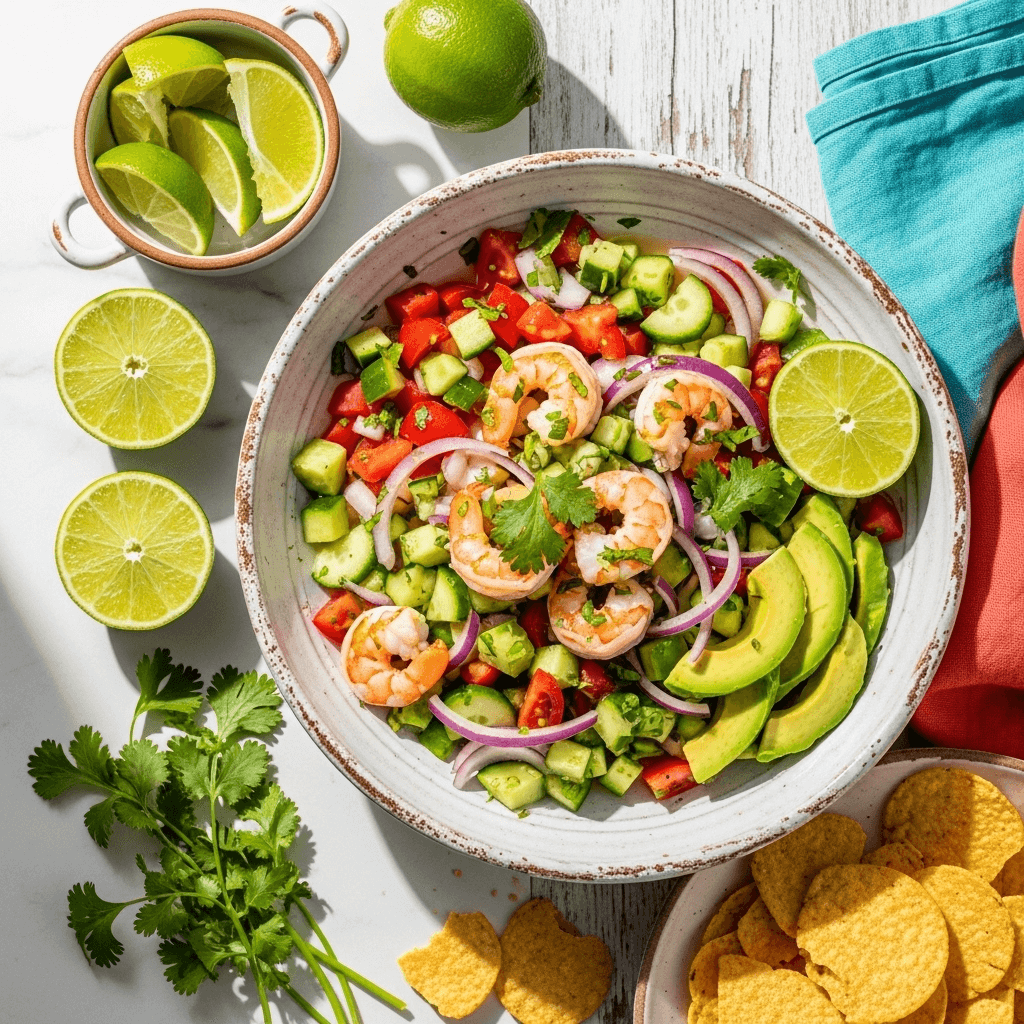
Fresh Shrimp Ceviche Recipe – Easy, Zesty, and Restaurant-Quality!

If you’ve been craving something light, refreshing, and bursting with bright citrus flavors, this shrimp ceviche recipe is about to become your warm-weather obsession! Shrimp ceviche is a vibrant Latin American seafood dish where fresh shrimp is “cooked” in tangy citrus juices and tossed with crunchy vegetables, fresh cilantro, and a kick of jalapeño. The result? A colorful, protein-packed dish that’s equal parts elegant appetizer and satisfying light meal.
This authentic Mexican shrimp ceviche is perfect for so many occasions – serve it at your next backyard barbecue with crispy tortilla chips, bring it to a potluck where it’ll steal the show, enjoy it as a healthy lunch on a hot summer day, or impress dinner guests with this restaurant-quality dish that looks far more complicated than it actually is. The best part? While traditional ceviche uses raw fish that “cooks” in lime juice over several hours, this easy shrimp ceviche recipe uses pre-cooked shrimp, meaning you can have it ready in just 30 minutes with minimal hands-on time. It’s light yet satisfying, healthy but indulgent-tasting, and absolutely perfect for anyone who loves fresh, zesty flavors that transport you straight to a beachside Mexican restaurant.
History / Background
Ceviche (also spelled cebiche or seviche) has a rich history that spans centuries and multiple South American countries, each claiming to be its birthplace. While the origins are debated, most food historians agree that ceviche has roots in Peru, where it’s considered the national dish and has been prepared for over 2,000 years. The ancient Moche civilization along Peru’s northern coast is believed to have created an early version using fresh fish marinated in fermented juice from local bananas and passion fruit.
When Spanish conquistadors arrived in the 16th century, they introduced citrus fruits – particularly limes and bitter oranges – which revolutionized the dish into something closer to what we know today. The acidic citrus juice causes a chemical process called denaturation, where the proteins in raw seafood change structure and become firm and opaque, essentially “cooking” the fish without heat.
While Peru may be ceviche’s spiritual home, the dish spread throughout coastal Latin America, with each country developing its own regional variations. Mexican ceviche, particularly popular along the Pacific coast and in states like Sinaloa, Nayarit, and Jalisco, tends to be more tomato-forward than its South American cousins and often includes ingredients like tomatoes, cucumber, and avocado. The Mexican version is typically served with tostadas or saltine crackers rather than the large-kernel corn and sweet potato you’d find in Peru.
Shrimp ceviche specifically became popular because shrimp is more widely available year-round than certain fish, and many recipes (like ours!) use pre-cooked shrimp for food safety and convenience, making it accessible to home cooks who might be nervous about preparing raw seafood. Today, ceviche has become a beloved dish throughout the United States, especially in coastal areas and anywhere people are seeking fresh, healthy, flavor-packed meals that celebrate the vibrant tastes of Latin American cuisine.
Why You’ll Love This Recipe
This fresh shrimp ceviche recipe checks every box for what makes a recipe truly special, and I’m confident it’s about to become one of your most-requested dishes!
This isn’t just another seafood recipe – it’s a celebration of fresh ingredients that come together to create something that tastes like sunshine in a bowl. The combination of tender shrimp, bright lime juice, crisp vegetables, and aromatic cilantro creates layers of flavor and texture that keep you coming back for bite after bite. Unlike heavy, rich dishes that weigh you down, this healthy shrimp ceviche leaves you feeling energized and satisfied.
Here’s why this recipe is a total winner:
- Quick & Easy – Ready in just 30 minutes with minimal cooking required; perfect for busy weeknights or last-minute entertaining
- Light & Refreshing – The ultimate warm-weather dish that won’t leave you feeling heavy or sluggish
- Naturally Healthy – High in protein, low in calories, gluten-free, dairy-free, and keto-friendly without even trying
- Make-Ahead Friendly – Actually tastes better after the flavors marry in the fridge, making it perfect for meal prep or party planning
- Impressive But Simple – Looks and tastes restaurant-quality but requires no special skills or equipment
- Budget-Friendly – Uses affordable frozen shrimp and everyday vegetables to create something that feels luxurious
- Customizable – Easy to adjust the heat level, add your favorite vegetables, or swap proteins
- Crowd-Pleaser – Appeals to everyone from health-conscious eaters to seafood lovers to adventurous foodies
- Versatile Serving Options – Works as an appetizer, light lunch, dinner, or party snack with chips
- No Cooking Required – Uses pre-cooked shrimp, so you never even have to turn on the stove!
Ingredient Notes
Let’s talk about what makes this authentic shrimp ceviche so delicious and break down each component:
Shrimp: The star of the show! I recommend using cooked, peeled, and deveined shrimp (fresh or frozen and thawed) in the 31-40 count size (medium-large). This size is perfect because the shrimp pieces aren’t too small or too large when chopped. You can buy pre-cooked frozen shrimp at any grocery store – just thaw them in cold water or overnight in the refrigerator. If you prefer to cook your own, simply boil raw shrimp for 2-3 minutes until pink and opaque, then chill completely. The benefit of using pre-cooked shrimp is food safety – you don’t have to worry about the citrus juice adequately “cooking” the shrimp.
Fresh Lime Juice: This is absolutely non-negotiable – bottled lime juice won’t give you the same bright, fresh flavor. You’ll need about 8-10 limes to get ¾ cup of fresh juice. The acidity not only adds flavor but also helps preserve the shrimp and vegetables. If limes are expensive or unavailable, you can use a combination of lime and lemon juice, though lime is traditional and preferred.
Tomatoes: Roma tomatoes (also called plum tomatoes) are ideal because they’re meaty, have fewer seeds, and less liquid than other varieties, which prevents your ceviche from becoming watery. If you can’t find Roma tomatoes, regular tomatoes work too – just scoop out excess seeds and liquid. Grape or cherry tomatoes are another great option if you prefer sweeter tomatoes.
Cucumber: English cucumbers (also called hothouse cucumbers) are perfect because they have thin skins and fewer seeds. If using regular cucumbers, you may want to peel them and scoop out the seeds for better texture. The cucumber adds a refreshing crunch that contrasts beautifully with the tender shrimp.
Red Onion: Provides a sharp, pungent bite that balances the citrus and seafood. Red onion is preferred over white or yellow because it’s milder and adds beautiful color. If you find raw onion too strong, you can soak the diced onion in cold water for 10 minutes, then drain – this removes some of the harsh bite while keeping the flavor.
Jalapeño: Adds just the right amount of heat without overwhelming the dish. The seeds and membranes contain most of the heat, so remove them for a milder ceviche or leave some in if you like it spicy. You can also substitute serrano peppers for more heat or bell peppers for a completely mild version.
Fresh Cilantro: A must-have herb that adds bright, citrusy, slightly peppery notes. If you’re in the small percentage of people who think cilantro tastes like soap (it’s genetic!), substitute with fresh parsley or just leave it out entirely.
Avocado: Not traditional in all ceviche recipes, but it’s commonly added in Mexican versions. The creamy avocado adds richness and helps mellow the acidity. Add it just before serving to prevent browning.
Salt and Pepper: Simple seasonings that enhance all the other flavors without competing with them.
Optional Add-ins: Some recipes include a touch of hot sauce (like Valentina or Tapatio), a splash of tomato juice or Clamato, or even diced mango for a sweet-spicy twist.
Equipment Needed
The beauty of this shrimp ceviche recipe is that you need almost no special equipment – just basic kitchen tools:
- Large Mixing Bowl – Glass or stainless steel works best; you’ll need something big enough to comfortably toss all the ingredients together
- Sharp Knife – Essential for dicing vegetables and chopping shrimp cleanly
- Cutting Board – Preferably one designated for seafood to prevent cross-contamination
- Citrus Juicer – A handheld lime squeezer or reamer makes juicing limes much easier, though you can certainly squeeze by hand
- Measuring Cups and Spoons – For accurate measurements
- Colander or Strainer – For rinsing shrimp and draining excess liquid if needed
- Serving Bowl or Platter – Something attractive if you’re serving to guests
- Plastic Wrap or Airtight Container – For covering the ceviche while it marinates in the refrigerator
That’s it! No blender, no food processor, no fancy equipment required – just simple prep tools that every kitchen already has.
Print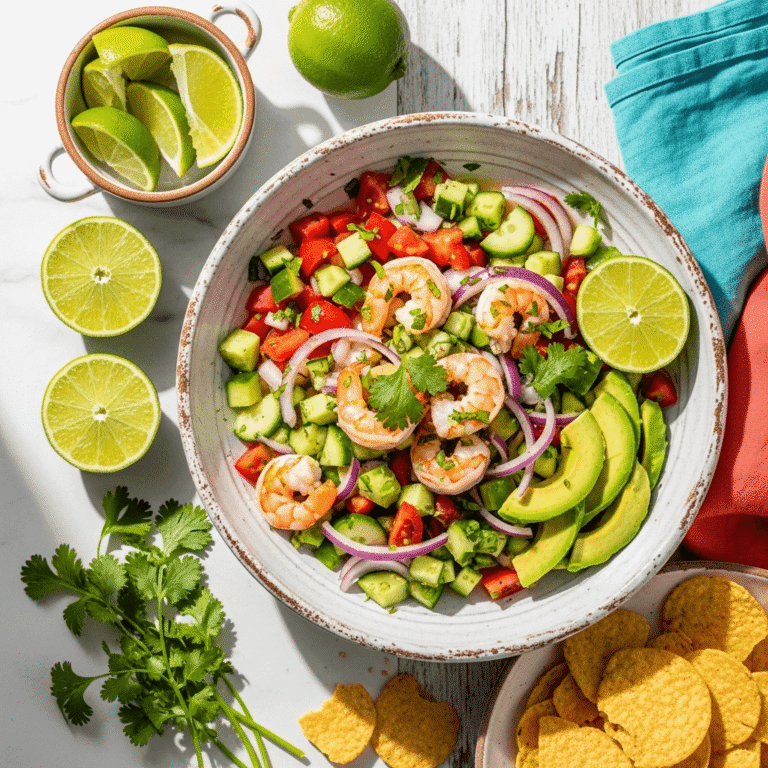
Fresh Shrimp Ceviche Recipe
Bright, fresh, and bursting with flavor, this easy shrimp ceviche recipe features tender cooked shrimp marinated in zesty lime juice with tomatoes, cucumber, jalapeño, cilantro, and creamy avocado. Ready in just 25 minutes – no cooking required!
- Total Time: 25 minutes
- Yield: 6 servings (about 6 cups) 1x
Ingredients
- 1½ pounds cooked shrimp, peeled and deveined, chopped into ½-inch pieces
- ¾ cup fresh lime juice (from about 8-10 limes)
- 3 Roma tomatoes, diced (about 1½ cups)
- 1 English cucumber, diced (about 1½ cups)
- ½ red onion, finely diced (about ¾ cup)
- 1-2 jalapeños, seeded and minced (adjust to taste)
- ½ cup fresh cilantro, chopped
- 2 ripe avocados, diced
- 1 teaspoon salt (or to taste)
- ½ teaspoon black pepper
- 1 tablespoon olive oil (optional, for richness)
- Hot sauce, to taste (optional)
- Tortilla chips, tostadas, or crackers for serving
Instructions
- Prepare the Shrimp: If using frozen cooked shrimp, thaw completely by placing in a colander under cold running water for about 5 minutes, or thaw overnight in the refrigerator. Pat the shrimp completely dry with paper towels. Chop the shrimp into ½-inch pieces – you want them bite-sized but not too small. Place the chopped shrimp in a large glass or stainless steel mixing bowl.
- Add the Lime Juice: Pour the fresh lime juice over the shrimp, making sure all pieces are submerged or coated. The lime juice will help “marinate” the shrimp and infuse them with flavor. Stir gently to combine. If you want extra citrus flavor, you can let the shrimp sit in the lime juice for 15-20 minutes, stirring occasionally.
- Prep the Vegetables: While the shrimp marinates, dice the tomatoes, cucumber, and red onion into small, uniform pieces (about ¼-inch dice). Seed and mince the jalapeño, removing all seeds and membranes for mild heat, or leaving some for extra spice. Roughly chop the fresh cilantro.
- Combine Everything: Add the diced tomatoes, cucumber, red onion, minced jalapeño, and chopped cilantro to the bowl with the shrimp and lime juice. Season with salt and pepper. If using, drizzle in the olive oil and add a few dashes of hot sauce to taste.
- Mix and Taste: Gently fold all ingredients together until everything is well combined and evenly distributed. Taste and adjust seasonings – you may want more salt, lime juice, or jalapeño depending on your preference. The flavors should be bright, tangy, and well-balanced.
- Chill (Optional but Recommended): Cover the bowl with plastic wrap and refrigerate for at least 30 minutes to 1 hour. This resting time allows all the flavors to meld together beautifully. You can also serve it immediately if you’re short on time.
- Add Avocado and Serve: Just before serving, gently fold in the diced avocado. This prevents the avocado from turning brown during storage. Transfer to a serving bowl and serve immediately with tortilla chips, tostadas, or saltine crackers. Garnish with extra cilantro leaves if desired.
Notes
- Shrimp Size: Medium to large shrimp (31-40 count) work best. Avoid using tiny salad shrimp as they can get lost in the mix.
- Fresh Lime Juice is Essential: Don’t use bottled lime juice – it lacks the bright, fresh flavor that makes ceviche special.
- Adjusting Consistency: If your ceviche seems too liquidy, simply drain off some of the excess liquid before serving. If it’s too dry, add more lime juice or a splash of tomato juice.
- Food Safety: Since we’re using pre-cooked shrimp, there’s no food safety concern. If using raw shrimp, make sure to let it marinate in lime juice for at least 2 hours until completely opaque.
- Spice Level: Start with one jalapeño and add more to taste. You can always add heat but can’t take it away!
- Make it a Meal: Serve over tostadas, in lettuce cups, or with rice for a more substantial meal.
- Prep Time: 25 minutes
- Cook Time: 0 minutes
- Category: Appetizer
- Method: No-Cook
- Cuisine: Mexican
- Diet: Gluten Free
Nutrition
- Serving Size: 1 cup (about ⅙ of recipe)
- Calories: 215
- Sugar: 3g
- Sodium: 520mg
- Fat: 9g
- Saturated Fat: 1g
- Unsaturated Fat: 7g
- Trans Fat: 0g
- Carbohydrates: 12g
- Fiber: 4g
- Protein: 24g
- Cholesterol: 190mg
Tips & Variations
One of the best things about shrimp ceviche is how easily you can customize it to your taste preferences or dietary needs. Here are some delicious ways to make this recipe your own:
Spicy Shrimp Ceviche: Double the jalapeños, add serrano peppers, or include a minced habanero for serious heat. A few dashes of hot sauce or a pinch of cayenne pepper also amps up the spice factor.
Tropical Twist: Add diced mango, pineapple, or papaya for a sweet-spicy version that’s incredibly refreshing. The fruit complements the shrimp beautifully and adds natural sweetness that balances the acidity.
Loaded Veggie Version: Bulk it up with extra vegetables like diced bell peppers (red, yellow, or orange), radishes for extra crunch, corn kernels (fresh or grilled), or even jicama for a unique, crisp texture.
Mixed Seafood Ceviche: Combine shrimp with other cooked seafood like crab meat, scallops, or diced cooked fish (like mahi-mahi or tilapia). This creates a more complex flavor profile.
Restaurant-Style with Clamato: Add ½ cup of Clamato juice or tomato juice for a more “soup-like” consistency that’s popular in Mexican restaurants.
Citrus Blend: Mix in some fresh orange juice or grapefruit juice along with the lime juice for a more complex citrus flavor profile.
Herb Variations: If cilantro isn’t your thing, try fresh mint, basil, or flat-leaf parsley for a different herbaceous note.
Lower Sodium: Reduce or eliminate added salt and use low-sodium tomato juice if adding liquid. The lime juice provides plenty of flavor on its own.
Pro Chef Tips
Want to elevate your shrimp ceviche from homemade to restaurant-quality? Here are professional tricks that make all the difference:
Uniform Dicing is Key: Take the time to dice all your vegetables and shrimp into similar-sized pieces (about ¼ to ½ inch). This isn’t just about looks – uniform pieces ensure every bite has the perfect balance of flavors and textures. It’s the difference between amateur and professional presentation.
Balance Your Acid: The lime juice should taste bright and tangy but not mouth-puckeringly sour. If your ceviche is too acidic, add a small pinch of sugar or a touch more olive oil to round out the flavors. The fat helps mellow the acidity.
Temperature Matters: Always serve ceviche ice cold. Keep it refrigerated until the very last moment before serving. You can even serve it in a bowl set over another bowl filled with ice to keep it perfectly chilled during a party.
The Avocado Timing Trick: Professional chefs always add avocado at the last possible moment to prevent browning and mushiness. If you need to prep ahead, toss diced avocado with extra lime juice in a separate container and add just before serving.
Salt in Stages: Season the shrimp and lime juice mixture first, let it sit for a few minutes, then taste and adjust again after adding the vegetables. This layered seasoning approach ensures everything is properly seasoned.
Use Quality Seafood: The better your shrimp, the better your ceviche. Look for wild-caught shrimp when possible, and always smell before buying – it should smell fresh and ocean-like, never fishy or ammonia-scented.
The “Rest and Toss” Method: After mixing everything, let it rest in the refrigerator for 10 minutes, then give it another good stir. This allows the salt to draw out some vegetable juices, which blend with the lime juice to create a more cohesive, flavorful marinade.
Drain Strategically: If your ceviche has too much liquid after marinating, don’t dump it all out! Drain just enough to get the consistency you want, but save some of that flavorful liquid – it’s packed with taste and can be drizzled back over the top just before serving.
Common Mistakes to Avoid
Even a simple recipe like ceviche has potential pitfalls. Here’s how to sidestep the most common errors:
Using Bottled Lime Juice: This is the number one mistake home cooks make. Bottled lime juice has a completely different flavor – it’s flat, sometimes bitter, and lacks the bright, fresh zing of freshly squeezed limes. Always use fresh! If you’re worried about the cost, buy limes when they’re on sale and juice them ahead, freezing the juice in ice cube trays.
Over-Marinating: While traditional raw fish ceviche needs several hours to “cook” in citrus, pre-cooked shrimp only needs time for the flavors to meld. Leaving it too long (more than 4-6 hours) can make the shrimp rubbery and the vegetables mushy. Fresh is best with this recipe.
Not Draining the Shrimp Properly: Wet, watery shrimp will dilute your ceviche and make it soupy. Always pat your thawed shrimp completely dry with paper towels before chopping and adding to the lime juice. This ensures the right consistency.
Adding Avocado Too Early: Avocado oxidizes and turns brown quickly, plus it can become mushy if added too far in advance. Always fold in diced avocado within 30 minutes of serving for the best color, texture, and flavor.
Chopping Too Large or Too Small: Pieces that are too large don’t allow flavors to distribute evenly and make eating difficult. Pieces that are too small turn mushy and lose their individual textures. Aim for that ¼ to ½ inch sweet spot for both shrimp and vegetables.
Under-Seasoning: Ceviche needs more salt than you might think because the acid makes everything taste brighter. Don’t be afraid to season assertively, but do it gradually – you can always add more but can’t take it away.
Storage & Meal Prep
Shrimp ceviche is fantastic for meal prep, though there are a few important guidelines to follow for the best results:
Refrigerator Storage: Store leftover ceviche in an airtight container in the refrigerator for up to 2 days maximum. The quality is absolutely best within the first 24 hours – after that, the vegetables start breaking down and releasing more liquid, and the shrimp can become rubbery from continued exposure to the acid.
Storing Without Avocado: For the longest shelf life and best quality, store your ceviche without the avocado. Keep diced avocado separate (tossed in a bit of lime juice) and add it only to the portion you’re serving. This way the avocado stays fresh and green.
Draining Excess Liquid: If your ceviche becomes watery after storage, simply drain off some of the excess liquid before serving. The flavors will still be there, and the texture improves dramatically with a quick drain.
No Reheating Needed: Ceviche is always served cold, so there’s no need to reheat. Simply take it out of the refrigerator and enjoy! If anything, you want to keep it well-chilled.
Meal Prep Strategy: If you’re meal prepping for the week, consider preparing all your ingredients separately and storing them in individual containers. Then you can assemble fresh portions as needed. Chop and store shrimp, vegetables, and cilantro separately, keep lime juice in a small jar, and dice fresh avocado daily.
Serving from Storage: Before serving leftover ceviche, give it a good stir, taste, and adjust seasonings. You may need to add a squeeze of fresh lime juice to brighten the flavors, or a pinch of salt to reseason.
Make-Ahead & Freezer Notes
Planning ahead? Here’s everything you need to know about preparing shrimp ceviche in advance:
Make-Ahead Timeline: Shrimp ceviche actually benefits from some advance preparation! You can make it anywhere from 2 hours to 24 hours ahead of when you plan to serve it. The sweet spot is about 4-6 hours before serving – this gives the flavors plenty of time to develop and meld while keeping everything fresh and crisp.
Best Make-Ahead Method: Combine the shrimp, lime juice, tomatoes, cucumber, onion, jalapeño, and cilantro up to 24 hours in advance. Store covered in the refrigerator. Wait to add the avocado until 30 minutes before serving to prevent browning and mushiness.
Party Prep: If you’re serving ceviche at a party, prep all your ingredients the morning of (or even the night before), but store the shrimp and lime juice mixture separately from the vegetables. Combine them 2-3 hours before guests arrive, then add avocado just before serving. This gives you maximum flavor while keeping everything at peak freshness.
Freezing Ceviche – Not Recommended: Unfortunately, ceviche does not freeze well at all. The vegetables become mushy and watery when thawed, the texture of the shrimp deteriorates, and the bright, fresh flavors that make ceviche special are completely lost. This is definitely a recipe best enjoyed fresh.
Freezing Components: If you want to save time on future batches, you can buy shrimp in bulk and keep it frozen until needed. Frozen cooked shrimp will keep for up to 3 months. Just thaw, chop, and use in your ceviche recipe. But never freeze the prepared ceviche itself.
Preparing Ahead for a Crowd: If you’re serving a large group, you can easily double or triple this recipe. Make it in a very large bowl or even a small food-safe bucket, and keep it well-chilled in the refrigerator until serving time.
Serving Suggestions
Shrimp ceviche is incredibly versatile and can be served in so many delicious ways:
Classic Style: The most traditional way is simply in bowls or cocktail glasses with a big basket of crispy tortilla chips or saltine crackers for scooping. The combination of cold, zesty ceviche with crunchy chips is absolutely perfect.
Tostada Bar: Set out crispy corn tostadas and let everyone build their own. Top the tostada with ceviche, add a dollop of sour cream or Mexican crema, maybe some hot sauce, and you’ve got a complete meal.
Lettuce Cups: For a low-carb, lighter option, serve the ceviche in butter lettuce or romaine lettuce cups. This makes an elegant appetizer and is perfect for anyone watching their carb intake.
Ceviche Taco Bar: Warm soft corn tortillas and let guests build ceviche tacos. Add toppings like shredded cabbage, crema, lime wedges, and your favorite hot sauce.
Over Rice or Quinoa: For a more substantial meal, serve the ceviche over a bed of cilantro-lime rice, quinoa, or cauliflower rice. This stretches the recipe further and makes it more filling.
With Fresh Beverages: Pair with refreshing drinks like Mexican beer (Corona, Modelo, Pacifico), margaritas, palomas, agua fresca (watermelon, cucumber, or hibiscus), or fresh limeade.
Side Dish Pairings: Serve alongside black beans, Mexican street corn (elote), chips and guacamole, pico de gallo, fresh fruit salad, grilled vegetables, or a simple green salad.
Appetizer Spread: Include ceviche as part of a larger spread with queso fundido, guacamole, salsa verde, Mexican street corn dip, and an assortment of chips for the ultimate party table.
Brunch Option: Believe it or not, ceviche makes an excellent brunch dish! Serve with Bloody Marys or mimosas for a fresh, light brunch that’s different from the usual fare.
FAQs Section
Can I use raw shrimp instead of cooked shrimp?
Yes, but it requires a longer marinating time. Dice raw, fresh shrimp and submerge completely in lime juice. Refrigerate for 2-4 hours, stirring occasionally, until the shrimp turns opaque and pink throughout. The acid “cooks” the shrimp through denaturation. However, I recommend using cooked shrimp for food safety and convenience, especially if you’re new to making ceviche.
How long does shrimp ceviche last in the refrigerator?
Shrimp ceviche is best enjoyed within 24 hours of making it, though it will keep safely refrigerated for up to 2 days. After that, the vegetables become mushy, excess liquid accumulates, and the shrimp can become rubbery. For the best taste and texture, make it the day you plan to serve it, or at most, the day before.
Why is my ceviche so watery?
Excess liquid usually comes from tomatoes or cucumbers releasing their juices, shrimp that weren’t patted dry, or too much lime juice. To fix watery ceviche, simply drain off the excess liquid before serving using a slotted spoon or strainer. In the future, seed your tomatoes, use English cucumbers (which have less water), and pat shrimp completely dry.
Can I make ceviche without cilantro?
Absolutely! While cilantro is traditional, some people have a genetic aversion to it. Simply substitute with fresh flat-leaf parsley, mint, or basil, or leave it out entirely. The ceviche will still be delicious – just a bit different in flavor profile.
Is shrimp ceviche healthy?
Yes! Shrimp ceviche is naturally low in calories, high in protein, packed with vegetables, and contains healthy fats from avocado. It’s naturally gluten-free, dairy-free, and fits into keto, paleo, and low-carb diets. The only consideration is the sodium content from the shrimp and added salt, but you can control that by seasoning lightly.
What’s the difference between ceviche and poke?
While both are raw or cooked seafood dishes, ceviche is Latin American and features citrus-marinated seafood with vegetables, while poke is Hawaiian and typically features soy-marinated raw fish (usually tuna) served over rice. The flavor profiles, ingredients, and cultural origins are quite different.
Can I make ceviche with frozen shrimp?
Yes! Frozen cooked shrimp actually works wonderfully for ceviche and is often fresher than “fresh” shrimp at the grocery store since it’s frozen immediately after harvest. Just thaw completely in cold water, pat very dry, and use as directed. Most grocery store shrimp has actually been previously frozen anyway.
Conclusion
There you have it – everything you need to make the most incredible, restaurant-quality shrimp ceviche right in your own kitchen! This fresh Mexican ceviche recipe proves that impressive, flavor-packed dishes don’t have to be complicated or time-consuming. With just a handful of fresh ingredients, some good quality shrimp, and about 30 minutes, you can create something that’ll transport your taste buds straight to a sunny beachside restaurant in Mexico.
Whether you’re planning a summer party, need a healthy lunch option, want to impress dinner guests, or just crave something light and refreshing, this easy shrimp ceviche delivers every single time. The combination of tender shrimp, bright citrus, crunchy vegetables, and creamy avocado creates the perfect balance of flavors and textures that keeps everyone coming back for more.
I truly hope you’ll give this recipe a try and experience just how delicious homemade ceviche can be! Once you make it yourself, you’ll never want to order it at a restaurant again – yours will be better! I’d absolutely love to hear how your shrimp ceviche turns out. Did you add any special ingredients? What did you serve it with? Drop a comment below and let me know your experience!
If you loved this authentic shrimp ceviche recipe as much as I know you will, please PIN it to your favorite Pinterest board so you can find it easily whenever that craving strikes. And don’t forget to share it with your friends who love fresh, healthy, Mexican-inspired recipes – they’ll thank you! Now grab those limes and let’s get started on this amazing dish!