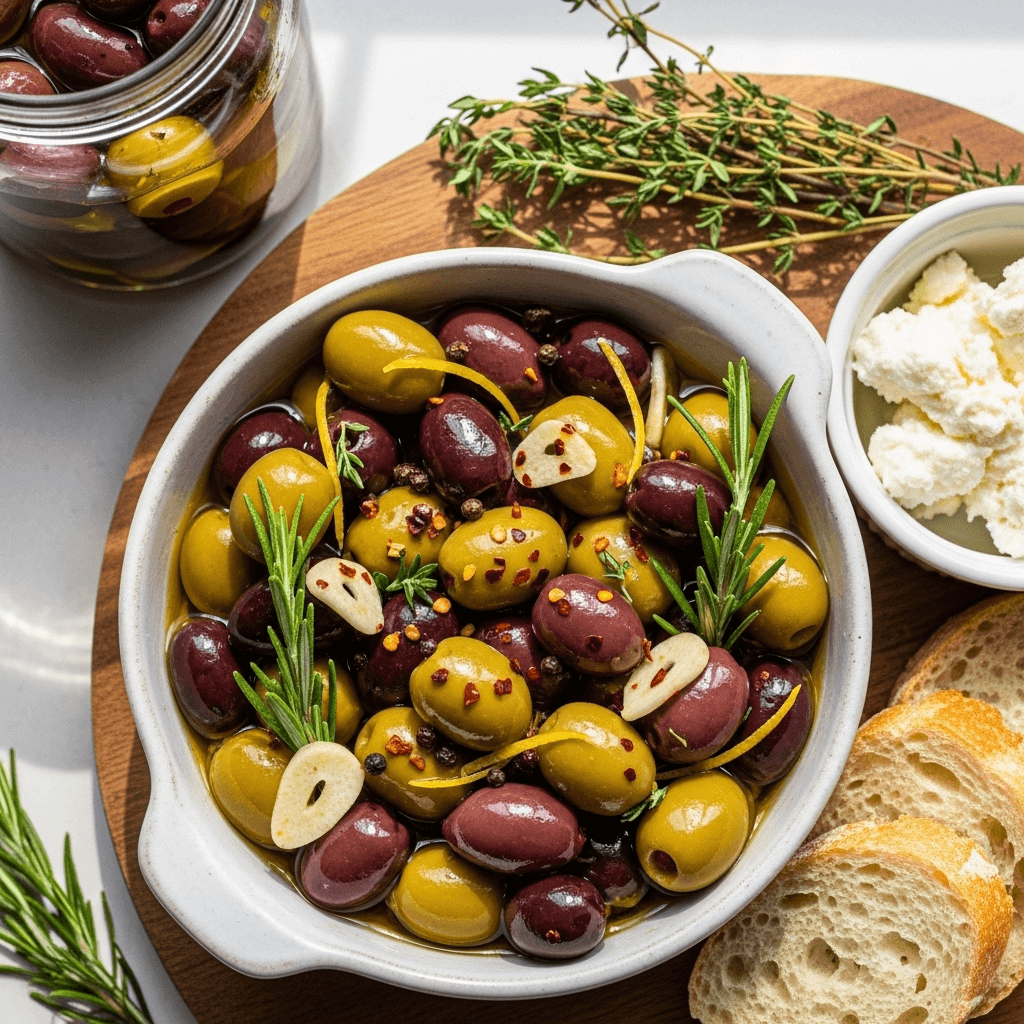
Easy Marinated Olives: A 10-Minute Mediterranean Appetizer Recipe

If you’re looking for an impressive yet effortless appetizer that screams sophistication, these Marinated Olives are about to become your secret weapon for entertaining! This simple recipe transforms ordinary store-bought olives into a flavor-packed Mediterranean delicacy that tastes like you spent hours in the kitchen—but really only takes 10 minutes of hands-on time.
What makes this homemade marinated olives recipe so irresistible is the aromatic blend of fresh herbs, citrus zest, garlic, and quality olive oil that infuses every bite with bold, complex flavors. Unlike the bland, briny olives you find at the grocery store, these marinated beauties are bursting with warmth from crushed red pepper, brightness from fresh lemon, and earthiness from rosemary and thyme.
Perfect for holiday gatherings, cocktail parties, wine nights, or simply as part of an elegant charcuterie board, marinated olives are the ultimate make-ahead appetizer. They actually taste better after sitting for a day or two, which means less stress when you’re entertaining. Serve them alongside artisan bread, aged cheeses, cured meats, and a glass of wine, and you’ve got yourself an Instagram-worthy spread that requires minimal effort but delivers maximum impact.
Whether you’re hosting a fancy dinner party, planning a casual game day spread, or looking for a thoughtful homemade gift, this easy marinated olive recipe is versatile, customizable, and always a crowd-pleaser. Plus, it’s naturally gluten-free, vegan, keto-friendly, and packed with healthy fats—so everyone at your table can enjoy them!
History / Background
Olives have been cultivated and cherished around the Mediterranean for over 6,000 years, making them one of humanity’s oldest cultivated crops. Ancient civilizations from Greece to Rome, Egypt to Spain, recognized both the culinary and economic value of olive trees, which could live for hundreds of years and provide sustenance through their fruit and oil.
The practice of marinating olives dates back centuries, born from the Mediterranean tradition of preserving foods and enhancing flavors through simple, natural ingredients. In ancient times, olives were preserved in brine, oil, or vinegar to extend their shelf life and make them more palatable, as fresh olives straight from the tree are incredibly bitter and inedible without curing.
Different regions developed their own signature marinating styles based on local ingredients and taste preferences. In Greece, olives might be marinated with oregano, lemon, and garlic. Italian preparations often feature rosemary, fennel seeds, and chili flakes. Spanish marinated olives frequently include orange zest, sherry vinegar, and smoked paprika. French versions might incorporate herbes de Provence and white wine.
Marinated olives became particularly popular in Italian antipasto spreads and Spanish tapas culture, where small plates of flavorful bites are served before meals or alongside drinks. These traditions emphasized the importance of quality ingredients, simple preparations, and allowing time for flavors to meld—principles that remain central to Mediterranean cooking today.
In modern times, marinated olives have become a staple at upscale grocers and specialty food shops, often sold at premium prices despite their simple preparation. The beauty of making your own marinated olives at home is that you control the quality of ingredients, customize the flavors to your preferences, and save money—all while creating something that tastes infinitely better than store-bought versions.
Today, marinated olives represent the essence of Mediterranean entertaining: effortless elegance, bold flavors, and the joy of sharing good food with good company.
Why You’ll Love This Recipe
These homemade marinated olives are the entertaining hack you never knew you needed—they look and taste incredibly gourmet, but they’re actually one of the easiest appetizers you’ll ever make!
Here’s why this recipe will transform your entertaining game:
- Ridiculously easy – Just 10 minutes of prep, then let the flavors do the work
- Make-ahead magic – Tastes even better after marinating for 1-3 days
- Budget-friendly – Costs a fraction of store-bought marinated olives
- Endlessly customizable – Adjust herbs, spices, and heat levels to your taste
- Impressive presentation – Looks like you hired a caterer
- Crowd-pleaser – Appeals to sophisticated palates and olive lovers alike
- Dietary friendly – Naturally vegan, gluten-free, keto, paleo, and Whole30 compliant
- Minimal cleanup – Just one bowl and a jar
- Long shelf life – Keeps in the fridge for up to 3 weeks
- Versatile serving – Perfect for parties, cheese boards, gift-giving, or casual snacking
- Healthy snack – Packed with heart-healthy monounsaturated fats and antioxidants
- No cooking required – Completely no-bake and stress-free
Whether you’re a seasoned entertainer or someone who gets nervous hosting, these marinated olives take all the pressure off. You can prepare them days in advance, and they’ll be sitting pretty in your fridge, ready to impress whenever guests arrive. They’re sophisticated enough for a formal wine tasting yet casual enough for a backyard barbecue.
Ingredient Notes
The magic of marinated olives lies in the quality and combination of simple, flavorful ingredients that create something far greater than the sum of their parts.
Mixed Olives: The foundation of this recipe! Use a variety of olives for the most interesting flavor and visual appeal. Kalamata olives bring a rich, wine-like flavor; Castelvetrano olives offer buttery sweetness; black olives provide mild earthiness; and green olives add bright, briny notes. You can find mixed olive bars at most grocery stores, or buy pre-mixed varieties. Look for olives with pits if possible—they stay firmer and more flavorful during marinating. Pitted olives work fine too for convenience, especially if serving to guests who prefer them. Plan on about 1 pound (roughly 3 cups) of olives for this recipe.
Extra Virgin Olive Oil: Quality matters here! Use a good extra virgin olive oil with fruity, peppery notes—this is what carries all the flavors and coats each olive beautifully. You’ll need about ½ cup. Don’t use light or refined olive oil; they lack the flavor depth this recipe needs. If you prefer, you can substitute with avocado oil, though it won’t have the same Mediterranean authenticity.
Fresh Garlic: Thinly sliced fresh garlic cloves add aromatic pungency that mellows as it marinates. Use 3-4 cloves, sliced thin so the flavors distribute evenly. Avoid pre-minced garlic from a jar—it lacks the fresh, vibrant flavor of real garlic cloves.
Fresh Herbs: Rosemary and thyme are classic choices that bring woodsy, earthy notes. Fresh herbs are always better than dried here because they infuse more vibrant flavor and look beautiful in the jar. Use about 2-3 sprigs of fresh rosemary and 4-5 sprigs of fresh thyme. You can also add fresh oregano, basil, or bay leaves.
Citrus Zest: Fresh lemon and orange zest add brightness and complexity. Use a vegetable peeler or zester to remove wide strips of zest, avoiding the bitter white pith underneath. The oils in citrus zest are incredibly aromatic and balance the richness of the olives and oil perfectly.
Red Pepper Flakes: A pinch (about ½ teaspoon) adds subtle warmth and visual interest without making the olives spicy. Adjust to taste—add more if you love heat, or omit entirely for a milder version.
Fennel Seeds: Optional but highly recommended! About ½ teaspoon of fennel seeds adds a subtle licorice-like flavor that’s very Mediterranean. You can also use coriander seeds or cumin seeds for different flavor profiles.
Black Peppercorns: Whole black peppercorns (about 1 teaspoon) add gentle spice and visual texture. Crushing them slightly releases more flavor.
Salt: Usually, olives are already quite salty from their brine, so you typically don’t need to add extra salt. Taste before adding any—you can always adjust at the end.
Substitutions: No fresh herbs? Use 1 teaspoon dried herbs, though the flavor won’t be as vibrant. No citrus? Add a splash of white wine vinegar or lemon juice instead. Want different flavors? Try adding sun-dried tomatoes, roasted red peppers, anchovies, or capers.
Equipment Needed
This recipe requires minimal equipment—chances are you already have everything you need!
- Mixing bowl – Medium to large bowl for combining ingredients
- Sharp knife – For slicing garlic and removing citrus zest
- Cutting board – Standard size for prep work
- Vegetable peeler or zester – For removing citrus zest in strips
- Measuring cups and spoons – For accurate ingredient amounts
- Wooden spoon or spatula – For tossing olives with marinade
- Glass jar with tight-fitting lid – A quart-sized mason jar works perfectly for storage
- Small serving bowl – For presenting olives when ready to serve
- Colander or strainer – For draining olives from their original brine
The key piece here is the glass jar—use something with an airtight seal to keep the olives fresh and allow flavors to infuse properly. Mason jars are perfect because they’re inexpensive, look beautiful, and create an airtight seal. Plus, if you’re gifting these marinated olives, a pretty jar with a ribbon makes for gorgeous presentation!
Print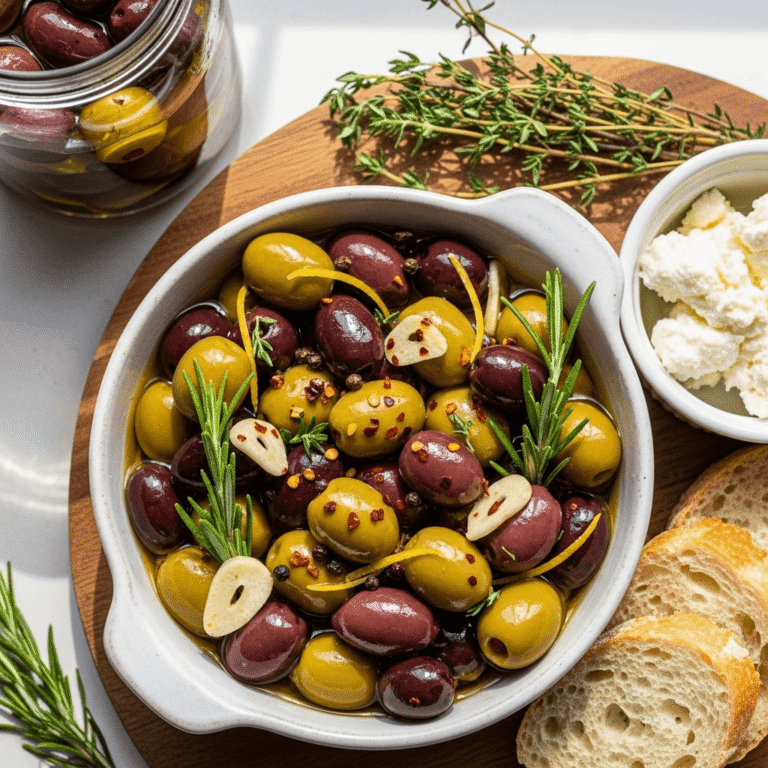
Easy Marinated Olives
Easy homemade marinated olives infused with garlic, fresh herbs, citrus, and aromatic spices! This no-cook Mediterranean appetizer takes just 10 minutes to prepare and makes an impressive addition to any cheese board or party spread.
- Total Time: 10 minutes
- Yield: 8 servings (about 3 cups) 1x
Ingredients
- 1 pound mixed olives (about 3 cups), drained (Kalamata, Castelvetrano, green, and black)
- ½ cup extra virgin olive oil
- 3-4 garlic cloves, thinly sliced
- 2-3 sprigs fresh rosemary
- 4-5 sprigs fresh thyme
- 2 wide strips lemon zest (use a vegetable peeler)
- 2 wide strips orange zest
- ½ teaspoon red pepper flakes (adjust to taste)
- ½ teaspoon fennel seeds
- 1 teaspoon whole black peppercorns, lightly crushed
- Optional: 2 bay leaves
Instructions
- Drain the olives: Empty your olives into a colander and rinse briefly under cold water to remove excess brine. Let them drain thoroughly for a few minutes. Pat dry with paper towels if they’re very wet—this helps the marinade adhere better.
- Prepare aromatics: Using a sharp knife, thinly slice the garlic cloves. Use a vegetable peeler to remove wide strips of zest from the lemon and orange, being careful to avoid the white pith underneath, which can be bitter. If desired, gently crush the black peppercorns using the back of a spoon or mortar and pestle to release their oils.
- Combine ingredients: In a medium mixing bowl, combine the drained olives, olive oil, sliced garlic, rosemary sprigs, thyme sprigs, lemon zest, orange zest, red pepper flakes, fennel seeds, crushed black peppercorns, and bay leaves (if using). Toss everything together gently but thoroughly, ensuring the olives are well-coated with oil and the aromatics are evenly distributed.
- Transfer to jar: Transfer the olive mixture to a clean glass jar or airtight container. Make sure the olives are completely submerged in the olive oil—add a bit more oil if needed. The oil creates a seal that preserves the olives and allows flavors to infuse.
- Marinate: Seal the jar tightly and let the olives marinate at room temperature for at least 2 hours to allow flavors to develop. For best results, refrigerate for 24 hours to 3 days before serving. The longer they marinate, the more flavorful they become!
- Bring to room temperature: About 30 minutes before serving, remove the jar from the refrigerator and let it sit at room temperature. The olive oil will solidify when cold, so bringing it to room temperature allows it to liquify again and makes the olives easier to serve and more flavorful.
- Serve: Transfer the olives to a serving bowl using a slotted spoon. You can drizzle some of the infused oil over them for extra flavor. Serve with crusty bread, cheese, crackers, or as part of a charcuterie board.
Notes
- Olive varieties: Mix different types for the best flavor and visual appeal. Kalamata, Castelvetrano, and Cerignola olives are excellent choices.
- Oil coverage: Olives must be completely covered with oil during marinating to prevent spoilage and ensure even flavor distribution.
- Marinating time: Minimum 2 hours, but 24-72 hours is ideal for maximum flavor development.
- Room temperature serving: Always serve at room temperature for the best flavor and texture.
- Refrigeration: Once refrigerated, the oil will solidify—this is completely normal! Just bring to room temperature before serving.
- Customization: Feel free to adjust herbs, spices, and heat level to your preferences.
- Prep Time: 10 minutes
- Cook Time: 0 minutes
- Category: Appetizer
- Method: No-Cook Marinating
- Cuisine: Mediterranean
- Diet: Gluten Free
Nutrition
- Serving Size: ⅓ cup (about 6-8 olives)
- Calories: 145
- Sugar: 0g
- Sodium: 310mg
- Fat: 15g
- Saturated Fat: 2g
- Unsaturated Fat: 13g
- Trans Fat: 0g
- Carbohydrates: 4g
- Fiber: 1g
- Protein: 1g
- Cholesterol: 0mg
Tips & Variations
The beauty of marinated olives is how easily you can customize them to match your flavor preferences or the occasion!
Flavor Variations:
- Italian-style: Add sun-dried tomatoes, fresh basil, and a splash of balsamic vinegar
- Greek-inspired: Include dried oregano, feta cheese cubes, and extra lemon
- Spanish twist: Use smoked paprika, sherry vinegar, and Marcona almonds
- Spicy version: Double the red pepper flakes and add sliced fresh jalapeños
- Herbes de Provence: Swap herbs for a dried Herbes de Provence blend plus lavender
- Middle Eastern: Add cumin seeds, sumac, and preserved lemon pieces
- Garlic lovers: Double or triple the garlic for more pungent flavor
- Sweet and savory: Add a drizzle of honey and some fresh mint
Ingredient Swaps:
- Different citrus: Try lime, grapefruit, or blood orange zest
- Herb variations: Use fresh oregano, basil, sage, or marjoram instead of rosemary/thyme
- Spice options: Experiment with coriander seeds, mustard seeds, or whole allspice
- Add-ins: Include roasted red peppers, artichoke hearts, capers, or anchovies
Presentation Ideas:
- Gift jars: Layer ingredients attractively in clear jars with decorative labels and ribbons
- Skewers: Thread marinated olives onto small appetizer picks with cheese cubes
- Warm olives: Gently warm the marinated olives in a small saucepan before serving (especially nice in winter)
- Fancy garnish: Top with fresh herb leaves and extra citrus zest when serving
Dietary Modifications:
- Already naturally vegan, gluten-free, keto, paleo, and Whole30 compliant!
- Low-sodium: Use low-sodium olives and rinse well before marinating
- Oil-free: Not recommended, as oil is essential for both flavor and preservation
Pro Chef Tips
These professional techniques will elevate your marinated olives from homemade to gourmet-quality:
1. Toast the spices first: For deeper, more complex flavor, lightly toast your fennel seeds, coriander seeds, and peppercorns in a dry skillet for 1-2 minutes until fragrant before adding to the marinade. This awakens the essential oils and intensifies their flavor dramatically.
2. Bruise the herbs: Before adding fresh herbs to the marinade, gently bruise or rub them between your hands. This breaks down the cell walls and releases more of their aromatic oils into the marinade.
3. Use a ratio: For perfectly balanced marinated olives, follow this ratio: 3 parts olives to 1 part olive oil. This ensures proper coverage without using excessive oil.
4. Layer in the jar: When transferring to your storage jar, layer the ingredients strategically—some olives, then herbs and aromatics, then more olives. This ensures even distribution of flavors throughout.
5. Warm infusion method: For faster flavor development, gently warm the olive oil with the garlic, herbs, and spices in a small saucepan for 3-5 minutes (don’t let it boil), then pour over the olives. This speeds up the infusion process significantly.
6. Quality olive selection: Avoid canned black olives—they’re heavily processed and lack flavor. Seek out olives from the olive bar at your grocery store or specialty markets for the best quality and variety.
7. The “rest and shake” technique: After the first 12 hours of marinating, give your jar a good shake or stir to redistribute the oil and aromatics. This ensures every olive gets maximum flavor exposure.
8. Save and reuse the oil: The infused olive oil is liquid gold! After finishing your olives, strain and save that aromatic oil for salad dressings, bread dipping, or drizzling over roasted vegetables.
9. Room temperature is key: Cold olives lack flavor intensity. Always serve marinated olives at room temperature—plan to remove them from the fridge 30-60 minutes before serving.
10. Fresh garlic safety: If you plan to store your marinated olives for more than 2 weeks, remove the fresh garlic slices after 1 week to prevent any risk of botulism in the oil environment. The garlic will have already infused its flavor by then.
Common Mistakes to Avoid
Even this simple recipe has pitfalls—here’s how to sidestep them:
1. Not draining the olives properly: Starting with olives that are too wet dilutes your marinade and creates a watery, less flavorful final product. Always drain your olives thoroughly and even pat them dry with paper towels if needed. The brine from the jar doesn’t add good flavor—it’s just salty liquid that interferes with your carefully crafted marinade.
2. Skimping on the olive oil: Your olives need to be completely submerged in oil for two critical reasons: proper flavor infusion and preservation. If olives are exposed to air, they can develop mold or spoil. Don’t try to save money by using less oil—the leftover infused oil is delicious for other uses anyway!
3. Using dried herbs instead of fresh: While dried herbs can work in a pinch, they don’t provide the same vibrant flavor and beautiful visual appeal that fresh herbs do. Fresh herbs release their essential oils gradually over time, creating a more nuanced, complex flavor. If you must use dried, reduce the amount to 1 teaspoon total and expect less impressive results.
4. Serving straight from the fridge: This is the most common mistake! Cold olive oil solidifies and cold olives have muted flavors. Your beautiful marinated olives will seem bland and the oil will look cloudy and congealed. Always let them sit at room temperature for 30-60 minutes before serving so the oil liquifies and the flavors bloom.
5. Not marinating long enough: While you can technically eat these immediately, the magic happens during the waiting period. The flavors need at least 12-24 hours to really penetrate the olives and meld together. Patience pays off tremendously here—marinated olives taste exponentially better on day 2 or 3 than they do on day 1.
6. Forgetting to taste and adjust: Olives vary in saltiness depending on their brine and variety. After the initial marinating period, taste your olives and adjust seasonings if needed. They might need more red pepper flakes for heat, an extra squeeze of fresh lemon juice for brightness, or additional herbs for more complexity.
7. Using rancid or low-quality oil: Since olive oil is a starring ingredient here (not just a cooking medium), rancid or low-quality oil will ruin the entire batch. Taste your olive oil before using it—it should smell fruity and peppery, never musty or like crayons. Invest in good extra virgin olive oil for this recipe.
Storage & Meal Prep
Proper storage keeps your marinated olives fresh and flavorful for weeks!
Refrigerator Storage: Store marinated olives in an airtight glass jar or container in the refrigerator for up to 3 weeks. The key is ensuring the olives remain completely submerged in olive oil at all times. The oil creates a protective barrier against bacteria and keeps the olives from drying out.
Oil Solidification: When refrigerated, your olive oil will solidify and turn cloudy—this is completely normal and not a sign of spoilage! Simply remove the jar from the fridge 30-60 minutes before serving, and the oil will return to its liquid state. Alternatively, you can run warm water over the outside of the jar to speed this process.
Maintaining Quality: Every time you remove olives from the jar, make sure the remaining olives are pushed down and covered with oil. If needed, add a bit more fresh olive oil to maintain coverage. This prevents oxidation and keeps them fresh longer.
Room Temperature: Marinated olives can sit at room temperature for up to 4 hours during serving. After that, return them to the refrigerator to maintain food safety, especially since they contain fresh garlic.
Meal Prep Strategy: These are the ultimate make-ahead appetizer! Prepare 2-3 jars at once—one for immediate use, one for the following week, and one for gifting. They actually improve with age (up to 3 weeks), so batch preparation makes perfect sense.
Signs of Spoilage: Discard marinated olives if you notice any off smells, mold growth, or if the oil becomes rancid. Properly stored with adequate oil coverage, this should never happen within the 3-week timeframe.
Make-Ahead & Freezer Notes
Marinated olives are the ultimate make-ahead appetizer—in fact, they’re better when made in advance!
Make-Ahead Timeline:
- 2 hours minimum: Olives are technically edible but flavors haven’t fully developed yet
- 24 hours: Good flavor development; perfect for serving
- 2-3 days: Optimal flavor; this is the sweet spot
- 1 week: Excellent flavor intensity
- 2-3 weeks: Maximum flavor development; still fresh and delicious
Best Practice: Make your marinated olives at least 24 hours before you plan to serve them, but ideally 2-3 days ahead. This advance preparation not only improves flavor but also reduces your day-of-party stress significantly.
Gifting Timeline: If making these as gifts, prepare them 3-5 days before giving so recipients can enjoy them at their peak flavor. Attach a pretty tag with the date you made them and storage instructions.
Freezing: Freezing marinated olives is not recommended. The freezing and thawing process negatively affects the olive texture, making them mushy and watery. Additionally, the herbs will become limp and unappealing. The good news is you don’t need to freeze them—they keep beautifully in the refrigerator for up to 3 weeks!
Garlic Safety Note: If you’re making these more than 2 weeks in advance, remove the fresh garlic slices after 1 week of marinating. While rare, garlic stored in oil for extended periods can potentially develop botulism. The garlic will have already infused plenty of flavor by then, and removing it is a simple safety precaution for long-term storage.
Refreshing Old Olives: If your marinated olives have been sitting for 2+ weeks and taste a bit tired, refresh them by adding a few new fresh herb sprigs and a fresh strip of citrus zest. This brightens up the flavors instantly.
Serving Suggestions
Marinated olives are incredibly versatile and can be served in countless delicious ways!
Classic Presentations:
- Charcuterie board: Centerpiece alongside cured meats, aged cheeses, crackers, and nuts
- Cheese plate: Perfect companion to soft cheeses like brie, goat cheese, and burrata
- Mezze platter: Serve with hummus, baba ganoush, pita bread, and feta
- Antipasto spread: Traditional Italian appetizer with prosciutto, salami, and marinated vegetables
- Cocktail hour: Simple bowl with toothpicks for easy grabbing during drinks
Bread Pairings:
- Crusty artisan bread or baguette slices for dipping in the infused oil
- Warm focaccia drizzled with some of the olive marinade
- Grilled or toasted crostini
- Homemade breadsticks
- Pita chips or lavash crackers
Cheese Pairings:
- Soft: Brie, camembert, goat cheese, cream cheese
- Hard: Aged cheddar, manchego, parmesan, pecorino
- Blue: Gorgonzola, Roquefort, Stilton (the saltiness complements beautifully)
- Fresh: Feta, mozzarella, burrata
Meat Pairings:
- Prosciutto di Parma
- Salami and soppressata
- Spanish chorizo
- Serrano ham
- Coppa or capicola
Beyond the Board:
- Pasta: Toss warm pasta with marinated olives, the infused oil, and parmesan
- Pizza topping: Scatter over homemade pizza before baking
- Salads: Add to Greek salads, grain bowls, or arugula salads
- Sandwiches: Include in Mediterranean wraps or paninis
- Roasted vegetables: Mix into roasted cauliflower, potatoes, or tomatoes
Beverage Pairings:
- Wine: Dry white wines (Sauvignon Blanc, Vermentino), light reds (Pinot Noir), or rosé
- Cocktails: Martinis, Negronis, Aperol Spritz, or Bloody Marys
- Beer: Light lagers, wheat beers, or Belgian ales
- Non-alcoholic: Sparkling water with lemon, iced tea, or Italian sodas
Occasion Ideas:
- Holiday parties and New Year’s Eve celebrations
- Game day spreads and Super Bowl parties
- Book club meetings and ladies’ nights
- Outdoor summer picnics and BBQs
- Romantic date nights at home
- Potluck contributions (they travel well!)
FAQs
How long do marinated olives last in the fridge?
Properly stored marinated olives will last up to 3 weeks in the refrigerator. The key to longevity is keeping them completely submerged in olive oil in an airtight container. The oil acts as a preservative and barrier against bacteria. Always use clean utensils when removing olives to avoid introducing contaminants. If you notice any off smells, mold, or the oil becomes rancid, discard the batch immediately.
Can I use any type of olives for marinating?
Absolutely! The beauty of this recipe is its versatility. The best results come from using a variety of olives for complexity of flavor and visual appeal. Kalamata olives offer rich, wine-like flavor; Castelvetrano olives are buttery and mild; Cerignola olives are large and meaty; green olives provide bright, briny notes. Avoid canned black olives, which are heavily processed and lack flavor. Olives with pits tend to stay firmer and more flavorful, but pitted olives work fine for convenience.
Do I need to use fresh herbs or can I use dried?
Fresh herbs are strongly recommended for the best flavor and presentation. They release their essential oils gradually during marinating, creating layers of flavor. Dried herbs can be used in a pinch, but reduce the amount to about 1 teaspoon total of mixed dried herbs since dried herbs are more concentrated. The visual appeal won’t be the same, and the flavor will be less vibrant and complex.
Why does my olive oil solidify in the fridge?
This is completely normal and nothing to worry about! Extra virgin olive oil solidifies when chilled below 40°F, turning cloudy and thick. This is actually a sign of quality olive oil. Simply remove the jar from the refrigerator 30-60 minutes before serving, and the oil will return to its clear, liquid state. You can speed this up by running warm water over the outside of the jar. Never microwave the jar to liquify the oil, as this can create hot spots and affect flavor.
Can I warm marinated olives before serving?
Yes, warmed marinated olives are delicious, especially in cooler months! Gently warm them in a small saucepan over low heat for 3-5 minutes, just until heated through—don’t boil them or overheat, which can make them mushy. Warm olives release even more aromatic oils and have a softer, more luxurious texture. This is a popular preparation in Spanish tapas bars. Serve them warm with crusty bread for dipping in the warm infused oil.
Are marinated olives healthy?
Yes! Olives are packed with heart-healthy monounsaturated fats, particularly oleic acid, which has anti-inflammatory properties. They’re also rich in antioxidants, vitamin E, and beneficial compounds. While they are high in sodium (about 300mg per serving), this recipe doesn’t add extra salt beyond what’s already in the olives. They’re naturally keto-friendly, paleo, vegan, and gluten-free. The olive oil used for marinating contains the same beneficial fats. Just enjoy them in moderation as part of a balanced diet—about 6-8 olives per serving is ideal.
Can I reuse the infused olive oil after the olives are gone?
Absolutely! That aromatic olive oil is full of flavor and far too delicious to waste. Strain it through a fine-mesh sieve or cheesecloth to remove any herb pieces and garlic, then transfer to a clean bottle. Use it within 1 week for drizzling over salads, dipping bread, sautéing vegetables, finishing pasta dishes, or as a flavor boost for roasted meats. Store in the refrigerator and use the same way you’d use finishing olive oil. Just remember the garlic safety rule: don’t store garlic-infused oil at room temperature or for more than a week.
Conclusion
And there you have it—the complete guide to making show-stopping Marinated Olives that will elevate every gathering, party, and quiet night in! This simple Mediterranean appetizer proves that the most impressive dishes don’t require complicated techniques or hours in the kitchen. With just 10 minutes of hands-on time and a handful of quality ingredients, you can create something that tastes infinitely better than anything you’d buy at the store—at a fraction of the cost.
The best part about this easy marinated olive recipe is how incredibly forgiving and flexible it is. You can customize the herbs, adjust the spice level, experiment with different olive varieties, and create countless flavor combinations. Whether you’re preparing them for a holiday party, adding them to your weekly charcuterie night, or packaging them as thoughtful homemade gifts, these homemade marinated olives never fail to impress.
Remember, these olives get better with time, so embrace the make-ahead nature of this recipe. Prepare them 2-3 days before you need them, and you’ll be rewarded with deeply flavorful, aromatic olives that taste like they came from a gourmet market. Your guests will never guess how little effort went into creating something so delicious!
Ready to become the host with the most? Try this recipe this weekend and experience the magic of homemade marinated olives! Once you taste the difference, you’ll never go back to store-bought. Share your creations in the comments below—I’d love to hear which flavor combinations you try! And don’t forget to pin this recipe to your Pinterest boards for easy reference whenever entertaining season arrives.
Here’s to effortless entertaining and the simple pleasures of Mediterranean cuisine!