Crispy Sesame Shrimp Toast Recipe (Restaurant-Style Appetizer!)

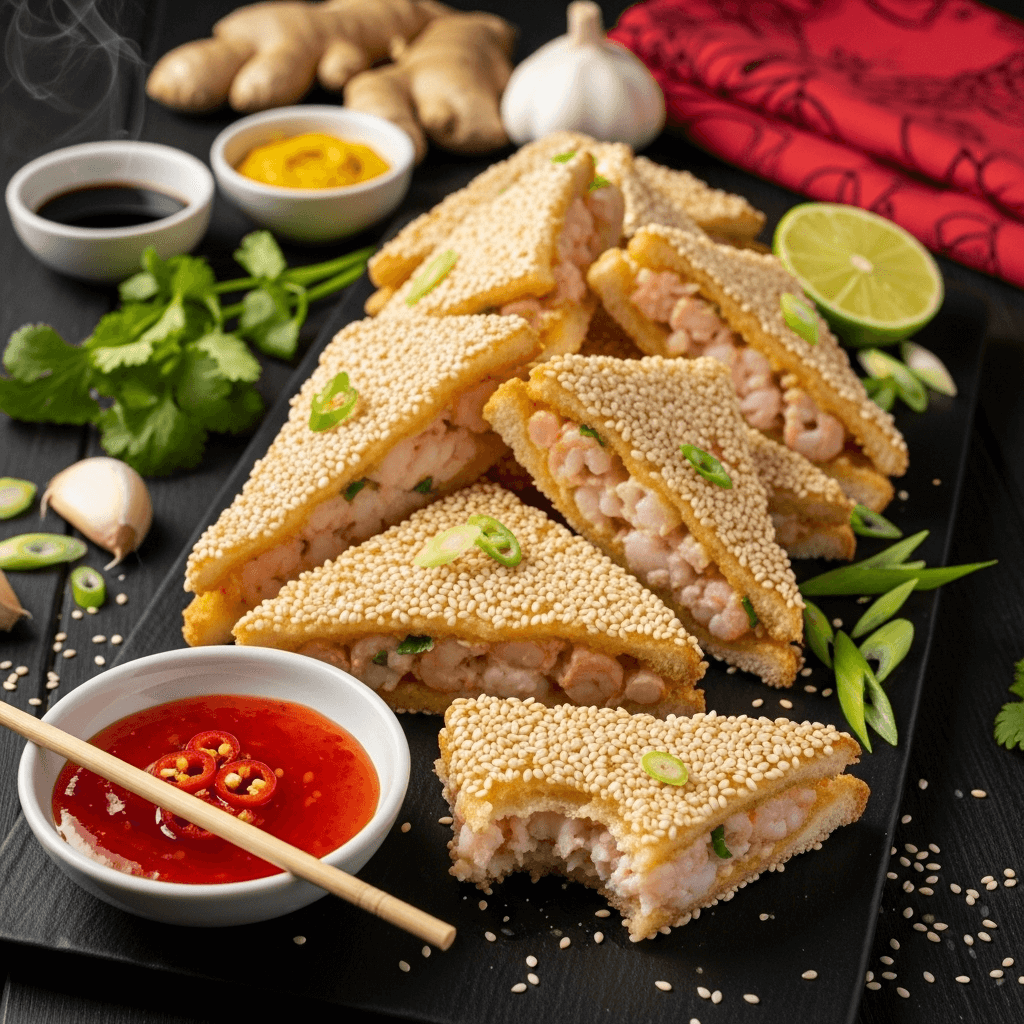
There’s something undeniably addictive about sesame shrimp toast—those golden, crispy triangles of bread topped with a savory shrimp mixture and coated in toasted sesame seeds that crunch with every bite. This classic Chinese-American appetizer combines succulent shrimp paste spread on white bread, coated generously with sesame seeds, and fried until perfectly golden and crispy. The result is an irresistible contrast of textures and flavors that disappears from plates in minutes.
What makes this homemade shrimp toast so special is how it captures that authentic restaurant quality with surprisingly simple techniques. The shrimp mixture is seasoned with ginger, garlic, and a touch of sesame oil, creating layers of flavor that complement rather than overpower the delicate seafood. Unlike the frozen versions you might find at grocery stores, these taste incredibly fresh and have that perfect crispy exterior with a tender, flavorful center.
Perfect for cocktail parties, Chinese New Year celebrations, game day spreads, dinner party appetizers, dim sum brunches at home, or anytime you want to impress guests with something special, these crispy shrimp toasts never fail to wow. They’re elegant enough for formal gatherings yet fun and approachable for casual get-togethers. Serve them as an appetizer before Asian-inspired dinners, as party finger food, or even as a unique brunch item alongside other dim sum favorites.
History / Background
Shrimp toast, known as “ha do si” in Cantonese, has a fascinating culinary history that reflects the evolution of Chinese cuisine both in China and abroad. While many assume it’s an ancient Chinese dish, shrimp toast as we know it today is actually a relatively modern creation that emerged in the early-to-mid 20th century.
The dish likely originated in Hong Kong during the 1920s-1930s, a period when Cantonese cuisine was innovating and adapting to incorporate Western ingredients and techniques. Hong Kong, as a British colony, had unique access to Western foods including white bread, which wasn’t traditionally part of Chinese cuisine. Enterprising Cantonese chefs began experimenting with bread as a vehicle for traditional ingredients, leading to several bread-based dishes that became dim sum classics.
Shrimp toast represents the ingenious Chinese culinary principle of using every ingredient efficiently—the dish likely emerged as a creative way to use day-old bread while showcasing premium shrimp. By spreading a shrimp paste on bread and frying it, chefs created something entirely new that combined the best of both worlds: Western bread’s ability to crisp beautifully when fried, and Cantonese cuisine’s masterful seafood preparations.
The dish gained international recognition when it became a staple in Chinese-American restaurants during the post-World War II era, particularly in the 1950s and 60s when American interest in Chinese cuisine exploded. Chinese restaurants across America added shrimp toast to their appetizer menus, where it became as popular as egg rolls and wonton soup. The addition of sesame seeds—which weren’t always part of the original Hong Kong version—became standard in American adaptations, adding visual appeal and nutty flavor.
In traditional dim sum houses in Hong Kong and Guangzhou, you might find variations called “prawn toast” served alongside har gow and siu mai. However, the version most Americans know—triangular pieces heavily coated in white sesame seeds—is distinctly Chinese-American. Today, sesame shrimp toast remains a beloved appetizer that bridges cultures, representing how cuisine evolves and adapts while maintaining its delicious essence.
Why You’ll Love This Recipe
This isn’t your average frozen shrimp toast from the grocery store. This is the restaurant-quality, made-from-scratch version that will make you wonder why you ever bought the pre-made kind. Every bite delivers that perfect crunch from the sesame coating, giving way to the savory, slightly sweet shrimp mixture that’s moist and flavorful.
Here’s why this crispy shrimp toast recipe will become your go-to appetizer:
- Restaurant-Quality at Home – Tastes just like what you’d get at upscale Chinese restaurants, but costs a fraction of the price
- Impressive Yet Easy – Looks and tastes fancy but uses simple techniques anyone can master
- Perfect Texture Contrast – Crispy, crunchy exterior with a tender, flavorful interior creates addictive eating experience
- Make-Ahead Friendly – Prepare ahead and fry just before serving for stress-free entertaining
- Freezer-Friendly – Make big batches and freeze for quick appetizers anytime
- Customizable Heat – Adjust spices and add chili for your preferred spice level
- Crowd-Pleaser – Universal appeal means even picky eaters will love them
- Elegant Presentation – Beautiful golden color with sesame seed coating looks professionally made
- Quick to Prepare – Ready in about 30 minutes from start to finish
- Authentic Flavor – Real restaurant-style taste that rivals your favorite Chinese restaurant
Ingredient Notes
Understanding your ingredients helps you achieve the best possible shrimp toast. Let’s break down each component and why it matters.
Shrimp – The star ingredient. Use raw shrimp (not pre-cooked), peeled and deveined. Medium to large shrimp (31-40 count or 26-30 count) work best—they have better flavor than tiny shrimp and are easier to process. Fresh is ideal, but high-quality frozen shrimp work perfectly (thaw completely and pat very dry before using). Avoid pre-cooked shrimp as they’ll become rubbery when fried again.
White Bread – Traditional choice for authentic texture. Use soft white sandwich bread, slightly stale (1-2 days old) if possible—it absorbs less oil and crisps better. Fresh bread can get soggy if overloaded with topping. Remove crusts for traditional presentation and easier eating. Brioche or challah create richer, more decadent versions. Avoid whole wheat or grainy breads—they don’t crisp as well.
Sesame Seeds – White sesame seeds are traditional and provide that signature look and nutty flavor. Toasted sesame seeds add extra depth, or use a mixture of white and black sesame seeds for visual interest. The seeds create the crispy coating and nutty flavor that makes shrimp toast so distinctive.
Egg White – Acts as a binder, holding the shrimp mixture together and helping it adhere to the bread. You’ll need about 1-2 egg whites depending on your shrimp quantity. Some recipes use whole eggs, but whites create lighter texture.
Cornstarch – Helps bind the mixture and creates better texture. Just 1-2 tablespoons make the shrimp paste easier to spread and help it hold together during frying. Tapioca starch works as a substitute.
Ginger & Garlic – Fresh ginger and garlic are essential for authentic flavor. Ginger adds brightness and cuts through richness, while garlic provides savory depth. Use fresh, never jarred or powdered, for best results.
Green Onions – Add freshness, color, and mild onion flavor. Use both white and green parts, minced finely. Scallions provide visual interest throughout the mixture.
Sesame Oil – A small amount of toasted sesame oil adds authentic Asian flavor and aroma. Don’t skip this—it’s essential for the right taste. A little goes a long way; too much can be overpowering.
Soy Sauce – Adds umami and saltiness. Use regular soy sauce, not low-sodium (you need the full flavor). Light soy sauce is traditional in Chinese cooking if you can find it.
White Pepper – Traditional in Chinese cooking, white pepper has a different flavor profile than black—slightly fermented and more pungent. If you don’t have it, black pepper works but tastes different.
Optional Sugar – A small pinch enhances shrimp’s natural sweetness and balances flavors. Not enough to taste sweet, just to round out the seasoning.
Equipment Needed
Having the right tools makes preparing shrimp toast straightforward and successful:
- Food Processor or Blender – Essential for processing shrimp into the right consistency. A food processor works best for control over texture. You can mince by hand with a very sharp knife, but it’s much more work.
- Sharp Knife and Cutting Board – For trimming bread crusts, cutting into triangles, and mincing aromatics.
- Mixing Bowl – Medium bowl for combining the shrimp mixture if not using food processor exclusively.
- Small Bowl or Shallow Dish – For holding sesame seeds for coating.
- Butter Knife or Small Offset Spatula – For spreading shrimp mixture evenly on bread.
- Deep Heavy-Bottomed Pot, Wok, or Deep Fryer – For frying. Needs to be at least 3-4 inches deep to safely hold oil. Cast iron or heavy stainless steel work best for maintaining temperature.
- Cooking Thermometer – Essential for monitoring oil temperature. Proper temperature is crucial for crispy, not greasy results.
- Slotted Spoon or Spider Strainer – For safely removing toasts from hot oil.
- Paper Towels and Wire Rack – For draining excess oil. A wire rack over paper towels is better than paper towels alone.
- Baking Sheet – For holding prepared toasts before frying and for the wire rack.
Sesame Shrimp Toast Recipe
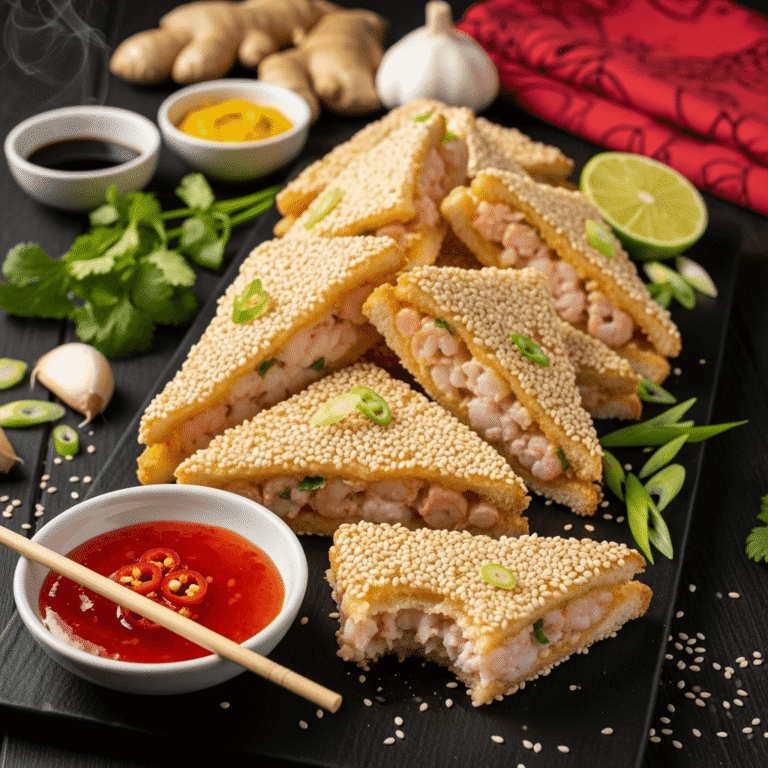
Crispy, golden shrimp toast with a savory shrimp mixture spread on white bread, coated with sesame seeds, and fried until perfectly crunchy. This restaurant-quality Chinese appetizer is easier to make than you think and absolutely delicious.
- Total Time: 35 minutes
- Yield: 16 pieces (4-6 servings as appetizer) 1x
Ingredients
For the Shrimp Mixture:
- 8 ounces raw shrimp, peeled and deveined (about ½ pound)
- 1 egg white
- 2 tablespoons cornstarch
- 2 teaspoons fresh ginger, minced
- 2 cloves garlic, minced
- 2 green onions, finely chopped
- 1 tablespoon soy sauce
- 1 teaspoon sesame oil
- ½ teaspoon white pepper
- ¼ teaspoon salt
- ¼ teaspoon sugar (optional)
For Assembly:
- 8 slices white sandwich bread
- ½ cup white sesame seeds
- Vegetable oil for frying (about 2-3 cups)
For Serving:
- Sweet chili sauce
- Soy sauce for dipping
- Hot mustard (optional)
- Sliced green onions for garnish
Instructions
- Prepare the Shrimp Mixture: Pat shrimp completely dry with paper towels—excess moisture creates a watery mixture that won’t stick to bread. Roughly chop shrimp into smaller pieces, then place in a food processor. Add egg white, cornstarch, ginger, garlic, green onions, soy sauce, sesame oil, white pepper, salt, and sugar. Pulse in short bursts 8-10 times until mixture forms a chunky paste with some texture remaining—don’t over-process into a completely smooth paste. You want some small shrimp pieces for texture. The mixture should be thick and spreadable, not watery.
- Prepare the Bread: Remove crusts from all bread slices using a sharp knife—this creates a cleaner presentation and easier eating. You can discard crusts or save them for breadcrumbs. Each slice will be cut into triangles or quarters after topping.
- Spread Shrimp Mixture: Divide shrimp mixture evenly among the 8 bread slices, using about 2-3 tablespoons per slice. Using a butter knife or small offset spatula, spread mixture evenly across the entire surface, reaching all the way to edges. The layer should be about ¼ to ⅓ inch thick—thick enough to taste the shrimp but not so thick it won’t cook through or stay attached to bread.
- Apply Sesame Seeds: Pour sesame seeds into a shallow dish or small bowl. Take each topped bread slice and press it firmly, shrimp-side down, into the sesame seeds. Press gently but firmly to ensure seeds adhere well and cover the entire surface. Flip over and gently pat any loose seeds into place. The more seeds that stick, the crunchier and more flavorful the coating.
- Cut into Triangles: Using a sharp knife, cut each coated slice diagonally from corner to corner to create 2 triangles. Then cut each triangle in half again to create 4 triangles per slice (16 triangles total). You can also cut into squares or rectangles if preferred. Cutting after coating prevents seeds from falling off as much.
- Heat the Oil: Pour vegetable oil into a heavy-bottomed pot, wok, or deep fryer to a depth of 2-3 inches. Heat over medium-high heat to 350-375°F, checking with a cooking thermometer. Proper temperature is crucial—too low and they’ll be greasy and soggy, too high and they’ll burn before cooking through. Test by dropping in a small piece of bread; it should sizzle immediately and turn golden in about 45 seconds.
- Fry the Toast: Working in batches of 3-4 pieces to avoid crowding (which lowers oil temperature), carefully place shrimp toast into hot oil, shrimp-side down. Fry for 1-2 minutes until golden brown on the shrimp side, then carefully flip using a slotted spoon or spider strainer. Fry another 45-60 seconds until bread side is golden brown. The toast should be crispy and golden, with the shrimp fully cooked through (no longer translucent).
- Drain and Serve: Remove fried toast from oil using a slotted spoon or spider strainer, allowing excess oil to drip off. Transfer to a wire rack set over paper towels or a baking sheet lined with paper towels. This allows air circulation and prevents sogginess. Repeat frying process with remaining pieces, allowing oil to return to proper temperature between batches.
- Garnish and Serve: Arrange sesame shrimp toast on a serving platter. Garnish with sliced green onions if desired. Serve immediately while hot and crispy with sweet chili sauce, soy sauce, or hot mustard for dipping.
Notes
- Shrimp Texture: Don’t over-process the shrimp mixture—leave some texture for better bite and authentic restaurant quality.
- Oil Temperature: Maintain consistent 350-375°F. Too low creates greasy toast, too high burns the outside before cooking inside.
- Batch Frying: Don’t overcrowd the pan. Fry in small batches for crispiest results.
- Make-Ahead: Prepare through step 5, cover with plastic wrap, and refrigerate up to 4 hours before frying.
- Freezing: Freeze uncooked prepared toast on a baking sheet, then transfer to freezer bags. Fry from frozen, adding 30-60 seconds to cooking time.
- Baking Option: For healthier version, brush with oil and bake at 425°F for 12-15 minutes, flipping halfway, though they won’t be as crispy.
- Prep Time: 20 minutes
- Cook Time: 15 minutes
- Category: Appetizer
- Method: Deep Frying
- Cuisine: Chinese-American
- Diet: Gluten Free
Nutrition
- Serving Size: 4 pieces
- Calories: 245
- Sugar: 2g
- Sodium: 485mg
- Fat: 12g
- Saturated Fat: 2g
- Unsaturated Fat: 9g
- Trans Fat: 0g
- Carbohydrates: 22g
- Fiber: 2g
- Protein: 13g
- Cholesterol: 75mg
Tips & Variations
The beauty of shrimp toast is how easily it adapts to different flavors and preferences. Here are delicious ways to customize:
Spicy Shrimp Toast – Add 1-2 teaspoons sriracha or sambal oelek to the shrimp mixture. Sprinkle red pepper flakes on top before adding sesame seeds. Serve with spicy mayo for extra heat.
Crab or Lobster Toast – Replace shrimp with lump crab meat or chopped cooked lobster for luxurious variations. Adjust moisture as crab is more delicate. These are incredibly elegant for special occasions.
Water Chestnuts Addition – Add 2-3 tablespoons finely chopped water chestnuts to the shrimp mixture for extra crunch and authentic dim sum texture.
Bacon Shrimp Toast – Add 2-3 strips of cooked, crumbled bacon to the shrimp mixture for smoky richness. This creates an addictive sweet-savory combination.
Baked Version – For healthier option, brush assembled toasts with oil on both sides and bake at 425°F for 12-15 minutes, flipping halfway through. They won’t be quite as crispy but still delicious with significantly less oil.
Air Fryer Method – Brush with oil and air fry at 375°F for 8-10 minutes, flipping halfway. Works well and requires minimal oil.
Cilantro Lime Variation – Replace green onions with fresh cilantro and add lime zest to the mixture for bright, fresh flavors.
Five-Spice Addition – Add ¼ teaspoon Chinese five-spice powder to the shrimp mixture for deeper, more complex flavor profile.
Pro Chef Tips
Want to elevate your shrimp toast from good to absolutely restaurant-perfect? These professional techniques make all the difference:
Dry Your Shrimp Thoroughly – This is the most important step. Excess moisture creates watery mixture that won’t stick to bread and will make soggy toast. Pat shrimp multiple times with paper towels until completely dry.
Don’t Over-Process – Leave some texture in your shrimp mixture. Over-processing creates a paste that’s too smooth and can be mushy. Pulse in short bursts and check frequently for chunky-paste consistency.
Use Slightly Stale Bread – Fresh bread can become soggy with the moist shrimp mixture. Day-old bread holds up better and absorbs less oil during frying. If you only have fresh bread, toast it very lightly first.
Press Seeds Firmly – Really press the shrimp mixture into sesame seeds. Seeds that aren’t well-adhered will fall off during frying and burn in the oil, creating bitter flavor. The more seeds that stick, the better.
Maintain Oil Temperature – Use a thermometer and monitor constantly. Add a few pieces at a time, not too many. Overcrowding drops oil temperature dramatically, resulting in greasy, soggy toast. Let oil return to proper temperature between batches.
Fry Shrimp-Side Down First – Always place shrimp side into the oil first. This seals the shrimp to the bread and prevents separation. If bread goes in first, shrimp mixture can fall off.
Don’t Rush the Flip – Wait until the shrimp side is properly golden (1-2 minutes) before flipping. Flipping too early can cause the topping to separate from bread. The coating should be set and golden before turning.
Use Fresh Oil – Old or repeatedly used oil imparts off-flavors and creates greasier results. Use fresh vegetable, canola, or peanut oil for best taste and crispiness.
Drain Properly – A wire rack over paper towels is better than paper towels alone. This allows air circulation underneath, preventing steam from making the bottom soggy.
Common Mistakes to Avoid
Even experienced cooks can stumble with shrimp toast. Here are the most common pitfalls and how to avoid them:
Using Pre-Cooked Shrimp – This is a major mistake. Pre-cooked shrimp will become rubbery and tough when fried again. Always use raw shrimp. The brief frying time is sufficient to cook raw shrimp perfectly.
Mixture Too Wet or Too Dry – Watery mixture slides off bread during frying; too-dry mixture won’t adhere. The consistency should be like thick, spreadable paste—thick enough to hold its shape but moist enough to spread smoothly. Adjust with small amounts of cornstarch (thicken) or egg white (moisten).
Oil Temperature Wrong – This is critical. Too cold (below 325°F) and toast absorbs excess oil, becoming greasy and soggy. Too hot (above 400°F) and bread burns before shrimp cooks through. Invest in a thermometer and maintain 350-375°F.
Overcrowding the Pan – Adding too many pieces at once drops oil temperature dramatically, resulting in greasy, unevenly cooked toast. Fry in small batches of 3-4 pieces, allowing oil to recover between batches.
Cutting Before Coating – If you cut bread into triangles before spreading shrimp mixture and applying sesame seeds, edges are harder to coat evenly and seeds fall off more easily. Always coat full slices, then cut into portions.
Not Removing Crusts – While optional, crusts don’t absorb the shrimp mixture as well, can become very hard when fried, and make for less elegant presentation. Remove them for best results.
Storage & Meal Prep
While shrimp toast is best enjoyed fresh and hot, you can prepare components ahead for entertaining convenience.
Refrigerating Uncooked Toast – Prepare through step 5 (fully assembled and coated, cut into triangles), arrange on a parchment-lined baking sheet, cover tightly with plastic wrap, and refrigerate for up to 4 hours. Fry directly from refrigerator—actually slightly easier to handle when cold.
Storing Leftover Cooked Toast – Let cool completely, store in an airtight container in the refrigerator for up to 2 days. Reheat in a 350°F oven for 5-7 minutes to restore some crispiness. Microwave makes them soggy.
Reheating Best Practices – Oven reheating works best. Place on a baking sheet and heat at 350°F for 5-8 minutes until crispy and warmed through. Toaster oven works great for small quantities. Avoid microwaving—it makes them soggy and rubbery.
Make-Ahead Shrimp Mixture – Prepare the shrimp mixture alone up to 1 day ahead and refrigerate in an airtight container. Spread on bread and fry when ready to serve.
Meal Prep Strategy – For parties, prepare everything through coating with sesame seeds several hours ahead. Cover and refrigerate. Fry in batches just before serving. This gives you maximum convenience with minimum stress.
Make-Ahead & Freezer Notes
Shrimp toast is one of the best freezer appetizers—perfect for having impressive food ready anytime.
Freezing Uncooked Toast (Best Method) – Prepare through step 5 (fully assembled, coated with sesame seeds, cut into portions). Arrange in a single layer on a parchment-lined baking sheet and freeze until solid (2-3 hours). Transfer frozen pieces to freezer bags or airtight containers, separating layers with parchment paper. Freeze for up to 3 months. This is the preferred method.
Frying from Frozen – No thawing needed! Fry directly from frozen, adding 30-60 seconds to the cooking time. The frozen center actually helps prevent overcooking the shrimp while allowing bread to crisp perfectly.
Freezing Cooked Toast – Not recommended. Cooked fried foods don’t freeze and reheat well—they lose crispiness and can become soggy or tough. Always freeze uncooked and fry fresh.
Thawing (If Needed) – While frying from frozen works great, if you prefer to thaw, arrange frozen toasts on a baking sheet and thaw in refrigerator for 2-3 hours. Fry as directed in the recipe.
Party Planning Strategy – Make a double or triple batch and freeze. Pull out exactly how many you need for any gathering and fry fresh in minutes. Your guests will think you spent all day preparing!
Serving Suggestions
Shrimp toast is traditionally served as an appetizer, but the right accompaniments and presentation elevate it to party centerpiece status.
Dipping Sauces:
- Sweet Chili Sauce – The classic pairing! Sweet, tangy, and slightly spicy
- Soy Sauce – Simple and allows shrimp flavor to shine
- Chinese Hot Mustard – Traditional and provides serious heat
- Spicy Mayo – Mix mayo with sriracha for creamy, spicy dip
- Plum Sauce – Sweet and tangy with complex fruit flavor
- Ponzu Sauce – Citrusy soy-based sauce for lighter option
- Thai Peanut Sauce – Rich and creamy with nutty flavor
Complementary Appetizers for Asian-Inspired Spread:
- Spring rolls or egg rolls
- Pot stickers or dumplings
- Crab rangoon
- Edamame
- Cucumber salad
- Lettuce wraps
- Chicken satay
Beverage Pairings:
- Wine: Riesling, Gewürztraminer, or Prosecco
- Beer: Light lager, wheat beer, or Japanese beer
- Cocktails: Mai tai, lychee martini, or sake cocktail
- Non-Alcoholic: Iced jasmine tea, ginger ale, or sparkling water with lime
Presentation Ideas:
- Arrange in a circular pattern on a round platter
- Serve on banana leaves for tropical presentation
- Use Asian-style serving platters or bamboo plates
- Garnish platter with fresh cilantro and lime wedges
- Serve dipping sauces in small bowls alongside
Occasion Ideas:
- Chinese New Year – Traditional and festive
- Cocktail Parties – Sophisticated finger food
- Game Day – Unique alternative to typical snacks
- Dim Sum Brunch – Serve alongside other dim sum favorites
- Dinner Party Starter – Before Asian-inspired main course
FAQs Section
Q: Can I bake shrimp toast instead of frying?
A: Yes! For healthier option, brush both sides with oil, place on a baking sheet, and bake at 425°F for 12-15 minutes, flipping halfway through. They won’t be quite as crispy as fried but still delicious and significantly lower in fat. Air frying at 375°F for 8-10 minutes also works well.
Q: Can I make this with cooked shrimp?
A: Not recommended. Pre-cooked shrimp will become rubbery and tough when fried again. The brief frying time (2-3 minutes total) is perfect for raw shrimp. Always use raw, peeled, deveined shrimp for best texture and flavor.
Q: Why did my shrimp mixture fall off the bread?
A: This usually happens for three reasons: shrimp mixture was too wet (pat shrimp very dry before processing), you didn’t spread it all the way to edges (leave no gaps), or oil temperature was wrong (maintain 350-375°F). Also ensure you fry shrimp-side down first to seal it to the bread.
Q: Can I use frozen shrimp?
A: Absolutely! Frozen shrimp work perfectly—in fact, most “fresh” shrimp at stores were previously frozen anyway. Thaw completely in the refrigerator overnight or under cold running water. The critical step is patting them completely dry before processing. Excess water creates watery mixture that won’t bind properly.
Q: What if I don’t have a food processor?
A: You can finely mince the shrimp by hand with a very sharp knife. Chop until you have a coarse paste with some texture remaining. Mix thoroughly with other ingredients in a bowl. It requires more effort but works. A blender can work but is harder to control consistency.
Q: How do I know when the oil is hot enough?
A: Use a cooking thermometer for accuracy—350-375°F is ideal. Without a thermometer, drop a small piece of bread into oil; it should sizzle immediately and turn golden brown in 45-60 seconds. If it browns in 30 seconds, oil is too hot. If it takes longer than a minute, oil is too cool.
Q: Can I make these ahead for a party?
A: Yes! Best method: Prepare fully through coating with sesame seeds, arrange on a baking sheet, cover, and refrigerate up to 4 hours. Fry just before serving. Or freeze uncooked toasts up to 3 months and fry directly from frozen when needed. This makes entertaining much less stressful.
Conclusion
There you have it—everything you need to make restaurant-quality, incredibly crispy sesame shrimp toast right in your own kitchen! This classic Chinese-American appetizer proves that impressive food doesn’t have to be complicated. With simple ingredients, straightforward techniques, and a little attention to detail, you can create these addictive golden triangles that rival any restaurant.
Whether you’re hosting a cocktail party, celebrating Chinese New Year, planning a dim sum brunch at home, or simply want to treat yourself to something special, this easy shrimp toast recipe delivers every single time. The contrast of crispy sesame-coated exterior with tender, flavorful shrimp filling creates a texture and taste experience that keeps people reaching for “just one more.”
I’d absolutely love to hear how your shrimp toast turned out! Did you try any of the variations? What dipping sauce was your favorite? Drop a comment below sharing your experience, and don’t forget to rate the recipe if these became a hit at your gathering. If you found this recipe helpful and delicious, please share it on Pinterest so other home cooks can discover the joy of making restaurant-quality appetizers at home!
Here’s to crispy, crunchy, utterly delicious bites that bring restaurant magic to your home kitchen! 🍤✨