
Crispy Crab Rangoon Recipe: Better Than Takeout!

Get ready to make the most addictively delicious crab rangoon recipe that tastes even better than your favorite Chinese restaurant! These golden, crispy wontons are filled with a luscious cream cheese and crab mixture that’s sweet, savory, and absolutely irresistible. Each bite delivers that perfect contrast of crunchy exterior and creamy, flavorful filling that makes crab rangoon one of the most beloved appetizers in American-Chinese cuisine.
Whether you’re hosting a party, planning an Asian-inspired dinner night, looking for impressive appetizers, or just craving that restaurant favorite, this easy crab rangoon recipe brings takeout magic right into your kitchen. The best part? They’re surprisingly simple to make, can be prepared ahead, freeze beautifully, and cost a fraction of what you’d pay for delivery.
Perfect for game day gatherings, cocktail parties, family dinners, or even special occasions, these homemade crab rangoon disappear faster than you can make them. Serve them with sweet and sour sauce or sweet chili sauce for dipping, and watch your guests reach for “just one more” until the entire platter is gone. Let’s turn your kitchen into the best Chinese restaurant in town!
History / Background
Crab rangoon has one of the most fascinating and uniquely American stories in culinary history. Despite appearing on virtually every Chinese restaurant menu in the United States, crab rangoon is actually not Chinese at all—it’s a purely American invention, part of the broader “American-Chinese cuisine” category that includes dishes like General Tso’s chicken, fortune cookies, and chop suey.
The creation of crab rangoon is credited to Victor Bergeron, better known as “Trader Vic,” who invented the dish at his Polynesian-themed restaurant in San Francisco sometime in the 1950s. The name “Rangoon” refers to the former capital of Burma (now Yangon, Myanmar), chosen purely for its exotic appeal to American diners fascinated with tiki culture and Polynesian restaurants that were wildly popular during the post-war era.
Trader Vic’s original inspiration likely came from Southeast Asian cuisine, where fried wontons and dumplings have ancient roots, combined with the American love of cream cheese—an ingredient that would never appear in traditional Chinese cooking. This fusion created something entirely new: a crispy wonton wrapper encasing a sweet, creamy filling that balanced Western and Eastern flavors in a way that captivated American palates.
The dish gained massive popularity throughout the 1960s and 70s as Chinese-American restaurants proliferated across the country. What started as a trendy Polynesian restaurant novelty became a staple appetizer that defined American expectations of Chinese food. Interestingly, if you visit China today, you won’t find crab rangoon on menus—it remains distinctly American.
The original recipe used real crabmeat, but as the dish spread and restaurants sought to control costs, many establishments began using imitation crab (surimi) instead. Some restaurants even omit seafood entirely, creating “cream cheese wontons” or “rangoon” that are essentially fried cream cheese dumplings. Despite these variations, the core appeal remains unchanged: that addictive combination of crispy, golden wrapper and rich, creamy filling.
Today, crab rangoon represents a beloved piece of American culinary culture—a reminder that some of the most cherished “ethnic” foods are actually creative fusions born right here in the USA. Making them at home connects you to this fascinating food history while delivering restaurant-quality results that impress everyone!
Why You’ll Love This Recipe
This isn’t just another crab rangoon recipe—this is the ultimate version that delivers authentic restaurant flavor and texture with foolproof instructions that guarantee success every time. I’ve tested countless variations to bring you the perfect balance of crispy wrapper and luxuriously creamy filling.
Here’s why this recipe will become your new favorite appetizer:
- Restaurant-Quality Results – Tastes exactly like (or better than!) your favorite takeout spot
- Surprisingly Easy – Much simpler than they look, perfect for beginners
- Ready in 30 Minutes – From start to finish, including filling prep and frying
- Perfect Party Food – Always the first appetizer to disappear at gatherings
- Budget-Friendly – Costs a fraction of takeout and makes a generous batch
- Make-Ahead Friendly – Assemble hours or even days ahead, then fry when ready
- Freezer Superstar – Freeze uncooked rangoon for up to 3 months for easy entertaining
- Customizable – Adjust crab amount, add spices, or create variations to suit your taste
- Impressive Presentation – Looks sophisticated and restaurant-worthy with minimal effort
- Crowd-Pleaser – Loved by kids and adults alike, even picky eaters
- Versatile Serving – Perfect as appetizer, party snack, or even light dinner with sides
- Better Than Takeout – Control the quality of ingredients and adjust filling to your preferences
- No Special Skills Required – Simple folding techniques with multiple style options
- Addictively Delicious – That perfect sweet-savory-creamy flavor combination is irresistible
Ingredient Notes
The magic of crab rangoon lies in the beautiful simplicity of its filling and the crispy perfection of the wrapper. Let’s break down each component and why it matters:
Cream Cheese – The foundation of your filling and what makes crab rangoon so uniquely delicious. Use full-fat cream cheese (not low-fat or whipped) for the best texture and flavor. Let it soften to room temperature for at least 30 minutes before mixing—softened cream cheese blends smoothly without lumps. Philadelphia brand is the gold standard, but any quality cream cheese works.
Crabmeat – Traditional crab rangoon uses real lump crabmeat for the best flavor and texture. You can use canned lump crab (drain it well), fresh crabmeat (pick through for shells), or imitation crab (surimi) for a budget-friendly option. Each provides different flavor—real crab is more delicate and sweet, while imitation crab is slightly fishier but perfectly acceptable and what many restaurants use. Plan on 6-8 ounces for a noticeable crab flavor.
Green Onions (Scallions) – Add freshness, color, and a mild onion flavor that complements the rich cream cheese. Use both the white and light green parts, finely chopped. They provide little bursts of flavor throughout the creamy filling.
Garlic Powder – Provides savory depth without the moisture that fresh garlic would add (excess moisture can make wrappers soggy). Don’t substitute with garlic salt unless you reduce the additional salt.
Worcestershire Sauce – This is the secret ingredient that adds umami depth and complexity! Just a teaspoon brings a savory, slightly tangy element that elevates the filling from good to restaurant-quality. Don’t skip it—the difference is noticeable.
Soy Sauce – Adds saltiness and that distinctive Asian-inspired flavor. Use regular or low-sodium depending on your preference. Just a small amount goes a long way.
Sugar – A pinch of sugar balances the savory elements and brings out the natural sweetness of the crab. This subtle sweetness is part of what makes crab rangoon so addictive.
Wonton Wrappers – The crispy vessel that holds your filling! Buy fresh wonton wrappers in the refrigerated section of most grocery stores (near tofu and Asian vegetables). They’re usually square, about 3-3.5 inches. Keep them covered with a damp towel while working to prevent drying out. Twin Dragon and Nasoya are common brands.
Oil for Frying – Use a neutral, high-heat oil like vegetable, canola, or peanut oil. You’ll need enough to submerge the rangoon (about 2-3 inches in your pan). Avoid olive oil which has a low smoke point.
Water – For sealing the wontons. Some recipes call for egg wash, but plain water works perfectly and is simpler.
Equipment Needed
Making crab rangoon requires some basic kitchen equipment and one essential item for frying. Here’s everything you’ll need:
- Large Mixing Bowl – For combining the cream cheese filling ingredients
- Small Bowl – For water to seal the wonton edges
- Measuring Cups and Spoons – For accurate ingredient portions
- Rubber Spatula or Spoon – For mixing the filling until smooth
- Small Spoon or Cookie Scoop – For portioning filling onto wrappers (a small cookie scoop ensures consistent amounts)
- Pastry Brush or Your Finger – For brushing water on wonton edges to seal
- Large Plate or Baking Sheet – For holding assembled rangoon before frying
- Heavy-Bottomed Pot or Deep Skillet – For frying, at least 3-4 inches deep to hold oil safely
- Candy/Deep-Fry Thermometer – Essential for monitoring oil temperature (350°F is ideal)
- Spider Strainer or Slotted Spoon – For safely removing fried rangoon from hot oil
- Paper Towel-Lined Plate – For draining excess oil after frying
- Kitchen Tongs – Optional but helpful for handling hot rangoon
- Baking Sheet with Wire Rack – Optional, for keeping fried rangoon warm in the oven
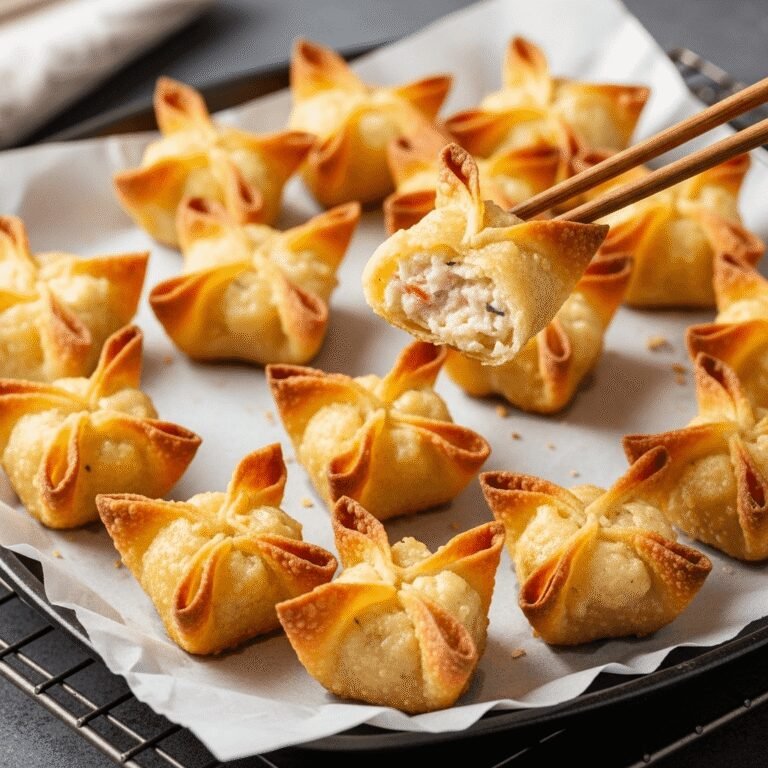
Crispy Crab Rangoon Recipe
These crispy homemade crab rangoon are filled with a creamy mixture of cream cheese, crab, and seasonings, then fried to golden perfection. Better than takeout and surprisingly easy to make at home!
- Total Time: 35 minutes
- Yield: 24 rangoon 1x
Ingredients
For the Filling:
- 8 oz cream cheese, softened to room temperature
- 6 oz lump crabmeat (fresh, canned and drained, or imitation crab, finely chopped)
- 2 green onions, finely chopped (white and light green parts)
- 1 clove garlic, minced (or ½ teaspoon garlic powder)
- 1 teaspoon Worcestershire sauce
- 1 teaspoon soy sauce
- ½ teaspoon sugar
- ¼ teaspoon salt
- ⅛ teaspoon white pepper or black pepper
For Assembly:
- 24 wonton wrappers (square, about 3-3.5 inches)
- Small bowl of water (for sealing)
- Vegetable or canola oil for frying (about 2-3 cups)
For Serving:
- Sweet and sour sauce
- Sweet chili sauce
- Duck sauce
- Chopped green onions for garnish
Instructions
- Prepare the Filling: In a large mixing bowl, combine the softened cream cheese, chopped crabmeat, green onions, minced garlic (or garlic powder), Worcestershire sauce, soy sauce, sugar, salt, and pepper. Using a rubber spatula or sturdy spoon, mix everything together until completely combined and smooth. The cream cheese should be well incorporated with no lumps, and the crab should be evenly distributed throughout. Taste the filling and adjust seasoning if needed—it should taste slightly more seasoned than you’d expect since the wrapper will dilute the flavor. Set aside while you prepare your workspace.
- Set Up Your Assembly Station: Clear a clean workspace and arrange everything you’ll need: the bowl of filling, wonton wrappers (keep them under a damp towel to prevent drying), small bowl of water, pastry brush or finger for applying water, and a large plate or baking sheet lined with parchment paper for holding assembled rangoon. Having everything organized makes the process much faster and prevents wrappers from drying out.
- Fill the First Wonton: Place one wonton wrapper on your work surface positioned like a diamond (corner pointing toward you). Dip your finger or pastry brush in water and lightly moisten all four edges of the wrapper—don’t use too much water or it will make the wrapper soggy and difficult to seal. Place about 1-1.5 teaspoons of filling in the center of the wrapper. Don’t overfill! Less is more here—too much filling will cause the rangoon to burst during frying.
- Fold and Seal: Fold the bottom corner up to meet the top corner, creating a triangle. Press gently around the filling to remove any air pockets (trapped air can cause bursting during frying). Starting from one side, press the edges firmly together to seal, working your way around to the other side. Make sure the seal is complete with no gaps—run your finger along the edges pressing firmly to ensure a good seal. The water acts as glue to keep the wonton closed during frying.
- Create the Classic Shape (Optional): For the traditional crab rangoon shape, bring the two outer corners of the triangle together and overlap them slightly, using a dab of water to seal them together. This creates that distinctive “purse” or “crown” shape. Alternatively, you can leave them as triangles or create other shapes—they all taste the same! Place the finished rangoon on your prepared baking sheet and cover with a slightly damp towel while you assemble the rest.
- Repeat Assembly: Continue filling and folding the remaining wonton wrappers until all filling is used or you’ve made your desired amount. Work at a comfortable pace and keep finished rangoon covered to prevent drying. If wrappers start drying out, lightly mist them with water using a spray bottle or keep them under a damp (not wet) towel.
- Heat the Oil: Pour 2-3 inches of oil into a heavy-bottomed pot or deep skillet. Heat over medium-high heat until the oil reaches 350°F on a deep-fry thermometer. This temperature is crucial—too cool and rangoon absorb excess oil and become greasy; too hot and they brown too quickly before the filling heats through. Test by dropping a small piece of wonton wrapper in the oil; it should sizzle immediately and turn golden in about 30 seconds.
- Fry in Batches: Carefully add 4-6 rangoon to the hot oil, depending on your pan size—don’t overcrowd or the temperature will drop too much. Fry for 2-3 minutes, turning occasionally with a spider strainer or slotted spoon, until they’re deep golden brown on all sides. The color should be a rich, toasty golden—if they’re pale, they’re undercooked and won’t be crispy. Watch carefully during the last minute as they can go from perfect to burnt quickly!
- Drain and Keep Warm: Remove fried rangoon with a spider strainer or slotted spoon and transfer to a paper towel-lined plate to drain excess oil. Let them rest for 1-2 minutes—they’ll continue crisping as they drain. If frying multiple batches, keep finished rangoon warm on a wire rack set over a baking sheet in a 200°F oven while you fry the remaining batches. Allow the oil to return to 350°F between batches.
- Serve Hot: Transfer the golden, crispy crab rangoon to a serving platter. Garnish with chopped green onions if desired and serve immediately with small bowls of sweet and sour sauce, sweet chili sauce, or duck sauce for dipping. These are best enjoyed hot and fresh when the exterior is at peak crispiness and the filling is warm and creamy!
Notes
- Wrapper Freshness: Always check the expiration date on wonton wrappers and make sure they’re pliable, not dried out or brittle.
- Filling Consistency: The filling should be thick enough to hold its shape on a spoon. If it’s too soft, refrigerate for 15-20 minutes to firm up.
- Don’t Overfill: The most common mistake is using too much filling. One teaspoon is plenty—overfilling causes bursting during frying.
- Oil Temperature: Maintain 350°F throughout frying. If it gets too hot, reduce heat; if it drops below 325°F, wait before adding more rangoon.
- Crab Alternatives: For a budget option, use all imitation crab. For a splurge, use all real lump crabmeat. A 50/50 mix is also great!
- Make Them Ahead: Assemble rangoon up to 24 hours ahead and refrigerate covered, or freeze for up to 3 months.
- Prep Time: 20 minutes
- Cook Time: 15 minutes
- Category: Appetizer
- Method: Frying
- Cuisine: American
- Diet: Vegetarian
Nutrition
- Serving Size: 3 rangoon
- Calories: 245
- Sugar: 2g
- Sodium: 385mg
- Fat: 17g
- Saturated Fat: 6g
- Unsaturated Fat: 10g
- Trans Fat: 0g
- Carbohydrates: 16g
- Fiber: 0g
- Protein: 7g
- Cholesterol: 45mg
Tips & Variations
Baked Crab Rangoon: For a healthier option, brush assembled rangoon with oil and bake at 425°F for 12-15 minutes until golden and crispy, flipping halfway through. They won’t be quite as crispy as fried but still delicious!
Air Fryer Method: Spray rangoon with cooking spray and air fry at 370°F for 8-10 minutes, flipping halfway, until golden brown. This method uses minimal oil while achieving great crispiness.
Spicy Crab Rangoon: Add 1-2 teaspoons sriracha or sambal oelek to the filling, or include some finely diced jalapeños for a spicy kick that pairs beautifully with the creamy filling.
Extra Crabby Version: Double the crab to 12 oz and reduce cream cheese slightly to 6 oz for rangoon with more pronounced seafood flavor.
Shrimp Rangoon: Replace crab with finely chopped cooked shrimp for a different but equally delicious variation.
Veggie Cream Cheese Wontons: Omit the crab entirely and add finely diced water chestnuts, carrots, or mushrooms for texture and flavor—still delicious!
Crab and Bacon: Add 2-3 strips of cooked, crumbled bacon to the filling for smoky, savory richness.
Herb-Enhanced: Mix in 1 tablespoon fresh chopped cilantro or 1 teaspoon dried dill for herby brightness.
Cheese Blend: Mix in 2 tablespoons grated Parmesan cheese for extra savory depth.
Sweet Variation: Increase sugar to 1 teaspoon and add a pinch of Chinese five-spice powder for a sweeter, more complex flavor profile.
Jalapeño Popper Rangoon: Add diced jalapeños and shredded cheddar cheese to the cream cheese base for a fusion appetizer.
Pro Chef Tips
Room Temperature Cream Cheese is Non-Negotiable: Cold cream cheese is nearly impossible to mix smoothly and will result in lumpy filling with uneven seasoning distribution. Take cream cheese out of the refrigerator at least 30-45 minutes before starting, or microwave it for 10-15 seconds to soften (but not melt!). Perfectly softened cream cheese should be easily spreadable but still hold its shape.
Drain Your Crab Thoroughly: Whether using canned or imitation crab, excess moisture is the enemy of crispy rangoon. After draining, press the crab gently with paper towels to remove as much liquid as possible. For imitation crab sticks, squeeze them gently to remove excess water before chopping.
The Water Seal Technique: When sealing wontons, use just enough water to make edges sticky—too much creates a soggy wrapper that won’t crisp properly. Dip your finger lightly in water, then brush it on edges rather than applying water directly. The goal is barely damp, not wet.
Remove All Air Pockets: When folding rangoon, gently press around the filling starting from one side and working across to push out any trapped air. Air pockets expand during frying and can cause rangoon to burst open, releasing filling into the oil. Take your time with this step.
Maintain Consistent Oil Temperature: This is perhaps the most important technical detail. Invest in an inexpensive deep-fry thermometer and clip it to the side of your pot. Monitor constantly and adjust heat as needed. When you add cold rangoon to hot oil, the temperature drops—wait for it to return to 350°F before adding the next batch. Consistent temperature ensures even cooking and prevents greasiness.
The Flip Timing Matters: Don’t flip too early or the wrapper might still be soft and could tear. Wait until the first side is set and beginning to turn golden (about 1 minute) before flipping. Then continue turning every 30-45 seconds to ensure even browning on all surfaces.
Double-Fry for Maximum Crispiness: For restaurant-level crispiness, fry rangoon once until pale golden (about 2 minutes), remove and let rest for 5 minutes, then fry again for 1-2 minutes until deep golden. This technique creates an exceptionally crispy exterior that stays crunchy longer.
The Draining Position: When transferring fried rangoon to drain, place them on their side rather than flat. This allows oil to drip away from both sides rather than pooling under the rangoon, resulting in less greasiness.
Common Mistakes to Avoid
Using Too Much Filling: This is the #1 mistake home cooks make! It’s tempting to stuff each wonton generously, but overfilling causes several problems: the rangoon won’t seal properly, they’ll burst during frying (making a mess and losing that delicious filling), and the filling-to-wrapper ratio becomes unbalanced. Stick to 1-1.5 teaspoons maximum—the wrapper puffs up during frying and creates plenty of space for the filling.
Not Sealing Edges Completely: Incomplete seals are a recipe for disaster. When rangoon hit hot oil, any gap or weak seal will open up, allowing hot oil to rush in and filling to leak out. Always press edges firmly, check for gaps, and use a dab of water to seal any spots that don’t look completely closed. Run your finger around the entire perimeter applying gentle pressure to ensure a tight seal.
Frying at the Wrong Temperature: Too-cool oil (below 325°F) means rangoon absorb excessive oil, becoming greasy and heavy rather than crisp. Too-hot oil (above 375°F) causes the exterior to brown too quickly before the filling heats through, resulting in burnt wrappers with cold centers. Always use a thermometer and maintain 350°F for perfect results.
Overcrowding the Pan: Adding too many rangoon at once dramatically drops the oil temperature and causes them to stick together. This results in uneven cooking, pale color, and greasy texture. Fry in small batches of 4-6 pieces with plenty of space between them, allowing the oil temperature to remain stable.
Letting Wrappers Dry Out: Wonton wrappers dry out quickly when exposed to air, becoming brittle and difficult to work with. They’ll crack when you try to fold them, creating gaps where filling can leak. Always keep wrappers covered with a damp (not soaking wet) towel, and work at a moderate pace. If wrappers do dry out, lightly mist them with water from a spray bottle.
Skipping the Rest After Draining: It’s tempting to serve rangoon immediately after draining, but waiting 1-2 minutes allows the exterior to finish crisping and firms up the structure. Serving too quickly means they’re still actively releasing steam, which can make them seem less crispy than they actually are.
Storage & Meal Prep
Refrigerator Storage: Store leftover fried crab rangoon in an airtight container in the refrigerator for up to 3 days. Place paper towels between layers to absorb any moisture that develops. While they won’t maintain their initial crispiness in the fridge, they can be reheated successfully.
Reheating Fried Rangoon: The oven is your best friend for reheating! Preheat your oven to 375°F, place rangoon on a wire rack over a baking sheet (this allows hot air to circulate all around), and heat for 8-10 minutes until warmed through and crispy again. They won’t be quite as crispy as fresh, but this method comes close. Avoid the microwave—it creates sad, soggy rangoon!
Air Fryer Reheating: Reheat in an air fryer at 350°F for 3-5 minutes for excellent results that restore much of the original crispiness.
Storing Uncooked Rangoon: Assembled but uncooked rangoon can be refrigerated for up to 24 hours before frying. Place them on a parchment-lined baking sheet in a single layer (not touching), cover loosely with plastic wrap, and refrigerate. Fry directly from the refrigerator, adding about 30 seconds to the cooking time.
Meal Prep Strategy: Assemble a large batch of rangoon on a weekend, refrigerate or freeze them, and fry small portions throughout the week for easy appetizers or snacks. This makes entertaining effortless and ensures you always have a restaurant-quality appetizer ready to go.
Preventing Sticking: Whether storing cooked or uncooked rangoon, always place parchment paper or plastic wrap between layers to prevent them from sticking together.
Make-Ahead & Freezer Notes
Freezing Uncooked Rangoon (Best Method): This is absolutely the best way to prep ahead! Assemble rangoon completely, place them on a parchment-lined baking sheet in a single layer without touching, and freeze uncovered for 2-3 hours until solid. Once frozen, transfer to a freezer bag or airtight container, removing as much air as possible. They’ll keep for up to 3 months. This method prevents them from sticking together and allows you to fry as many or as few as you need at any time.
Frying from Frozen: The beauty of frozen rangoon is you can fry them directly from the freezer—no thawing required! Just add 1-2 minutes to the frying time. The oil temperature may drop slightly when you add frozen rangoon, so wait for it to return to 350°F before adding more. Frying from frozen actually helps ensure the filling heats through properly while achieving perfectly crispy exteriors.
Freezing Cooked Rangoon: You can freeze already-fried rangoon, though the texture won’t be quite as perfect as freezing them uncooked. Let them cool completely, freeze on a baking sheet until solid, then transfer to a freezer bag. They’ll keep for up to 2 months. Reheat from frozen in a 375°F oven for 12-15 minutes.
Preparing Filling in Advance: The cream cheese filling can be made up to 3 days ahead and stored in an airtight container in the refrigerator. This makes assembly day much faster! Just let it come to room temperature (or close to it) before assembling for easier spreading.
Party Planning Timeline: For stress-free entertaining, assemble rangoon 1-2 days ahead and refrigerate, or make them weeks ahead and freeze. On party day, simply fry them fresh and serve hot—your guests will think you spent all day cooking when you actually just spent 15 minutes frying!
Thawing (If Needed): If you prefer to thaw before frying, transfer frozen rangoon to the refrigerator 4-6 hours before cooking. Never thaw at room temperature as this can affect food safety and make wrappers soggy.
Serving Suggestions
Classic Chinese Takeout Experience: Serve your crispy crab rangoon alongside other favorite Chinese-American dishes like fried rice, lo mein, General Tso’s chicken, egg rolls, or spring rolls for a complete restaurant-style feast at home.
Appetizer Platter: Create an impressive Asian-inspired appetizer spread with crab rangoon, pot stickers (gyoza), spring rolls, edamame, and various dipping sauces. Perfect for parties or holiday gatherings!
Dipping Sauce Bar: Set up small bowls of multiple dipping options and let guests choose their favorites. Essential sauces include sweet and sour, sweet chili sauce, duck sauce, soy sauce, and sriracha mayo.
Light Dinner: Serve 6-8 rangoon per person with a side of Asian-inspired slaw, cucumber salad, or stir-fried vegetables for a lighter meal that’s still satisfying.
Game Day Spread: Add crab rangoon to your game day lineup alongside wings, nachos, and sliders—the variety keeps everyone happy!
Traditional Accompaniments:
- Sweet and sour sauce (the classic pairing)
- Sweet chili sauce (adds a nice kick)
- Duck sauce (sweet and tangy)
- Soy sauce or ponzu for dipping
- Sriracha mayo (mix equal parts sriracha and mayo)
- Hot mustard (for those who like heat)
Side Dishes That Pair Well:
- Asian cucumber salad with rice vinegar
- Fried rice or coconut rice
- Stir-fried vegetables
- Hot and sour soup or egg drop soup
- Asian slaw with sesame dressing
- Steamed edamame with sea salt
- Vegetable spring rolls
Beverage Pairings:
- Chinese beer (Tsingtao) or light lagers
- White wine (Riesling or Gewürztraminer pairs beautifully with the sweet-savory flavors)
- Green tea or jasmine tea
- Ginger ale or sparkling water with lime
- Sake (hot or cold)
Presentation Ideas: Arrange golden crab rangoon on a white platter with small bowls of colorful dipping sauces in the center. Garnish with sliced green onions, sesame seeds, or fresh cilantro for restaurant-worthy presentation that’s Pinterest-perfect!
FAQs Section
Can I use imitation crab instead of real crab?
Absolutely! Many restaurants use imitation crab (surimi), and it works beautifully in this recipe. The texture is similar to real crab, and while the flavor is slightly different, most people find it delicious and prefer the budget-friendly cost. Imitation crab is typically already cooked, so just drain it well, chop it finely, and proceed with the recipe. For best results, use stick-style imitation crab rather than flake-style, as it has better texture.
Why are my crab rangoon exploding or opening during frying?
This frustrating problem usually comes from one of three issues: 1) Overfilling—too much filling creates pressure that bursts the wrapper, 2) Incomplete sealing—any gap in the seal will open in hot oil, or 3) Air pockets trapped inside—air expands when heated and can cause bursting. The solutions are using less filling (just 1 teaspoon), ensuring edges are completely sealed with water and firmly pressed, and pressing out all air when folding. Also make sure your oil isn’t too hot (stay at 350°F), as extremely hot oil can cause rapid expansion.
Can I bake crab rangoon instead of frying?
Yes! While they won’t be quite as crispy as fried, baked crab rangoon are still delicious and much lower in fat. Brush assembled rangoon on all sides with oil or melted butter, place on a parchment-lined baking sheet, and bake at 425°F for 12-15 minutes, flipping halfway through, until golden brown. For even crispier results, finish them under the broiler for 1-2 minutes, watching carefully. Baked rangoon are a great healthier alternative that still delivers that creamy filling and satisfying crunch.
What can I substitute for cream cheese?
Cream cheese is really the defining ingredient in crab rangoon, but if you can’t have it, try using Neufchâtel cheese (similar but lower fat), softened goat cheese (tangier flavor), or a combination of sour cream and mayonnaise (though this will be thinner and require adjusting other ingredients). For dairy-free options, there are cream cheese alternatives made from cashews or tofu, though the flavor will be noticeably different. None will taste exactly like traditional crab rangoon, but they can still be delicious in their own way.
How do I know when the oil is hot enough?
The best method is using a deep-fry or candy thermometer clipped to the side of your pot—aim for exactly 350°F. If you don’t have a thermometer, drop a small piece of wonton wrapper into the oil; it should sizzle immediately and turn golden brown in about 30 seconds. If it just sits there, the oil isn’t hot enough. If it browns almost instantly or burns, the oil is too hot. Another test: dip the handle of a wooden spoon into the oil—if tiny bubbles form around it immediately, the temperature is right.
Can I make crab rangoon without crab?
Definitely! “Cream cheese wontons” or “rangoon” without seafood are popular and delicious. Simply omit the crab and increase the cream cheese slightly (to 10 oz), then flavor it well with the other seasonings, adding perhaps some finely diced water chestnuts for texture. Some people add scallions, bell peppers, or jalapeños for variation. They won’t technically be “crab” rangoon, but they’re an equally tasty appetizer!
Why are my rangoon greasy and heavy instead of crispy?
Greasiness almost always indicates your oil temperature was too low. When oil isn’t hot enough (below 325°F), wrappers absorb excess oil instead of quickly crisping up. The solution is maintaining consistent 350°F oil temperature using a thermometer, not overcrowding the pan (which drops temperature), and allowing oil to return to proper temperature between batches. Also, make sure you’re draining fried rangoon thoroughly on paper towels—you can even blot the tops gently with additional paper towels to remove excess surface oil.
How long do fried crab rangoon stay crispy?
Honestly, crab rangoon are at their absolute best within the first 15-30 minutes after frying when the contrast between crispy exterior and creamy filling is most dramatic. They’ll stay relatively crispy for 1-2 hours if kept uncovered at room temperature or in a warm oven on a wire rack (not covered, which traps steam). However, once they cool completely or are refrigerated, they’ll soften significantly. The good news is they reheat beautifully in the oven or air fryer to restore much of that crispiness!
Conclusion
And there you have it—everything you need to know to make absolutely perfect crab rangoon at home that taste even better than your favorite Chinese restaurant! These golden, crispy parcels filled with creamy, luscious filling prove that restaurant-quality appetizers are totally achievable in your own kitchen with just a few simple ingredients and techniques.
What I absolutely love about this easy crab rangoon recipe is how it transforms simple, affordable ingredients into something that feels genuinely special and impressive. The combination of that shatteringly crisp wrapper with the rich, savory-sweet cream cheese and crab filling creates pure appetizer magic that never fails to wow guests and family alike. Whether you’re making them for a party, treating yourself to takeout-style food at home, or meal prepping freezer-friendly appetizers, these rangoon deliver every single time.
The beauty of homemade crab rangoon is that once you master the basic technique, the possibilities are endless. Change up the filling with different proteins, adjust spice levels, experiment with baking or air frying methods, or create your own signature variation. The fundamental techniques remain the same, but you get to be creative and make them uniquely yours.
Plus, knowing you can make a massive batch and freeze them for up to three months means you’re always prepared for unexpected guests, last-minute party invitations, or those nights when you’re craving something special but don’t want to order takeout. Just pull out however many you need, fry them up in 15 minutes, and enjoy restaurant-quality appetizers without leaving your house or spending a fortune on delivery.
I’d absolutely love to hear about your crab rangoon adventures! Did you try any of the variations? What’s your favorite dipping sauce combination? Do you prefer frying, baking, or air frying? Any creative filling ideas you experimented with? Drop a comment below and share your experience—I read every single one and love connecting with fellow home cooks in our community!
Don’t forget to PIN this recipe to your favorite Pinterest boards! Save it to “Appetizer Recipes,” “Chinese Food,” “Party Food,” “Game Day Recipes,” “Freezer Meals,” or “Better Than Takeout” so you can easily find it whenever those crab rangoon cravings hit. Trust me, once you realize how easy and delicious homemade rangoon are, you’ll be making them constantly!
If you loved this recipe, be sure to check out my other Asian-inspired favorites on the blog—homemade egg rolls, pot stickers, fried rice, lo mein, and General Tso’s chicken are all waiting for you to discover! And if you try this crab rangoon recipe, please leave a comment and five-star rating below—it helps other home cooks find this recipe and truly makes my day!
Now grab those wonton wrappers and cream cheese—your crispiest, most delicious batch of crab rangoon is just 30 minutes away! Your family and friends are going to be absolutely amazed when you tell them you made these restaurant favorites at home.