Homemade Soft Pretzels Recipe: Bakery-Style & Perfectly Chewy!

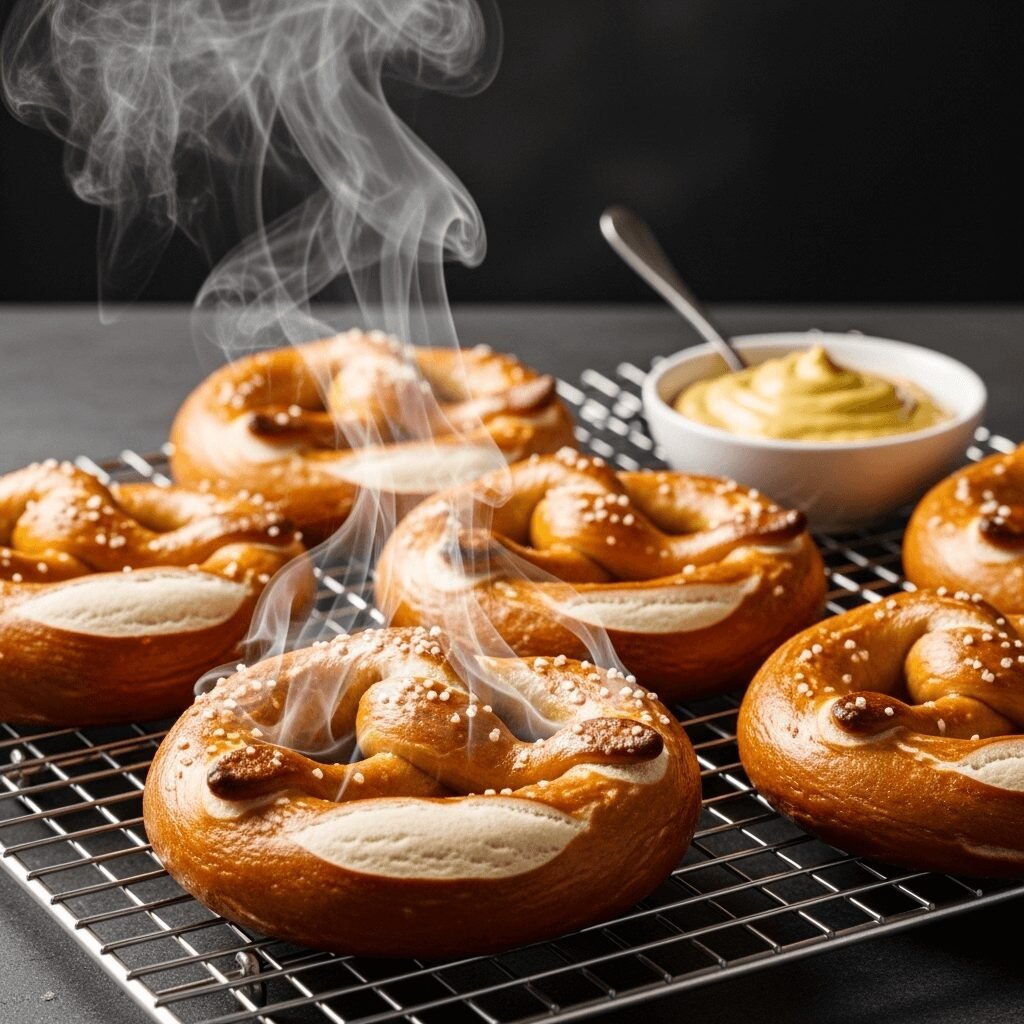
Get ready to make the most incredible homemade soft pretzels that taste exactly like those giant, warm pretzels you get at the mall or ballpark—but even better because they’re fresh from your own oven! These golden-brown beauties have that perfect chewy exterior with a tender, fluffy interior, generous sprinkles of coarse salt, and that distinctive pretzel flavor that’s absolutely irresistible.
Whether you’re looking for a fun weekend baking project with the kids, planning game day snacks, wanting impressive appetizers for a party, or simply craving that warm, doughy goodness, this easy soft pretzel recipe delivers bakery-quality results every single time. The process is surprisingly simple and incredibly rewarding—there’s something magical about pulling a tray of golden, twisted pretzels from your oven and watching them disappear within minutes.
Perfect served warm with mustard, cheese sauce, or even cinnamon sugar for a sweet variation, these soft pretzels from scratch are endlessly customizable and always crowd-pleasers. Kids love shaping them (it’s like edible arts and crafts!), adults love eating them, and everyone loves that amazing fresh-baked aroma that fills your kitchen. Let’s dive into making the best soft pretzels you’ve ever tasted!
History / Background
Pretzels have a fascinating history that stretches back over 1,400 years, making them one of the world’s oldest snack foods. The origin story is both charming and disputed, with the most popular legend tracing soft pretzels back to early Medieval Europe around 610 AD. According to tradition, Italian monks created pretzels as rewards for children who learned their prayers. The distinctive twisted shape was designed to resemble arms crossed in prayer, and the three holes represented the Holy Trinity.
The word “pretzel” itself comes from the Latin “pretiola,” meaning “little rewards,” which evolved through German (“brezel” or “pretzel”) to reach its current English form. These early pretzels were made from simple dough scraps—just flour, water, and salt—making them an economical treat that could be easily baked or stored.
Pretzels gained particular significance in German and Austrian culture, where they became symbols of good luck, prosperity, and spiritual wholeness. German immigrants brought their pretzel-making traditions to America in the 18th and 19th centuries, particularly settling in Pennsylvania, which became (and remains) the pretzel capital of America. The town of Lititz, Pennsylvania, even hosts an annual Pretzel Festival celebrating this heritage!
The transformation from hard, crunchy pretzels to the soft, chewy version we know today happened gradually. While hard pretzels were ideal for long-term storage, soft pretzels offered immediate gratification with their warm, doughy texture. The distinctive pretzel flavor and deep brown color come from a crucial step in the process: bathing the shaped dough in an alkaline solution before baking. Traditionally, this was a lye bath (still used by professional pretzel makers), but home bakers discovered that a baking soda bath creates similar results safely.
The 20th century saw soft pretzels become an iconic American snack food, particularly associated with street vendors in cities like New York and Philadelphia, baseball stadiums, shopping malls, and later, dedicated pretzel chains. Today, soft pretzels represent comfort food at its finest—that perfect combination of simplicity, nostalgia, and pure deliciousness that transcends cultural boundaries. Making them at home connects you to centuries of baking tradition while creating memories (and amazing snacks!) for your own family.
Why You’ll Love This Recipe
This isn’t just another pretzel recipe—this is the ultimate version that combines authentic technique with home-baker-friendly methods to create pretzels that genuinely rival (or surpass!) anything you’d buy. I’ve tested this recipe dozens of times to get every detail perfect, from the dough texture to the boiling time to the final golden color.
Here’s why this recipe will become your new favorite baking project:
- Authentic Bakery Taste – That signature pretzel flavor and texture you crave, achieved at home
- Surprisingly Simple – Easier than you’d think! No special skills or fancy equipment required
- Fun Family Activity – Kids absolutely love shaping the dough into pretzel twists
- Ready in 90 Minutes – Including rise time, faster than a trip to the mall
- Budget-Friendly – Costs pennies per pretzel using basic pantry staples
- Endlessly Customizable – Make them savory or sweet, plain or flavored, exactly how you like them
- Impressive Results – Looks and tastes like professional bakery quality
- Perfect Texture – Chewy exterior with soft, fluffy interior that’s absolutely addictive
- Makes Your House Smell Amazing – That fresh-baked bread aroma is unbeatable
- Freezer-Friendly – Make big batches and freeze for quick snacks anytime
- Healthier Than Store-Bought – No preservatives or additives, just real ingredients
- Great for Gifting – Package them up for neighbors, teachers, or friends
- Versatile Serving – Perfect as snack, appetizer, or even light meal with soup or salad
- Creates Memories – There’s something special about homemade pretzels that brings people together
Ingredient Notes
The beauty of soft pretzels lies in their simplicity—just a handful of basic ingredients come together to create something truly special. Let’s break down what you need and why each component matters:
All-Purpose Flour – The foundation of your pretzel dough. All-purpose flour provides the right protein content (around 10-12%) for that perfect chewy-yet-tender texture. You can substitute bread flour for slightly chewier pretzels, but all-purpose works beautifully and is what most home bakers have on hand. Measure accurately by spooning flour into your measuring cup and leveling off, or better yet, use a kitchen scale (4 cups = approximately 480g).
Active Dry Yeast or Instant Yeast – The leavening agent that makes your pretzels light and fluffy inside. Active dry yeast needs to be dissolved in warm water first (proof it), while instant yeast can be mixed directly into the flour. Both work perfectly—I’ve included instructions for both. Make sure your yeast isn’t expired by checking the date, and use water that’s between 105-110°F (warm to the touch but not hot).
Warm Water – Activates the yeast and brings the dough together. Temperature is crucial: too cold and yeast won’t activate; too hot (above 120°F) and you’ll kill the yeast. Aim for 105-110°F, which should feel like a comfortable bath—warm but not hot.
Brown Sugar – Provides food for the yeast to help it grow and adds a subtle sweetness that balances the salt. Brown sugar also contributes to the golden-brown color of the finished pretzels. You can substitute granulated sugar, but brown sugar adds a slightly richer flavor.
Salt (for dough) – Essential for flavor development and controlling yeast growth. Don’t skip the salt in the dough—it’s what makes pretzels taste like pretzels rather than just bread.
Butter – Adds richness, flavor, and tenderness to the dough. The fat in butter creates a softer interior texture. Use unsalted butter so you can control the salt level. Melted butter incorporates more easily into the dough.
Baking Soda – This is the secret ingredient that creates authentic pretzel flavor and color! The alkaline baking soda bath (similar to how traditional pretzels use lye) gives pretzels their distinctive dark brown color, shiny appearance, and characteristic slightly bitter, salty flavor that you can’t achieve any other way. This step is non-negotiable for real pretzel taste.
Coarse Salt – For sprinkling on top before baking. Pretzel salt or kosher salt works perfectly—those big crystals are iconic pretzel aesthetics. Regular table salt is too fine and will make pretzels too salty. Sea salt flakes also work beautifully.
Egg Wash (Optional but Recommended) – Beaten egg brushed on before baking creates that beautiful shiny, golden-brown finish that makes pretzels look professionally made. It’s optional but adds visual appeal.
Equipment Needed
Making soft pretzels requires minimal special equipment—mostly items you already have in your kitchen. Here’s what you’ll need:
- Large Mixing Bowl – For combining and kneading the dough (or use a stand mixer bowl)
- Stand Mixer with Dough Hook (Optional) – Makes kneading easier, but hand-kneading works perfectly fine
- Measuring Cups and Spoons – For accurate ingredient measurements
- Kitchen Scale (Optional but Helpful) – For the most precise flour measurement
- Instant-Read Thermometer – For checking water temperature (should be 105-110°F)
- Large Pot or Dutch Oven – For boiling the baking soda bath (at least 4-quart capacity)
- Slotted Spoon or Spider Strainer – For removing pretzels from the boiling water
- Baking Sheets – You’ll need 2-3 half-sheet pans depending on pretzel size
- Parchment Paper or Silicone Baking Mats – To line baking sheets and prevent sticking
- Clean Kitchen Towel – For covering dough while it rises
- Sharp Knife or Bench Scraper – For cutting dough into portions
- Pastry Brush – For applying egg wash (if using)
- Cooling Rack – For cooling pretzels after baking
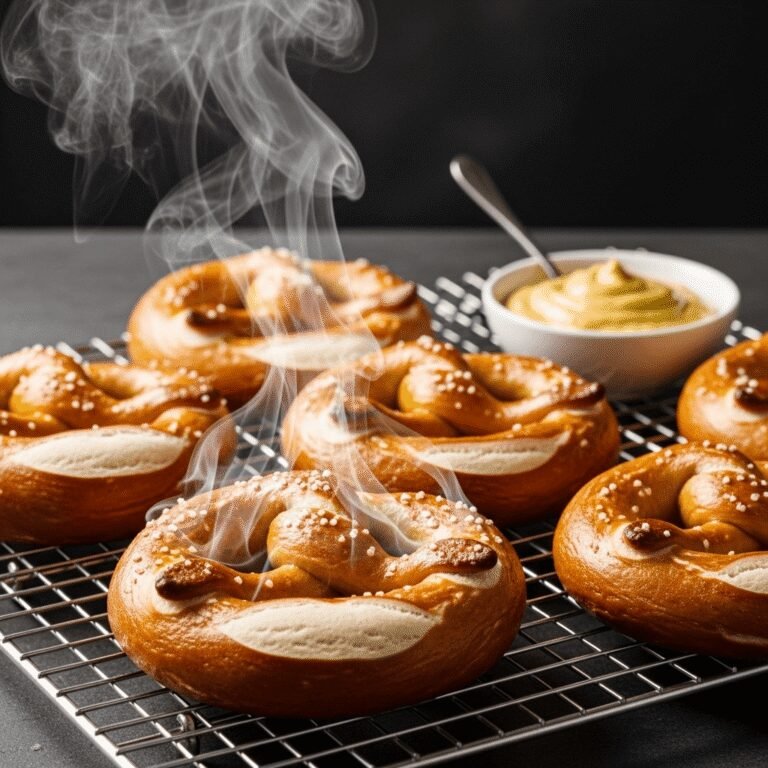
Homemade Soft Pretzels Recipe
These homemade soft pretzels are perfectly chewy on the outside, soft and fluffy on the inside, with that authentic pretzel flavor from a baking soda bath. Easier than you think and so much better than store-bought!
- Total Time: 1 hour 35 minutes
- Yield: 8 large pretzels 1x
Ingredients
For the Pretzel Dough:
- 1½ cups warm water (105-110°F)
- 2¼ teaspoons active dry yeast (1 standard packet)
- 2 tablespoons brown sugar, packed
- 2 teaspoons salt
- 4½ cups all-purpose flour, plus more for kneading
- 4 tablespoons unsalted butter, melted
For the Baking Soda Bath:
- 10 cups water
- ⅔ cup baking soda
For Topping:
- 1 large egg, beaten with 1 tablespoon water (egg wash)
- Coarse pretzel salt or coarse sea salt
- 3 tablespoons melted butter (for brushing after baking, optional)
Instructions
- Activate the Yeast: In a large mixing bowl (or the bowl of your stand mixer), combine the warm water (105-110°F—test with a thermometer if you have one), brown sugar, and yeast. Stir gently and let sit for 5-7 minutes until the mixture becomes foamy and bubbly on top. This proves your yeast is alive and active. If it doesn’t foam, your yeast is dead or your water was too hot/cold—start over with fresh yeast and properly tempered water.
- Make the Dough: Add the salt and melted butter to the yeast mixture, stirring to combine. Add the flour one cup at a time, stirring with a wooden spoon or dough hook on low speed after each addition. The dough will start out sticky and gradually come together. After all flour is incorporated, the dough should be slightly sticky but pulling away from the sides of the bowl.
- Knead the Dough: Turn the dough out onto a lightly floured surface and knead by hand for 5-7 minutes (or knead with a dough hook on medium speed for 4-5 minutes) until the dough is smooth, elastic, and springs back when poked. The dough should be soft and slightly tacky but not sticky. If it’s too sticky, add flour 1 tablespoon at a time. If too dry, wet your hands and knead the moisture in.
- First Rise: Shape the dough into a ball and place it in a large bowl lightly greased with oil or butter. Turn the dough to coat all sides with oil (this prevents a skin from forming). Cover the bowl with a clean kitchen towel or plastic wrap and let rise in a warm, draft-free spot for 45-60 minutes, until doubled in size. The dough should look puffy and when you gently press a finger into it, the indentation should remain.
- Prepare for Shaping: Line two large baking sheets with parchment paper or silicone baking mats and set aside. Preheat your oven to 450°F—pretzels need high heat for that characteristic deep golden-brown color. Fill a large pot with 10 cups of water and the ⅔ cup baking soda. Bring to a gentle boil over high heat, then reduce to a simmer. The baking soda will foam up initially—this is normal!
- Shape the Pretzels: Once the dough has doubled, punch it down to release the gas. Turn it out onto a clean work surface (you shouldn’t need flour). Divide the dough into 8 equal pieces (use a kitchen scale for precision—each piece should weigh about 100g). Roll each piece into a rope about 20-22 inches long. To shape: form the rope into a U-shape, cross the ends over each other about 1-2 inches from the tips, twist once, then fold the twisted section down and press the ends onto the bottom curve of the U, creating that classic pretzel shape. Don’t worry if your first few aren’t perfect—they’ll still taste amazing!
- Boil the Pretzels: This is the crucial step for authentic pretzel flavor! Working with 1-2 pretzels at a time, carefully place them into the simmering baking soda water using a large slotted spoon or spider strainer. Boil for 30 seconds, flip gently, then boil for another 30 seconds on the other side. The pretzels will puff up slightly and develop a slightly darker color. Remove with the slotted spoon, letting excess water drain off, and place on your prepared baking sheets, leaving about 2 inches between pretzels.
- Apply Egg Wash and Salt: Beat the egg with 1 tablespoon of water. Using a pastry brush, generously brush the top and sides of each boiled pretzel with egg wash—this creates that beautiful golden, shiny finish. Immediately sprinkle with coarse salt while the egg wash is still wet (the salt needs something to stick to). Be generous with the salt—it’s what makes pretzels taste like pretzels!
- Bake: Place the baking sheets in your preheated 450°F oven and bake for 12-15 minutes, until the pretzels are deep golden brown (they should be a rich, dark color, not pale). The darker they get (without burning), the more developed the pretzel flavor will be. If baking two sheets at once, rotate them halfway through for even browning.
- Finish and Serve: Remove the pretzels from the oven and let them cool on the baking sheets for 2-3 minutes. If desired, brush the warm pretzels with melted butter for extra richness and shine. Transfer to a wire rack. Serve warm or at room temperature with your favorite dipping sauces. These are absolutely best enjoyed fresh and warm—the texture and flavor are at their peak!
Notes
- Water Temperature is Critical: Too hot kills yeast, too cold won’t activate it. Use a thermometer for best results—aim for 105-110°F.
- Don’t Skip the Baking Soda Bath: This creates the authentic pretzel flavor, color, and texture. Regular boiling water won’t work.
- Dough Consistency: The dough should be soft and slightly tacky after kneading, not stiff. It will firm up slightly during rising.
- Size Matters: For consistent results, weigh your dough portions—each should be about 100g for large pretzels.
- Pretzel Salt: Use coarse salt (pretzel salt, kosher salt, or sea salt flakes), not table salt which is too fine.
- Darker = Better Flavor: Don’t pull pretzels too early. They should be deep golden brown for best flavor.
- Make Ahead: Shape pretzels, boil them, then refrigerate up to 24 hours before baking. Brush with egg and bake when ready.
- Prep Time: 35 minutes
- Cook Time: 60 minutes
- Category: Appetizer
- Method: Baking
- Cuisine: American
- Diet: Vegetarian
Nutrition
- Serving Size: 1 large pretzel
- Calories: 315
- Sugar: 3g
- Sodium: 890mg
- Fat: 7g
- Saturated Fat: 4g
- Unsaturated Fat: 2g
- Trans Fat: 0g
- Carbohydrates: 56g
- Fiber: 2g
- Protein: 8g
- Cholesterol: 38mg
Tips & Variations
Cinnamon Sugar Pretzels: Skip the egg wash and salt. After baking, brush warm pretzels generously with melted butter and immediately roll in a mixture of ½ cup sugar and 2 tablespoons cinnamon. Serve with cream cheese frosting for dipping!
Garlic Parmesan Pretzels: After baking, brush with melted butter mixed with garlic powder, then sprinkle with grated Parmesan cheese and Italian seasoning.
Jalapeño Cheddar Pretzels: Knead 1 cup shredded sharp cheddar and 2 tablespoons diced pickled jalapeños into the dough before the first rise.
Everything Bagel Pretzels: Instead of coarse salt, top with everything bagel seasoning before baking.
Mini Pretzel Bites: Divide dough into smaller portions, roll into ropes, and cut into 1-inch pieces. Boil and bake for 8-10 minutes. Perfect for parties!
Pretzel Rolls: Instead of shaping into traditional pretzels, divide dough into 12 portions, shape into smooth balls, boil briefly, and bake for sandwich rolls.
Stuffed Pretzels: Roll dough portions into rectangles, place a piece of cheese or hot dog in the center, seal edges, shape and proceed with boiling/baking.
Whole Wheat Pretzels: Substitute half the all-purpose flour (2¼ cups) with whole wheat flour for heartier, nuttier-flavored pretzels.
Vegan Pretzels: Skip the egg wash (or use plant milk instead) and brush finished pretzels with olive oil. Use vegan butter.
Sourdough Pretzels: Replace 1 cup of water and 1 cup of flour with fed, active sourdough discard for tangy flavor.
Pro Chef Tips
The Window Pane Test for Perfect Dough: To know when you’ve kneaded enough, do the window pane test: pinch off a small piece of dough and gently stretch it between your fingers. If it stretches thin enough to see light through it without tearing (like a window pane), your gluten is properly developed. If it tears immediately, knead a bit longer.
Create the Perfect Rising Environment: Yeast loves warmth! Create an ideal rising spot by turning your oven on to 200°F for just 1 minute, then turning it off. Place your covered dough bowl in this warm (but not hot) oven. Alternatively, place the bowl near (not on) a warm stovetop or in a sunny window.
The Rope-Rolling Technique: When rolling dough ropes for shaping, start from the center and roll outward toward the ends using both hands, applying even pressure. This creates uniform thickness. Let the dough rest for a minute if it keeps springing back—the gluten needs to relax.
Master the Baking Soda Bath: The boiling step seems intimidating but it’s simple! Don’t let the water boil too vigorously—a gentle simmer prevents pretzels from deforming. The baking soda makes the water slippery, so handle pretzels gently. Don’t overcrowd the pot—work with just 1-2 at a time for best results.
Egg Wash Matters More Than You Think: For the shiniest, most beautiful pretzels, don’t skip the egg wash and make sure to brush it on generously. The egg proteins create that gorgeous mahogany color during baking. Beat the egg thoroughly with water until completely combined for even coverage.
Embrace Dark Golden Brown: Home bakers often pull pretzels too early, resulting in pale, blonde pretzels. True pretzel flavor develops with deep, dark browning—your pretzels should look almost intimidatingly dark (but not burnt). That deep color is where the flavor magic happens!
The Butter Brush Finish: Brushing warm pretzels with melted butter immediately after baking adds incredible flavor and makes them glossy and irresistible. It’s optional but truly takes them from great to phenomenal. The butter should sizzle slightly when it hits the hot pretzel.
Timing Your Batches: If making a full recipe, start heating your baking soda water when the dough is about halfway through rising. This ensures the water is at a simmer when you’re ready to shape and boil pretzels, keeping your workflow smooth.
Common Mistakes to Avoid
Using Water That’s Too Hot or Too Cold: This is the #1 killer of pretzel dough! Water above 120°F will kill your yeast before it can do its job, resulting in dense, flat pretzels that never rise. Water below 95°F won’t activate the yeast properly, leading to slow or no rising. Always use a thermometer and aim for 105-110°F—it should feel like a warm (not hot) bath on your wrist.
Not Kneading Long Enough: Under-kneaded dough lacks proper gluten development, resulting in pretzels that are dense, tough, or fall apart. Proper kneading creates the elastic, stretchy texture that gives pretzels their characteristic chew. Knead for the full 5-7 minutes by hand (4-5 minutes with a mixer) until dough is smooth, elastic, and passes the window pane test.
Skipping or Rushing the Rise: Yeast needs time to do its work! Rushing the first rise by placing dough in too-hot an environment or pulling it before it’s doubled results in dense, bready pretzels without that light, tender interior. Be patient—give it the full 45-60 minutes in a warm spot. If your kitchen is cold, it might take longer, and that’s okay!
Making the Dough Ropes Too Thick: Thick ropes result in doughy centers that don’t bake through properly by the time the outside is done. Roll your ropes to about ½-inch thickness and a full 20-22 inches long. They’ll puff up during boiling and baking, so err on the side of too thin rather than too thick.
Not Boiling the Pretzels: Some recipes suggest skipping this step or using a baking soda spray—don’t! The baking soda bath is absolutely essential for creating authentic pretzel flavor, that distinctive dark brown color, and the characteristic slightly chewy exterior. There’s no shortcut that produces the same results. The brief boil is what transforms dough into pretzels.
Under-Baking: Pale pretzels lack the deep, complex flavor that makes them special. Many home bakers pull pretzels too early, worried about burning them. Trust the process—pretzels should be deep, dark golden brown, nearly mahogany in color. This darkness is flavor, not burning. At 450°F for 12-15 minutes, they develop that signature taste.
Storage & Meal Prep
Room Temperature Storage: Store completely cooled pretzels in an airtight container or zip-top bag at room temperature for up to 2 days. They’ll soften slightly but remain delicious. Placing a paper towel in the container absorbs excess moisture and helps maintain better texture.
Refrigerator Storage: Pretzels can be refrigerated in an airtight container for up to 5 days, though the texture will firm up considerably as they cool. This is actually fine since you’ll want to reheat them anyway before serving.
Refreshing Leftover Pretzels: The best way to bring pretzels back to life is reheating in a 350°F oven for 5-7 minutes until warmed through. For softer pretzels, wrap them in damp paper towels and microwave for 15-20 seconds. For crispier pretzels, skip the paper towels and microwave for 10-15 seconds, though the oven method is superior.
Preventing Sogginess: Never store pretzels while they’re still warm—the trapped steam creates a soggy texture. Always let them cool completely to room temperature before storing. If pretzels do become soft, a quick reheat in the oven restores much of their texture.
Meal Prep Strategy: Make a double or triple batch on the weekend and store portions in the freezer. You can pull out just what you need for quick snacks, lunch box additions, or unexpected guests.
Make-Ahead & Freezer Notes
Make-Ahead Method #1 (Refrigerate Before Baking): This is my favorite method for stress-free entertaining! Shape and boil the pretzels as directed, then place them on parchment-lined baking sheets. Cover tightly with plastic wrap and refrigerate for up to 24 hours. When ready to bake, remove from fridge, let sit at room temperature for 10-15 minutes, brush with egg wash, add salt, and bake as directed. The cold start actually results in extra-chewy texture!
Make-Ahead Method #2 (Freeze Shaped Dough): After shaping but before boiling, arrange shaped pretzels on a parchment-lined baking sheet and freeze until solid (about 2 hours). Transfer frozen shaped pretzels to a freezer bag and freeze for up to 2 months. To bake: boil from frozen (add 30 seconds to boiling time), brush with egg wash, salt, and bake, adding 2-3 minutes to baking time.
Freezing Baked Pretzels: Fully baked and cooled pretzels freeze beautifully for up to 3 months! Let them cool completely, then freeze in a single layer on a baking sheet until solid. Transfer to freezer bags, squeezing out excess air. This method ensures they don’t stick together.
Reheating Frozen Baked Pretzels: For best results, thaw at room temperature for 1-2 hours, then reheat in a 350°F oven for 5-7 minutes. For faster reheating, microwave frozen pretzels for 30-45 seconds (they won’t be as crispy but will taste fresh). You can also reheat from frozen in a 350°F oven for 10-12 minutes.
Freezing the Dough: You can freeze the dough after the first rise! Punch down the dough, wrap tightly in plastic wrap and then aluminum foil, and freeze for up to 3 months. Thaw overnight in the refrigerator, then let it come to room temperature before shaping and proceeding with the recipe.
Best Practices for Frozen Pretzels: Label everything clearly with the date and contents. For individually wrapped pretzels perfect for lunch boxes or quick snacks, wrap each cooled pretzel separately in plastic wrap before placing in freezer bags.
Serving Suggestions
Classic Pretzel Accompaniments: Serve your warm homemade soft pretzels with traditional dipping sauces like spicy brown mustard, honey mustard, or yellow mustard for that authentic ballpark experience.
Cheese Sauce Heaven: Make or buy warm cheese sauce (cheddar, nacho cheese, or beer cheese) for dipping—this combination is absolutely addictive and perfect for parties or game day.
Sweet Dipping Options: For cinnamon sugar pretzels, serve with cream cheese frosting, vanilla icing, chocolate sauce, or caramel sauce for an indulgent sweet treat.
Build a Pretzel Bar: Set up a DIY pretzel bar with multiple dipping sauces, toppings, and variations. Let guests customize their pretzels for an interactive party experience!
Perfect Pairings:
- Hot dogs or bratwurst (very German!)
- Tomato soup or beer cheese soup
- Soft pretzels with chili for a hearty meal
- German potato salad
- Sauerkraut and pickles
- Coleslaw
- Baked beans
Dipping Sauce Ideas:
- Spicy brown mustard (classic!)
- Honey mustard
- Beer cheese sauce
- Warm nacho cheese
- Ranch dressing
- Marinara sauce for pizza-style pretzels
- Cream cheese frosting for sweet pretzels
- Peanut butter and chocolate for dessert pretzels
Beverage Pairings:
- Cold beer (especially German lagers)
- Apple cider (hot or cold)
- Lemonade
- Root beer or cream soda
- Coffee for breakfast pretzels
Serving Temperatures: Pretzels are best served warm, about 10-15 minutes after baking when they’ve cooled enough to handle but are still soft and steamy inside. If serving a large batch, keep them warm in a 200°F oven on a wire rack.
FAQs Section
Can I make pretzels without a stand mixer?
Absolutely! This recipe works perfectly with hand-kneading. Mix the dough ingredients in a large bowl with a wooden spoon until combined, then turn out onto a floured surface and knead by hand for 5-7 minutes. Your arms will get a little workout, but the results are just as good. Many bakers actually prefer hand-kneading because you can feel the dough’s texture develop.
Why do my pretzels taste like regular bread?
If your pretzels taste like plain bread rolls, you likely skipped or didn’t properly execute the baking soda bath. This crucial step creates the distinctive pretzel flavor through a chemical reaction called the Maillard reaction. The alkaline environment (from baking soda) allows proteins and sugars to brown more deeply during baking, creating that characteristic pretzel taste and dark color. Make sure you’re boiling for the full 30 seconds per side.
Can I use baking powder instead of baking soda for the bath?
No, they’re not interchangeable for this purpose! Baking soda (sodium bicarbonate) creates the alkaline environment necessary for pretzel flavor and color. Baking powder contains both acid and base and won’t achieve the same effect. The baking soda bath is essential—there’s no substitute that produces authentic results.
My dough isn’t rising. What went wrong?
The most common culprits are: 1) Dead or expired yeast—always check the expiration date and proof your yeast in step 1 to confirm it’s active, 2) Water temperature was wrong—too hot kills yeast, too cold won’t activate it (use 105-110°F), 3) Too cold environment—yeast needs warmth to work, find a warm spot like a sunny window or warm oven, or 4) Too much salt added too early—salt can inhibit yeast if added before the yeast has time to activate.
How do I know when the dough is kneaded enough?
Properly kneaded dough should be smooth, elastic, and slightly tacky but not sticky. It should spring back when poked and pass the window pane test: stretch a small piece of dough between your fingers—if it stretches thin enough to see light through without tearing, it’s ready. Under-kneaded dough will tear easily and feel rough; over-kneaded dough (rare with hand-kneading) becomes stiff and hard to work with.
Can I make pretzel bites instead of full-sized pretzels?
Yes! Pretzel bites are actually easier to shape and perfect for parties. After the first rise, divide dough into 4 portions and roll each into a long rope. Cut into 1-inch pieces, boil for 20-25 seconds total (they’re smaller so need less time), egg wash, salt, and bake for 8-12 minutes until golden brown. You’ll get about 50-60 bites from this recipe.
Why are my pretzels tough and chewy instead of soft inside?
Several things can cause this: 1) Over-kneading (though this is rare), 2) Not enough liquid in the dough—the dough should be soft and slightly tacky, 3) Over-baking—pretzels continue cooking after removal from oven, 4) Not letting them cool properly—they firm up as they cool, or 5) Old dough that rose too long and exhausted the yeast. Make sure you’re following timing precisely and measuring ingredients accurately.
Can I make these pretzels gluten-free?
Unfortunately, traditional soft pretzels rely heavily on gluten development for their characteristic chewy texture. Standard gluten-free flour blends won’t produce the same results. There are specialized gluten-free pretzel recipes using different techniques and ingredients, but this particular recipe won’t work with a simple 1:1 substitution. I’d recommend searching for a recipe specifically developed for gluten-free baking.