Air Fryer Salmon Bites Recipe – Crispy Healthy Salmon in 10 Minutes
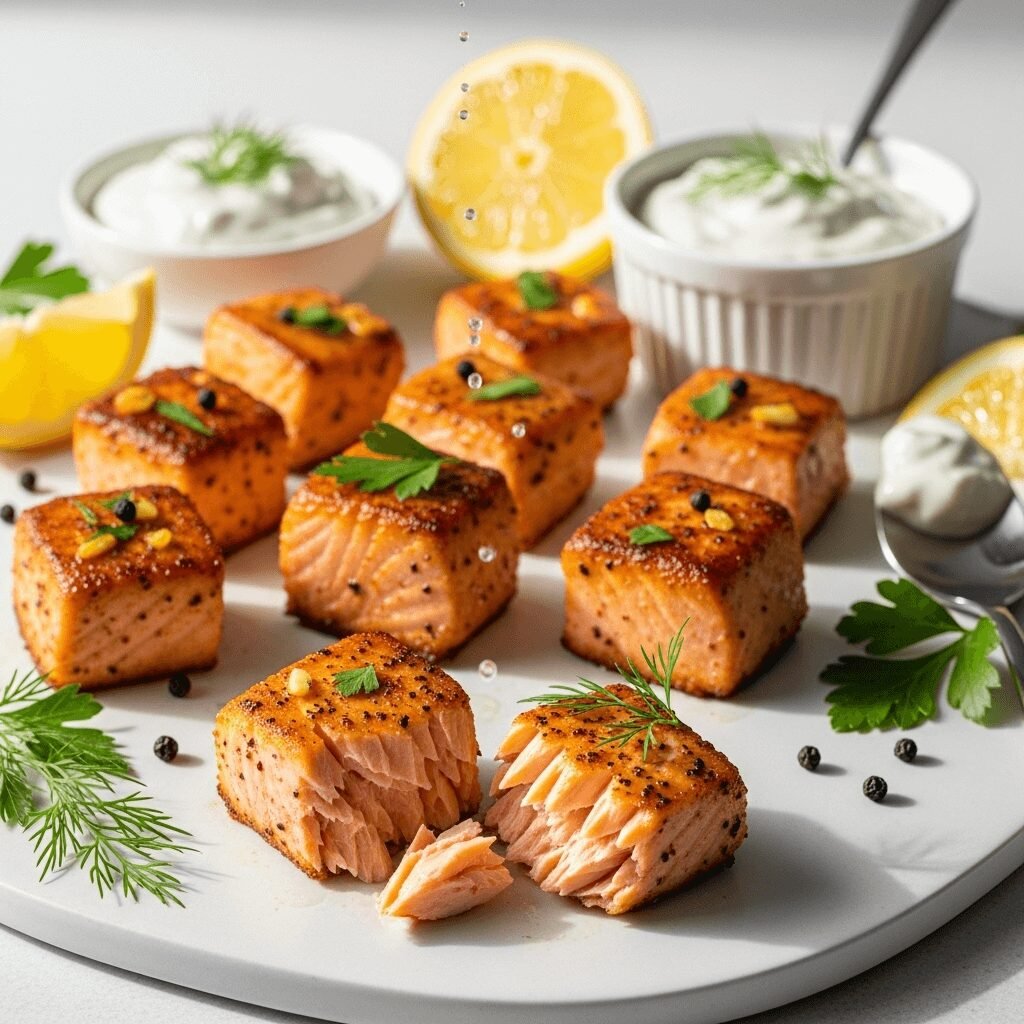
Air fryer salmon bites are tender, flaky chunks of fresh salmon that are perfectly seasoned, coated in a light crispy exterior, and cooked to absolute perfection in your air fryer in just 10 minutes. These bite-sized pieces of salmon are incredibly versatile—they work beautifully as a healthy weeknight dinner protein, an elegant appetizer for entertaining, a nutritious addition to salads and grain bowls, or even a fun finger food that kids actually enjoy eating.
What makes these crispy air fryer salmon bites so incredibly popular is their perfect combination of convenience, health benefits, and restaurant-quality results. The air fryer creates a beautifully caramelized, slightly crispy exterior while keeping the inside moist, tender, and flaky—something that’s surprisingly difficult to achieve with traditional cooking methods. There’s no fishy smell filling your kitchen, no messy oil splatters to clean up, and absolutely no risk of overcooking the salmon into dry, chalky disappointment.
These easy salmon bites are perfect for so many occasions: busy weeknight dinners when you need something healthy and fast, meal prep Sundays for the week ahead, elegant dinner parties where you want to impress without stress, kids’ meals (the bite-sized format makes them less intimidating), or anytime you’re craving nutritious, protein-packed food that actually tastes amazing. They take just 5 minutes to prep and 8-10 minutes to cook, meaning you can have a delicious, omega-3-rich meal on the table in 15 minutes flat. Whether you’re a seafood lover or someone who’s still learning to appreciate fish, these crispy salmon bites will convert even the most skeptical eaters into salmon fans!
History / Background
While air fryer salmon bites are a decidedly modern creation born from the air fryer revolution of the 2010s, they’re rooted in the long culinary tradition of cooking salmon—one of the world’s most important food fish for thousands of years. Salmon has been a dietary staple for indigenous peoples of the Pacific Northwest, Scandinavia, Scotland, and other coastal regions for millennia. Native American tribes like the Chinook, Tlingit, and Haida built entire cultures around salmon fishing, with elaborate ceremonies celebrating the annual salmon runs.
Traditional salmon preparation methods varied widely by culture: cedar plank grilling in the Pacific Northwest, gravlax (salt-cured salmon) in Scandinavia, hot-smoked preparations in Scotland, and poaching in French cuisine. What all these methods had in common was respect for the fish and techniques designed to preserve its delicate texture and rich flavor. Salmon is naturally high in healthy omega-3 fatty acids, high-quality protein, and essential nutrients, making it one of the most nutritious foods available.
The concept of cutting salmon into bite-sized pieces has precedent in various cuisines. Japanese cuisine features salmon sashimi and nigiri, where the fish is cut into precise, bite-sized portions. Hawaiian poke bowls traditionally include cubed raw fish. Korean cuisine includes salmon in bite-sized pieces for grilling. The “bite” format makes salmon less intimidating, easier to eat, and perfect for portion control.
The air fryer itself revolutionized home cooking when it gained mainstream popularity in the mid-2010s. This countertop appliance uses rapid air circulation technology to create crispy, “fried” results with minimal or no oil—essentially a powerful convection oven in compact form. Food bloggers and home cooks quickly discovered that air fryers excel at cooking salmon because the high heat and air circulation create a beautiful crust while the quick cooking time prevents the fish from drying out.
Air fryer salmon bites emerged as a viral recipe trend on Pinterest, Instagram, and TikTok around 2018-2020, as home cooks sought quick, healthy, photogenic meals that required minimal cleanup. The recipe perfectly embodied everything people loved about air fryer cooking: speed, health-consciousness, ease, and impressive results. Today, these crispy salmon bites represent the intersection of ancient appreciation for quality seafood and cutting-edge kitchen technology, making nutritious eating more accessible than ever before.
Why You’ll Love This Recipe
These air fryer salmon bites are about to become your new favorite way to cook salmon, and once you try them, you’ll wonder why you ever bothered with any other method. They deliver restaurant-quality results with minimal effort, making you look like a culinary genius while requiring only basic cooking skills.
Here’s what makes these salmon bites absolutely irresistible:
- Incredibly quick and easy – Just 15 minutes total from start to finish, with only 5 minutes of hands-on prep time
- Perfectly cooked every time – The air fryer ensures tender, flaky salmon that’s never dry or overcooked
- Crispy exterior, tender interior – Achieves that perfect textural contrast that makes salmon so satisfying
- Healthy and nutritious – Packed with omega-3 fatty acids, high-quality protein, and essential nutrients with minimal added fat
- Kid-friendly format – The bite-sized pieces are less intimidating for children and picky eaters who might shy away from a full salmon fillet
- Versatile serving options – Works as a main course, appetizer, salad topping, bowl ingredient, or party food
- Minimal cleanup – No greasy pans, no lingering fish smell, just a quick air fryer basket wash
- Budget-friendly – Salmon is more affordable when you buy a larger piece and cut it yourself
- Meal prep champion – Makes perfect portions for healthy lunches throughout the week
- Customizable flavors – Easy to adjust seasonings for different flavor profiles from Asian to Mediterranean to Cajun
- No fishy smell – The air fryer contains odors much better than traditional oven or pan-frying methods
- Foolproof results – Almost impossible to mess up, even for complete beginners
Whether you’re trying to eat healthier, need quick weeknight dinners, or want to introduce more seafood into your family’s diet, these easy air fryer salmon bites make it effortless and delicious!
Ingredient Notes
Let’s explore the simple ingredients that create these delicious bites and discuss the best options and possible substitutions:
Fresh Salmon Fillet – The star of the show! Look for fresh, high-quality salmon with bright color and no fishy smell. Wild-caught salmon (like Sockeye, Coho, or King) has superior flavor and firmer texture, but farm-raised Atlantic salmon works perfectly fine and is usually more affordable. The fillet should be about 1-1.5 inches thick for best results. Remove the skin before cutting into bite-sized pieces, though you can leave it on if you prefer (it gets wonderfully crispy in the air fryer). If buying frozen salmon, thaw completely in the refrigerator overnight before using. Plan on about 6 ounces of salmon per person for a main course, or 3-4 ounces for an appetizer.
Olive Oil or Avocado Oil – A light coating of oil helps seasonings adhere and promotes that beautiful golden-brown exterior. Olive oil is classic and adds subtle flavor, while avocado oil has a higher smoke point making it ideal for air frying. You can also use melted butter for richness, coconut oil for a different flavor profile, or cooking spray for the lowest-fat option.
Garlic Powder – Adds savory, aromatic depth without the risk of fresh garlic burning in the high heat of the air fryer. Garlic powder distributes evenly and creates consistent flavor throughout. You can use fresh minced garlic if you prefer, but add it for just the last 2-3 minutes of cooking to prevent burning.
Paprika – Provides beautiful color and mild, slightly sweet pepper flavor. Smoked paprika adds wonderful smoky depth that complements salmon beautifully. Regular sweet paprika works perfectly, but feel free to experiment with different varieties.
Salt and Black Pepper – Essential for enhancing the natural flavor of the salmon. Use kosher salt or sea salt for best results. Freshly cracked black pepper has more flavor than pre-ground.
Optional Lemon – Fresh lemon juice brightened the salmon after cooking and cuts through the richness. Lemon wedges for serving are highly recommended—that fresh citrus squeeze makes a huge difference in the final flavor.
Optional Fresh Herbs – Fresh dill, parsley, or cilantro make beautiful garnishes and add fresh, bright flavor. Dill is particularly classic with salmon.
Optional Seasonings – The basic recipe is intentionally simple, but you can customize with additional seasonings like onion powder, cayenne pepper for heat, Italian seasoning, everything bagel seasoning, Cajun spices, or Asian-inspired flavors like ginger and sesame.
Equipment Needed
This recipe requires minimal equipment, making it accessible for any home kitchen:
- Air fryer – Any size works; a 3.5-quart or larger is ideal for cooking a full batch at once
- Sharp knife – For cutting salmon into uniform bite-sized pieces
- Cutting board – Preferably one designated for raw proteins
- Large mixing bowl – For tossing salmon pieces with oil and seasonings
- Measuring spoons – For accurate seasoning measurements
- Tongs or spatula – For flipping salmon halfway through cooking (optional but recommended)
- Instant-read thermometer (optional) – To check doneness; salmon is done at 145°F internal temperature
- Paper towels – For patting salmon dry before seasoning

Air Fryer Salmon Bites Recipe
Crispy, tender air fryer salmon bites seasoned to perfection and cooked in just 10 minutes. These healthy salmon bites are perfect for quick dinners, meal prep, or as an elegant appetizer!
- Total Time: 15 minutes
- Yield: 4 servings 1x
Ingredients
For the Salmon Bites:
- 1½ pounds fresh salmon fillet, skin removed
- 2 tablespoons olive oil or avocado oil
- 1 teaspoon garlic powder
- 1 teaspoon paprika (smoked or regular)
- ¾ teaspoon salt
- ½ teaspoon black pepper
- ¼ teaspoon cayenne pepper (optional, for heat)
For Serving:
- Fresh lemon wedges
- Chopped fresh parsley or dill
- Your favorite dipping sauce (tartar sauce, garlic aioli, tzatziki, or honey mustard)
Instructions
Step 1: Prepare the Salmon
Pat the salmon fillet completely dry with paper towels—this is crucial for achieving a crispy exterior. Using a sharp knife, cut the salmon into bite-sized pieces, approximately 1 to 1.5-inch cubes. Try to make them as uniform as possible so they cook evenly. Remove any small bones you encounter (run your fingers over the salmon to feel for them).
Step 2: Season the Salmon
Place the salmon cubes in a large mixing bowl. Drizzle with olive oil and toss gently to coat all pieces. In a small bowl, combine garlic powder, paprika, salt, black pepper, and cayenne (if using). Sprinkle the seasoning mixture over the salmon and toss gently but thoroughly to ensure every piece is evenly coated. Be gentle to avoid breaking up the delicate salmon.
Step 3: Preheat the Air Fryer
Preheat your air fryer to 400°F (200°C) for 3-5 minutes. This step is important for getting that crispy exterior. Different air fryer models vary, so consult your manual if needed.
Step 4: Arrange in Air Fryer
Lightly spray the air fryer basket with cooking spray or brush with a thin layer of oil to prevent sticking. Arrange the seasoned salmon bites in a single layer in the air fryer basket, making sure they don’t overlap or touch too much. Leave a little space between pieces for air circulation—this is key to even cooking and crispiness. Depending on your air fryer size, you may need to cook in batches.
Step 5: Air Fry
Air fry at 400°F for 8-10 minutes, depending on the size of your salmon pieces and your preferred doneness. For extra crispiness, flip the salmon bites halfway through cooking (around the 4-5 minute mark) using tongs or a spatula. Be gentle as the salmon is delicate. The salmon is done when it reaches an internal temperature of 145°F and flakes easily with a fork. The exterior should be golden brown with some caramelized edges.
Step 6: Check for Doneness
Use an instant-read thermometer to check the thickest piece—it should register 145°F for fully cooked salmon. If you prefer your salmon slightly less cooked (medium), aim for 125-130°F. The salmon will continue cooking slightly after you remove it from the air fryer due to residual heat.
Step 7: Rest and Serve
Remove the salmon bites from the air fryer and let them rest for 2-3 minutes. This allows the juices to redistribute, keeping the salmon moist. Transfer to a serving platter, squeeze fresh lemon juice over the top, and garnish with chopped fresh herbs. Serve immediately with your favorite dipping sauce.
Notes
- Don’t overcrowd – Cook in batches if needed. Overcrowding causes steaming instead of air frying, resulting in less crispy salmon.
- Pat salmon dry – Moisture is the enemy of crispiness. Dry salmon thoroughly before seasoning.
- Uniform size matters – Cut salmon pieces roughly the same size so they cook evenly.
- Cooking time varies – Thicker pieces need 10 minutes, thinner pieces need 8 minutes. Start checking at 7 minutes.
- Frozen salmon – Must be completely thawed and dried before cooking for best results.
- Oil is essential – Don’t skip it; the oil helps create that crispy exterior and prevents sticking.
- Customize seasonings – Feel free to use your favorite spice blend or try different flavor profiles.
- Prep Time: 5 minutes
- Cook Time: 10 minutes
- Category: Appetizer
- Method: Air Fryer
- Cuisine: American
- Diet: Gluten Free
Nutrition
- Serving Size: About 6 ounces salmon (¼ of recipe)
- Calories: 285
- Sugar: 0g
- Sodium: 485mg
- Fat: 18g
- Saturated Fat: 3g
- Unsaturated Fat: 14g
- Trans Fat: 0g
- Carbohydrates: 1g
- Fiber: 0g
- Protein: 34g
- Cholesterol: 94mg
Tips & Variations
Asian-Inspired Salmon Bites:
Use sesame oil instead of olive oil, and season with ginger powder, garlic powder, and a sprinkle of sesame seeds. Serve with soy-ginger dipping sauce or spicy mayo. Garnish with sliced green onions and extra sesame seeds.
Mediterranean Salmon Bites:
Season with dried oregano, dried basil, garlic powder, and lemon zest. Serve with tzatziki sauce and garnish with fresh dill. These pair beautifully with Greek salad and pita bread.
Cajun Spiced Salmon:
Replace the seasoning blend with Cajun or Creole seasoning for a spicy, Southern-inspired version. Serve with remoulade sauce and garnish with fresh parsley.
Honey Garlic Glazed:
After air frying, toss the salmon bites in a mixture of honey, soy sauce, minced garlic, and a splash of rice vinegar for a sweet and savory glaze that’s absolutely addictive.
Everything Bagel Salmon:
Coat salmon pieces with everything bagel seasoning instead of the spice blend. Serve with cream cheese dip for a fun brunch-inspired version.
Teriyaki Salmon Bites:
Marinate salmon in teriyaki sauce for 15-30 minutes before air frying, or brush with teriyaki glaze during the last 2 minutes of cooking.
Crispy Breaded Version:
For extra crunch, dredge seasoned salmon pieces in panko breadcrumbs before air frying. Spray the breaded salmon with cooking spray for maximum crispiness.
Spicy Buffalo Salmon:
After cooking, toss salmon bites in buffalo sauce and serve with ranch or blue cheese dressing. Perfect for game day!
Lemon Herb Salmon:
Add lots of fresh lemon zest to the seasoning and toss with fresh dill and parsley after cooking. Serve with lemon wedges and garlic aioli.
Pro Chef Tips
Pat Salmon Completely Dry:
This is the single most important step for crispy salmon. Any surface moisture creates steam during cooking, preventing the exterior from getting that beautiful golden crust. Use paper towels and really press down to absorb all moisture. Let the salmon air-dry for a few minutes after patting if you have time.
Cut Uniform Pieces:
Consistent sizing ensures even cooking. If some pieces are much larger than others, the small ones will overcook while the large ones remain undercooked. Aim for 1 to 1.5-inch cubes and be as consistent as possible.
Don’t Skip Preheating:
Preheating your air fryer creates an immediate sear when the salmon hits the basket, which helps develop that crispy exterior. If you add salmon to a cold air fryer, it will cook less evenly and won’t crisp up as nicely.
Quality Matters:
Fresher, higher-quality salmon yields better results. Look for salmon that’s bright in color (not dull or gray), firm to the touch, and has no fishy smell. If it smells strongly of fish at the store, it’s not fresh enough. Wild-caught salmon generally has better texture and flavor than farmed, though both work.
Master the Flip:
Flipping halfway through isn’t absolutely necessary, but it does promote more even browning. Use a thin spatula or tongs and be very gentle—salmon is delicate and can break apart easily. If pieces start to fall apart, just leave them alone for the rest of cooking.
Don’t Overcook:
Salmon continues cooking from residual heat after you remove it from the air fryer. Pull it out when it’s just barely done (145°F internal temperature, or slightly lower if you prefer it medium). Overcooked salmon becomes dry and chalky—one of the most common mistakes.
Use a Light Hand with Seasonings:
Quality salmon has delicious natural flavor that can be overwhelmed by too many heavy seasonings. The simple garlic, paprika, salt, and pepper combination enhances without masking. You can always add more at the table, but you can’t remove excess seasoning.
The Temperature Check:
Invest in an instant-read thermometer if you don’t have one. It takes the guesswork out of doneness and prevents both under and overcooking. Insert it into the thickest part of a salmon piece—145°F is fully cooked, 125-135°F is medium (slightly translucent in the center).
Common Mistakes to Avoid
Not Drying the Salmon:
Wet salmon won’t get crispy no matter how long you cook it. The moisture creates steam that prevents browning and crisping. Always thoroughly pat salmon dry with paper towels, and even let it air-dry for 5-10 minutes if you can spare the time.
Overcrowding the Air Fryer Basket:
When salmon pieces touch or overlap, they steam instead of air fry, resulting in soggy, pale salmon instead of crispy, golden bites. Air needs to circulate around each piece. Cook in two batches if necessary—it only takes 10 minutes per batch, and the results are worth it.
Using Frozen Salmon Without Proper Thawing:
Frozen salmon that hasn’t been completely thawed will release excess water during cooking, making everything soggy. Plus, it won’t cook evenly—the outside will overcook while the inside stays cold. Always thaw salmon completely in the refrigerator overnight before cooking.
Cutting Pieces Too Large or Uneven:
Large pieces won’t cook through in 10 minutes and may be raw in the center, while tiny pieces will overcook and dry out. Inconsistent sizing means some pieces are perfect while others are under or overcooked. Take your time cutting uniform 1 to 1.5-inch pieces.
Overcooking the Salmon:
This is probably the most common mistake with any salmon cooking method. Overcooked salmon becomes dry, chalky, and unpleasant. Start checking for doneness at the 7-minute mark, especially if your pieces are on the smaller side. Remember, salmon continues cooking slightly after removal from heat.
Skipping the Oil:
Some people try to make these “oil-free” to cut calories, but the small amount of oil is essential for creating the crispy exterior and preventing sticking. Without it, you’ll have bland, pale salmon that sticks to the basket. Two tablespoons for 1.5 pounds of salmon is minimal and necessary.
Storage & Meal Prep
Refrigerator Storage:
Store leftover air fryer salmon bites in an airtight container in the refrigerator for up to 3 days. Let them cool completely before storing. Keep any dipping sauces or accompaniments in separate containers.
Reheating Cooked Salmon:
The best way to reheat is in the air fryer at 350°F for 3-4 minutes, which helps restore some of the crispy texture. You can also reheat in a 300°F oven for 5-7 minutes, or microwave for 30-60 seconds (though this makes them less crispy). Avoid overheating or the salmon will dry out.
Meal Prep Strategy:
These salmon bites are perfect for meal prep! Cook a batch on Sunday and portion into individual containers with your favorite sides (rice, quinoa, roasted vegetables, salad greens). They’re delicious cold in salads, at room temperature in grain bowls, or reheated for quick lunches.
Cold Serving:
Unlike many proteins, salmon is delicious served cold or at room temperature, making these bites practical for packed lunches. They work wonderfully on salads, in wraps, or as a protein snack throughout the day.
Storing Raw Marinated Salmon:
If you’ve seasoned salmon but need to delay cooking, store the seasoned raw salmon covered in the refrigerator for up to 4 hours. Any longer and the salt will start to cure the fish, changing its texture.
Make-Ahead & Freezer Notes
Freezing Cooked Salmon Bites:
You can freeze cooked salmon bites, though they won’t be quite as good as fresh. Let them cool completely, arrange on a baking sheet and freeze until solid (about 2 hours), then transfer to freezer bags or containers. They’ll keep for up to 2 months. Thaw in the refrigerator overnight and reheat in the air fryer at 350°F for 4-5 minutes.
Freezing Raw Salmon:
It’s better to freeze raw salmon than cooked. If you buy fresh salmon on sale, cut it into bite-sized pieces, season if desired, and freeze in a single layer on a parchment-lined baking sheet. Once frozen solid, transfer to freezer bags. Thaw completely in the refrigerator before air frying.
Prep Seasonings Ahead:
Mix your seasoning blend in advance and store in an airtight container. This way you can quickly season salmon whenever you need a fast dinner.
Partial Make-Ahead:
Cut and season the salmon up to 4 hours before cooking. Store covered in the refrigerator, then let it sit at room temperature for 10-15 minutes before air frying for best results.
Don’t Recommend Cooking from Frozen:
While some foods cook well in the air fryer from frozen, salmon does not. Frozen salmon releases too much water and won’t crisp up properly. Always thaw first for best results.
Serving Suggestions
These versatile air fryer salmon bites work beautifully in countless serving scenarios:
As a Main Course:
Serve with your favorite sides for a complete meal. Classic pairings include roasted asparagus, green beans, Brussels sprouts, broccoli, cauliflower rice, regular rice, quinoa, roasted potatoes, sweet potatoes, or a simple green salad. This creates a healthy, balanced dinner in under 30 minutes.
In Grain Bowls:
Build beautiful, nutritious bowls with salmon bites over rice, quinoa, or farro, topped with roasted vegetables, avocado, cucumber, edamame, and drizzled with tahini, teriyaki, or ginger-sesame dressing.
On Salads:
Add warm or cold salmon bites to any salad for instant protein. They’re especially good on Caesar salad, Greek salad, spinach salad with strawberries, or Asian-style salads with cabbage and mandarin oranges.
As an Appetizer:
Arrange on a platter with toothpicks and various dipping sauces (tartar, aioli, tzatziki, honey mustard, or spicy mayo) for an elegant appetizer that guests can easily grab.
In Tacos or Wraps:
Use salmon bites as filling for soft tacos with cabbage slaw and avocado, or wrap them in lettuce leaves or tortillas with your favorite toppings.
With Pasta:
Toss salmon bites with pasta, olive oil, garlic, cherry tomatoes, and spinach for a quick Mediterranean-inspired dinner.
Dipping Sauce Ideas:
Serve with homemade or store-bought sauces: lemon dill aioli, garlic herb sauce, tzatziki, tartar sauce, honey mustard, spicy mayo (mayo + sriracha), chimichurri, or teriyaki.
Beverage Pairings:
These pair beautifully with white wine (Sauvignon Blanc, Pinot Grigio, or Chardonnay), rosé, light beer, sparkling water with lemon, or iced green tea.
FAQs Section
Can I use frozen salmon?
Yes, but it must be completely thawed first. Thaw frozen salmon in the refrigerator overnight, then pat it very dry before cutting and seasoning. Cooking from frozen results in excess moisture that prevents crisping and causes uneven cooking.
What temperature should salmon be cooked to?
The USDA recommends 145°F internal temperature for fully cooked salmon. However, many people prefer salmon slightly less cooked (125-135°F) for a more tender, less dry texture with a slightly translucent center. Use an instant-read thermometer to check.
Do I need to flip the salmon during cooking?
It’s not absolutely necessary, but flipping halfway through (around 4-5 minutes) promotes more even browning and crispiness on both sides. Be gentle when flipping as salmon is delicate. If pieces start breaking apart, leave them alone for the rest of cooking.
Can I cook other fish this way?
Absolutely! This method works beautifully with other firm fish like cod, halibut, mahi-mahi, swordfish, or tuna. Adjust cooking time based on thickness—delicate fish like tilapia may need less time (6-7 minutes), while very thick pieces may need slightly more.
Why is my salmon sticking to the air fryer basket?
Three reasons: not enough oil on the salmon, not spraying/oiling the basket, or trying to move the salmon too soon. The salmon will naturally release once it’s developed a crust. Always lightly oil both the salmon and the basket, and wait until the salmon has cooked for at least 4-5 minutes before attempting to flip.
How do I prevent dry salmon?
Don’t overcook it! Start checking for doneness at 7 minutes, use an instant-read thermometer, and remember that salmon continues cooking slightly after removal from heat. Also, using fattier salmon (like King or Sockeye) helps, as does not cutting pieces too small.
Can I make these without an air fryer?
Yes! You can achieve similar results by baking in a 425°F oven for 10-12 minutes, or pan-searing in a hot skillet with a little oil for 3-4 minutes per side. The air fryer is just the easiest and least messy method with the most consistent results.
What’s the white stuff that comes out of salmon?
That’s albumin, a harmless protein that coagulates and is released when salmon is cooked. It’s completely safe to eat. To minimize it, avoid cooking at extremely high temperatures and don’t overcook the salmon.
Conclusion
There you have it—everything you need to make perfectly crispy, tender, restaurant-quality air fryer salmon bites that will revolutionize your weeknight dinners and meal prep routine! These healthy salmon bites prove that nutritious eating doesn’t have to be complicated, time-consuming, or boring. With just 15 minutes and a handful of simple ingredients, you can create a protein-packed meal that’s good for your body and absolutely delicious.
Whether you’re trying to incorporate more omega-3s into your diet, need quick healthy dinners for busy weeknights, want impressive appetizers for entertaining, or simply love the convenience of air fryer cooking, these crispy air fryer salmon bites deliver every single time. The combination of that beautifully caramelized exterior and tender, flaky interior is simply irresistible, and the best part is how versatile and customizable this recipe is—make it Asian-inspired, Mediterranean, Cajun, or keep it simple and classic.
I’d love to hear how your salmon bites turned out! Drop a comment below and let me know what seasoning variation you tried, how you served them, and whether you managed to have any leftovers (spoiler: probably not!). If you loved this easy air fryer salmon recipe, please share it on Pinterest so other home cooks can discover how simple it is to make healthy, delicious salmon at home. Pin it to your air fryer recipes board, healthy dinner ideas, or meal prep collection!
Now grab that beautiful salmon fillet, fire up your air fryer, and get ready for the easiest, most delicious salmon you’ve ever made. These bites are calling your name!