Crispy Cheesesteak Egg Rolls (Game Day Favorite!)

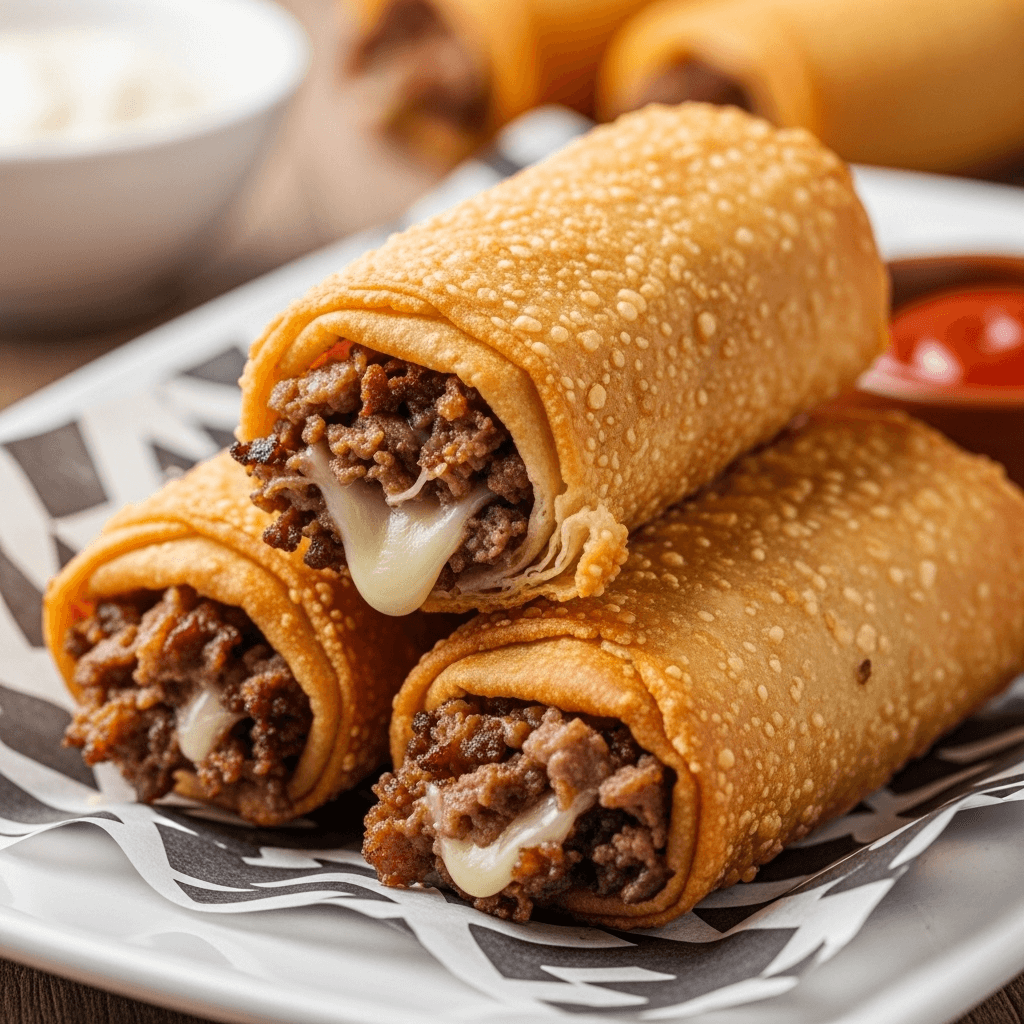
Get ready to fall head over heels for these Cheesesteak Egg Rolls—the ultimate fusion food that combines the iconic flavors of a Philadelphia cheesesteak with the crispy, crunchy satisfaction of an egg roll! Imagine biting through a golden, shatteringly crisp wrapper to discover tender ribeye steak, caramelized onions, sautéed peppers, and gooey melted provolone cheese all wrapped up in one incredible handheld package. These are seriously addictive, and I’m warning you now—it’s impossible to eat just one!
These easy cheesesteak egg rolls have become a viral sensation on Pinterest and TikTok, and for good reason. They’re the perfect party appetizer that works beautifully for game day spreads, Super Bowl parties, casual get-togethers, tailgates, or even a fun twist on family dinner night. The combination of savory steak, melty cheese, and crispy wrapper creates a textural and flavor experience that keeps people coming back to the serving platter again and again.
What makes these homemade Philly cheesesteak egg rolls so special is their incredible versatility—serve them as appetizers with a side of cheese sauce for dipping, pack them for lunches, make them for meal prep, or serve a few per person as a main dish with fries. They’re finger-food friendly, completely customizable to your taste preferences, and way more affordable than ordering from your favorite restaurant. Plus, they’re surprisingly easy to make at home, even if you’ve never worked with egg roll wrappers before!
History / Background
To understand cheesesteak egg rolls, we need to look at the beautiful collision of two iconic food traditions: the Philadelphia cheesesteak and Chinese-American egg rolls.
The Philadelphia cheesesteak was born in the 1930s in South Philadelphia, created by Pat and Harry Olivieri, who owned a hot dog stand. According to legend, Pat decided to grill some beef from the butcher and put it on an Italian roll. A passing taxi driver smelled the sandwich and wanted to try it. The combination was so delicious that Pat and Harry opened Pat’s King of Steaks in 1930, and the cheesesteak was born. The addition of cheese came later—initially with provolone, and eventually Cheez Whiz became a popular option in the 1950s. Today, the cheesesteak is Philadelphia’s most iconic food contribution, with passionate debates about proper toppings, cheese choices, and preparation methods.
Egg rolls, meanwhile, have roots in Chinese cuisine but were adapted and popularized in Chinese-American restaurants throughout the 20th century. While spring rolls are traditional in China, the heartier, crispier egg roll became an American Chinese restaurant staple. The wrapper is made from wheat flour and egg, creating a sturdier vessel that can be deep-fried to golden perfection and stuffed with various fillings.
The fusion of these two classics—cheesesteak egg rolls—is a relatively modern creation that emerged from the American fusion food movement of the 2000s and 2010s. Creative restaurant chefs and home cooks began experimenting with putting beloved regional dishes into egg roll wrappers, creating handheld versions of classics. Restaurants in Philadelphia and beyond started featuring cheesesteak egg rolls on their appetizer menus, and food bloggers picked up the trend, sharing recipes that went viral on Pinterest.
This recipe represents the best of American food culture—taking beloved traditions from different cuisines and combining them into something new, exciting, and absolutely delicious. It honors the iconic flavors of Philly while embracing the technique and format of Chinese-American cuisine, creating a dish that’s greater than the sum of its parts.
Why You’ll Love This Recipe
These cheesesteak egg rolls deliver everything you want in the perfect appetizer or snack—incredible flavor, satisfying crunch, and that irresistible combination of meat and melted cheese. They’re destined to become a regular request in your household!
Here’s why these Philly cheesesteak egg rolls deserve a permanent spot in your recipe rotation:
- Seriously Addictive: That combination of crispy wrapper, tender steak, and melted cheese is genuinely hard to stop eating
- Perfect Party Food: Handheld, no utensils needed, and impressive enough to wow your guests
- Budget-Friendly: Makes a pound of steak stretch to feed a crowd—way more economical than individual sandwiches
- Freezer-Friendly: Make a big batch and freeze them for quick appetizers or snacks anytime
- Kid-Approved: Children love the crispy, handheld format and familiar flavors
- Customizable: Easy to adjust vegetables, cheese types, and protein to suit your preferences
- Two Cooking Methods: Fry for maximum crispiness or bake/air fry for a lighter option
- Great for Meal Prep: Make ahead and reheat throughout the week for quick lunches or dinners
- Restaurant-Quality at Home: Tastes like something you’d order at a trendy gastropub
- Simple Technique: Easier than you think—egg roll wrapping is straightforward once you get the hang of it
- Versatile Serving: Works as appetizer, main dish, game day snack, or party food
Ingredient Notes
Understanding your ingredients helps you achieve the best flavor and texture in your cheesesteak egg rolls:
Ribeye Steak: The traditional choice for authentic Philly cheesesteaks and the best option here! Ribeye is well-marbled with fat, which means it stays tender and juicy while delivering incredible beefy flavor. Slice it very thin (partially freezing for 20-30 minutes makes this easier) against the grain for the most tender bites. You can substitute with sirloin, flank steak, or even top round if you’re on a tighter budget, though ribeye truly is superior. For the easiest prep, ask your butcher to slice it thin for cheesesteaks, or look for pre-sliced “sandwich steaks” in the meat department. Vegetarians can substitute with thinly sliced portobello mushrooms or plant-based steak alternatives.
Bell Peppers: Green bell peppers are traditional in Philly cheesesteaks, providing a slightly bitter, vegetal flavor that balances the richness. However, you can use red, yellow, or orange peppers for a sweeter, more colorful filling. I like using a combination of green and red for both flavor and visual appeal. Dice them small (about ¼-inch pieces) so they cook quickly and distribute evenly throughout the filling.
Onions: Yellow or white onions are classic choices, providing sweet, caramelized flavor when cooked down. Slice them thin so they soften completely and meld into the filling. The onions should be golden and jammy, not crunchy. For a milder flavor, use sweet onions like Vidalia. Some people skip onions entirely (there’s actually a Philadelphia debate about “wit” or “wit-out” onions), so feel free to adjust based on preference.
Provolone Cheese: The most traditional cheese for Philly cheesesteaks! Provolone melts beautifully and has a mild, slightly tangy flavor that doesn’t overpower the beef. Use the deli-sliced provolone rather than aged provolone, as it melts better. Each egg roll needs about 1-2 slices depending on size. You can substitute with American cheese (very traditional in Philly), mozzarella (mild and melty), or Cheez Whiz (controversial but authentic). Whatever cheese you choose, make sure it’s a good melter!
Egg Roll Wrappers: These are wheat-based wrappers that typically measure 6×6 inches or 7×7 inches. Find them in the refrigerated produce section or freezer aisle near other Asian ingredients. Don’t confuse them with spring roll wrappers (rice paper) or wonton wrappers (too small). Egg roll wrappers need to be thawed if frozen and kept covered with a damp towel while working to prevent drying out. They’re surprisingly forgiving for beginners!
Worcestershire Sauce: Adds savory, umami depth to the beef. This secret ingredient is what makes the filling taste like an authentic cheesesteak. Don’t skip it!
Oil for Frying: Use a neutral oil with a high smoke point—vegetable oil, canola oil, or peanut oil all work perfectly. You need enough oil to come halfway up the egg rolls for proper frying. If baking or air frying, you’ll just need a light spray or brush of oil.
Garlic and Seasonings: Fresh garlic adds aromatic flavor, while salt, pepper, and optional seasonings like paprika or Italian seasoning enhance the overall taste. Keep seasonings simple to let the steak and vegetables shine.
Equipment Needed
Making cheesesteak egg rolls requires some basic kitchen equipment:
- Large skillet or sauté pan: For cooking the steak and vegetables
- Sharp knife and cutting board: For slicing steak and chopping vegetables
- Wooden spoon or spatula: For stirring the filling
- Small bowl: For the egg wash (beaten egg for sealing wrappers)
- Pastry brush (optional): For applying egg wash neatly
- Large plate or baking sheet: For assembling egg rolls before cooking
- Paper towels: For draining fried egg rolls
- Large pot or deep fryer: If frying—needs to hold at least 2-3 inches of oil
- Cooking thermometer: For monitoring oil temperature (crucial for perfect frying)
- Spider strainer or slotted spoon: For safely removing egg rolls from hot oil
- Wire rack: For draining egg rolls after frying
Alternative cooking equipment:
- Baking sheet and parchment paper: If baking in the oven
- Air fryer basket: If using an air fryer (my favorite method!)
- Cooking spray or oil mister: For lighter preparation methods
Cheesesteak Egg Rolls
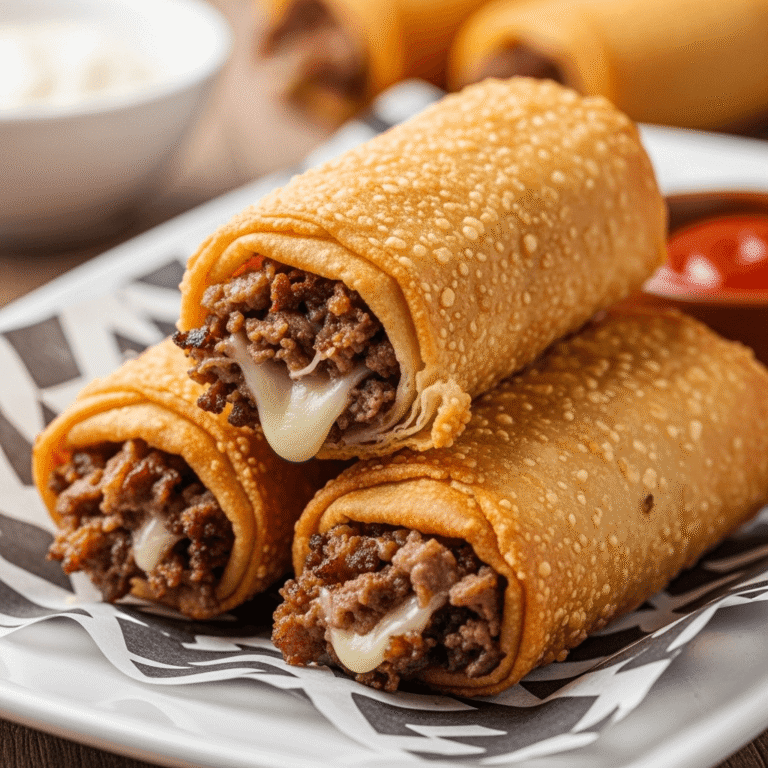
Crispy egg rolls filled with tender ribeye steak, sautéed peppers and onions, and melted provolone cheese. These Philly cheesesteak egg rolls are perfect for game day or any gathering!
- Total Time: 45 minutes
- Yield: 12 egg rolls (serves 6) 1x
Ingredients
For the Filling:
- 1 lb ribeye steak, thinly sliced and chopped into small pieces
- 1 large onion, thinly sliced
- 1 green bell pepper, diced
- 1 red bell pepper, diced (optional)
- 3 cloves garlic, minced
- 2 tablespoons Worcestershire sauce
- 1 tablespoon vegetable oil
- 1 teaspoon salt
- ½ teaspoon black pepper
- ½ teaspoon paprika (optional)
For Assembly:
- 12 egg roll wrappers (6×6 or 7×7 inch)
- 12 slices provolone cheese (about 6-8 oz)
- 1 egg, beaten (for egg wash)
- Vegetable oil for frying (about 3-4 cups)
For Serving:
- Cheese sauce, ranch dressing, or marinara for dipping
Instructions
- Prepare the filling: Heat 1 tablespoon of vegetable oil in a large skillet over medium-high heat. Add the sliced onions and diced peppers. Sauté for 5-6 minutes until softened and beginning to caramelize. Add the minced garlic and cook for another minute until fragrant. Transfer the vegetables to a plate and set aside.
- Cook the steak: In the same skillet, add the thinly sliced ribeye steak (work in batches if needed to avoid overcrowding). Season with salt, pepper, and paprika. Cook for 3-4 minutes, stirring occasionally, until the beef is browned and cooked through. The steak should have some nice caramelization on the edges. Add the Worcestershire sauce and stir to coat. Return the cooked vegetables to the skillet with the steak and toss everything together. Remove from heat and let the filling cool for 5-10 minutes—this is important to prevent the wrappers from getting soggy.
- Prepare your wrapping station: Lay out your egg roll wrappers on a clean work surface, keeping them covered with a slightly damp towel to prevent drying. Have your beaten egg in a small bowl, provolone cheese sliced and ready, and the cooled filling nearby. Set up a baking sheet or large plate to hold the assembled egg rolls.
- Assemble the egg rolls: Place one egg roll wrapper on your work surface with a corner pointing toward you (diamond shape). Place one slice of provolone cheese in the center of the wrapper. Top with about 3-4 tablespoons of the steak and vegetable filling, arranged in a horizontal line across the center. Don’t overfill or the egg rolls will be difficult to seal and may burst during cooking.
- Wrap the egg rolls: Fold the bottom corner up over the filling, tucking it tightly underneath. Fold in the left and right corners toward the center, creating an envelope shape. Brush the top corner with beaten egg wash. Roll the egg roll away from you tightly, sealing the top corner with the egg wash. Place seam-side down on the prepared baking sheet. Repeat with remaining wrappers and filling.
- Heat the oil: Pour 2-3 inches of vegetable oil into a large, deep pot or Dutch oven. Heat over medium-high heat until the oil reaches 350°F on a cooking thermometer. This temperature is crucial—too low and the egg rolls will be greasy; too high and they’ll burn before cooking through. If you don’t have a thermometer, test with a small piece of wrapper—it should sizzle immediately and turn golden in about 30 seconds.
- Fry the egg rolls: Working in batches of 3-4 egg rolls at a time (don’t overcrowd), carefully lower them into the hot oil using a spider strainer or slotted spoon. Fry for 3-4 minutes, turning occasionally with tongs or a slotted spoon, until deep golden brown and crispy on all sides. The wrapper should be bubbly and crisp.
- Drain and serve: Remove the fried egg rolls to a wire rack set over a baking sheet or to a plate lined with paper towels. Let them drain for 1-2 minutes. Serve immediately while hot and crispy with your favorite dipping sauces like cheese sauce, ranch dressing, marinara, or even ketchup!
Air Fryer Method: Preheat air fryer to 390°F. Brush assembled egg rolls lightly with oil on all sides. Place in a single layer in the air fryer basket (work in batches if needed). Air fry for 10-12 minutes, flipping halfway through, until golden and crispy.
Oven Baking Method: Preheat oven to 425°F. Place egg rolls seam-side down on a parchment-lined baking sheet. Brush generously with oil or spray with cooking spray. Bake for 18-22 minutes, flipping halfway through, until golden and crispy.
Notes
- Wrapper Management: Keep egg roll wrappers covered with a damp towel while working to prevent them from drying out and cracking.
- Cooling the Filling: Let the filling cool before assembling—hot filling makes wrappers soggy and difficult to work with.
- Don’t Overfill: Less is more! Overfilled egg rolls are difficult to seal and prone to bursting during cooking.
- Oil Temperature: Maintaining 350°F is key to crispy, non-greasy egg rolls. Let oil return to temperature between batches.
- Sealing: Make sure to seal the edges well with egg wash—unsealed egg rolls will open during cooking and leak filling.
- Freezing Before Cooking: For even crispier results, freeze assembled egg rolls for 30 minutes before frying.
- Prep Time: 25 minutes
- Cook Time: 20 minutes
- Category: Appetizer
- Method: Frying
- Cuisine: American
- Diet: Gluten Free
Nutrition
- Serving Size: 2 egg rolls
- Calories: 425
- Sugar: 4g
- Sodium: 780mg
- Fat: 22g
- Saturated Fat: 8g
- Unsaturated Fat: 12g
- Trans Fat: 0g
- Carbohydrates: 32g
- Fiber: 2g
- Protein: 24g
- Cholesterol: 75mg
Tips & Variations
Protein Variations:
- Chicken Cheesesteak: Use thinly sliced chicken breast or thighs instead of beef
- Steak-Umm Style: Use frozen sandwich steaks for budget-friendly convenience
- Ground Beef: Use seasoned ground beef for easier prep and lower cost
- Italian Sausage: Use crumbled Italian sausage for a flavor twist
- Vegetarian: Replace steak with thinly sliced portobello mushrooms or plant-based meat
Cheese Options:
- Classic Philly: Use Cheez Whiz (controversial but authentic!)
- White American: Melts beautifully and is very traditional
- Mozzarella: Mild flavor and excellent melt
- Pepper Jack: Add some heat with spicy cheese
- Swiss: For a different flavor profile
- Cheese Sauce Inside: Mix some cheese sauce into the filling for extra gooeyness
Vegetable Additions:
- Sautéed mushrooms (very popular in Philly!)
- Banana peppers or pepperoncini for tang
- Jalapeños for heat
- Extra garlic for garlic lovers
- Cherry peppers for sweet heat
Seasoning Variations:
- Italian Style: Add Italian seasoning, oregano, and basil
- Cajun: Use Cajun seasoning for a spicy Louisiana twist
- Garlic Herb: Extra garlic powder, onion powder, and dried herbs
- Smoky: Add smoked paprika and a touch of liquid smoke
Healthier Modifications:
- Air fry or bake instead of deep frying
- Use lean sirloin or chicken breast
- Add extra vegetables and less meat
- Use reduced-fat cheese
- Serve with lighter dipping sauces like Greek yogurt ranch
Creative Twists:
- Pizza Egg Rolls: Add pepperoni and mozzarella, serve with marinara
- Breakfast Version: Use scrambled eggs, cheese, peppers, and breakfast sausage
- Buffalo Chicken Cheesesteak: Toss chicken in buffalo sauce before assembling
- French Onion: Extra caramelized onions with gruyere cheese
Pro Chef Tips
Partially Freeze Your Steak for Perfect Slicing: Professional butchers know that partially frozen meat is much easier to slice thin. Place your ribeye in the freezer for 20-30 minutes until it’s firm but not rock-hard. This makes cutting paper-thin slices a breeze. Always slice against the grain for maximum tenderness—look for the direction of the muscle fibers and cut perpendicular to them.
Caramelize Your Vegetables Properly: Don’t rush the vegetable cooking step! Let your onions and peppers cook until they’re truly soft and starting to caramelize—this takes 5-7 minutes. The natural sugars caramelize and develop deep, complex flavors that make the filling taste restaurant-quality. If you rush this step and have crunchy vegetables, they’ll create moisture pockets that can make wrappers soggy.
Cool Your Filling Completely: This is the most critical step many home cooks skip! Hot filling creates steam that softens the wrapper and makes it nearly impossible to achieve that crispy texture. Let your filling cool for at least 10 minutes, or refrigerate it for 30 minutes for best results. You can even make the filling a day ahead—cold filling is actually easier to work with and less messy.
The Double-Fold Sealing Technique: For egg rolls that absolutely won’t burst during cooking, use this pro technique: after wrapping normally, apply egg wash along the seam, then fold the wrapper edge back over itself to create a double seal. This creates a stronger closure that holds up even if the filling expands during cooking. Press firmly to ensure the seal is complete.
Temperature Control is Everything: Maintain your oil at a consistent 350°F. When you add egg rolls, the temperature will drop—this is normal. Fry only 3-4 at a time to minimize temperature fluctuation, and give the oil a minute to recover between batches. Use a thermometer and adjust your burner heat as needed. This attention to temperature is what separates soggy, greasy egg rolls from crispy, golden perfection.
The Freeze Before Frying Trick: Restaurant kitchens often freeze assembled egg rolls for 15-30 minutes before frying. This firms up the filling, prevents the wrapper from absorbing moisture, and creates an even crispier exterior. The cold filling takes longer to heat through, giving the wrapper more time to develop that shattering crunch. Try it—you’ll taste the difference!
Strategic Cheese Placement: Place the cheese slice directly against the wrapper (under the filling) rather than on top of the filling. As it melts during cooking, it creates a moisture barrier that protects the wrapper from getting soggy from the meat juices. This restaurant technique ensures maximum crispiness.
The Water Test for Perfect Wrapping: If you’re new to wrapping egg rolls, practice your technique with water instead of oil first. Brush water on the edges instead of egg wash and roll as directed. This lets you perfect your technique without wasting ingredients. Once you’ve mastered the rolling motion with water, switch to egg wash for the real thing.
Common Mistakes to Avoid
Overfilling the Egg Rolls: This is the number one mistake! It’s tempting to cram as much delicious filling as possible into each wrapper, but overfilled egg rolls won’t seal properly and will burst during cooking, leaking filling into the oil. Use only 3-4 tablespoons of filling per egg roll—about the size of your thumb when arranged in a line. Less is definitely more when it comes to egg roll filling.
Wrapping with Hot Filling: Adding hot or even warm filling to egg roll wrappers creates steam that softens the wrapper, making it difficult to work with and preventing that crispy texture we’re after. The moisture from hot filling also prevents proper sealing, leading to egg rolls that burst open during cooking. Always let your filling cool to room temperature or even refrigerate it before assembling.
Incorrect Oil Temperature: Oil that’s too cool (below 325°F) results in greasy, soggy egg rolls that absorb too much oil. Oil that’s too hot (above 375°F) burns the exterior before the filling heats through. Invest in an inexpensive cooking thermometer and maintain 350°F consistently. This single tool makes the difference between mediocre and restaurant-quality results.
Not Sealing the Wrapper Properly: Egg rolls that aren’t sealed well will definitely open during cooking, releasing filling into the oil and creating a mess. Make sure to brush egg wash generously on the final corner before rolling, and press firmly to seal. The egg wash acts as glue—don’t skip it or use water as a substitute. After rolling, press along the seam one more time to ensure it’s completely sealed with no gaps.
Overcrowding the Pan: Dropping too many egg rolls into the oil at once drastically lowers the temperature, resulting in greasy, pale egg rolls instead of crispy golden ones. The egg rolls also stick together when overcrowded. Fry only 3-4 at a time, giving them plenty of space to float freely and cook evenly. Be patient between batches and let the oil return to 350°F before adding the next batch.
Letting Wrappers Dry Out: Egg roll wrappers dry out quickly when exposed to air, becoming brittle and prone to cracking. Keep the stack covered with a slightly damp (not wet!) kitchen towel while you work. If a wrapper does crack, simply use a fresh one—don’t try to patch it or use a cracked wrapper, as it will definitely break during cooking.
Storage & Meal Prep
Refrigerator Storage: Store cooked, cooled egg rolls in an airtight container in the refrigerator for up to 3 days. Layer them with parchment paper between layers to prevent sticking. They’ll lose some crispiness in the fridge, but you can restore it during reheating. Fried egg rolls store slightly better than baked ones in terms of maintaining some texture.
Reheating Instructions: The key to reheating is restoring that crispy exterior without drying out the filling:
- Oven Method (best results): Preheat to 375°F, place egg rolls on a wire rack over a baking sheet, and heat for 10-12 minutes until crispy and heated through
- Air Fryer Method (fastest): Heat at 370°F for 5-7 minutes, no need to preheat
- Toaster Oven: Works similarly to regular oven, about 8-10 minutes at 375°F
- Avoid Microwave: This makes the wrapper soggy and chewy—only use as a last resort, and expect compromised texture
Meal Prep Strategy: These cheesesteak egg rolls are fantastic for meal prep! Make a double batch and store them using one of these methods:
- Refrigerate assembled uncooked: Assemble egg rolls, place on a baking sheet in a single layer, cover tightly with plastic wrap, and refrigerate for up to 24 hours before cooking
- Cook and refrigerate: Fry or bake all egg rolls, let cool completely, then refrigerate in an airtight container. Reheat as needed throughout the week for quick lunches or snacks
- Portion for lunches: Pack 2-3 cooked egg rolls with dipping sauce in meal prep containers with a side salad or vegetables for complete grab-and-go lunches
Make-Ahead & Freezer Notes
Advance Preparation Timeline:
- Up to 2 days ahead: Make the filling, let it cool completely, and store in an airtight container in the refrigerator
- Up to 1 day ahead: Assemble the egg rolls, place on a baking sheet in a single layer, cover tightly with plastic wrap, and refrigerate
- Day of serving: Fry or bake the egg rolls fresh for the crispiest results
Freezing Uncooked Egg Rolls (Highly Recommended!): This is my favorite method for always having cheesesteak egg rolls ready to go:
- Assemble the egg rolls completely as directed
- Place them in a single layer on a parchment-lined baking sheet, not touching
- Freeze until solid (about 2-3 hours)
- Transfer frozen egg rolls to a freezer-safe zip-top bag or airtight container
- Label with the date and store for up to 3 months
- To cook from frozen: No thawing needed! Add 2-3 minutes to the cooking time. For frying, the oil temperature may drop more, so be extra vigilant about maintaining 350°F. For air frying, cook at 380°F for 14-16 minutes. For baking, cook at 425°F for 22-25 minutes.
Freezing Cooked Egg Rolls: While not ideal (they lose some crispiness), you can freeze already-cooked egg rolls:
- Let cooked egg rolls cool completely to room temperature
- Wrap individually in plastic wrap or aluminum foil
- Place wrapped egg rolls in a freezer-safe container or zip-top bag
- Freeze for up to 2 months
- To reheat: Thaw in refrigerator overnight, then reheat in oven or air fryer as directed above. They won’t be quite as crispy as fresh but still taste delicious.
Party Planning Timeline: For stress-free entertaining:
- 1 week ahead: Make and freeze assembled uncooked egg rolls
- Day before: Make dipping sauces and store refrigerated
- 2 hours before party: Set up your frying station or preheat oven/air fryer
- 30 minutes before serving: Start cooking egg rolls in batches
- During party: Keep warm in a 200°F oven on a wire rack while you cook remaining batches
Serving Suggestions
These versatile cheesesteak egg rolls shine in many serving scenarios:
Dipping Sauces (Essential!):
- Cheese Sauce: The classic choice—warm queso or nacho cheese sauce
- Ranch Dressing: Cool and creamy contrast to the rich filling
- Marinara Sauce: For an Italian twist
- Sriracha Mayo: Mix sriracha with mayonnaise for spicy creaminess
- Garlic Aioli: Sophisticated and flavorful
- Horseradish Sauce: For those who like a kick
- Comeback Sauce: Southern favorite that’s tangy and slightly spicy
- Honey Mustard: Sweet and tangy balance
Side Dishes:
- French Fries or Sweet Potato Fries: Classic pairing for the full Philly experience
- Crispy Onion Rings: Double down on the fried goodness
- Coleslaw: Cool, crunchy, and refreshing contrast
- Pickle Spears: Tangy palate cleanser
- Caesar Salad: Fresh greens balance the richness
- Chips and Salsa: For a casual spread
- Mac and Cheese: Because why not go all out?
Complete Menu Ideas:
Game Day Spread:
- Cheesesteak egg rolls with multiple dipping sauces
- Buffalo wings
- Loaded nachos
- Vegetable platter with ranch
- Beer and sodas
Casual Dinner:
- Cheesesteak egg rolls (3-4 per person as main dish)
- French fries or tater tots
- Simple green salad
- Brownies or cookies for dessert
Party Appetizer Table:
- Cheesesteak egg rolls
- Mozzarella sticks
- Spinach artichoke dip with chips
- Vegetable spring rolls
- Charcuterie board
Beverage Pairings:
- Beer: Light lagers, IPAs, or amber ales
- Wine: Zinfandel, Merlot, or Shiraz for reds; Riesling for white
- Cocktails: Whiskey sours, old fashioneds, or Moscow mules
- Non-Alcoholic: Iced tea, lemonade, or cola
Presentation Tips:
- Serve on a wooden board or slate platter for rustic appeal
- Arrange around small bowls of various dipping sauces
- Garnish the platter with fresh parsley or green onions
- Serve immediately while hot for best experience
- Provide small plates and plenty of napkins—these can be messy (in the best way!)
FAQs Section
Q: Can I bake these instead of frying? A: Absolutely! Baking is a healthier alternative and still produces delicious results, though they won’t be quite as crispy as fried versions. Preheat your oven to 425°F, place egg rolls seam-side down on a parchment-lined baking sheet, brush generously with oil or spray with cooking spray, and bake for 18-22 minutes, flipping halfway through. For even better results, use an air fryer at 390°F for 10-12 minutes, flipping halfway. The air fryer produces results closest to deep frying without all the oil.
Q: Where do I find egg roll wrappers? A: Egg roll wrappers are typically found in the refrigerated produce section of most grocery stores, near the tofu and Asian vegetables. Some stores stock them in the freezer aisle near other frozen Asian foods. Look for square wrappers labeled “egg roll wrappers” that are approximately 6×6 or 7×7 inches. Popular brands include Nasoya and Dynasty. Don’t confuse them with spring roll wrappers (made from rice paper) or wonton wrappers (much smaller). If your regular grocery store doesn’t carry them, try Asian markets or order them online.
Q: Can I make these ahead and freeze them? A: Yes, and this is actually one of the best features of this recipe! Assemble the egg rolls completely, place them on a parchment-lined baking sheet in a single layer, and freeze until solid (2-3 hours). Then transfer to a freezer bag or airtight container and freeze for up to 3 months. Cook directly from frozen—no thawing needed! Just add 2-3 extra minutes to the cooking time. This makes them perfect for meal prep or having party-ready appetizers on hand anytime.
Q: My egg rolls burst open during cooking. What did I do wrong? A: Egg rolls typically burst for one of several reasons: overfilling (use only 3-4 tablespoons of filling), not sealing properly (use generous egg wash and press firmly to seal), using hot filling (always cool completely first), or oil temperature too high (maintain 350°F). Make sure you’re folding the sides in tightly and rolling snugly but not so tight that you tear the wrapper. The egg wash is crucial—don’t skip it or substitute water.
Q: What’s the best cheese for cheesesteak egg rolls? A: Provolone is the most traditional and my top recommendation—it melts beautifully and has an authentic Philly cheesesteak flavor. However, white American cheese is also very traditional in Philadelphia and melts even more smoothly. For convenience, you can use Cheez Whiz (controversial but authentic!), mozzarella (mild and melty), or even pepper jack if you want some heat.