Healthy French Onion Dip Recipe (Better Than Store-Bought!)
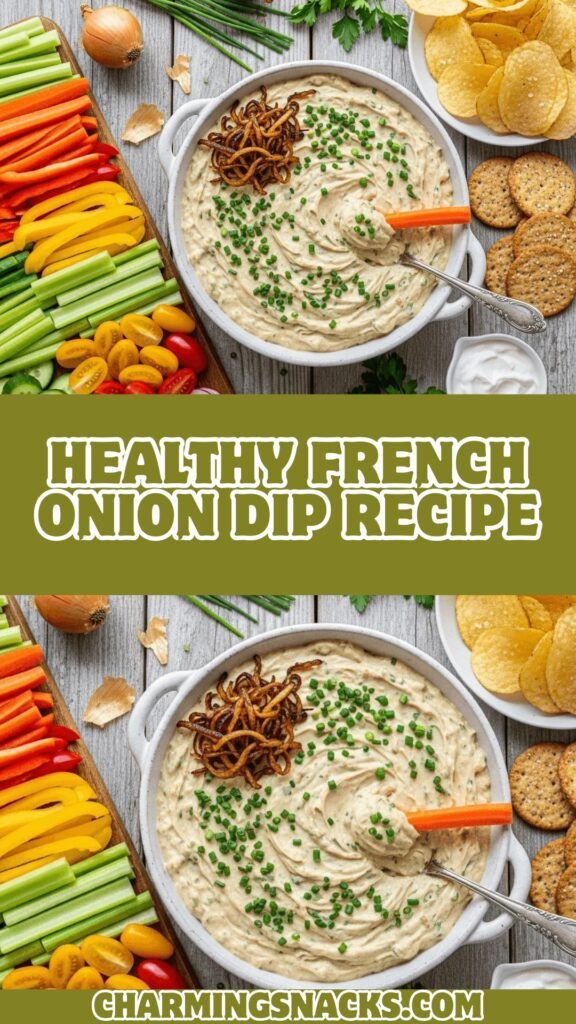
There’s something wonderfully nostalgic about French onion dip—that creamy, savory, onion-packed dip that has graced party tables and game day spreads for decades. This healthy French onion dip recipe takes the beloved classic and gives it a nutritious makeover without sacrificing any of that addictive flavor. Made with Greek yogurt instead of sour cream and real caramelized onions instead of dried soup mix, this homemade version is lighter, fresher, and infinitely more delicious than anything you’ll find in a tub at the grocery store.
What makes this lightened French onion dip so irresistible is the depth of flavor from slowly caramelized onions combined with the tangy creaminess of Greek yogurt. Unlike the packet-mix versions loaded with sodium and artificial ingredients, this from-scratch dip delivers authentic onion flavor with a fraction of the calories and significantly more protein. The best part? It tastes like you spent hours making it, but it comes together in about 30 minutes with minimal hands-on time.
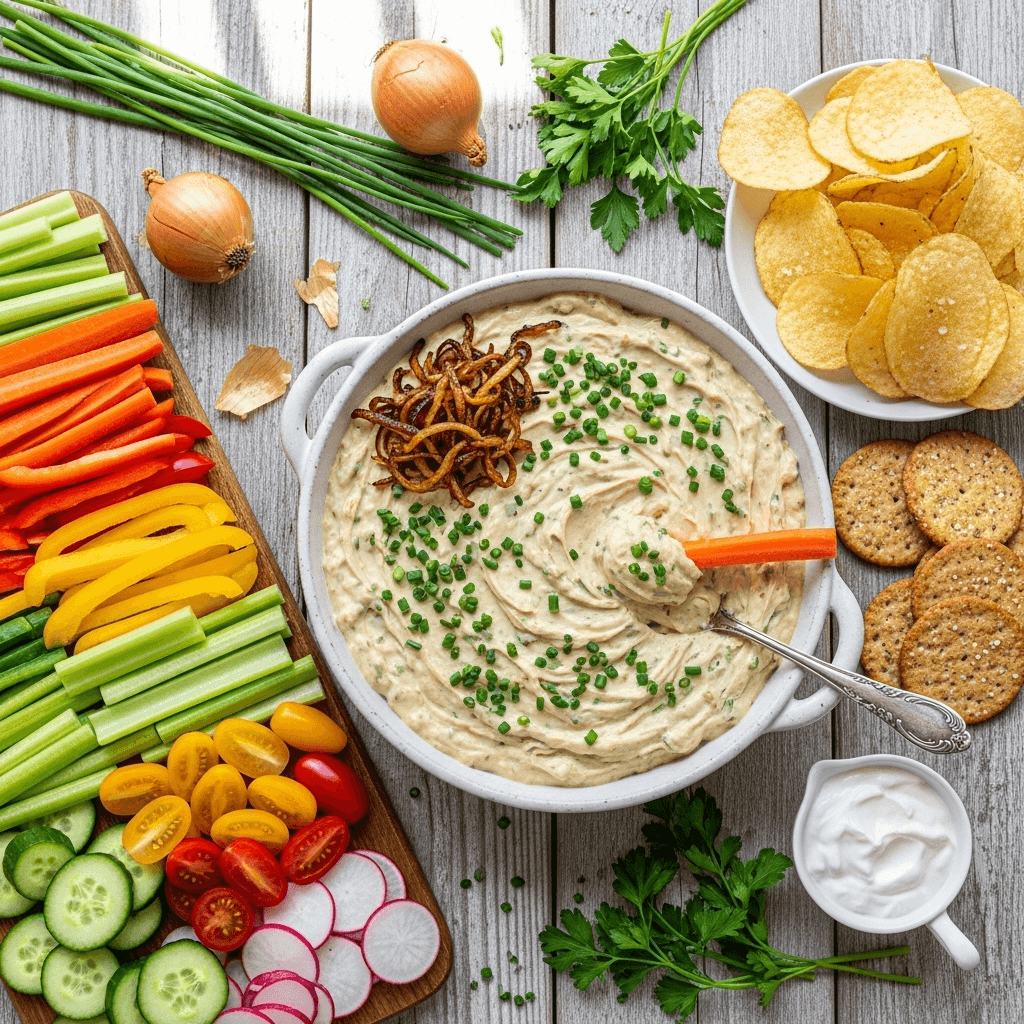
Perfect for game day parties, holiday gatherings, casual get-togethers, movie nights at home, picnics, potlucks, or anytime you’re craving a satisfying snack, this easy onion dip never disappoints. Serve it with crunchy vegetable sticks for a guilt-free appetizer, classic potato chips for tradition, or pita chips for something a little different. It’s the kind of dip that disappears in minutes, with everyone asking for the recipe.
History / Background
French onion dip has a surprisingly specific origin story that’s quintessentially American. Despite its name suggesting French heritage, this beloved dip is actually a mid-century American invention that emerged during the 1950s—the golden age of convenience foods and creative home entertaining.
The original French onion dip was created around 1954 and is credited to an anonymous home cook who combined Lipton’s French Onion Soup Mix (introduced in 1952) with sour cream. This ingenious two-ingredient combination was so delicious and easy that it spread rapidly through church cookbooks, community recipe exchanges, and word of mouth. Lipton eventually printed the recipe on their soup mix packages, cementing its place in American culinary culture.
The name “French onion dip” likely derived from the soup mix’s name rather than any actual French connection. French onion soup itself—a traditional French dish of caramelized onions in beef broth topped with bread and melted cheese—has been around since the 18th century. The soup became popular in America during the 1960s, further boosting the appeal of anything “French onion” flavored.
By the 1960s and 70s, French onion dip had become a party staple, appearing alongside other popular dips like spinach dip and deviled ham. The combination of the soup mix (containing dried onions, beef bouillon, and various seasonings) with sour cream created that signature savory-sweet flavor profile that Americans came to love. Ruffles potato chips even marketed themselves as the perfect companion to French onion dip, creating an iconic pairing that persists today.
However, as Americans became more health-conscious in recent decades, the traditional version—high in sodium, saturated fat, and artificial ingredients—fell somewhat out of favor. This led creative home cooks to develop healthier versions using Greek yogurt, fresh onions, and natural seasonings. These modern adaptations maintain the beloved flavor while aligning with contemporary nutrition preferences.
Today’s healthy French onion dip represents the evolution of this classic recipe—honoring its nostalgic appeal while embracing fresh ingredients and better-for-you substitutions. It’s proof that comfort food can be both delicious and nutritious.
Why You’ll Love This Recipe
This isn’t your grandmother’s packet-mix French onion dip, and it’s definitely not the overly processed store-bought version. This is the fresh, flavorful, actually-good-for-you onion dip that will make you wonder why you ever bought the pre-made stuff. Every scoop delivers rich caramelized onion flavor and satisfying creamy texture.
Here’s why this homemade onion dip will become your go-to party appetizer:
- Significantly Healthier – Made with protein-rich Greek yogurt instead of sour cream, with 50% fewer calories and triple the protein
- Real Ingredients Only – No artificial flavors, preservatives, or mysterious ingredients you can’t pronounce
- Better Flavor – Fresh caramelized onions create authentic, complex taste that packaged mixes simply cannot match
- Quick & Easy – Ready in 30 minutes with mostly hands-off time while onions caramelize
- Crowd-Pleasing – Even people who try to eat healthy will indulge without guilt
- Budget-Friendly – Costs less than premium store-bought dips and uses simple, affordable ingredients
- Customizable – Easily adjusted for dietary needs or flavor preferences
- Make-Ahead Friendly – Actually tastes better after flavors meld overnight in the refrigerator
- Versatile Serving Options – Perfect with vegetables, chips, crackers, or as a spread for sandwiches
- Protein-Packed Snack – Greek yogurt base makes this a surprisingly filling, nutritious option
Ingredient Notes
Understanding your ingredients helps you create the best possible healthy French onion dip. Let’s break down each component.
Yellow Onions – The star ingredient that gives this dip its name and flavor. Yellow onions caramelize beautifully, developing sweet, complex flavors through slow cooking. You’ll need 2 medium onions (about 3 cups sliced). Sweet onions like Vidalia work wonderfully but aren’t necessary. Red onions can substitute but have sharper flavor. White onions work but are slightly less sweet.
Greek Yogurt – The healthy base that replaces sour cream. Use plain, full-fat Greek yogurt for the richest, most sour cream-like texture and flavor. Low-fat or non-fat Greek yogurt work but result in thinner, less creamy dip. The tanginess of Greek yogurt complements the sweet caramelized onions perfectly while providing protein, calcium, and probiotics.
Cream Cheese – A small amount (2-3 tablespoons) adds richness and helps create that classic French onion dip texture. Use full-fat for best results, but reduced-fat works acceptably. For dairy-free, use dairy-free cream cheese alternative. This ingredient bridges the gap between the lighter Greek yogurt and traditional heavy sour cream bases.
Olive Oil or Butter – For caramelizing the onions. Olive oil keeps the dip lighter and adds healthy fats. Butter creates richer flavor and more authentic French onion soup taste. Use whichever aligns with your preferences—both work beautifully.
Garlic – Fresh garlic adds aromatic depth and complexity. Use 2-3 cloves, minced or pressed. Granulated garlic (½ teaspoon) can substitute in a pinch but lacks the bright flavor of fresh.
Worcestershire Sauce – Adds umami depth and that subtle savory complexity that makes French onion dip so craveable. Just 1-2 teaspoons make a big difference. For vegetarian version, use mushroom-based Worcestershire or soy sauce.
Fresh Herbs – Chives are traditional and add mild onion flavor and pretty green flecks. Fresh parsley, dill, or a combination also work beautifully. Dried herbs can substitute (use ⅓ the amount) but fresh is significantly better.
Seasonings – Salt, black pepper, and a pinch of onion powder round out the flavors. The onion powder might seem redundant with fresh onions, but it adds an extra layer of depth.
Optional Additions – A splash of balsamic vinegar enhances the caramelized onions, a pinch of cayenne adds subtle heat, or a teaspoon of Dijon mustard adds tang.
Equipment Needed
Making this healthy onion dip requires minimal equipment, most of which you likely already have:
- Large Skillet or Sauté Pan – For caramelizing onions. A 10 or 12-inch pan with a heavy bottom works best for even heat distribution. Nonstick makes cleanup easier but isn’t essential.
- Sharp Knife and Cutting Board – For slicing onions thinly and evenly. Uniform slices caramelize at the same rate.
- Wooden Spoon or Spatula – For stirring onions frequently during caramelization.
- Medium Mixing Bowl – For combining all ingredients.
- Measuring Cups and Spoons – For accurate ingredient portions.
- Garlic Press or Microplane (Optional) – Makes mincing garlic easier and finer.
- Rubber Spatula – For scraping bowl and folding ingredients together gently.
- Serving Bowl – Choose something attractive since this dip looks beautiful presented well.

French Onion Dip Recipe
Lightened-up French onion dip made with Greek yogurt, caramelized onions, and fresh herbs. This healthy version has 50% fewer calories than traditional recipes but delivers even better flavor. Perfect with vegetables or chips!
- Total Time: 30 minutes
- Yield: About 2 cups (8 servings) 1x
Ingredients
For the Caramelized Onions:
- 2 medium yellow onions, thinly sliced (about 3 cups)
- 1 tablespoon olive oil or butter
- Pinch of salt
- ½ teaspoon sugar (optional, helps caramelization)
For the Dip:
- 1½ cups plain full-fat Greek yogurt (12 ounces)
- 2-3 tablespoons cream cheese, softened
- 2-3 cloves garlic, minced
- 1-2 teaspoons Worcestershire sauce
- ½ teaspoon onion powder
- ½ teaspoon salt (adjust to taste)
- ¼ teaspoon black pepper
- 2 tablespoons fresh chives, finely chopped
- 1 tablespoon fresh parsley, chopped (optional)
For Serving:
- Assorted fresh vegetables (carrots, celery, bell peppers, cucumber)
- Potato chips, pita chips, or crackers
- Extra chives for garnish
Instructions
- Caramelize the Onions: Heat olive oil or butter in a large skillet over medium heat. Add sliced onions and a pinch of salt, stirring to coat with oil. Cook, stirring occasionally, for 15-20 minutes until onions are deeply golden brown and caramelized. If onions start to burn, reduce heat slightly and add a tablespoon of water. The onions should be very soft, sweet, and golden brown. If adding sugar, sprinkle it on halfway through cooking to enhance caramelization. Remove from heat and let cool for 10 minutes.
- Prepare the Base: While onions cool, add Greek yogurt and softened cream cheese to a medium bowl. Stir or whisk until smooth and well combined. The cream cheese should be fully incorporated with no lumps. If cream cheese is too firm, microwave for 10-15 seconds to soften.
- Add Aromatics and Seasonings: Stir in minced garlic, Worcestershire sauce, onion powder, salt, and black pepper. Mix well until all seasonings are evenly distributed throughout the yogurt mixture. Taste and adjust seasonings—you may want more salt or Worcestershire depending on preference.
- Fold in Onions and Herbs: Reserve about 2 tablespoons of caramelized onions for topping. Add the remaining cooled caramelized onions to the yogurt mixture along with chopped chives and parsley. Fold gently with a spatula until onions and herbs are evenly distributed. The dip should have visible flecks of herbs and golden onion pieces throughout.
- Chill for Best Flavor: Transfer the dip to a serving bowl, cover tightly with plastic wrap, and refrigerate for at least 1 hour (preferably 2-4 hours or overnight). This chilling time allows flavors to meld and develop, making the dip significantly better. The texture also firms up as it chills.
- Serve: Before serving, give the dip a quick stir. Top with reserved caramelized onions and a sprinkle of fresh chives for presentation. Serve cold with your choice of vegetables, chips, or crackers.
Notes
- Greek Yogurt Consistency: If your dip seems too thin, use thicker Greek yogurt or strain regular yogurt through cheesecloth for 30 minutes to remove excess liquid.
- Flavor Development: This dip tastes significantly better after resting overnight as flavors meld together.
- Onion Caramelization: Don’t rush this step! Proper caramelization takes 15-20 minutes. Rushing creates bitter, undercooked onions.
- Make it Lighter: Use non-fat Greek yogurt and omit cream cheese for an even lighter version (texture will be thinner).
- Storage: Keeps in refrigerator for 4-5 days in an airtight container.
- Prep Time: 10 minutes
- Cook Time: 20 minutes
- Category: Appetizer
- Method: Stovetop
- Cuisine: American
- Diet: Vegetarian
Nutrition
- Serving Size: ¼ cup
- Calories: 65
- Sugar: 3g
- Sodium: 185mg
- Fat: 3g
- Saturated Fat: 1g
- Unsaturated Fat: 1g
- Trans Fat: 0g
- Carbohydrates: 6g
- Fiber: 1g
- Protein: 5g
- Cholesterol: 8mg
Tips & Variations
The beauty of homemade French onion dip is how easily it adapts to different preferences and dietary needs:
Extra Caramelized Flavor – Add 1 teaspoon balsamic vinegar to onions during the last 2 minutes of cooking. The vinegar deglazes the pan and adds deep, sweet-tart complexity.
Vegan French Onion Dip – Replace Greek yogurt with unsweetened coconut yogurt or cashew cream, and use vegan cream cheese. The texture and flavor are remarkably similar.
Dairy-Free Version – Use coconut yogurt (thick, unsweetened varieties work best) and dairy-free cream cheese. Add extra Worcestershire and garlic for more robust flavor.
Lower Calorie Version – Use non-fat Greek yogurt and omit cream cheese entirely. Add 1 tablespoon of light mayonnaise for creaminess if desired.
Caramelized Shallot Dip – Replace half the onions with thinly sliced shallots for sweeter, more delicate flavor.
French Onion Soup Dip – Add ¼ cup grated Gruyère or Swiss cheese to the dip and a splash of beef or vegetable broth for authentic French onion soup flavor.
Spicy Version – Add ¼ teaspoon cayenne pepper, 1 teaspoon hot sauce, or finely diced jalapeño to the mixture.
Herb-Forward Dip – Double the fresh herbs and add fresh thyme or tarragon for more complex herbal notes.
Pro Chef Tips
Want to elevate your healthy onion dip from good to absolutely restaurant-worthy? These professional techniques make all the difference:
Don’t Rush the Caramelization – This is the single most important step. True caramelization takes 15-20 minutes over medium to medium-low heat. The onions should turn deep golden brown and taste sweet, not sharp. Rushing produces bitter, undercooked onions that ruin the dip. Low and slow wins the race here.
Slice Onions Uniformly – Use a sharp knife and cut onions into thin, even slices (about ⅛ inch). Uniform size ensures even caramelization—thick pieces stay crunchy while thin ones burn.
Deglaze if Needed – If brown bits stick to the pan bottom during caramelization, add a tablespoon of water and scrape them up. Those browned bits are pure flavor that should go into your dip, not get burned and wasted.
Let Onions Cool Completely – Adding hot onions to cold yogurt can cause separation and create a watery dip. Always let onions cool to room temperature before mixing.
Use Room Temperature Cream Cheese – Cold, hard cream cheese won’t incorporate smoothly and creates lumps. Leave it out for 30 minutes or microwave for 10-15 seconds until softened but not melted.
Strain Excess Liquid – If your Greek yogurt seems watery, line a fine-mesh strainer with cheesecloth, add yogurt, and let drain over a bowl for 30 minutes. This creates thicker, richer dip.
Season in Layers – Add salt during onion cooking, then again when mixing the dip, and finally taste and adjust. This layering creates more complex, well-rounded flavor than adding all salt at once.
Fresh Garlic is Key – Jarred minced garlic has a metallic, harsh flavor that’s especially noticeable in cold dips. Always use fresh garlic for clean, bright flavor.
Reserve Onions for Topping – Setting aside some caramelized onions for garnish makes presentation more attractive and gives guests a preview of the flavor.
Common Mistakes to Avoid
Even experienced cooks can stumble with this seemingly simple recipe. Here are the most common pitfalls:
Burning the Onions – Too-high heat causes onions to burn before caramelizing, creating bitter flavor. Use medium to medium-low heat and watch carefully. If they start browning too fast, reduce heat and add a splash of water.
Not Cooking Onions Long Enough – Undercooked onions are sharp and crunchy, not sweet and soft. They need the full 15-20 minutes to properly caramelize. Don’t rush this step or your dip will taste harsh instead of sweet and complex.
Using Low-Quality Greek Yogurt – Watery, thin yogurt creates runny dip. Choose thick, creamy Greek yogurt from reputable brands. Check labels—it should have at least 10g protein per serving and minimal additives.
Adding Hot Onions to Cold Yogurt – Temperature shock can cause yogurt to separate and become watery. Always let caramelized onions cool completely before mixing into the dairy base.
Over-Salting – Remember that Worcestershire sauce adds saltiness, and you’ll likely serve this with salty chips or crackers. Start with less salt and adjust upward—you can always add more but can’t remove it.
Skipping the Chill Time – Serving immediately results in thin, runny dip with muted flavors. The refrigeration time is essential for proper texture and flavor development. This dip genuinely tastes twice as good after resting overnight.
Storage & Meal Prep
French onion dip is actually a fantastic make-ahead recipe that stores beautifully and often tastes better with time.
Refrigerator Storage – Transfer dip to an airtight container and refrigerate for up to 4-5 days. The flavors actually deepen and improve after 1-2 days as ingredients meld together. Stir before serving as some separation is natural.
Preventing Separation – A thin layer of liquid may appear on top after storage—this is normal whey separation from the yogurt. Simply stir it back in before serving.
Make-Ahead Strategy – This dip is perfect for party planning. Make it 1-2 days before your event and refrigerate. The advance preparation actually enhances flavor and saves you stress on party day.
Portioning for Meal Prep – If making for weekly snacking, portion into small containers (½ cup servings) with pre-cut vegetables for grab-and-go healthy snacks throughout the week.
Refreshing Leftovers – If dip thickens too much after days in the refrigerator, stir in 1-2 teaspoons of milk or water to restore creamy consistency.
Make-Ahead & Freezer Notes
While this dip stores well in the refrigerator, freezing requires special considerations due to the dairy content.
Make-Ahead Timeline – The ideal make-ahead window is 1-3 days before serving. The dip reaches peak flavor at 24-48 hours when all ingredients have fully melded. Beyond 5 days, flavor diminishes and texture may degrade.
Caramelize Onions in Advance – You can caramelize onions up to 3 days ahead and refrigerate them separately. This splits the work and makes final assembly quick. Bring to room temperature before mixing into yogurt base.
Freezing Considerations – Freezing Greek yogurt-based dips is not recommended. Yogurt separates and becomes grainy when frozen and thawed. The texture will be compromised and watery. If you must freeze, use sour cream instead of Greek yogurt for better results.
Freezing Caramelized Onions Only – The caramelized onions themselves freeze beautifully for up to 3 months. Freeze in portions, thaw overnight in refrigerator, and mix with fresh yogurt base when ready to serve.
Day-Of Assembly – For best results with frozen components, make the yogurt base fresh on the day you plan to serve and fold in thawed caramelized onions.
Serving Suggestions
While French onion dip is traditionally served with potato chips, this healthier version pairs beautifully with numerous options:
Healthy Dipping Options:
- Fresh Vegetables: Carrot sticks, celery, bell pepper strips, cucumber rounds, cherry tomatoes, broccoli florets, snap peas, radishes
- Whole Grain Crackers: Wheat Thins, Triscuits, Mary’s Gone Crackers
- Pita Chips: Store-bought or homemade baked pita triangles
- Pretzels: Traditional or pretzel chips
- Rice Cakes: Broken into dippable pieces
- Jicama Sticks: Crunchy and slightly sweet
Traditional Options:
- Potato Chips: Ruffles are the classic pairing, ridges hold more dip
- Kettle Chips: Extra-crunchy texture contrasts nicely with creamy dip
- Tortilla Chips: Especially good with the spicy version
Creative Serving Ideas:
- Spread on sandwiches – Use as a condiment for turkey, roast beef, or veggie sandwiches
- Baked potato topping – Healthier alternative to sour cream and bacon
- Burger spread – Adds amazing flavor to burgers and veggie burgers
- Crudité platter centerpiece – Surround with colorful vegetables for stunning presentation
- Stuffed into mushrooms or cherry tomatoes – Elegant appetizer presentation
Beverage Pairings:
- Wine: Crisp Sauvignon Blanc, dry Riesling, or Champagne
- Beer: Light lager, pilsner, or wheat beer
- Non-Alcoholic: Sparkling water with lemon, iced tea, or lemonade
Occasion Ideas:
- Game Day Parties – Part of a healthy snack spread
- Summer Picnics – Stays fresh and doesn’t require heating
- Holiday Gatherings – Lighter option among heavy appetizers
- Movie Nights – Satisfying snack that feels indulgent
- Meal Prep – Healthy afternoon snack with vegetables
FAQs Section
Q: Can I use regular yogurt instead of Greek yogurt?
A: Greek yogurt is strongly preferred because it’s much thicker and has more protein. Regular yogurt is too thin and watery, creating runny dip. If you only have regular yogurt, strain it through cheesecloth for 2-3 hours to remove excess liquid, which essentially creates Greek yogurt.
Q: Can I make this with sour cream for a richer dip?
A: Absolutely! For a version between traditional and healthy, use half Greek yogurt and half sour cream. For full traditional richness, use 100% sour cream. The flavor will be richer but calories and fat content will increase significantly.
Q: How can I make this dip thicker?
A: Several options: use full-fat Greek yogurt (naturally thicker than low-fat), strain your Greek yogurt through cheesecloth for 30 minutes to remove excess whey, increase cream cheese to 4 tablespoons, add 1 tablespoon mayonnaise, or refrigerate overnight which naturally thickens the dip.
Q: Can I skip caramelizing the onions?
A: Technically yes, but you’ll miss the best part! The sweet, complex flavor of caramelized onions is what makes this dip special. Raw onions are too sharp and crunchy. If you’re truly short on time, sauté onions until soft (about 8-10 minutes) rather than fully caramelizing, though flavor won’t be as deep.
Q: Is this dip keto-friendly?
A: Yes! French onion dip is naturally low-carb and keto-friendly. One ¼ cup serving has only 6g net carbs. To make it even lower carb, reduce onions slightly or serve exclusively with keto vegetables like celery, bell peppers, and cucumber rather than chips.
Q: How do I prevent the dip from being too oniony or sharp?
A: Ensure onions are fully caramelized (golden brown, very soft, sweet-smelling) which takes 15-20 minutes. Under-cooked onions taste sharp and harsh. Also, letting the dip rest overnight mellows all flavors beautifully. If it still tastes too sharp, add another tablespoon of cream cheese or a teaspoon of sugar.
Q: Can kids eat this?
A: Yes! This dip is very family-friendly with mild flavors that kids generally enjoy. The onions become sweet when caramelized, not sharp. If serving to young children, you might reduce garlic and Worcestershire sauce slightly. Serve with vegetables to make snack time healthy!
Conclusion
There you have it—everything you need to make the most delicious, healthy French onion dip that rivals any store-bought version while being significantly better for you! This lightened-up recipe proves that you don’t have to sacrifice flavor to eat healthier. With real caramelized onions, protein-rich Greek yogurt, and fresh herbs, you get authentic taste with a fraction of the calories and none of the artificial ingredients.
Whether you’re planning a party, looking for healthy snack options, prepping for game day, or simply want a satisfying dip for your weekly vegetable consumption, this easy French onion dip delivers every single time. It’s the kind of recipe that becomes a staple in your rotation—one you’ll make again and again because it’s just that good.
I’d absolutely love to hear how your healthy onion dip turned out! What did you serve it with? Did your family notice it was the lighter version? Drop a comment below sharing your experience, and don’t forget to rate the recipe if it became a hit at your gathering. If you found this recipe helpful and delicious, please share it on Pinterest so other health-conscious home cooks can discover that party dips don’t have to be unhealthy!
Here’s to delicious dips, healthier choices, and the satisfaction of making something way better than store-bought! 🧅✨