Fresh Mango Salsa Recipe (Sweet, Spicy & Perfect for Summer!)
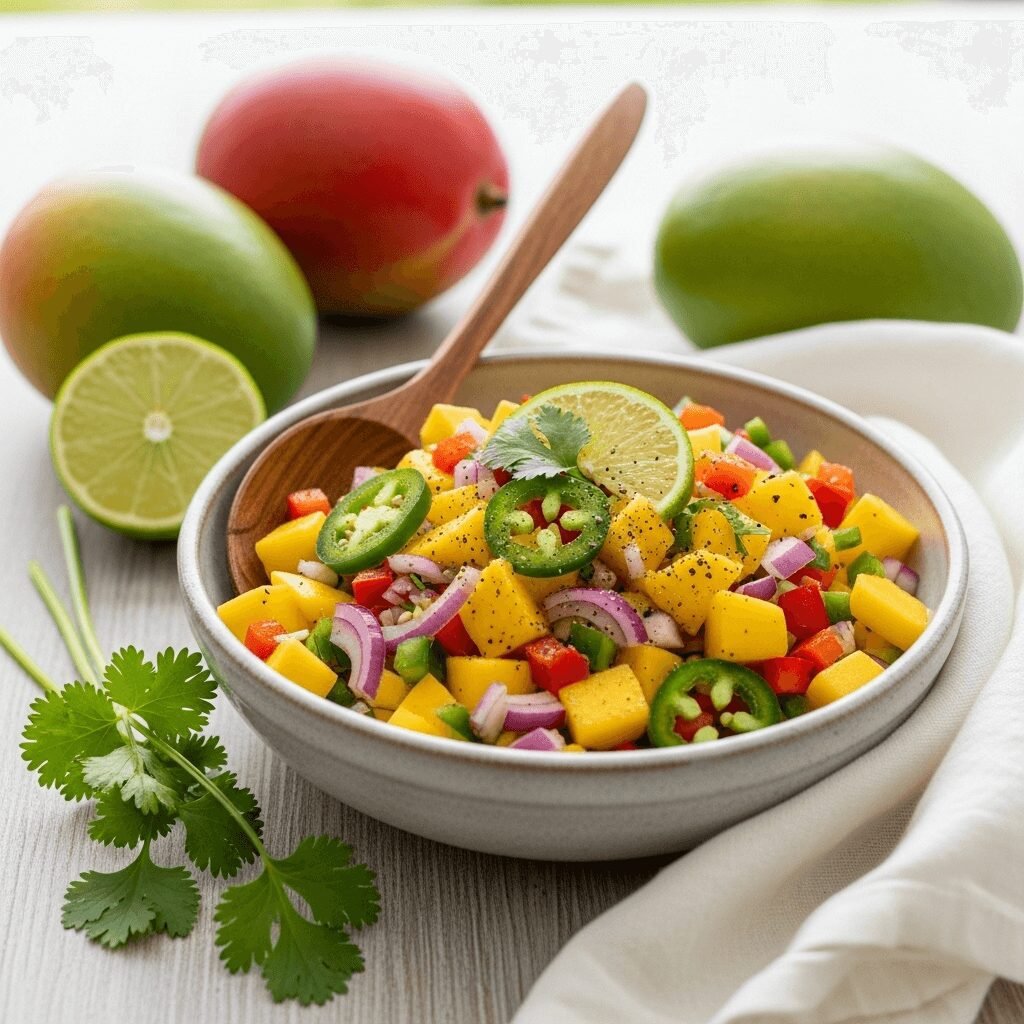
Get ready for the ultimate fresh summer salsa that’s about to become your new obsession—this vibrant mango salsa is a perfect blend of sweet, spicy, tangy, and fresh flavors that’ll brighten up any meal! This easy mango salsa recipe combines juicy, ripe mango chunks with crisp red bell pepper, zesty red onion, fresh cilantro, lime juice, and just a touch of jalapeño heat. It’s colorful, refreshing, and tastes like summer in a bowl.
What makes this homemade mango salsa truly special is how it balances contrasting flavors and textures. The sweet mango plays beautifully against tangy lime and spicy jalapeño, while cilantro adds freshness and red onion provides a sharp bite. Unlike jarred salsas that taste flat and one-dimensional, this fresh fruit salsa delivers complex, bright flavors that awaken your taste buds with every bite.
This tropical mango salsa works perfectly for countless occasions: summer BBQs and pool parties, Cinco de Mayo celebrations, casual weeknight dinners, game day snacking, picnics and potlucks, or as a refreshing side dish for grilled fish and chicken. Serve it with tortilla chips as an appetizer, spoon it over tacos or burritos, pair it with grilled proteins, or use it as a zesty topping for salads and grain bowls.
Whether you’re looking for a crowd-pleasing party dip, a healthy snack, or a versatile condiment that elevates simple meals, this quick mango salsa delivers on all fronts. Let’s make the most delicious, colorful salsa you’ve ever tasted!
History / Background
Mango salsa represents a delicious fusion of traditional Mexican salsa culture and tropical Caribbean influences. While tomato-based salsas have been prepared in Mexico for centuries—dating back to Aztec civilizations who combined tomatoes, chili peppers, and ground squash seeds—fruit-based salsas like mango salsa are a more modern innovation that emerged as culinary traditions from different regions blended together.
Mangoes themselves have an ancient history in South Asia, where they’ve been cultivated for over 4,000 years in India and Southeast Asia. Spanish and Portuguese explorers brought mangoes to the Americas in the 15th and 16th centuries, where they flourished in tropical climates. In Latin America and the Caribbean, mangoes became integrated into local cuisines, appearing in everything from beverages and desserts to savory dishes.
The concept of fruit salsa gained mainstream popularity in the United States during the 1990s and early 2000s as part of the broader “fusion cuisine” movement. Chefs began experimenting with non-traditional salsa ingredients, moving beyond tomatoes to incorporate tropical fruits like mango, pineapple, and papaya. These fruity salsas brought sweetness and complexity that paired particularly well with fish, chicken, and pork.
Mango salsa specifically became trendy at Caribbean and Latin-fusion restaurants, where chefs served it with grilled fish tacos, jerk chicken, or as a fresh accompaniment to seafood. The combination of sweet mango with traditional salsa elements like lime, cilantro, onion, and jalapeño created an irresistible flavor profile that appealed to American palates seeking both familiar and exotic tastes.
Food bloggers and home cooks embraced mango salsa enthusiastically in the 2000s and 2010s, especially as healthy eating trends emphasized fresh fruits and vegetables. The vibrant colors made it highly photogenic for social media, while the simple preparation and impressive results made it accessible to cooks of all skill levels. Today, mango salsa has become a staple of summer cooking in the United States, appearing at backyard BBQs, taco nights, and pool parties across the country.
What makes mango salsa culturally significant is how it represents culinary evolution—taking traditional techniques and ingredients while embracing new flavors and global influences. It honors Mexican salsa-making traditions while celebrating tropical fruits, creating something that feels both familiar and excitingly different.
Why You’ll Love This Recipe
This isn’t just another salsa recipe—this is THE fresh mango salsa that will have everyone asking for the recipe at every gathering!
Here’s why this homemade mango salsa will become your summer staple:
- Ready in 15 minutes – Just chop, mix, and serve for instant flavor
- Incredibly fresh and vibrant – Tastes like summer with bright, clean flavors
- Perfect sweet-spicy balance – Sweet mango tempered with jalapeño heat and tangy lime
- Naturally healthy – Low calorie, packed with vitamins, and full of fresh ingredients
- Versatile and multi-purpose – Works as a dip, topping, side dish, or condiment
- Crowd-pleasing – Everyone loves the tropical flavors and beautiful colors
- Budget-friendly – Uses affordable, accessible ingredients
- No cooking required – Perfect for hot summer days when you don’t want to turn on the stove
- Customizable heat level – Adjust jalapeño to make it mild or spicy
- Naturally gluten-free and vegan – Fits most dietary preferences without modifications
- Great for meal prep – Makes enough for several meals or gatherings
- Kid-friendly – Most children love the sweet mango flavor (just reduce jalapeño!)
- Impressive presentation – The colorful mix looks gorgeous and appetizing
Ingredient Notes
Fresh, quality ingredients make all the difference in this vibrant salsa:
Ripe Mangoes – The star ingredient! You’ll need 2 large ripe mangoes (or 3 smaller ones) to yield about 2 cups diced fruit. Choose mangoes that yield slightly to gentle pressure and smell sweet and fragrant near the stem end. They should have yellow-orange skin with possible red blush (color varies by variety). Avoid rock-hard green mangoes (underripe and too tart) or overly soft mushy ones. If you can only find firm mangoes, let them ripen on the counter for a few days. For convenience, you can use frozen mango chunks (thawed and drained), though fresh is always best.
Red Bell Pepper – Adds sweet crunch and beautiful color. Red bell peppers are sweeter than green ones and provide gorgeous contrast to the orange mango. Yellow or orange peppers work too. One medium pepper is perfect. Remove all seeds and white membranes for the best texture.
Red Onion – Provides sharp, pungent bite that balances the sweetness. Red onion is milder and more colorful than white or yellow onion, making it ideal for raw salsas. For even milder onion flavor, soak diced onion in cold water for 10 minutes, then drain before using.
Fresh Cilantro – Essential for authentic Mexican flavor! The fresh, citrusy, slightly peppery taste of cilantro ties everything together. If you’re one of those people with the genetic variation that makes cilantro taste like soap, substitute fresh parsley or simply omit (the salsa will still be delicious).
Jalapeño Pepper – Brings the heat! One small jalapeño provides gentle warmth; use two for more spice, or omit for completely mild salsa. Remove seeds and membranes for less heat, or leave them in if you like it spicy. Wash hands thoroughly after handling jalapeños!
Fresh Lime Juice – Absolutely crucial for brightness and preventing browning. Always use fresh-squeezed lime juice, never bottled—the flavor difference is dramatic. You’ll need about 2-3 limes for ¼ cup juice. Lemon juice can substitute in a pinch but lime is traditional and tastes better with mango.
Honey – Optional but recommended! Just 1 teaspoon enhances the mango’s natural sweetness and balances the lime’s acidity. Agave nectar works too. Omit for sugar-free or leave it out if your mangoes are very sweet.
Salt – Essential for bringing out all the flavors. Don’t skip it! Start with ½ teaspoon and adjust to taste.
Optional Add-ins:
- Diced cucumber for extra crunch
- Diced avocado for creaminess (add just before serving)
- Minced garlic for extra flavor
- Crushed red pepper flakes for more heat
- Fresh mint for a unique twist
Equipment Needed
Making mango salsa requires minimal equipment—just basic kitchen tools:
- Sharp knife – Essential for cleanly cutting mango, which can be tricky due to the pit
- Large cutting board – Preferably one that won’t stain (mango can leave color)
- Large mixing bowl – For combining all ingredients
- Measuring cups and spoons – For accurate proportions
- Citrus juicer or reamer – Makes extracting lime juice easier, though you can squeeze by hand
- Large spoon or rubber spatula – For mixing and serving
Optional but helpful:
- Mango splitter – A specialized tool that removes the pit easily
- Fine grater or zester – If adding lime zest
- Serving bowl – For presentation

Mango Salsa Recipe
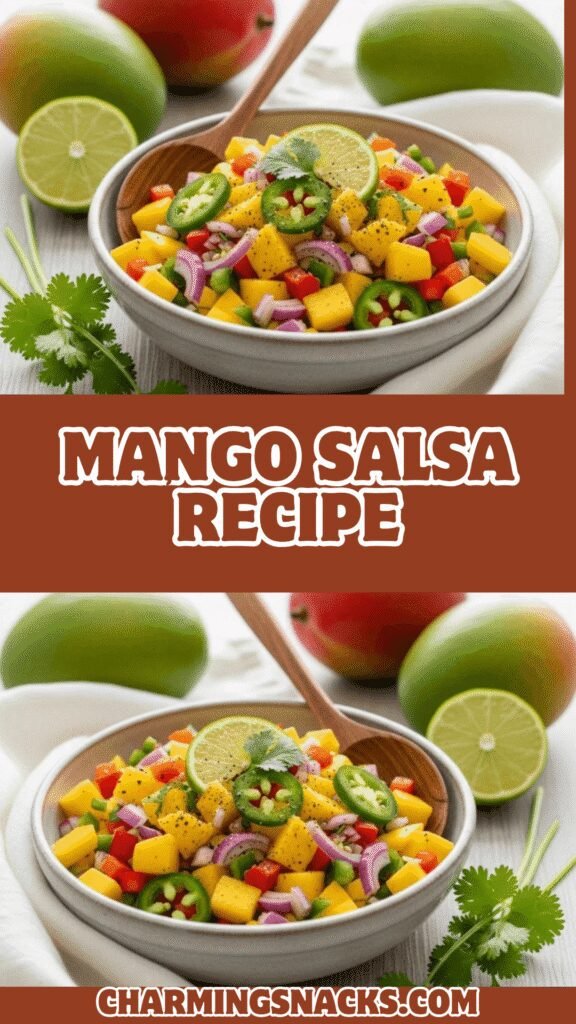
This fresh mango salsa is a vibrant, tropical blend of sweet ripe mangoes, crisp red bell pepper, zesty red onion, cilantro, lime juice, and jalapeño. Ready in just 15 minutes with no cooking required, this easy fruit salsa is perfect for summer gatherings, taco nights, or as a refreshing dip with chips. The combination of sweet, spicy, and tangy flavors makes this homemade mango salsa irresistible!
- Total Time: 15 minutes
- Yield: About 3 cups (6-8 servings) 1x
Ingredients
Main Ingredients:
- 2 large ripe mangoes, peeled and diced (about 2 cups)
- 1 medium red bell pepper, diced
- ½ cup red onion, finely diced
- ½ cup fresh cilantro, chopped
- 1 small jalapeño, seeded and minced (adjust to taste)
- ¼ cup fresh lime juice (about 2-3 limes)
- 1 teaspoon honey (optional but recommended)
- ½ teaspoon salt, or to taste
- ¼ teaspoon black pepper
Optional Add-Ins:
- ½ cup diced cucumber
- 1 diced avocado (add just before serving)
- 1 clove garlic, minced
- ¼ teaspoon cumin
Instructions
- Prepare the mango: This is the trickiest part! Stand the mango on its end. Using a sharp knife, slice down along one side of the flat pit, getting as close to the pit as possible. Repeat on the other side. You’ll have two “cheeks.” Score the flesh in a crosshatch pattern without cutting through the skin, then turn inside out and slice the cubes off. Peel any remaining fruit from around the pit. Dice into ½-inch pieces. You should have about 2 cups.
- Dice the vegetables: Dice the red bell pepper into pieces similar in size to the mango (about ½ inch). Finely dice the red onion—you want smaller pieces since raw onion is pungent. Mince the jalapeño very finely, removing seeds and membranes if you prefer less heat. Remember to wash your hands after handling jalapeño!
- Chop cilantro: Roughly chop the cilantro leaves and tender stems. Discard any thick, tough stems. Don’t chop it too finely—you want to see visible cilantro pieces.
- Combine ingredients: In a large mixing bowl, gently combine the diced mango, red bell pepper, red onion, cilantro, and jalapeño. Toss gently to distribute evenly.
- Make the dressing: In a small bowl or measuring cup, whisk together the fresh lime juice, honey (if using), salt, and black pepper. Stir until honey dissolves and salt is incorporated.
- Dress the salsa: Pour the lime mixture over the mango mixture. Gently fold everything together until well combined and all ingredients are coated with the lime dressing. Be gentle to keep the mango pieces intact.
- Taste and adjust: This is important! Taste your salsa and adjust seasonings. Need more lime? Add it. Want more heat? Add more jalapeño or a pinch of cayenne. Not sweet enough? Add a bit more honey. Too sweet? Add more lime juice. Perfect? Great!
- Chill (recommended): While you can serve immediately, the salsa tastes even better after chilling for 30 minutes to 2 hours. This allows flavors to meld and develop. Cover and refrigerate until ready to serve.
- Serve: Give the salsa a gentle stir before serving (some liquid will settle at the bottom). Serve with tortilla chips, or use as a topping for fish, chicken, tacos, or salads. Enjoy!
Notes
- Mango ripeness matters: Use ripe but firm mangoes. Overripe mangoes turn mushy; underripe ones are too tart and hard to cut.
- Adjust heat: Start with half a jalapeño if sensitive to heat. You can always add more!
- Make it chunky or fine: Dice ingredients larger for chunky salsa, smaller for finer texture.
- Add avocado last: If using avocado, add it just before serving to prevent browning.
- Fresh lime juice only: Bottled lime juice tastes flat and bitter. Always use fresh!
- Cilantro alternatives: Can’t stand cilantro? Use parsley or simply omit.
- Best when fresh: This salsa is best eaten within 24-48 hours. The mango softens over time.
- Prep Time: 15 minutes
- Cook Time: 0 minutes
- Category: Appetizer
- Method: No-Cook
- Cuisine: Mexican
- Diet: Gluten Free
Nutrition
- Serving Size: ½ cup
- Calories: 45
- Sugar: 9g
- Sodium: 150mg
- Fat: 0.3g
- Saturated Fat: 0g
- Unsaturated Fat: 0g
- Trans Fat: 0g
- Carbohydrates: 12g
- Fiber: 2g
- Protein: 0g
- Cholesterol: 0mg
Tips & Variations
The basic mango salsa is perfect, but here are creative ways to customize:
Pineapple Mango Salsa – Replace half the mango with diced fresh pineapple for extra tropical sweetness and tang.
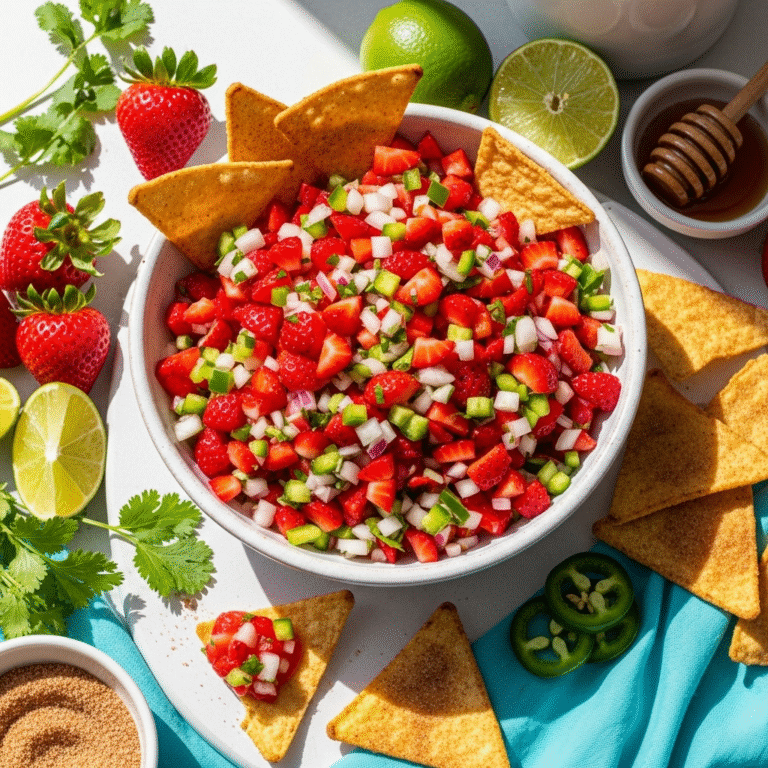
Strawberry Mango Salsa – Add 1 cup diced fresh strawberries for a beautiful pink-orange salsa perfect with fish or desserts.
Spicy Mango Salsa – Use 2 jalapeños (with seeds), add ¼ teaspoon cayenne pepper, or include diced serrano peppers for serious heat.
Black Bean Mango Salsa – Add 1 cup drained black beans and 1 cup corn for a heartier, more substantial salsa that works as a side dish or even a light meal.
Avocado Mango Salsa – Gently fold in 1-2 diced avocados just before serving for creamy richness.
Cucumber Mango Salsa – Add ½ cup diced cucumber for extra crunch and refreshing flavor.
Asian-Inspired Mango Salsa – Replace cilantro with mint and basil, use lime juice, add minced ginger and a splash of rice vinegar for fusion flavor.
Peach Mango Salsa – Replace half the mango with diced fresh peaches when they’re in season.
Grilled Mango Salsa – Grill mango and bell pepper halves for 2-3 minutes before dicing. The char adds wonderful smoky depth.
Jicama Mango Salsa – Add ½ cup diced jicama for apple-like crunch and mild sweetness.
Spicy Mango Habanero Salsa – Replace jalapeño with ½ minced habanero for intense heat (use gloves when handling!).
Mango Salsa Verde – Use green mangoes (underripe) instead of ripe ones, and add green tomatoes for a tangy, less sweet version.
Pro Chef Tips
These professional insights will elevate your mango salsa from good to restaurant-quality:
Choose the right mango ripeness – The perfect mango yields slightly to gentle pressure (like a ripe avocado) but still holds its shape. Too firm and it’s hard to cut and tastes sour; too soft and it turns mushy in the salsa. Let firm mangoes ripen at room temperature for 2-5 days.
Uniform dice matters – Cut all ingredients to roughly the same size (about ½ inch) so you get a balanced taste in every bite. Uniform pieces also look more professional and appealing.
Salt strategically – Salt doesn’t just season; it draws out moisture and intensifies flavors. However, too much salt can make the salsa watery as it draws liquid from vegetables. Start with less and add more after the salsa has sat for 15 minutes.
Don’t over-mix – Mango is delicate and bruises easily. Fold ingredients together gently with a rubber spatula rather than stirring vigorously. Rough handling breaks down mango pieces into mush.
Chill before serving – While you can eat mango salsa immediately, chilling for at least 30 minutes allows flavors to marry and develop complexity. Cold salsa also tastes more refreshing.
Drain excess liquid – After the salsa sits, it will release juice (especially if your mangoes were very ripe). Before serving, you can drain some liquid to prevent chips from getting soggy. Save that juice—it’s delicious in cocktails or smoothies!
Balance sweet, sour, spicy, salty – A great salsa hits all these notes. Taste as you go: lime adds sour, honey adds sweet, jalapeño adds spicy, salt enhances everything. Adjust until all flavors are in harmony.
Toast cumin for depth – If using cumin (optional), toast whole cumin seeds in a dry pan for 30 seconds, then grind them. Toasted cumin adds incredible depth that pre-ground can’t match.
Add herbs at the right time – Add cilantro just before serving or right at the end. Lime juice can darken cilantro if it sits too long, and the flavor fades. For best color and flavor, mix cilantro in within an hour of serving.
Consider texture contrast – Include ingredients with different textures: soft mango, crisp bell pepper, crunchy onion. This creates interest in every bite.
Common Mistakes to Avoid
Even simple recipes have pitfalls. Here’s what to watch out for:
Using unripe mangoes – Mangoes need to be ripe for proper sweetness and texture. Hard, green mangoes are tart, fibrous, and difficult to cut. They’ll never taste right no matter how much sugar or honey you add. Be patient and let them ripen!
Skipping fresh lime juice – Bottled lime juice tastes bitter and flat with none of the bright, fresh flavor that makes salsa sing. Always squeeze fresh limes. It takes an extra minute but makes all the difference.
Cutting mango too large – Big chunks of mango are awkward to eat with chips and don’t allow even flavor distribution. Aim for ½-inch pieces—they’re perfect for scooping with chips and deliver balanced flavor in every bite.
Over-handling the mixture – Stirring too vigorously or too much breaks down the delicate mango into mush. Fold gently, just until combined. The salsa should have distinct, intact pieces of fruit and vegetables.
Not adjusting seasonings – Mangoes vary in sweetness, limes vary in tartness, and jalapeños vary in heat. Always taste and adjust! A great salsa requires seasoning to taste, not just following measurements blindly. Trust your palate.
Making it too far in advance – While flavors improve after 30 minutes to 2 hours, making salsa a full day ahead results in mushy mango and watery salsa. Fresh mango salsa is best eaten within 24 hours of preparation. Make it the same day you plan to serve it.
Forgetting to wash your hands after handling jalapeños – Capsaicin (the compound that makes peppers hot) transfers easily to your skin. If you touch your eyes, nose, or any sensitive area after handling jalapeños without washing, you’ll experience painful burning. Wash thoroughly with soap!
Storage & Meal Prep
Mango salsa is best fresh but can be stored with proper care:
Refrigerator Storage – Store mango salsa in an airtight container in the refrigerator for up to 2-3 days. The quality is best within the first 24 hours. After that, the mango begins to soften and release more liquid, making the salsa watery.
Texture Changes – As salsa sits, ingredients release natural juices and the mixture becomes more liquidy. This is normal. Before serving, you can drain off excess liquid if desired. The flavors actually improve slightly after a few hours, but texture declines after a day.
Preventing Browning – Press plastic wrap directly onto the surface of the salsa before sealing the container. This minimizes air exposure and helps prevent browning (though mangoes don’t brown as quickly as apples).
Meal Prep Strategy – For best results, prep ingredients separately: dice mango, bell pepper, and onion, chop cilantro, juice limes. Store each in separate containers. Combine them within a few hours of serving for the freshest taste and best texture.
Adding Avocado – If your salsa includes avocado, add it just before serving. Avocado browns quickly and becomes mushy when stored. Store the base salsa without avocado, then gently fold it in right before eating.
Draining for Serving – If your stored salsa has accumulated liquid at the bottom, use a slotted spoon to serve, leaving excess juice behind. This prevents soggy chips and maintains better texture.
Not Freezer-Friendly – Do not freeze fresh mango salsa. The high water content in mango and vegetables means they turn mushy and watery when thawed. The texture is completely ruined and cannot be restored.
Make-Ahead & Freezer Notes
While fresh is always best, here are strategies for advance preparation:
Best Make-Ahead Approach – Prepare all ingredients (dice mango, bell pepper, onion, chop cilantro, juice limes) and store separately in airtight containers in the refrigerator for up to 24 hours. Combine everything within 2-3 hours of serving for optimal freshness.
Short-Term Make-Ahead – You can make the complete salsa up to 4-6 hours before serving. Store covered in the refrigerator and give it a gentle stir before serving. The flavors actually improve during this time!
Day-Before Prep – If you must prep the day before, dice all vegetables and fruit, but keep them separate. Store mango with a squeeze of lime juice to prevent browning. Combine everything the day of your event, at least 1 hour before serving.
Freezing is Not Recommended – Fresh salsa with high water-content ingredients like mango does not freeze well. The fruit and vegetables turn mushy and watery when thawed. The texture is completely unacceptable. Always make fresh for best results.
Party Planning Timeline – For parties, prep ingredients 4-6 hours ahead, refrigerate separately, then combine 1-2 hours before guests arrive. This ensures maximum freshness while reducing last-minute work.
Serving Suggestions
This versatile mango salsa pairs beautifully with countless dishes:
Classic Ways to Serve:
- With tortilla chips as an appetizer or party dip
- Spooned over grilled fish (salmon, mahi-mahi, tilapia, or snapper)
- On fish tacos or shrimp tacos
- Over grilled chicken breasts or thighs
- As a topping for grilled pork chops or tenderloin
- With blackened fish or jerk chicken
Creative Serving Ideas:
- On top of black bean burgers or veggie burgers
- Mixed into grain bowls with quinoa or rice
- As a fresh topping for grilled steak
- Alongside coconut shrimp or fried fish
- On crab cakes or fish cakes
- With quesadillas or burritos
- On top of avocado toast
- As a bright topping for scrambled eggs or omelets
Complete Meal Pairings:
- Grilled fish + mango salsa + cilantro lime rice + black beans
- Chicken tacos + mango salsa + Mexican street corn
- Jerk chicken + mango salsa + coconut rice + plantains
- Grilled shrimp skewers + mango salsa + coleslaw + cornbread
- Fish tacos + mango salsa + chips and guacamole
Beverage Pairings:
- Margaritas (classic lime or mango-flavored)
- Corona or other light Mexican beers
- Piña coladas or tropical cocktails
- Fresh fruit agua fresca
- Sparkling water with lime
- White wine (Sauvignon Blanc or Riesling)
- Mojitos or caipir