
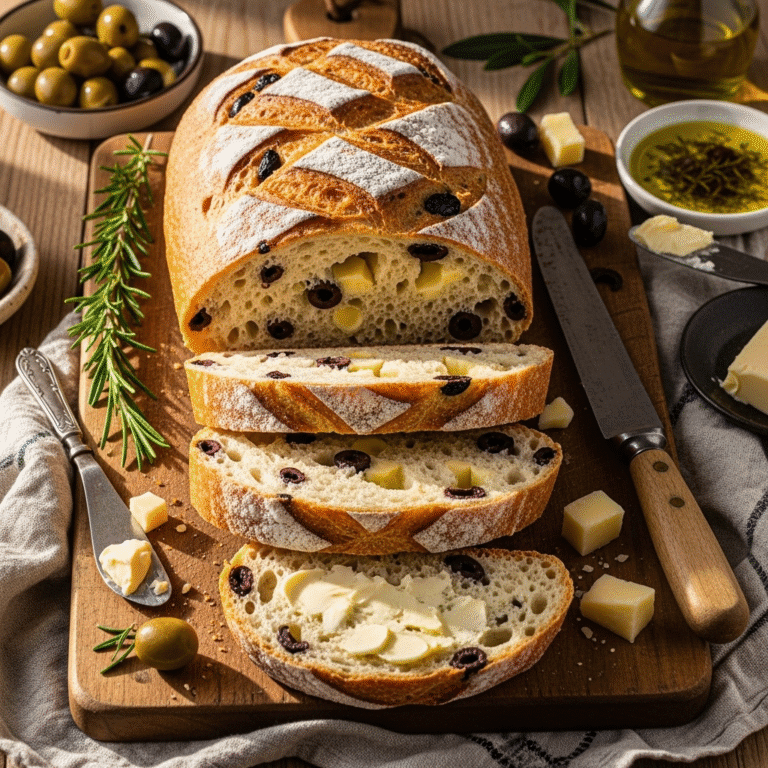
Easy Olive Cheese Bread Recipe: Savory Homemade Loaf

Olive cheese bread is a savory, rustic loaf studded with briny olives and rich cheese—a combination that creates an irresistible bread perfect for any occasion. This easy olive cheese bread recipe delivers a golden-crusted, tender-crumbed artisan-style bread loaded with Mediterranean flavors that make every slice absolutely delicious. Whether you’re serving it alongside soup, bringing it to a potluck, enjoying it with dinner, or simply snacking on warm slices with butter, this homemade olive cheese bread transforms simple ingredients into something truly special.
What makes this savory olive bread so appealing is how it combines contrasting flavors and textures into perfect harmony. The salty, tangy olives provide bursts of Mediterranean flavor throughout the bread, while melted cheese creates pockets of creamy richness. Fresh herbs add aromatic notes, and the bread itself develops a beautiful golden crust with a soft, pillowy interior. Each bite offers a different combination of olives, cheese, and herbs, making this bread endlessly interesting and satisfying.
This cheese olive bread recipe works beautifully for countless occasions—holiday gatherings, dinner parties, weekend brunches, casual weeknight dinners, or as a homemade gift. It’s impressive enough for special occasions yet simple enough for regular baking. The best part? While this homemade olive cheese bread looks and tastes like it came from an artisan bakery, it uses straightforward techniques that any home baker can master, making rustic, flavorful bread accessible to everyone.
History / Background
Olive cheese bread represents the delicious intersection of Mediterranean ingredients with European bread-baking traditions. Olives have been cultivated around the Mediterranean for thousands of years, with evidence of olive cultivation dating back to 3000 BCE in Crete and Syria. These versatile fruits became staples of Mediterranean diets, featured in countless dishes across Greek, Italian, Spanish, and Middle Eastern cuisines.
The tradition of adding savory ingredients to bread dough is ancient and practical. In many cultures, bread wasn’t just an accompaniment but often contained the meal’s protein and vegetables baked right into the loaf. Italian focaccia with olives, French fougasse studded with various ingredients, and Greek olive bread all exemplify this tradition of enriching simple bread with flavorful add-ins.
The specific combination of olives with cheese in bread likely evolved from Italian and Mediterranean baking traditions. In Italy, regions like Puglia and Calabria have long traditions of olive breads, while cheese-filled breads appear throughout Italian and French baking. The marriage of these two ingredients created a bread that’s both substantial enough to serve as a meal component and flavorful enough to stand alone.
In American home baking, savory breads like olive cheese bread gained popularity in the 1980s-1990s as Americans became more interested in artisan breads and Mediterranean cuisine. Food magazines and cookbooks began featuring recipes that brought European-style savory breads to home kitchens. The rise of bread machines in the 1990s also made homemade bread more accessible, encouraging experimentation with different flavors and additions.
Today, olive cheese bread has become a beloved option for home bakers who want to create impressive, flavorful bread without requiring professional skills or complicated techniques. It represents how traditional Mediterranean ingredients and European bread-making have been embraced and adapted by American home cooks, creating something that feels both rustic and approachable.
Why You’ll Love This Recipe
This olive cheese bread is about to become your new favorite homemade bread recipe. This easy savory bread delivers bakery-quality results using simple ingredients and straightforward techniques that anyone can master. Whether you’re an experienced baker or trying yeast bread for the first time, you’ll appreciate how this homemade olive cheese bread creates impressive results that taste as good as they look.
Here’s why this recipe deserves a permanent spot in your baking rotation:
- Bakery-Quality at Home – Tastes like artisan bread from an upscale bakery
- Simple Ingredients – Uses pantry staples plus olives and cheese
- No Special Skills – Straightforward techniques perfect for beginners
- Impressive Presentation – Always looks beautiful and rustic
- Incredibly Flavorful – Mediterranean ingredients create complex, delicious taste
- Versatile Serving – Works for appetizers, meals, or snacks
- Makes Your House Smell Amazing – Fresh bread baking is the best aroma
- Budget-Friendly – Costs less than bakery bread with better results
- Great for Gifting – Homemade bread makes a wonderful gift
- Freezer-Friendly – Make ahead and freeze for later
- Crowd-Pleasing – Everyone loves fresh, warm, savory bread
- Pairs with Everything – Complements soups, salads, pasta, and more
Ingredient Notes
Understanding your ingredients helps you make the best olive cheese bread possible. Let’s break down each component:
All-Purpose Flour – The foundation that provides structure. All-purpose flour creates the perfect texture—not too dense, not too airy. Bread flour can substitute for slightly chewier texture, but all-purpose is ideal for this recipe’s rustic, tender crumb. You’ll need about 3-3½ cups.
Active Dry Yeast – The leavening agent that makes the bread rise and creates that beautiful, airy interior. Make sure your yeast is fresh (check expiration date) and proof it in warm water to ensure it’s active. Instant yeast can substitute with no changes needed. The yeast is what transforms simple dough into light, fluffy bread.
Olive Oil – Adds moisture, richness, and subtle flavor while creating a tender crumb. Extra virgin olive oil provides the best taste and connects to the Mediterranean theme. Regular olive oil or even vegetable oil can substitute, though flavor will be milder.
Olives – The star ingredient that provides salty, briny, tangy flavor. Use pitted olives (green, black, or Kalamata—your preference). Chop them into pieces so they distribute throughout the bread. About 1 cup of chopped olives is perfect. Kalamata olives provide the most robust flavor, while green olives are milder.
Cheese – Creates pockets of melted, savory richness throughout. Shredded mozzarella, cheddar, or a blend works beautifully. For best melting, shred from a block rather than using pre-shredded. About 1-1½ cups provides generous cheese throughout. Parmesan can be added for extra flavor.
Herbs – Fresh or dried herbs add aromatic complexity. Rosemary, oregano, basil, or Italian seasoning all complement the Mediterranean flavors. About 1-2 tablespoons of fresh herbs (or 1-2 teaspoons dried) enhances the bread without overwhelming.
Honey or Sugar – A small amount (1-2 tablespoons) feeds the yeast and promotes browning. Honey adds subtle sweetness and moisture; sugar is more neutral. Either works perfectly.
Salt – Essential for flavor development and controlling yeast activity. About 1½-2 teaspoons seasons the entire loaf. Don’t skip it—bread without enough salt tastes flat.
Equipment Needed
You’ll need these tools to make perfect olive cheese bread:
- Large Mixing Bowl – For combining and kneading dough
- Measuring Cups and Spoons – For accurate ingredient measurements
- Wooden Spoon or Dough Whisk – For initial mixing
- Stand Mixer with Dough Hook (Optional) – Makes kneading easier, though hand-kneading works great
- Clean Kitchen Towel – To cover rising dough
- Loaf Pan or Baking Sheet – 9×5-inch loaf pan or baking sheet for free-form loaf
- Parchment Paper – Prevents sticking and makes cleanup easy
- Sharp Knife or Lame – For scoring the top of the loaf
- Pastry Brush – Optional, for brushing with olive oil before baking
- Wire Cooling Rack – For cooling bread properly after baking
Olive Cheese Bread Recipe
Easy olive cheese bread features a golden crust and tender interior studded with savory olives, melted cheese, and herbs. This homemade artisan-style bread is perfect for any meal!
- Total Time: 2 hours 30 minutes
- Yield: 1 loaf (12-14 slices) 1x
Ingredients
For the Dough:
- 3 to 3½ cups all-purpose flour
- 2¼ teaspoons (1 packet) active dry yeast
- 1 tablespoon honey or sugar
- 1½ teaspoons salt
- 1 cup warm water (110°F)
- 3 tablespoons olive oil
For the Mix-ins:
- 1 cup pitted olives (Kalamata, green, or black), chopped
- 1 to 1½ cups shredded cheese (mozzarella, cheddar, or blend)
- 2 tablespoons fresh rosemary or 1 tablespoon dried Italian seasoning
- Optional: 2 tablespoons grated Parmesan
For Topping:
- 1 tablespoon olive oil for brushing
- Flaky sea salt for sprinkling
Instructions
- Proof Yeast: In a large bowl, combine warm water (110°F), yeast, and honey. Stir gently and let sit for 5-10 minutes until foamy. If it doesn’t foam, your yeast is dead—start over with fresh yeast.
- Mix Dough: Add olive oil and salt to the yeast mixture. Gradually add flour, 1 cup at a time, mixing with a wooden spoon until a shaggy dough forms. You may need slightly less or more flour—dough should be soft but not overly sticky.
- Knead: Turn dough onto a lightly floured surface and knead for 8-10 minutes until smooth and elastic (or use stand mixer with dough hook for 5-6 minutes on medium speed). The dough should be soft, slightly tacky, but not sticky.
- Add Mix-ins: Flatten dough into a rectangle. Sprinkle olives, cheese, and herbs over the surface. Fold dough over itself and knead gently to distribute mix-ins throughout. Don’t worry if distribution isn’t perfectly even—it will even out during shaping.
- First Rise: Place dough in a lightly greased bowl, turning to coat. Cover with a damp kitchen towel and let rise in a warm place for 1-1½ hours, or until doubled in size.
- Shape: Punch down dough and turn onto a lightly floured surface. Shape into a loaf by flattening into a rectangle, then rolling tightly from one short end to the other, pinching seams to seal. Place seam-side down in a greased 9×5-inch loaf pan, or shape into a round and place on a parchment-lined baking sheet for a free-form loaf.
- Second Rise: Cover loosely with a towel and let rise for 30-45 minutes until puffy and nearly doubled.
- Preheat Oven: Preheat oven to 375°F (190°C) while bread completes second rise.
- Prepare for Baking: Brush top of loaf with olive oil. Use a sharp knife or lame to score the top with 3-4 diagonal slashes about ¼ inch deep. Sprinkle with flaky sea salt if desired.
- Bake: Bake for 30-35 minutes until golden brown and internal temperature reaches 190°F. The loaf should sound hollow when tapped on the bottom.
- Cool: Remove from oven and let cool in pan for 10 minutes, then transfer to a wire rack. Let cool at least 20 minutes before slicing (warm bread is harder to slice cleanly, though it’s delicious!).
Notes
- Warm water should be 110°F—too hot kills yeast, too cold won’t activate it.
- Don’t skip kneading—it develops gluten for proper texture.
- Rising times vary based on kitchen temperature—look for doubled size rather than exact time.
- Bread is done when it reaches 190°F internal temperature or sounds hollow when tapped.
- Let bread cool at least 20 minutes before slicing for cleanest cuts.
- Store in an airtight container at room temperature for 3-4 days.
- Prep Time: 20 minutes (plus 1.5 hours rising time)
- Cook Time: 30-35 minutes
- Category: Bread
- Method: Baking
- Cuisine: Mediterranean
- Diet: Gluten Free
Nutrition
- Serving Size: 1 slice (1/12 of loaf)
- Calories: 215
- Sugar: 2g
- Sodium: 385mg
- Fat: 8g
- Saturated Fat: 3g
- Unsaturated Fat: 5g
- Trans Fat: 0g
- Carbohydrates: 28g
- Fiber: 2g
- Protein: 7g
- Cholesterol: 12mg
Tips & Variations
Transform your olive cheese bread to match any preference with these creative variations:
Sun-Dried Tomato Olive Bread: Add ½ cup chopped sun-dried tomatoes along with the olives for sweet-tart contrast and beautiful color throughout the bread.
Garlic Herb Cheese Bread: Add 3-4 cloves minced fresh garlic and increase herbs to 3 tablespoons fresh (or 1 tablespoon dried) for intensely aromatic, garlicky bread.
Spicy Olive Cheese Bread: Add ½ teaspoon red pepper flakes or diced jalapeños for heat that contrasts beautifully with rich cheese and salty olives.
Mediterranean Bread: Add artichoke hearts (chopped and well-drained), roasted red peppers, and use feta cheese along with mozzarella for bold Mediterranean flavors.
Whole Wheat Olive Bread: Replace half the all-purpose flour with whole wheat flour for heartier, nuttier flavor and extra fiber. You may need slightly more water.
Focaccia-Style Olive Bread: Instead of shaping into a loaf, press dough into an oiled 9×13-inch pan, dimple with fingertips, top with olives and cheese, and bake for 25-30 minutes for focaccia-style bread.
Herbed Cheese Bread (No Olives): Skip olives for those who don’t like them, and increase cheese to 2 cups with generous herbs for a simple but delicious cheese bread.
Bacon Olive Cheese Bread: Add ½ cup cooked, crumbled bacon for smoky, savory richness that elevates the entire loaf.
Pro Chef Tips
Elevate your olive cheese bread from good to bakery-quality with these professional techniques:
Proof Your Yeast Properly: Water temperature is crucial—110°F is the sweet spot. Too hot (above 120°F) kills yeast; too cool (below 100°F) won’t activate it properly. Use an instant-read thermometer or test on your wrist—it should feel warm but comfortable. If yeast doesn’t foam after 5-10 minutes, start over with fresh yeast.
Knead Until Windowpane Test Passes: Properly kneaded dough should pass the “windowpane test”—stretch a small piece of dough thin. If it forms a translucent membrane without tearing, gluten is developed enough. Under-kneaded dough creates dense, heavy bread. This takes 8-10 minutes by hand or 5-6 minutes in a mixer.
Create Steam in the Oven: For a crispier, more professional crust, place a shallow pan of hot water on the oven’s bottom rack while baking. The steam creates that beautiful, crackling crust you see on artisan breads.
Score Deeply and Confidently: Don’t be timid when scoring. Use a very sharp knife or razor blade (lame) and cut about ¼-½ inch deep at a 45-degree angle. Confident, deep scoring allows bread to expand properly and creates beautiful patterns.
Let Bread Cool Completely Before Storing: Warm bread creates condensation in storage containers, making the crust soggy. Always cool completely on a wire rack (at least an hour) before storing. The bread continues cooking slightly as it cools.
Use High-Quality Olives: Since olives are a star ingredient, their quality matters. Kalamata olives from Greece, Castelvetrano olives from Italy, or good-quality Spanish olives all provide better flavor than generic canned olives.
Don’t Overfill with Mix-ins: While tempting to add tons of olives and cheese, too many add-ins prevent dough from holding together properly. Stick to the amounts listed for best structure and texture.
Common Mistakes to Avoid
Sidestep these frequent pitfalls for perfect olive cheese bread every time:
Using Water That’s Too Hot or Cold: Incorrect water temperature is the most common bread-baking mistake. Too-hot water kills yeast; too-cold water won’t activate it. Both result in bread that won’t rise. Always use a thermometer or test water temperature—110°F feels warm but comfortable on your wrist.
Not Kneading Enough: Under-kneaded dough lacks gluten development, creating dense, heavy bread rather than light, airy texture. Knead the full time (8-10 minutes by hand) until dough is smooth and elastic. Your arms will get tired—that’s normal and means you’re doing it right!
Rushing the Rising Times: Bread cannot be rushed. If your kitchen is cool, dough may need longer than the time listed to double. Look for visual cues (doubled size) rather than relying solely on time. Under-risen bread is dense; properly risen bread is light and fluffy.
Using Too Much Flour: Adding too much flour creates dry, dense bread. Add flour gradually during kneading, stopping when dough is soft and slightly tacky but not sticky. It’s better to have slightly tacky dough than dry dough.
Not Draining Olives Properly: Wet olives add excess moisture to dough, making it soggy. Pat olives very dry with paper towels before chopping and adding to dough. This prevents wet spots and helps olives distribute evenly.
Cutting into Bread Too Soon: Warm bread is still cooking inside and hasn’t set properly. Cutting too early creates gummy, doughy slices. Wait at least 20 minutes (ideally an hour) before slicing for cleanest cuts and best texture.
Storage & Meal Prep
Here’s how to handle storage and prep for olive cheese bread:
Room Temperature Storage: Store completely cooled bread in an airtight container, plastic bag, or wrapped in foil at room temperature for 3-4 days. Don’t refrigerate—the cold dries bread out and makes it stale faster.
Reheating: To restore fresh-baked warmth and crusty texture, wrap bread loosely in foil and warm in a 350°F oven for 10-15 minutes. For individual slices, toast in a toaster or toaster oven for crispy edges and warm centers.
Freezing Baked Bread: Olive cheese bread freezes beautifully! Let cool completely, wrap tightly in plastic wrap, then in foil or a freezer bag. Freeze for up to 3 months. Thaw overnight at room temperature or unwrap and thaw at room temperature for a few hours.
Slicing Before Freezing: For convenience, slice bread before freezing. Wrap individual slices or small groups in plastic wrap, then freeze. You can toast slices directly from frozen—perfect for quick breakfasts or snacks.
Refreshing Day-Old Bread: Day-old bread that’s slightly stale can be refreshed. Sprinkle lightly with water and warm in a 350°F oven for 8-10 minutes. The moisture and heat revive the texture.
Make-Ahead & Freezer Notes
Plan ahead with these time-saving strategies for olive cheese bread:
Dough Can Rise Overnight: After first rise, punch down dough, shape into loaf, place in pan, cover tightly, and refrigerate overnight. The next day, let dough come to room temperature and complete second rise (about 1 hour), then bake. Cold fermentation actually improves flavor!
Freeze Unbaked Dough: Shape dough into loaf, wrap very tightly in plastic wrap and foil, and freeze for up to 1 month. Thaw overnight in refrigerator, let come to room temperature and complete second rise, then bake.
Bake and Freeze: The easiest make-ahead method is baking completely, cooling, then freezing. Thaw at room temperature and warm briefly in the oven before serving. Tastes freshly baked!
Par-Bake Method: Bake bread for only 20 minutes until set but not browned. Cool completely, wrap, and freeze. When ready to serve, bake frozen loaf at 375°F for 15-20 minutes until golden. This creates the freshest texture.
Weekend Baking: Make a double batch on the weekend—enjoy one loaf fresh and freeze the second for busy weeknights. Homemade bread is always ready when you need it!
Serving Suggestions
Create memorable meals and complete the olive cheese bread experience with these serving ideas:
With Soup: Serve warm slices alongside tomato soup, minestrone, lentil soup, or any hearty soup. The bread is perfect for dipping and soaking up every drop.
Appetizer Platter: Slice and arrange on a board with hummus, tzatziki, olive tapenade, roasted red peppers, and cheese for a Mediterranean-inspired appetizer spread.
Sandwich Bread: Use for gourmet sandwiches—the olive and cheese flavors complement turkey, chicken, vegetables, or Italian cold cuts beautifully.
With Pasta: Serve alongside pasta dishes—spaghetti, lasagna, or fettuccine Alfredo. The bread complements Italian meals perfectly.
With Salad: Pair with Greek salad, Caesar salad, or any green salad for a complete, satisfying meal. The bread adds substance while enhancing Mediterranean flavors.
Bruschetta Base: Toast slices and top with tomatoes, basil, and balsamic for a twist on traditional bruschetta.
Breakfast or Brunch: Toast slices and serve with scrambled eggs, frittata, or an omelet for a savory breakfast that feels special.
Cheese Board Addition: Include on cheese boards alongside other breads, crackers, fruits, and nuts for elegant entertaining.
Beverage Pairings: This Mediterranean-inspired bread pairs wonderfully with red wine (Chianti, Sangiovese), white wine (Pinot Grigio, Sauvignon Blanc), beer, or sparkling water with lemon.
FAQs Section
Q: Can I use a bread machine for this recipe?
A: Yes! Add liquid ingredients first, then dry ingredients, then yeast on top. Use the dough cycle. When cycle completes, remove dough, fold in olives and cheese by hand, shape, let rise, and bake in the oven as directed.
Q: Why didn’t my bread rise?
A: Most commonly, dead yeast (check expiration date), water that was too hot (killed yeast) or too cold (didn’t activate it), or not enough rising time. Always proof yeast first to ensure it’s alive before proceeding.
Q: Can I make this without a stand mixer?
A: Absolutely! This bread is easily made by hand. Mix ingredients in a bowl, then turn onto a floured surface and knead by hand for 8-10 minutes. It’s a great workout and produces excellent bread!
Q: What if I don’t like olives?
A: Skip the olives and make cheese herb bread! Increase cheese to 2 cups and add plenty of herbs. Or substitute sun-dried tomatoes, roasted red peppers, or caramelized onions for different savory flavors.
Q: How do I know when bread is done?
A: Bread should be golden brown, sound hollow when tapped on the bottom, and reach an internal temperature of 190°F when checked with an instant-read thermometer. These are the most reliable indicators.
Q: Can I use instant yeast instead of active dry?
A: Yes! Instant yeast can be mixed directly into dry ingredients without proofing. Follow the same recipe otherwise. Both work perfectly.
Q: Why is my bread dense?
A: Usually from under-kneading (gluten not developed), not enough rising time (dough didn’t double), or too much flour added during kneading. Follow timing and visual cues carefully for light, fluffy bread.
Conclusion
There you have it—everything you need to create absolutely delicious, bakery-quality olive cheese bread in your own kitchen! This easy homemade bread recipe proves that artisan-style bread doesn’t require professional training or complicated techniques—just quality ingredients, proper technique, and a little patience while dough rises. The combination of briny olives, melted cheese, and aromatic herbs creates a savory loaf that’s perfect for any meal or occasion.
Remember the keys to success: proof your yeast properly to ensure it’s alive, knead until dough is smooth and elastic, don’t rush the rising times, score confidently before baking, and let bread cool before slicing for the cleanest cuts. Master these fundamentals and you’ll create homemade olive cheese bread that rivals anything from an artisan bakery.
The beauty of this savory olive bread recipe lies in its incredible versatility. Keep it classic or experiment with different olives, cheeses, and herbs, serve it for any meal from breakfast to dinner, make it ahead and freeze for convenience—this bread adapts beautifully to your needs while always delivering impressive, delicious results.
Ready to fill your kitchen with the irresistible aroma of fresh-baked bread? Pin this recipe to your favorite Pinterest board so you’ll always have it ready when bread-baking inspiration strikes! Make this olive cheese bread this weekend and let me know in the comments how it turned out. What mix-ins did you use? I absolutely love hearing about your baking adventures and seeing your beautiful homemade loaves!
Don’t forget to snap a photo of your gorgeous golden loaf and share it on social media. Tag me so I can see your masterpiece and celebrate with you! Here’s to homemade bread, Mediterranean flavors, and the simple joy of baking!