Easy Pesto Pinwheels: The Show-Stopping Appetizer That Takes Just 20 Minutes
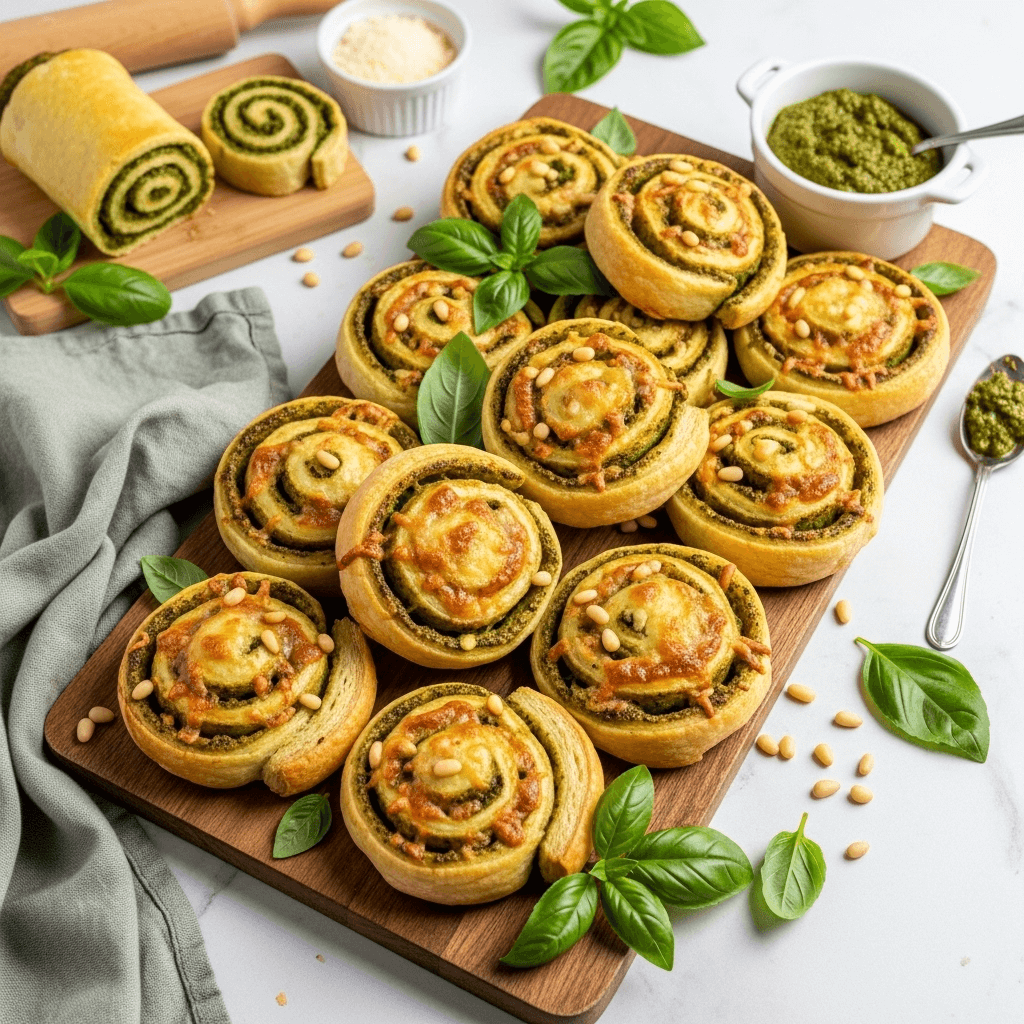
Get ready to fall in love with the easiest, most impressive appetizer you’ll ever make! These Pesto Pinwheels are buttery, flaky puff pastry spirals filled with vibrant basil pesto and melted cheese, creating gorgeous swirls that look like they came from a fancy bakery but take just 20 minutes from start to finish.
These easy pesto pinwheels are the ultimate crowd-pleaser that works for virtually any occasion. Whether you’re hosting a holiday party, need something elegant for brunch, want a sophisticated game day snack, or simply crave a delicious bite with your evening wine, these beautiful spirals deliver every single time. The combination of crispy, golden puff pastry with aromatic pesto and gooey cheese creates an irresistible flavor and texture experience that keeps everyone reaching for just one more.
What makes these puff pastry pesto rolls so special is their impressive appearance despite requiring minimal effort. They look incredibly professional and complex, yet the actual technique is remarkably simple—even beginners can master these on their first try. Just roll, spread, roll again, slice, and bake. That’s it! No special skills, no complicated steps, and certainly no all-day kitchen commitment required.
Serve them warm from the oven when the cheese is still melty and the pastry is at its crispiest, or at room temperature for convenient party planning. Either way, prepare for compliments, recipe requests, and empty platters. These Italian pesto appetizers have a magical way of disappearing almost as quickly as you can arrange them on the serving plate!
History / Background
Pinwheels, palmiers, and spiral pastries have a rich history across multiple culinary traditions, though pesto pinwheels as we know them today represent a delicious fusion of classic French pastry technique with Italian flavor profiles.
Puff pastry itself originated in France in the 17th century, though the technique of creating laminated dough (layers of butter and dough) may have roots even earlier. French pastry chefs perfected “pâte feuilletée” (puff pastry), creating hundreds of delicate, flaky layers through a labor-intensive process of folding and rolling. This buttery pastry became the foundation for countless French pastries, from croissants to Napoleons.
The concept of rolling pastry with fillings and slicing it into spirals likely evolved from several traditions. French palmiers (also called “palm leaves” or “elephant ears”) feature puff pastry rolled with sugar into heart-shaped cookies. Meanwhile, various European cuisines developed savory rolled pastries with cheese, herbs, or meat fillings.
Pesto, of course, comes from Genoa in the Liguria region of Italy, where “pesto alla Genovese” has been made since at least the 16th century. The word “pesto” comes from the Italian verb “pestare,” meaning to pound or crush—referring to the traditional method of making pesto in a marble mortar with a wooden pestle. Traditional Genovese pesto combines fresh basil, pine nuts, garlic, Parmigiano-Reggiano cheese, Pecorino cheese, and olive oil into a vibrant, aromatic sauce.
Pesto pinwheels emerged much more recently, likely in the 1980s and 1990s, as home cooks and caterers began experimenting with fusion cooking and exploring creative ways to use convenient ingredients like store-bought puff pastry. This era saw the rise of “entertaining cookbooks” that featured impressive-looking yet achievable recipes for home hosts. The combination of readily available frozen puff pastry with the growing popularity of pesto (which had become widely available in American supermarkets by the late 1980s) created the perfect conditions for this recipe to flourish.
These pinwheels represent the best of modern American home cooking: taking traditional techniques and quality ingredients from different cultures and combining them into something accessible, delicious, and practical for today’s busy home cooks. They’ve become a staple at everything from casual gatherings to elegant affairs, proving that sophisticated flavor doesn’t require complicated cooking.
Why You’ll Love This Recipe
These homemade pesto pinwheels are about to become your secret weapon for stress-free entertaining, and here’s why: they deliver gourmet flavor and presentation with incredibly minimal effort. Just four main ingredients and twenty minutes stand between you and an appetizer that looks like you spent hours in the kitchen!
Here’s why this recipe is absolutely irresistible:
- Lightning-Fast Preparation: Ready in just 20 minutes total—that’s faster than most delivery times!
- Only 4 Main Ingredients: Puff pastry, pesto, cheese, and an egg wash—that’s all you need for spectacular results
- Impressively Professional Appearance: These look like they came from an artisan bakery, yet require zero professional skills
- Make-Ahead Friendly: Assemble in advance and bake just before guests arrive, or bake ahead and serve at room temperature
- Endlessly Versatile: Perfect for breakfast, brunch, appetizers, snacks, or even packed in lunchboxes
- Kid-Approved: Even picky eaters love these! The familiar cheese and mild pesto flavors appeal to all ages
- Budget-Friendly: Uses affordable ingredients that won’t break the bank, yet tastes expensive
- Vegetarian-Friendly: Naturally vegetarian and easy to customize for various dietary preferences
- Freezer-Friendly: Freeze unbaked pinwheels and bake fresh whenever you need them—ultimate convenience!
- Minimal Cleanup: Uses just a cutting board, rolling pin, baking sheet, and pastry brush
- Scales Easily: Double or triple the recipe effortlessly for larger gatherings
- Restaurant-Quality Flavor: The combination of buttery pastry, aromatic basil, and melted cheese tastes absolutely luxurious
- Pinterest-Perfect: These photograph beautifully and will make your feed look absolutely stunning
Ingredient Notes
Let’s dive into the simple yet essential ingredients that make these pesto puff pastry pinwheels so incredibly delicious:
Puff Pastry: The foundation of this recipe! Use frozen puff pastry sheets (not shells) from brands like Pepperidge Farm or Dufour. You’ll want the kind that comes in flat, folded sheets, usually two per box. Thaw according to package directions—typically 40 minutes at room temperature or overnight in the refrigerator. The pastry should be cold but pliable, not warm and sticky or frozen solid. All-butter puff pastry (like Dufour) creates the flakiest, most flavorful results, though standard vegetable shortening versions work perfectly well and are often more budget-friendly.
Basil Pesto: This is where your flavor comes from! You can use store-bought pesto (look for quality brands in the refrigerated section near fresh pasta for best flavor) or homemade if you’re feeling ambitious. Traditional basil pesto works beautifully, but you can also experiment with sun-dried tomato pesto, arugula pesto, or kale pesto for variations. Look for pesto with visible basil leaves and a bright green color—brownish pesto has oxidized and won’t taste as fresh. If your store-bought pesto seems oily, drain off excess oil before spreading.
Parmesan Cheese: Freshly grated Parmigiano-Reggiano is absolute gold here! The nutty, salty, umami-rich flavor complements the pesto perfectly. Avoid pre-grated parmesan in the green can—it doesn’t melt properly and lacks flavor. Buy a wedge of real Parmigiano-Reggiano or Grana Padano and grate it yourself for the best results. You can also use Pecorino Romano for a sharper, saltier flavor.
Mozzarella Cheese: Use shredded low-moisture mozzarella for optimal melting without excess water. Pre-shredded is convenient and works perfectly here. Fresh mozzarella is too wet and will make your pastry soggy—save it for caprese salad! Some recipes use all Parmesan or all mozzarella, but combining them gives you the best of both worlds: flavor from the Parmesan and gooey, stretchy texture from the mozzarella.
Egg: For the egg wash that gives your pinwheels that gorgeous, glossy, golden-brown finish. You’ll beat one egg with a tablespoon of water to thin it slightly for easy brushing.
Optional Add-Ins: While not essential, consider red pepper flakes for heat, Italian seasoning for extra herb flavor, or sun-dried tomatoes finely chopped into the filling for texture and tangy sweetness.
Equipment Needed
You’ll need just a few basic kitchen tools to create these baked pesto pinwheels:
- Baking sheet: A standard half-sheet pan (13×18 inches) works perfectly
- Parchment paper or silicone baking mat: Essential for preventing sticking and easy cleanup
- Rolling pin: For rolling out the puff pastry to the right dimensions (a wine bottle works in a pinch!)
- Sharp knife or pizza cutter: For slicing the rolled pastry into pinwheels
- Pastry brush: For applying the egg wash (a paper towel works if you don’t have a brush)
- Small bowl: For whisking the egg wash
- Fork: For whisking the egg
- Measuring cups and spoons: For accurate ingredient portions
- Cutting board or clean work surface: For rolling and slicing
- Wire cooling rack: Optional but helpful for cooling the pinwheels
That’s it! No mixers, no special equipment, just basic tools you likely already have in your kitchen.
Print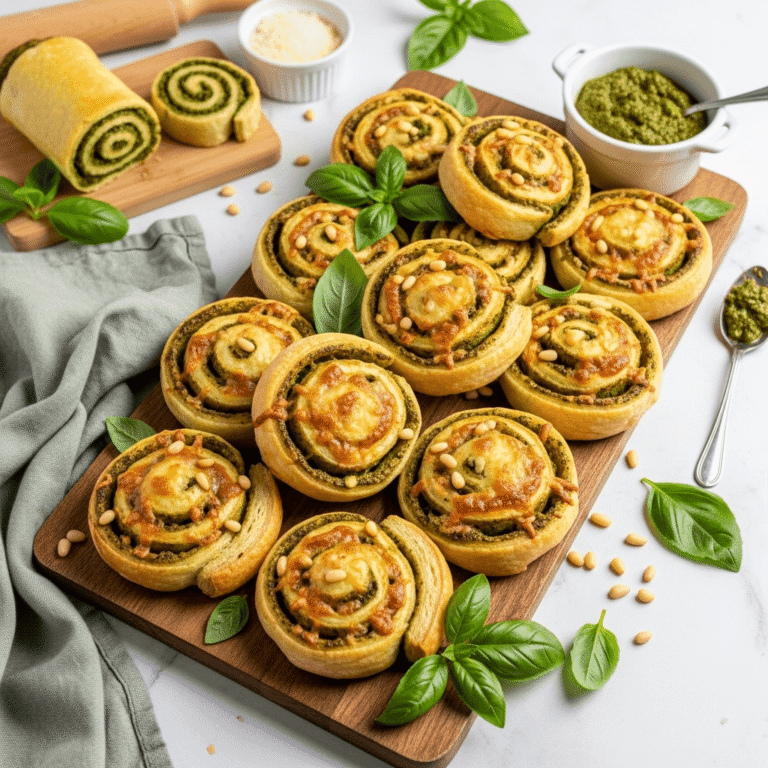
Pesto Pinwheels
These Easy Pesto Pinwheels feature flaky golden puff pastry swirled with vibrant basil pesto and melted cheese. Ready in just 20 minutes, they’re the perfect make-ahead appetizer that looks impressive but requires minimal effort!
- Total Time: 22 minutes
- Yield: 20-24 pinwheels (serves 10-12) 1x
Ingredients
- 1 sheet frozen puff pastry (half of a 17.3 oz package), thawed
- ⅓ cup basil pesto (store-bought or homemade)
- ½ cup shredded mozzarella cheese
- ¼ cup freshly grated Parmesan cheese
- 1 large egg
- 1 tablespoon water
- Optional: ¼ teaspoon red pepper flakes for heat
- Optional: 2 tablespoons pine nuts for garnish
Instructions
- Preheat and Prepare: Preheat your oven to 400°F (200°C). Line a baking sheet with parchment paper or a silicone baking mat. This prevents sticking and makes cleanup a breeze.
- Roll the Pastry: On a lightly floured surface or piece of parchment paper, gently unfold your thawed puff pastry sheet. If it has cracks along the fold lines, use your rolling pin to gently roll them smooth. Roll the pastry into a rectangle approximately 10×12 inches—you want it slightly larger than its original size for more pinwheels, but don’t roll too thin or it won’t puff properly.
- Spread the Pesto: Using a spoon or offset spatula, spread the pesto evenly over the entire surface of the puff pastry, leaving a ½-inch border along one of the long edges (this helps the roll seal). Don’t skimp on coverage—you want pesto flavor in every bite! If your pesto is very thick, you can thin it slightly with a teaspoon of olive oil for easier spreading.
- Add the Cheese: Sprinkle the shredded mozzarella cheese evenly over the pesto layer, followed by the grated Parmesan. Make sure to distribute the cheese all the way to the edges (except for that ½-inch border). If using red pepper flakes, sprinkle them on now.
- Roll It Up: Starting from the long edge opposite the border, begin tightly rolling the pastry toward the border edge, like you’re making a jelly roll or cinnamon rolls. Roll firmly but gently—you want a tight spiral but don’t want to squeeze out all the filling. When you reach the border edge, the pesto will help seal the roll closed. Position the roll seam-side down.
- Chill the Roll (Important!): Place the rolled pastry in the refrigerator for 10-15 minutes, or in the freezer for 5 minutes. This firms up the pastry and makes slicing much easier and cleaner. Don’t skip this step—it’s the secret to beautiful, clean slices!
- Prepare Egg Wash: While the roll chills, whisk together the egg and water in a small bowl until well combined. This creates your egg wash for that gorgeous golden color.
- Slice the Pinwheels: Using a sharp knife (wipe it clean between cuts for the neatest slices), trim off the uneven ends of the roll, then slice the roll into ½-inch thick rounds. You should get about 20-24 pinwheels depending on your roll length and slice thickness. A gentle sawing motion works better than pressing down, which can squash the spiral.
- Arrange on Baking Sheet: Place the pinwheels on your prepared baking sheet, spacing them about 1 inch apart (they’ll puff and expand slightly during baking). Arrange them cut-side up so the beautiful spiral is visible.
- Apply Egg Wash: Using a pastry brush, gently brush the top of each pinwheel with the egg wash. This gives them that bakery-beautiful golden sheen. Be gentle—you don’t want to press down and flatten the spirals.
- Bake to Perfection: Bake for 12-15 minutes, or until the pinwheels are puffed, golden brown, and beautifully crisp. The cheese should be melted and bubbly. Watch them during the last few minutes—puff pastry can go from perfectly golden to too dark quickly.
- Cool and Serve: Remove from the oven and let cool on the baking sheet for 2-3 minutes, then transfer to a wire rack or serving platter. If desired, sprinkle with pine nuts while still warm so they stick slightly. Serve warm or at room temperature.
Notes
- Thawing Puff Pastry: Plan ahead! Thaw in the refrigerator overnight or on the counter for 40 minutes. Don’t microwave it or thaw in warm water—it needs to stay cold.
- Pesto Consistency: If your pesto is very oily, drain excess oil first. Too much oil can prevent the puff pastry from crisping properly.
- Slice Thickness: Half-inch slices are ideal. Thicker slices take longer to cook through; thinner slices can become too crispy or burn.
- Freezing Unbaked: Freeze sliced pinwheels on a baking sheet until solid, then transfer to a freezer bag. Bake from frozen, adding 2-3 minutes to baking time.
- Crispiness: For maximum crispiness, serve warm. As they cool, they’ll soften slightly but remain delicious.
- Cheese Variations: Try adding crumbled feta, goat cheese, or asiago for different flavor profiles.
- Prep Time: 10 minutes
- Cook Time: 12 minutes
- Category: Appetizer
- Method: Baking
- Cuisine: Italian-French Fusion
- Diet: Vegetarian
Nutrition
- Serving Size: 2 pinwheels
- Calories: 198
- Sugar: 1g
- Sodium: 287mg
- Fat: 14g
- Saturated Fat: 5g
- Unsaturated Fat: 8g
- Trans Fat: 0g
- Carbohydrates: 14g
- Fiber: 1g
- Protein: 5g
- Cholesterol: 28mg
Tips & Variations
Sun-Dried Tomato Pesto Pinwheels: Replace basil pesto with sun-dried tomato pesto for a sweeter, tangier flavor profile. Add crumbled feta cheese instead of mozzarella for a Mediterranean twist.
Spinach and Artichoke Version: Mix ½ cup thawed, squeezed-dry frozen spinach with ¼ cup chopped artichoke hearts, cream cheese, and garlic. Spread this mixture instead of pesto for a beloved flavor combination.
Pizza Pinwheels: Use marinara sauce instead of pesto, add pepperoni slices, and use mozzarella and Italian seasoning. These taste like pizza rolls and kids go crazy for them!
Caprese Style: Spread pesto as directed, then add thin slices of fresh tomato (seeded and patted very dry) and fresh mozzarella. These are more delicate but absolutely delicious.
Greek-Inspired: Use basil pesto, add crumbled feta cheese, chopped kalamata olives, and sun-dried tomatoes. Sprinkle with oregano before baking.
Spicy Version: Add red pepper flakes to the pesto, or mix in some chopped jalapeños or pepperoncini. Use pepper jack cheese instead of mozzarella for extra heat.
Vegan Pinwheels: Use vegan puff pastry (many brands are accidentally vegan), dairy-free pesto, and vegan cheese. Skip the egg wash or use plant-based milk for brushing.
Everything Bagel Pinwheels: After applying egg wash, sprinkle with everything bagel seasoning before baking. This adds incredible savory flavor!
Protein Addition: Add thin slices of prosciutto, salami, or cooked bacon over the pesto layer before adding cheese for a heartier appetizer.
Herb Garden Version: Mix fresh chopped herbs (basil, parsley, dill, chives) into softened cream cheese instead of using pesto for a lighter, fresher flavor.
Pro Chef Tips
Temperature is Everything: Keep your puff pastry cold while working with it. If it becomes too warm and soft, pop it back in the refrigerator for 5-10 minutes. Warm pastry is sticky, difficult to work with, and won’t puff properly during baking. The butter layers need to stay distinct and cold to create those flaky layers.
The Chill Before Slicing Is Non-Negotiable: This is the single most important step for beautiful pinwheels! Chilling the rolled log firms up the filling and pastry, preventing squishing and creating clean, defined spirals when you slice. It’s the difference between Pinterest-worthy pinwheels and sad, squashed ones.
Use a Sharp Knife with a Sawing Motion: A dull knife compresses the pastry and creates messy, squashed pinwheels. Use your sharpest knife and a gentle back-and-forth sawing motion rather than pressing straight down. Clean the blade between cuts for the most professional results.
Don’t Overwork the Puff Pastry: Puff pastry is temperamental! Roll it gently and only as much as necessary. Excessive rolling or handling warms up the butter and destroys those delicate layers that create the puff. Treat it with a light touch.
Egg Wash Technique: Brush gently in one direction only, and don’t let egg wash drip down the sides of the pinwheels—this can actually prevent them from puffing properly. A thin, even layer is all you need for that golden sheen.
Watch the Oven Closely: Puff pastry can go from perfectly golden to burnt in just 1-2 minutes. Start checking at the 10-minute mark, and watch carefully during the final minutes. If the tops are browning too quickly but the bottoms aren’t crisp yet, lower the oven temperature to 375°F and continue baking.
Rest Before Serving: Let pinwheels cool for 2-3 minutes before transferring. They’re fragile when hot and will firm up slightly as they cool, making them easier to handle and preventing burned fingers!
Common Mistakes to Avoid
Not Thawing the Puff Pastry Properly: Frozen pastry won’t roll without cracking; warm pastry becomes sticky and difficult to handle. Thaw in the refrigerator overnight or at cool room temperature for exactly the time specified on the package—usually 40 minutes.
Spreading Pesto Too Thick or Too Thin: Too much pesto makes the pinwheels soggy and causes filling to ooze out during baking. Too little means bland, disappointing bites. Aim for an even, medium-thin layer—you should still be able to see the pastry through it in places.
Skipping the Refrigeration Before Slicing: This is the #1 mistake! Attempting to slice warm pastry creates squashed, messy spirals with filling squeezed out everywhere. Always chill the roll first—it’s the secret to those beautiful, clean spirals you see in pictures.
Slicing Unevenly: Inconsistent thickness means some pinwheels burn while others are undercooked. Use a ruler if you need to, and aim for consistent ½-inch slices throughout. Take your time with this step!
Overcrowding the Baking Sheet: Pinwheels need space to puff and expand. Crowding them prevents air circulation, leading to soggy bottoms and uneven cooking. Leave at least 1 inch between each pinwheel.
Opening the Oven Door Repeatedly: Every time you open the oven, the temperature drops, which interferes with proper puffing. Resist the urge to check constantly—use your oven light instead and only open when you’re ready to check for doneness.
Storage & Meal Prep
Room Temperature Storage: Baked pesto pinwheels are best enjoyed within a few hours of baking for maximum crispness. If storing at room temperature, place them in a single layer in an airtight container or cover loosely with foil for up to 4-6 hours. They’ll soften slightly but remain delicious.
Refrigerator Storage: Store completely cooled pinwheels in an airtight container in the refrigerator for up to 3 days. Place parchment paper between layers to prevent sticking. The pastry will lose its crispness in the fridge—this is normal for puff pastry.
Reheating for Crispness: To restore crispness, reheat refrigerated pinwheels in a 350°F oven for 5-7 minutes until warmed through and crispy again. Don’t microwave—this makes them soggy! For best results, place them on a baking sheet, not overlapping.
Meal Prep Strategy: These make excellent meal prep items for quick breakfasts or snacks. Bake a big batch on Sunday, store properly, and reheat individual portions in a toaster oven throughout the week.
Preventing Sogginess: The enemy of crispy puff pastry is moisture. Always store in airtight containers only after the pinwheels have cooled completely (trapped steam creates sogginess). If they seem moist, refresh them in the oven before serving.
Make-Ahead & Freezer Notes
Make-Ahead Assembled Rolls: You can roll and fill the pastry up to 24 hours ahead. Wrap the unsliced roll tightly in plastic wrap and refrigerate. Slice and bake when needed—this is perfect for stress-free entertaining! The pastry actually becomes easier to slice after extended chilling.
Make-Ahead Sliced Pinwheels: Arrange sliced, unbaked pinwheels on a parchment-lined baking sheet, cover tightly with plastic wrap, and refrigerate for up to 8 hours. Brush with egg wash and bake directly from the refrigerator, adding 1-2 minutes to the baking time.
Freezing Unbaked Pinwheels (Best Method): This is the ultimate make-ahead technique! Arrange sliced pinwheels on a parchment-lined baking sheet and freeze until solid (about 2 hours). Transfer frozen pinwheels to a freezer bag or airtight container, separating layers with parchment paper. They’ll keep beautifully for up to 3 months. No need to thaw—bake directly from frozen at 400°F for 15-18 minutes until golden and puffed.
Freezing Baked Pinwheels: While possible, I don’t recommend it. Puff pastry loses its crispness when frozen after baking and becomes somewhat soggy when thawed. If you must freeze baked pinwheels, freeze in airtight containers for up to 1 month, then reheat in a 375°F oven for 8-10 minutes to restore some crispness.
Party Planning Timeline: For parties, I recommend freezing unbaked pinwheels 1-2 weeks ahead, then baking them fresh the day of your event. They’ll taste just-baked because they are! This approach gives you all the convenience of frozen appetizers with none of the quality compromise.
Thawing Instructions: If you want to thaw frozen unbaked pinwheels before baking (not necessary, but some prefer it), transfer them to the refrigerator for 2-3 hours, then bake as directed. They may bake 1-2 minutes faster than frozen ones.
Serving Suggestions
These Italian pesto pinwheels are incredibly versatile and work beautifully in countless serving scenarios:
Appetizer Spread: Create an impressive platter by serving pesto pinwheels alongside:
- Assorted cheeses and crackers
- Fresh vegetables with hummus or ranch
- Marinated olives and artichoke hearts
- Sliced salami or prosciutto
- Fresh fruit like grapes and berries
- Mixed nuts
Brunch Board: Perfect for morning gatherings with:
- Scrambled eggs or quiche
- Fresh fruit salad
- Croissants and pastries
- Smoked salmon and cream cheese
- Mimosas or Bellinis
- Fresh-squeezed orange juice
Lunch Box Addition: Pack these in lunch boxes with:
- Cherry tomatoes and cucumber slices
- String cheese or cheese cubes
- Fresh fruit
- A small container of marinara for dipping
Wine and Cheese Party: Pair with sophisticated selections:
- Crisp white wines like Pinot Grigio or Sauvignon Blanc
- Light red wines like Pinot Noir
- Prosecco or champagne
- Aged cheeses
- Artisan crackers
Game Day Spread: Combine with crowd favorites:
- Wings and sliders
- Chips and dip
- Vegetable platter
- Beer and cocktails
- Brownies or cookies
Soup Partner: These pair beautifully with:
- Tomato soup (classic combination!)
- Minestrone
- Butternut squash soup
- French onion soup
- Any creamy soup
Dipping Sauces: While delicious on their own, some love dipping options:
- Warm marinara sauce
- Ranch dressing
- Garlic aioli
- Balsamic reduction
- Extra pesto for pesto lovers
Presentation Ideas:
- Arrange in a spiral pattern on a round platter
- Stack in a pyramid for dramatic height
- Line a long rectangular board for a modern look
- Alternate with fresh basil leaves for color
- Sprinkle with pine nuts and grated Parmesan
- Serve on a rustic wooden board for casual charm
- Use a tiered stand for elegant affairs
FAQs Section
Can I use homemade puff pastry?
Absolutely, if you’re ambitious! Homemade puff pastry creates the absolute best flavor and flakiest texture. However, it’s a time-intensive process requiring several hours of rolling, folding, and chilling. For most home cooks, quality store-bought puff pastry (especially all-butter brands like Dufour) delivers excellent results with a fraction of the effort.
What if my puff pastry cracks when I unroll it?
This is completely normal, especially along the fold lines! Simply use your rolling pin to gently roll over the cracks, pressing them back together. A light touch is all you need—the pastry is forgiving. If the pastry is very brittle and cracking excessively, it may be too cold; let it sit at room temperature for 5 more minutes.
Can I make these without cheese?
Yes! The cheese adds flavor and helps bind the filling, but you can make cheese-free versions. Use pesto alone, or add sun-dried tomatoes, roasted red peppers, or sautéed mushrooms for texture. Keep in mind that without cheese as “glue,” the filling may shift slightly during slicing and baking.
Why didn’t my puff pastry puff up?
Several factors can prevent proper puffing: the pastry was too warm when it went in the oven (the butter melted before creating steam), you rolled it too thin (destroying the layers), you overworked it (warming the butter too much), or your oven wasn’t hot enough. Make sure your oven is fully preheated to 400°F and the pastry is cold when baking.
Can I use pesto from a jar?
Absolutely! Jarred pesto works perfectly and is what most people use. Look for quality brands in the refrigerated section near fresh pasta—they taste much fresher than shelf-stable versions. Brands like Buitoni, Classico, or store brands from the refrigerated section work great. Avoid using very oily pesto; drain excess oil first.
How do I prevent the filling from leaking out?
The key is not overfilling and leaving that ½-inch border along one edge. Also, make sure you roll tightly but don’t squeeze—you want firm contact without squishing filling out the sides. Chilling before slicing also helps the filling set and stay in place.
Can I make these with different shapes?
Yes! Instead of pinwheels, you can cut the rolled pastry into triangles and twist them into spirals, cut into strips and twist into cheese straws, or cut into rectangles for simple pesto pastry bites. Get creative!
What’s the best way to transport these to a party?
Transport in a single layer in a rigid container to prevent crushing. If possible, bake them at your destination for maximum freshness. Otherwise, bake ahead, transport carefully, and serve at room temperature, or reheat briefly in the host’s oven before serving.
Conclusion
And there you have it—the easiest, most show-stopping pesto pinwheels recipe that will make you the star of every gathering! These gorgeous spirals prove that impressive doesn’t have to mean complicated. With just four main ingredients and twenty minutes, you’re creating an appetizer that looks like it came from a fancy bakery and tastes absolutely incredible.
I absolutely love how these easy puff pastry pinwheels work for literally any occasion. Morning brunch? Perfect. Elegant cocktail party? Absolutely. Casual game day? You bet. Tuesday afternoon snack because you deserve something delicious? Why not! The versatility is honestly remarkable.
The best part is how you can make them your own. Once you’ve mastered the basic technique (which, let’s be honest, you’ll nail on your first try), feel free to experiment with different pestos, cheeses, and add-ins. There’s no wrong way to customize these beauties!
Now it’s your turn to experience the magic! I’d absolutely love to hear about your homemade pesto pinwheels adventures. Did you try a creative variation? Serve them at a party where they were the hit of the evening? Discover a genius shortcut? Drop a comment below and share your experience—I genuinely read every single comment and love connecting with fellow food lovers!
Please save this recipe to your Pinterest boards so you can find it easily whenever you need an impressive yet easy appetizer! Share it with friends who love entertaining, tag me in your gorgeous photos on social media (@yourhandle), and let me know if you discovered any amazing variations. Your creativity and feedback inspire me to keep creating and sharing recipes that make your life more delicious!
Happy baking, and here’s to effortless entertaining that always impresses!