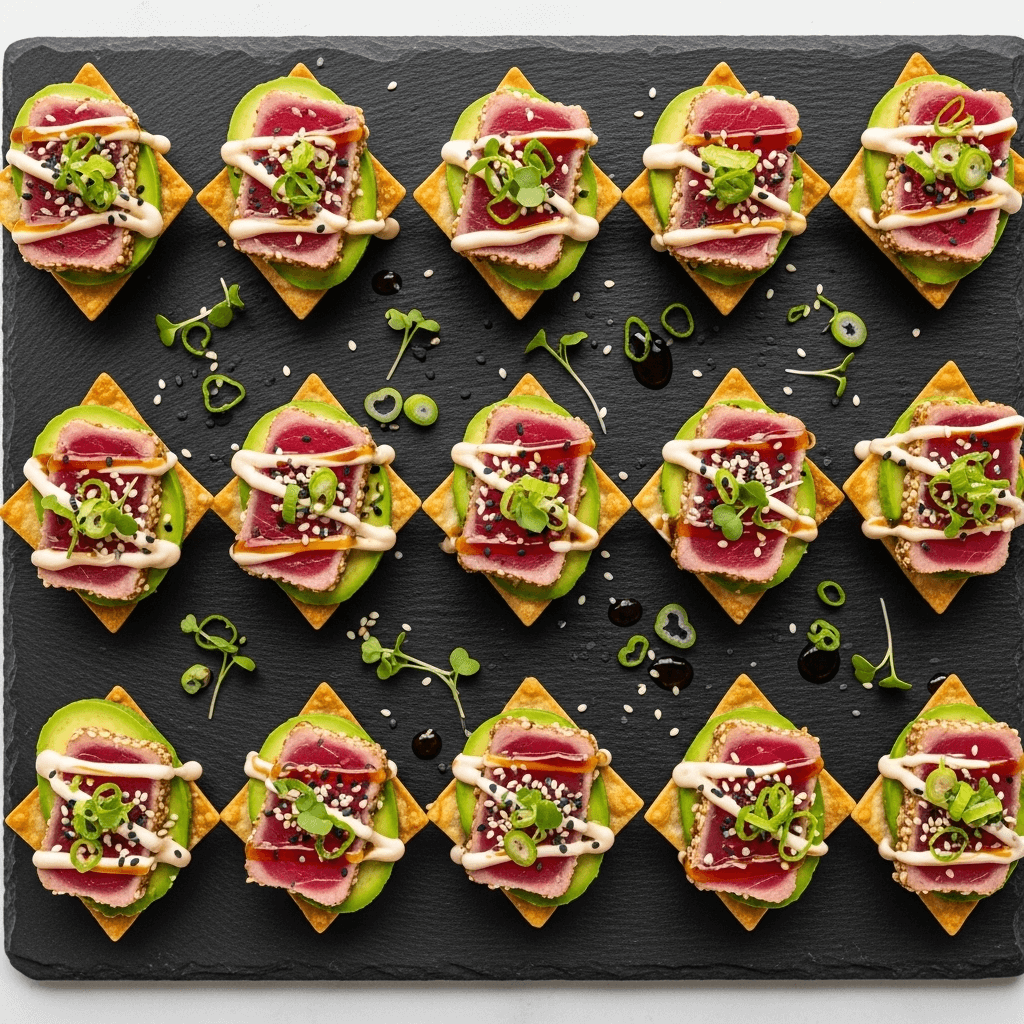
Seared Ahi Tuna Wonton Crisps – Restaurant-Style Appetizer at Home
If you’ve ever wanted to recreate that stunning restaurant appetizer that makes everyone at the table stop talking and start photographing their food, these Seared Ahi Tuna Wonton Crisps are exactly what you need. This elegant dish combines buttery seared ahi tuna with crispy wonton chips, creamy avocado, and a drizzle of spicy mayo and sweet soy glaze that creates an explosion of flavors and textures in every bite. It’s the kind of appetizer that looks incredibly impressive but is surprisingly simple to make at home.
What makes these ahi tuna wonton crisps so special is the beautiful contrast between the crispy, golden wonton base and the tender, barely-seared tuna that’s still ruby-red in the center. Each element brings something unique to the party – the wontons provide crunch, the tuna offers buttery richness, the avocado adds creaminess, and the sauces tie everything together with sweet, spicy, and umami notes. It’s like having a deconstructed sushi roll meets upscale fusion appetizer, and it’s absolutely addictive.
These wonton crisps are perfect for so many occasions – cocktail parties, date night dinners, special celebrations, holiday entertaining, or even as a light lunch when you’re craving something fresh and exciting. They’re sophisticated enough to impress dinner guests but approachable enough for a weekend cooking project. Once you master this easy ahi tuna appetizer recipe, you’ll find yourself making it whenever you want to elevate your entertaining game or treat yourself to something special.
History / Background
The story of ahi tuna wonton crisps is a fascinating tale of culinary fusion that emerged from the creative melting pot of Pacific Rim cuisine in the 1980s and 1990s. While seared ahi tuna has deep roots in Japanese cuisine (where it’s known as “tataki”), and wontons are a Chinese culinary staple dating back over 1,800 years, combining these elements into elegant appetizer bites is a distinctly modern American innovation.
The fusion movement that gave birth to dishes like this one really took off in California and Hawaii, where chefs began blending Asian cooking techniques with Western presentations. Roy Yamaguchi, Wolfgang Puck, and other pioneering chefs of the Pacific Rim cuisine movement started experimenting with high-quality Pacific fish like ahi tuna (yellowfin tuna), treating it more like beef by searing it rare and serving it with Asian-inspired sauces and contemporary plating techniques.
Wontons themselves have an ancient history in Chinese cuisine, traditionally filled with seasoned pork or shrimp and either boiled in soup or fried until crispy. Clever American chefs realized that the wonton wrapper – when baked or fried on its own – created the perfect crispy vehicle for other ingredients, similar to how tostadas or crostini function in other cuisines. This innovation opened up endless possibilities for creative toppings.
The specific combination of seared ahi on crispy wontons with avocado and drizzled sauces became particularly popular in upscale casual restaurants and sushi bars throughout the 1990s and 2000s. It represented the perfect marriage of Japanese sashimi-quality fish, Chinese wonton wrappers, California’s love affair with avocado, and the American appetite for bold, layered flavors. Today, this ahi tuna wonton crisp appetizer remains a menu favorite at fusion restaurants across the country and has become accessible enough for home cooks to recreate with confidence.
Why You’ll Love This Recipe
These homemade ahi tuna wonton crisps deliver restaurant-quality elegance without requiring professional cooking skills or exotic ingredients that are hard to find. While the presentation looks incredibly sophisticated, the actual technique is straightforward and forgiving, making this recipe perfect for home cooks who want to impress without stress.
Here’s why this recipe will become your go-to impressive appetizer:
- Restaurant-quality at a fraction of the cost – Ordering this appetizer at a restaurant can easily cost $18-25, but making it at home costs just a few dollars per serving while tasting even better
- Quick to prepare – From start to finish, you can have these stunning bites ready in under 30 minutes, making them perfect for last-minute entertaining
- Naturally low-carb option – Loaded with protein and healthy fats from the tuna and avocado, with minimal carbs from the thin wonton crisps
- Customizable to your taste – Adjust the spice level, swap ingredients based on preferences, or create your own sauce combinations
- Impressive presentation – These look like they came from a high-end restaurant, making them perfect for special occasions when you want to wow your guests
- Fresh and light – Unlike heavy, fried appetizers, these feel fresh and vibrant with clean flavors that don’t weigh you down
- No cooking experience needed for the tuna – Searing ahi is incredibly forgiving since you’re aiming for rare to medium-rare, which means just a quick sear on each side
- Make-ahead friendly components – The wonton crisps can be made in advance, and the sauces can be prepared ahead, leaving just the quick tuna searing for service time
- Conversation starter – The beautiful presentation and unique flavor combination always get guests talking and asking for the recipe
Ingredient Notes
Understanding your ingredients ensures the best possible results with your ahi tuna wonton crisps:
Ahi Tuna (Yellowfin Tuna) – This is the star of the show, so quality matters tremendously. Look for sushi-grade or sashimi-grade ahi tuna, which means it’s been handled and frozen properly to kill any parasites and is safe to eat raw or rare. The tuna should be deep red with no brown spots or fishy smell – fresh tuna smells like clean ocean water. A 1-pound tuna steak will serve about 6-8 people as an appetizer. If you can’t find ahi, yellowtail, salmon, or even seared rare beef can be substituted.
Wonton Wrappers – These thin square or round wheat flour wrappers are found in the refrigerated section near the tofu. They become incredibly crispy when baked or fried. Square wrappers work perfectly and can be found at most grocery stores. If you can’t find them, you can substitute with egg roll wrappers cut into smaller pieces, though they’ll be slightly thicker.
Avocado – Choose ripe but firm avocados that yield slightly to gentle pressure. Hass avocados work best for their creamy texture and rich flavor. The avocado adds essential creaminess that balances the crispy wonton and provides a cooling element against the spicy mayo.
Soy Sauce and Mirin – These form the base of your marinade and sweet soy glaze. Use regular soy sauce (or tamari for gluten-free), and mirin is a sweet Japanese rice wine that adds depth. If you can’t find mirin, substitute with a combination of rice vinegar and a pinch of sugar.
Sriracha and Mayo – Combined, these create the classic spicy mayo that’s essential to the dish. The creaminess of the mayo mellows the heat of the sriracha. You can adjust the ratio to control spice level, or substitute with your favorite hot sauce.
Sesame Oil – Just a drizzle of toasted sesame oil adds incredible nutty depth to the tuna marinade. A little goes a long way – it’s powerful stuff. Don’t substitute with regular vegetable oil, as the flavor won’t be the same.
Fresh Ginger and Garlic – These aromatics add brightness and complexity to your marinade. Always use fresh rather than powdered for the best flavor, especially with a delicate dish like this where each ingredient shines.
Sesame Seeds – Both white and black sesame seeds add visual appeal and a subtle nutty crunch. You can toast them yourself in a dry pan for enhanced flavor, or buy them pre-toasted.
Green Onions (Scallions) – The fresh, mild onion flavor and bright green color add both flavor and visual pop. Use both the white and green parts, thinly sliced on the bias for an elegant look.
Equipment Needed
You’ll need just a few basic kitchen tools to create these restaurant-quality appetizers:
- Baking sheet – For baking the wonton crisps
- Parchment paper or silicone baking mat – Prevents sticking and ensures even crisping
- Pastry brush or oil mister – For coating wontons with oil
- Cast iron skillet or heavy-bottomed pan – Essential for getting a good sear on the tuna
- Sharp knife – Crucial for slicing the tuna cleanly (a dull knife will tear the fish)
- Cutting board – Preferably one designated for raw fish
- Small mixing bowls – For preparing marinades and sauces
- Tongs – For flipping the tuna while searing
- Squeeze bottles (optional) – For elegant sauce drizzling, though ziplock bags with a corner cut off work too
- Paper towels – For patting the tuna dry before searing
- Measuring spoons and cups – For accurate ingredient amounts
- Serving platter – To showcase your beautiful creation
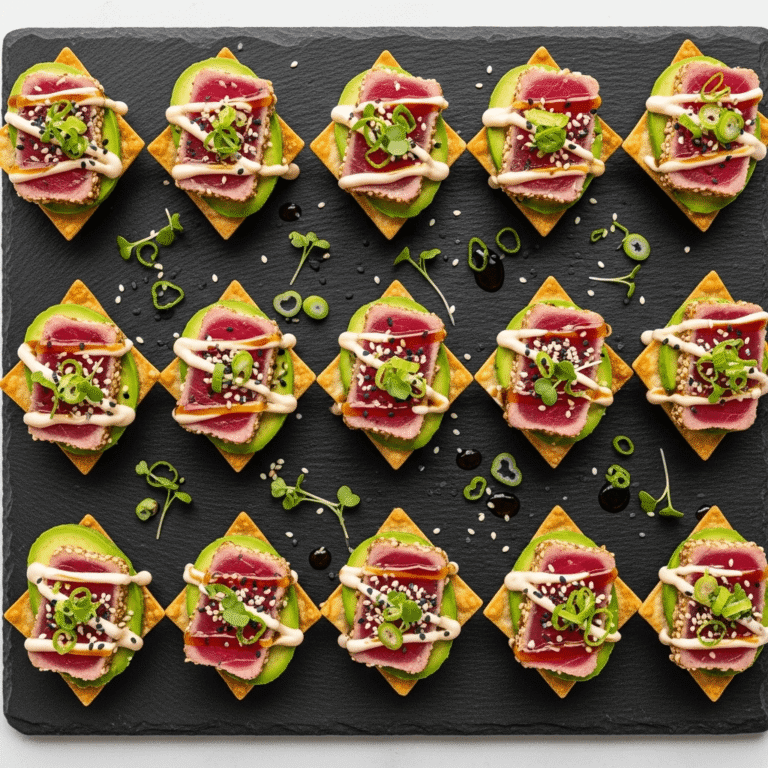
Seared Ahi Tuna Wonton Crisps
These elegant Seared Ahi Tuna Wonton Crisps feature buttery rare tuna, crispy wonton chips, creamy avocado, and a drizzle of spicy mayo and sweet soy glaze. A restaurant-quality appetizer that’s surprisingly easy to make at home and perfect for impressive entertaining.
- Total Time: 30 minutes
- Yield: 6-8 servings (about 24 wonton crisps) 1x
Ingredients
For the Wonton Crisps:
- 24 wonton wrappers (square or round)
- 2 tablespoons neutral oil (vegetable or canola)
- Pinch of sea salt
For the Ahi Tuna:
- 1 pound sushi-grade ahi tuna steak (about 1-inch thick)
- 2 tablespoons soy sauce (or tamari for gluten-free)
- 1 tablespoon sesame oil
- 1 teaspoon fresh ginger (grated)
- 1 clove garlic (minced)
- 1 tablespoon neutral oil (for searing)
- 2 tablespoons sesame seeds (white, black, or mixed)
- Salt and black pepper to taste
For the Spicy Mayo:
- ½ cup mayonnaise
- 2-3 tablespoons sriracha (adjust to taste)
- 1 teaspoon lime juice
- Pinch of salt
For the Sweet Soy Glaze:
- ¼ cup soy sauce
- 2 tablespoons honey or agave nectar
- 1 tablespoon rice vinegar
- 1 teaspoon sesame oil
- ½ teaspoon cornstarch mixed with 1 teaspoon water
For Assembly:
- 2 ripe avocados (sliced thin)
- 3 green onions (thinly sliced)
- Extra sesame seeds for garnish
- Microgreens or cilantro (optional)
- Pickled ginger (optional)
Instructions
- Prepare the wonton crisps: Preheat your oven to 350°F (175°C). Line a large baking sheet with parchment paper. Brush both sides of each wonton wrapper lightly with oil, or spray with cooking spray. Arrange them in a single layer on the baking sheet without overlapping. Sprinkle lightly with sea salt. Bake for 8-10 minutes, flipping halfway through, until golden brown and crispy. Watch carefully in the last few minutes as they can burn quickly. Remove and let cool on the pan – they’ll continue to crisp as they cool.
- Make the spicy mayo: In a small bowl, whisk together mayonnaise, sriracha, lime juice, and a pinch of salt. Start with 2 tablespoons of sriracha and add more if you want extra heat. Taste and adjust seasoning. Transfer to a squeeze bottle or small ziplock bag for easy drizzling. Refrigerate until ready to use.
- Prepare the sweet soy glaze: In a small saucepan over medium heat, combine soy sauce, honey, rice vinegar, and sesame oil. Bring to a gentle simmer, stirring until honey dissolves completely. In a tiny bowl, mix cornstarch with water to create a slurry. Slowly whisk the slurry into the simmering sauce and cook for 1-2 minutes until it thickens to a syrupy consistency that coats the back of a spoon. Remove from heat and let cool. Transfer to a squeeze bottle for drizzling.
- Marinate the tuna: Pat the tuna steak completely dry with paper towels – this is crucial for a good sear. In a shallow dish, combine 2 tablespoons soy sauce, sesame oil, grated ginger, and minced garlic. Add the tuna and turn to coat all sides. Let marinate for 10-15 minutes at room temperature while you prepare other components. Don’t marinate longer than 30 minutes or the acid will start to “cook” the fish.
- Coat the tuna with sesame seeds: Remove tuna from marinade and pat dry again. Season both sides lightly with salt and pepper. Pour sesame seeds onto a plate and press each side of the tuna firmly into the seeds to create an even coating on all sides.
- Sear the tuna: Heat a cast iron skillet or heavy pan over high heat until it’s smoking hot – this is key to a good sear. Add 1 tablespoon neutral oil and swirl to coat. Carefully place the sesame-crusted tuna in the hot pan. Sear for 60-90 seconds per side without moving it. You want a golden crust on the outside while keeping the center raw to medium-rare. The sides should show about ¼-inch of cooked (gray) tuna around a red raw center. Use tongs to sear the edges briefly, about 15-30 seconds each.
- Rest and slice the tuna: Transfer the seared tuna to a cutting board and let rest for 2-3 minutes. Using a very sharp knife, slice the tuna against the grain into ¼-inch thick slices. Wipe your knife clean between cuts for the cleanest slices.
- Assemble the wonton crisps: Arrange your crispy wontons on a serving platter. Place a thin slice of avocado on each wonton crisp. Top with a slice of the seared ahi tuna, folding or arranging it artfully on the avocado.
- Garnish and serve: Drizzle each wonton crisp with spicy mayo in a zigzag pattern, then drizzle with the sweet soy glaze. Sprinkle with sliced green onions and extra sesame seeds. Add microgreens or cilantro if using. Serve immediately while the wontons are still crispy, with any extra sauces on the side for dipping.
Notes
- Tuna quality is paramount – Only use sushi-grade or sashimi-grade tuna from a reputable source. If you’re unsure about raw fish safety, you can sear the tuna longer to medium, though traditionalists prefer it rare.
- Don’t oversear the tuna – The goal is rare to medium-rare. The entire searing process should take less than 4 minutes total for a 1-inch thick steak.
- Make wontons ahead – Baked wonton crisps can be made up to 2 days ahead and stored in an airtight container at room temperature.
- Slice tuna just before serving – Pre-sliced tuna will oxidize and lose its vibrant color.
- Knife sharpness matters – A sharp knife is essential for clean tuna slices. A dull knife will tear the delicate fish.
- Temperature control – Let the tuna come to room temperature for about 15 minutes before searing for the most even cooking.
- Prep Time: 20 minutes
- Cook Time: 10 minutes
- Category: Appetizer
- Method: Baking
- Cuisine: Asian
- Diet: Gluten Free
Nutrition
- Serving Size: 3-4 wonton crisps with tuna
- Calories: 285
- Sugar: 6g
- Sodium: 680mg
- Fat: 16g
- Saturated Fat: 2f
- Unsaturated Fat: 12g
- Trans Fat: 0g
- Carbohydrates: 18g
- Fiber: 2g
- Protein: 18g
- Cholesterol: 32mg
Tips & Variations
Make these ahi tuna wonton crisps your own with these creative twists:
Spicy Tuna Version: Mix finely diced raw tuna with spicy mayo, sesame oil, and green onions for a spicy tuna tartare topping instead of seared slices. This gives you that popular sushi roll flavor in appetizer form.
Salmon Swap: Can’t find ahi tuna? Sushi-grade salmon works beautifully with the same technique. The richer, fattier salmon pairs wonderfully with the crispy wontons and creamy avocado.
Wasabi Kick: Add wasabi paste to your spicy mayo for an extra sinus-clearing kick, or serve with a small dollop of wasabi on the side for those who love the heat.
Mango Tuna Crisps: Replace or supplement the avocado with thin slices of ripe mango for a sweet, tropical twist that complements the tuna beautifully.
Cucumber Freshness: Add paper-thin cucumber slices between the wonton and avocado for extra crunch and refreshing flavor.
Ponzu Instead of Sweet Soy: Substitute the sweet soy glaze with ponzu sauce (a citrus-based soy sauce) for a tangier, lighter flavor profile.
Fried Wontons: For extra indulgence, deep fry the wonton wrappers in 350°F oil for 30-60 seconds until golden and puffy instead of baking them.
Eel Sauce Drizzle: Use store-bought unagi (eel) sauce instead of making sweet soy glaze – it’s similar in flavor and saves a step.
Jalapeño Heat: Add thin jalapeño slices on top for those who want extra spice and a fresh pepper flavor.
Furikake Seasoning: Sprinkle furikake (Japanese rice seasoning) over the finished crisps for an extra umami boost and beautiful color.
Pro Chef Tips
Elevate your ahi tuna wonton crisps with these professional techniques:
The Perfect Sear Starts with Dryness: The number one secret to a gorgeous crust on your tuna is making sure the fish is completely dry before it hits the pan. Use paper towels to pat it thoroughly dry, even after marinating. Any surface moisture will create steam instead of a sear.
High Heat is Non-Negotiable: Your pan must be ripping hot before the tuna goes in – we’re talking smoking point. A properly heated pan creates that instant crust that seals in the juices while keeping the center raw. If you add tuna to a lukewarm pan, it’ll stick and cook through before developing color.
Quality Over Everything: With so few ingredients and such minimal cooking, there’s nowhere for inferior ingredients to hide. Invest in the best quality tuna you can find – it’s the soul of this dish. The difference between good and great tuna is night and day.
Shape Your Tuna for Even Cooking: If your tuna steak has an irregular shape or thin tail, trim it or fold the thin parts under and secure with kitchen twine before searing. This ensures even cooking and prevents thin sections from overcooking.
The Press Test for Doneness: Gently press the center of the tuna with your finger – rare tuna feels very soft and squishy, like pressing the fleshy part of your palm below your thumb. Medium-rare has just a bit more resistance but still gives easily.
Slice Against the Grain: Look at your tuna and notice which direction the muscle fibers run, then slice perpendicular to those lines. This shortens the fibers and makes each bite more tender and less chewy.
Chill Your Knife: For the cleanest slices, dip your sharp knife in ice water and wipe dry between cuts. The cold blade glides through the fish more smoothly and prevents sticking.
Build as You Serve: These are best assembled just before serving. If you need to prep ahead for a party, have all components ready and do a quick assembly line during cocktail hour for maximum crispness.
Common Mistakes to Avoid
Don’t let these common pitfalls ruin your ahi tuna wonton crisps:
Using Non-Sushi-Grade Tuna: This is the most critical mistake. Regular tuna from the grocery store fish counter is not safe to eat rare or raw. You must use tuna specifically labeled as sushi-grade or sashimi-grade, or purchase from a trusted Japanese market. When in doubt, ask the fishmonger directly if it’s safe to eat raw.
Overcooking the Tuna: Remember, you want rare to medium-rare tuna. The goal is just a thin cooked layer around a cool red center. If you cook it through, you’ll end up with dry, tough tuna that’s lost its luxurious buttery texture. If you’re nervous about timing, err on the side of undersearing – you can always put it back in the pan, but you can’t uncook it.
Soggy Wontons from Early Assembly: Building these more than 5-10 minutes before serving is a recipe for soggy, sad wontons. The moisture from the avocado, tuna, and sauces will seep into the crispy wontons and make them chewy. Always assemble these at the last possible moment.
Dull Knife for Slicing: Trying to slice delicate seared tuna with a dull knife creates ragged edges and tears the fish apart instead of creating clean, beautiful slices. Sharpen your knife before starting this recipe, or use your sharpest chef’s knife.
Crowding the Pan or Baking Sheet: Whether you’re searing the tuna or baking wontons, crowding creates steam that prevents proper browning and crisping. Give everything space – cook tuna steaks one at a time if needed, and use multiple baking sheets for wontons if necessary.
Oversalting: Between the soy sauce marinade, the soy-based glaze, and the naturally salty tuna, this dish can easily become too salty. Go light on additional salt and always taste your sauces before using them.
Wrong Pan for Searing: Non-stick pans don’t get hot enough for a proper sear and can release toxic fumes at the high temperatures needed. Cast iron or stainless steel are your best friends here.
Storage & Meal Prep
Smart storage keeps your components fresh and ready:
Storing Components Separately: Never store assembled wonton crisps – they’ll become completely soggy. Store each component separately and assemble just before serving.
Wonton Crisps: Once completely cooled, store baked wonton crisps in an airtight container at room temperature for up to 2 days. If they lose their crispness, refresh them in a 300°F oven for 3-4 minutes.
Seared Tuna: Seared tuna is best eaten immediately, but if you must store it, wrap tightly in plastic wrap and refrigerate for no more than 24 hours. The color will darken (oxidize) and it won’t look as appealing, but it’s still safe to eat. Slice just before serving, never in advance.
Spicy Mayo and Sweet Soy Glaze: Both sauces keep beautifully in airtight containers in the refrigerator for up to 1 week. The sweet soy glaze will thicken as it chills – gently warm it or let it come to room temperature before using.
Sliced Avocado: Avocado oxidizes quickly and turns brown. Slice just before assembly. If you must prep ahead, toss slices in a little lime or lemon juice and store in an airtight container pressed directly against the surface of the avocado for up to 2 hours.
Reheating Tips: Don’t reheat the tuna if possible – eat it cold or at room temperature. If wontons have lost their crispness, refresh them in a 300°F oven for a few minutes. Never microwave any component as it will ruin textures completely.
Make-Ahead & Freezer Notes
Strategic prep makes entertaining stress-free:
Make-Ahead Timeline for Entertaining:
- 2 days ahead: Bake wonton crisps, store airtight at room temperature
- 1 day ahead: Make both sauces, store in refrigerator
- 4 hours ahead: Marinate tuna (no more than 30 minutes before searing)
- 30 minutes before guests arrive: Sear tuna, let rest, slice
- Just before serving: Assemble all components
Freezing Wonton Crisps: Baked, cooled wonton crisps freeze exceptionally well. Layer them with parchment paper in an airtight container and freeze for up to 1 month. Thaw at room temperature for 30 minutes before using. Refresh in a 300°F oven for 3-4 minutes if needed.
Can You Freeze the Tuna?: If you purchased previously frozen sushi-grade tuna (most is), do not refreeze it after thawing. If you bought fresh never-frozen tuna, you can freeze it for up to 2 months in airtight wrap, but the texture will change slightly. Always thaw in the refrigerator overnight, never at room temperature.
Sauce Freezing: Both the spicy mayo and sweet soy glaze can be frozen in ice cube trays, then transferred to freezer bags for up to 3 months. Thaw in the refrigerator overnight. The mayo may separate slightly – whisk it smooth before using.
Party Prep Strategy: For large gatherings, prep all components ahead but keep the final assembly as a fun interactive element. Set up a DIY wonton bar where guests can build their own – it becomes an activity and ensures maximum crispness.
Serving Suggestions
Create a complete Asian fusion experience with these perfect pairings:
Complementary Appetizers: Serve these alongside other Japanese-inspired apps like edamame with sea salt, miso soup shooters, vegetable spring rolls, or gyoza dumplings for a progressive appetizer party.
Asian-Style Salads: Pair with a crisp Asian slaw dressed with rice vinegar and sesame oil, or a seaweed salad for textural variety and to lighten the richness of the tuna.
Sake and Wine Pairings: These crisps pair beautifully with chilled sake (try a crisp junmai or ginjo style), or wines with good acidity like Sauvignon Blanc, dry Riesling, or even a light Pinot Noir if you prefer red.
Japanese Beer: Ice-cold Japanese lagers like Sapporo, Asahi, or Kirin complement the flavors without overwhelming the delicate tuna.
Signature Cocktails: Create an Asian-inspired cocktail menu with lychee martinis, sake mojitos, or ginger-infused Moscow mules to elevate the experience.
Complete Meal Additions: If serving as a light meal rather than just an appetizer, add a bowl of miso soup, a side of sticky rice, and perhaps some grilled asparagus or bok choy.
Sushi Night Theme: Make these part of a complete sushi night at home alongside California rolls, spicy tuna rolls, and sashimi platters.
Plating Ideas: Serve on a large white rectangular plate or black slate for drama. Arrange the wonton crisps in neat rows, drizzle sauces artfully around the plate (not just on top), and garnish with edible flowers or microgreens for an extra-special presentation.
Sauce Bar: Set out small bowls of extra spicy mayo, sweet soy glaze, wasabi, pickled ginger, and soy sauce so guests can customize their flavor experience.
FAQs Section
Q: Where can I buy sushi-grade tuna, and how do I know it’s safe?
A: Look for sushi-grade or sashimi-grade tuna at Japanese markets, high-end grocery stores like Whole Foods, or specialty fish markets. The fish should smell like clean ocean water (not fishy), have vibrant deep red color, and firm texture. Ask the fishmonger if it’s safe to eat raw – they’ll know. Most sushi-grade tuna has been previously frozen to kill parasites, which is actually a good thing for safety.
Q: Can I make this recipe if I’m nervous about eating raw fish?
A: Absolutely! Simply sear the tuna longer – about 2-3 minutes per side – until it’s cooked to medium (lightly pink in the center) or even all the way through if you prefer. The dish will still be delicious, just with a different texture. You can also substitute with cooked shrimp, cooked crab, or even seared rare beef.
Q: My wonton crisps aren’t crispy enough. What did I do wrong?
A: The most common issue is too much oil making them greasy rather than crispy, or not baking them long enough. Use just a light coating of oil, make sure your oven is fully preheated, and bake until they’re golden brown. They’ll continue to crisp as they cool. If they’re still soft, pop them back in the oven for another 2-3 minutes.
Q: Can I use imitation crab instead of ahi tuna?
A: While you can technically use imitation crab, the dish won’t have the same luxurious quality or flavor profile. Imitation crab is sweeter, mushier, and lacks the buttery richness of ahi tuna. If budget is a concern, consider using seared rare salmon instead, which is often more affordable than ahi tuna but still provides that premium experience.
Q: How long will the assembled wonton crisps stay crispy?
A: Unfortunately, not long – maybe 10-15 minutes max before they start softening. This is why it’s crucial to assemble just before serving. For parties, you can do it in batches, assembling a fresh platter every 15 minutes so guests always have crispy options.
Q: What’s the difference between ahi tuna and regular tuna?
A: “Ahi” is the Hawaiian name for yellowfin tuna (and sometimes bigeye tuna). It’s a specific type of tuna known for its mild flavor, firm texture, and deep red color. It’s quite different from the canned albacore tuna you might put in sandwiches. Ahi is leaner and meatier, making it perfect for searing and eating rare.
Q: Can I make this recipe gluten-free?
A: Yes! Use tamari instead of regular soy sauce (or coconut aminos for a soy-free option), and look for gluten-free wonton wrappers (they exist but are harder to find). Alternatively, you can use rice paper rounds crisped in the oven, or even thinly sliced cucumber rounds for a fully gluten-free and lower-carb base.
Conclusion
These Seared Ahi Tuna Wonton Crisps prove that restaurant-quality appetizers are absolutely achievable in your own kitchen. With their stunning presentation, incredible flavor combinations, and surprisingly simple technique, these elegant bites will make you feel like a professional chef every time you serve them. The beautiful contrast of textures – crispy wontons, buttery tuna, creamy avocado – combined with the sweet, spicy, and savory sauces creates an unforgettable eating experience that will have your guests asking for the recipe.
The beauty of this easy ahi tuna appetizer is how impressive it looks and tastes while requiring minimal actual cooking time. Once you master the basic technique of searing tuna (which is honestly quite forgiving), you’ll find yourself returning to this recipe again and again for special occasions, dinner parties, date nights, or just when you’re craving something that feels luxurious and special.
Ready to bring restaurant-style Asian fusion into your home kitchen? Gather your ingredients, grab some beautiful sushi-grade tuna, and get ready to seriously impress everyone at your table. Don’t forget to save this recipe to your Pinterest boards so it’s ready when you need your next showstopping appetizer! When you make these gorgeous wonton crisps (and trust me, you absolutely should), snap a photo and share it – I’d love to see your beautiful creations. Drop a comment below and let me know how they turned out, or share your own creative variations!