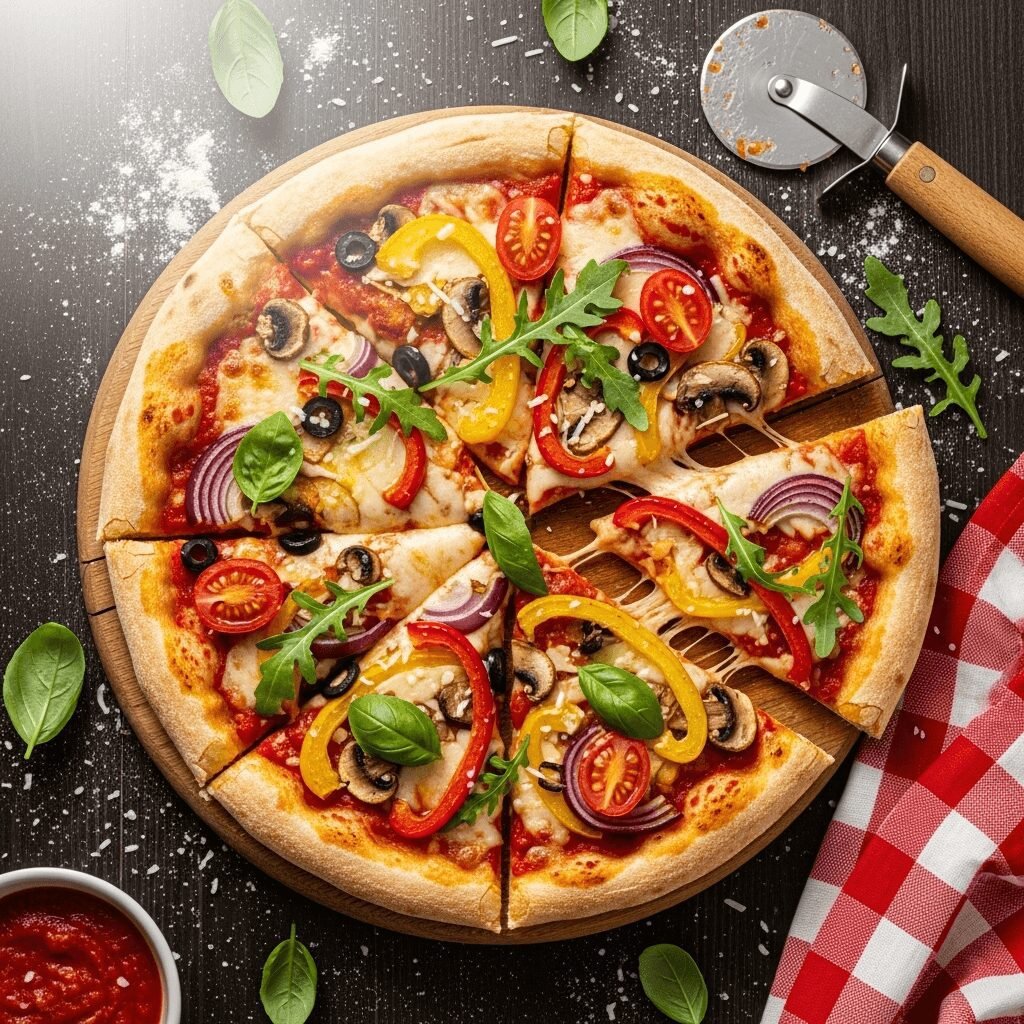
Homemade Veggie Pizza Recipe – Fresh, Colorful, and Better Than Delivery!

Get ready to fall in love with the most vibrant, delicious, and satisfying pizza you’ll ever make at home! This Homemade Veggie Pizza is loaded with colorful fresh vegetables, gooey melted cheese, and sits atop a perfectly crispy crust that rivals any pizzeria. Unlike greasy takeout, this vegetable pizza recipe lets you control exactly what goes on top, ensuring every bite is packed with fresh, wholesome ingredients that actually taste like real food.
What makes this easy veggie pizza so special is its incredible versatility and crowd-pleasing appeal. Whether you’re feeding vegetarian friends, trying to get your kids to eat more vegetables, or simply craving a lighter pizza option that doesn’t sacrifice flavor, this recipe delivers on all fronts. The combination of a golden, slightly chewy crust, tangy tomato sauce, melted mozzarella, and a rainbow of roasted vegetables creates a pizza that’s both nutritious and absolutely crave-worthy.
This colorful vegetable pizza is perfect for Friday night pizza parties, casual dinner gatherings, game day spreads, kids’ birthday celebrations, Meatless Monday dinners, or anytime you want something that feels indulgent but is actually good for you. It’s customizable based on what’s in your fridge, makes great leftovers, and proves that vegetarian pizza can be just as satisfying (if not more so!) than meat-loaded versions. Plus, making pizza from scratch is a fun family activity that gets everyone involved in the kitchen!
History / Background
Pizza’s journey from ancient flatbreads to the beloved dish we know today is a fascinating story of cultural evolution and culinary innovation. While pizza as we know it originated in Naples, Italy in the 18th century, the concept of topped flatbreads dates back thousands of years to ancient civilizations including the Greeks, Egyptians, and Romans, who all created variations of bread topped with oils, herbs, and vegetables.
The modern pizza was born in Naples among working-class Neapolitans who needed inexpensive, quick food. Street vendors sold flatbreads with various toppings, and by the late 1700s, the first true pizzeria, Antica Pizzeria Port’Alba, opened in Naples. The iconic Margherita pizza, featuring tomatoes, mozzarella, and basil (representing the colors of the Italian flag), was created in 1889 when pizza maker Raffaele Esposito was summoned to make pizza for Queen Margherita of Savoy.
When Italian immigrants came to America in the late 19th and early 20th centuries, they brought their pizza-making traditions with them. The first American pizzeria, Lombardi’s, opened in New York City in 1905. Pizza remained relatively unknown outside Italian-American communities until after World War II, when American soldiers returning from Italy craved the dish they’d discovered overseas. This sparked pizza’s explosive popularity across America throughout the 1950s and 60s.
Vegetable pizza, while not traditional in classic Italian pizza making (which favored simple combinations like Margherita or Marinara), emerged as American pizza culture evolved and diversified. As health consciousness grew in the 1970s and 80s, and vegetarianism gained mainstream acceptance in the 1990s, pizza makers began experimenting with vegetable-forward toppings. California-style pizza, pioneered by chefs like Wolfgang Puck at Spago in the 1980s, revolutionized pizza by treating it as a canvas for creative, fresh, high-quality ingredients including abundant vegetables.
Today’s veggie pizza represents the beautiful evolution of pizza from its humble Neapolitan roots to a globally beloved dish that can be customized infinitely. It honors the Italian tradition of quality ingredients while embracing American innovation and the modern emphasis on plant-forward eating. This homemade vegetable pizza bridges tradition and contemporary tastes, proving that pizza can be both indulgent and nutritious.
Why You’ll Love This Recipe
This homemade veggie pizza recipe is about to become your new Friday night tradition, and once you make it, you’ll understand why homemade pizza beats delivery every single time! The combination of a perfectly crispy-yet-chewy crust, fresh vegetables with incredible flavor, and that irresistible melted cheese creates something truly special that you just can’t get from a pizza chain.
Here’s why this easy vegetable pizza will become your go-to recipe:
- Healthier than takeout – Control the ingredients, reduce grease, add more vegetables, skip preservatives
- Incredibly customizable – Use whatever vegetables you have on hand or prefer
- Budget-friendly – Costs a fraction of delivery pizza and feeds the whole family
- Kid-approved – Children love making their own pizzas with their favorite veggies
- Ready in 45 minutes – Including rise time, faster than waiting for delivery
- Restaurant-quality results – Crispy crust and fresh toppings rival pizzerias
- Great for meal prep – Makes multiple pizzas or freezes beautifully for later
- Naturally vegetarian – Perfect for meatless meals without feeling like you’re sacrificing
- Uses simple ingredients – No specialty items required, just pantry staples
- Fun family activity – Get everyone involved in rolling, topping, and creating
- Impressive to serve – Guests always love homemade pizza
- Endless variations – Change vegetables seasonally or by preference
- Lighter but satisfying – Feels indulgent without the heavy, greasy aftermath
- Perfect leftovers – Reheats beautifully for lunch the next day
Ingredient Notes
The beauty of this colorful veggie pizza lies in how simple, fresh ingredients combine to create something extraordinary. Let’s break down what makes this recipe work:
Pizza Dough: The foundation of great pizza! You can use store-bought dough from the refrigerated section or bakery (super convenient), pre-made pizza crusts like Boboli, naan bread for quick personal pizzas, or make homemade dough (recipe included). Substitution: Cauliflower crust for low-carb, gluten-free pizza dough for dietary needs, or even tortillas for ultra-thin crispy pizza.
Pizza Sauce: Use your favorite jarred marinara or pizza sauce, or make quick homemade sauce with crushed tomatoes, garlic, Italian herbs, and olive oil. The sauce provides moisture and tangy flavor. Substitution: Pesto for a completely different flavor profile, white sauce (alfredo), olive oil and garlic, or even hummus for Mediterranean-style pizza.
Mozzarella Cheese: The classic pizza cheese melts beautifully and creates those Instagram-worthy cheese pulls. Use whole milk mozzarella for best flavor – pre-shredded for convenience or fresh mozzarella for authenticity (drain it well!). Substitution: Italian cheese blend, provolone, fontina, or vegan mozzarella for dairy-free.
Bell Peppers: These add sweet crunch and vibrant color. Use a mix of red, yellow, and orange for visual appeal – they’re sweeter than green peppers. Substitution: Any color bell pepper works, or try poblano peppers for mild heat.
Red Onion: Provides sharp, slightly sweet flavor that mellows when cooked. Slice thinly so it cooks through on the pizza. Substitution: Yellow onion, shallots, or caramelized onions for deeper sweetness.
Mushrooms: Add meaty texture and earthy, umami flavor. Button, cremini, or baby bella mushrooms all work. Slice thin and sauté first to remove excess moisture. Substitution: Shiitake for more flavor, portobello for meatier texture, or omit if you don’t like mushrooms.
Cherry Tomatoes: These burst with sweetness and add juicy pops of flavor. Slice in half so they don’t roll off. Substitution: Sun-dried tomatoes, diced roma tomatoes (drain excess liquid), or roasted red peppers.
Fresh Spinach or Arugula: Adds green color, nutrients, and slight bitterness that balances the richness. Add halfway through baking so it doesn’t burn. Substitution: Kale (remove stems and chop), Swiss chard, or fresh basil leaves.
Black Olives: Optional but adds briny, salty flavor that many people love. Substitution: Kalamata olives, green olives, artichoke hearts, or capers.
Olive Oil: Brushing the crust edges with olive oil creates golden, crispy, flavorful edges. Substitution: Melted butter or garlic butter for extra richness.
Italian Seasonings: Oregano, basil, garlic powder, and red pepper flakes enhance all the flavors. Substitution: Fresh herbs are even better when available!
Equipment Needed
Making homemade veggie pizza requires minimal equipment – you probably have everything already!
- Baking sheet or pizza stone (12-16 inch)
- Pizza peel (optional, for transferring to stone)
- Rolling pin for rolling out dough
- Cutting board for chopping vegetables
- Sharp knife for slicing veggies
- Cheese grater (if shredding fresh mozzarella)
- Small skillet for pre-cooking mushrooms
- Measuring cups and spoons
- Pastry brush for olive oil
- Parchment paper (optional, prevents sticking)
- Pizza cutter or large knife for slicing
Optional but helpful:
- Stand mixer with dough hook for homemade dough
- Pizza screen for extra crispy crust
- Bench scraper for handling sticky dough
- Kitchen scale for precise dough measurements
- Mandoline for uniform vegetable slicing

Homemade Veggie Pizza
This Homemade Veggie Pizza features a crispy golden crust topped with tangy tomato sauce, melted mozzarella, and a colorful array of fresh vegetables including bell peppers, mushrooms, onions, and tomatoes. Better than delivery and ready in just 35 minutes!
- Total Time: 35 minutes
- Yield: 8 slices (1 large pizza, serves 4) 1x
Ingredients
For the Pizza:
- 1 pound pizza dough (store-bought or homemade)
- ¾ cup pizza sauce or marinara
- 2 cups shredded mozzarella cheese (8 ounces)
- 1 red bell pepper, thinly sliced
- 1 yellow or orange bell pepper, thinly sliced
- 1 cup mushrooms, sliced (about 4 ounces)
- ½ red onion, thinly sliced
- 1 cup cherry tomatoes, halved
- 1 cup fresh spinach or arugula
- ¼ cup sliced black olives (optional)
- 2 tablespoons olive oil
- 1 teaspoon dried oregano
- ½ teaspoon garlic powder
- ¼ teaspoon red pepper flakes (optional)
- Fresh basil leaves for garnish
- Grated Parmesan cheese for finishing (optional)
For Quick Homemade Dough (optional):
- 2¼ cups all-purpose flour
- 1 packet (2¼ teaspoons) instant yeast
- 1 teaspoon sugar
- 1 teaspoon salt
- ¾ cup warm water (110°F)
- 2 tablespoons olive oil
Instructions
- Preheat your oven: Set oven to 475°F (245°C). If using a pizza stone, place it in the oven while preheating for at least 30 minutes. For a baking sheet, you can preheat or not – both work fine. Higher heat creates crispier crust!
- Prepare vegetables: While oven heats, slice all your vegetables. Keep them relatively thin (about ¼ inch) so they cook through. For mushrooms specifically, heat 1 tablespoon olive oil in a skillet over medium-high heat and sauté them for 3-4 minutes until they release their moisture and start to brown. This prevents soggy pizza. Drain excess liquid and set aside.
- Prepare your dough: If using store-bought refrigerated dough, let it sit at room temperature for 10 minutes – this makes it easier to stretch. Lightly flour your work surface and rolling pin. If making homemade dough (see notes), prepare it first and let it rest.
- Roll out the dough: Place dough on floured surface and use your hands to press it into a rough circle. Then use a rolling pin to roll it into a 12-14 inch circle for thin crust, or 10-12 inches for thicker crust. If dough springs back, let it rest 5 minutes and try again. For rustic look, stretch by hand instead of rolling.
- Transfer to pan: Carefully transfer rolled dough to a lightly oiled or parchment-lined baking sheet. If using pizza stone, transfer to a pizza peel dusted with cornmeal or flour (this helps it slide off). Brush the outer edge of dough with olive oil – this creates a golden, crispy crust.
- Add sauce: Spread pizza sauce evenly over the dough, leaving about a ½-inch border around the edges for the crust. Use the back of a spoon to spread it thin and even. Don’t oversauce – too much makes soggy pizza.
- Add cheese: Sprinkle about half the mozzarella evenly over the sauce. This creates a cheese barrier that prevents vegetables from making the crust soggy, and you’ll add more cheese on top later.
- Layer the vegetables: Distribute bell peppers, sautéed mushrooms, red onion, and cherry tomatoes evenly over the cheese. Don’t overload – less is more for crispy pizza. Arrange vegetables so each slice will get a good mix. Add black olives if using.
- Top with remaining cheese: Sprinkle the remaining mozzarella over the vegetables. This holds everything in place and creates that melty, gooey top layer everyone loves.
- Season: Sprinkle the entire pizza with oregano, garlic powder, and red pepper flakes if using. These simple seasonings make a huge flavor difference!
- Bake: Transfer to the oven and bake for 12-15 minutes, or until the crust is golden brown and the cheese is bubbly and starting to brown in spots. If using a pizza stone, the bottom will be crispier. If your oven has a convection setting, use it for even crisper results.
- Add fresh greens: In the last 2-3 minutes of baking, remove pizza and quickly scatter fresh spinach or arugula over the top, then return to oven. The residual heat will wilt the greens perfectly without burning them.
- Finish and rest: Remove from oven and let the pizza rest for 3-5 minutes before slicing – this allows the cheese to set slightly so it doesn’t all slide off. Drizzle with a bit more olive oil if desired, garnish with fresh basil leaves and grated Parmesan.
- Slice and serve: Use a pizza cutter or large sharp knife to cut into 8 slices. Serve immediately while hot and melty!
Notes
- Dough temperature: Cold dough is hard to stretch. Let refrigerated dough sit at room temperature 15-30 minutes before using.
- Pre-cooking vegetables: Vegetables with high water content (mushrooms, zucchini, eggplant) should be sautéed first to prevent soggy pizza.
- Cheese moisture: If using fresh mozzarella, slice and lay on paper towels for 15 minutes to absorb excess moisture first.
- Crispy crust secrets: Brush crust with olive oil, use high heat, and don’t overload with toppings.
- Quick homemade dough: Combine dry ingredients, add warm water and oil, knead 5 minutes until smooth, let rest 10 minutes. No rising needed for thin crust!
- Make it vegan: Use vegan mozzarella and skip the Parmesan.
- Prep Time: 20 minutes
- Cook Time: 15 minutes
- Category: Dinner
- Method: Baking
- Cuisine: Italian-American
- Diet: Vegetarian
Nutrition
- Serving Size: 2 slices (¼ of pizza)
- Calories: 385
- Sugar: 6g
- Sodium: 685mg
- Fat: 14g
- Saturated Fat: 6g
- Unsaturated Fat: 7g
- Trans Fat: 0g
- Carbohydrates: 48g
- Fiber: 4g
- Protein: 16g
- Cholesterol: 30mg
Tips & Variations
The versatility of this veggie pizza recipe makes it endlessly customizable! Here are my favorite ways to transform this basic recipe:
Vegetable Combinations:
- Mediterranean: Artichoke hearts, kalamata olives, sun-dried tomatoes, feta, red onion
- Garden Fresh: Zucchini, yellow squash, eggplant, fresh tomatoes, basil
- Roasted Veggie: Pre-roasted broccoli, cauliflower, carrots, Brussels sprouts
- Farmers Market: Whatever’s in season – asparagus in spring, corn in summer, butternut squash in fall
- White Pizza Veggie: Skip red sauce, use alfredo or garlic oil, add spinach, mushrooms, caramelized onions
Sauce Variations:
- Pesto instead of red sauce for herbaceous flavor
- White garlic sauce (butter, cream, garlic, parmesan)
- BBQ sauce for unexpected sweetness
- Butternut squash or pumpkin puree sauce (fall favorite!)
- Hummus base for Mediterranean-style
Cheese Options:
- Mix mozzarella with fontina for better melting
- Add goat cheese or feta crumbles for tanginess
- Sprinkle with parmesan and asiago for nutty flavor
- Use smoked mozzarella for depth
- Try vegan cheese for dairy-free option
Protein Add-Ins (if not keeping strictly vegetarian):
- Grilled chicken for more substance
- Italian sausage for traditional flavor
- Bacon or pancetta for smokiness
- Pepperoni for classic pizza taste
- Plant-based protein like Beyond or Impossible crumbles
Make It Spicy:
- Add fresh jalapeños or banana peppers
- Use pepper jack cheese instead of mozzarella
- Drizzle with hot honey or Mike’s Hot Honey
- Add red pepper flakes generously
- Include spicy Italian seasoning
Crust Variations:
- Whole wheat dough for more fiber
- Cauliflower crust for low-carb
- Naan or flatbread for quick personal pizzas
- Pita bread for thin and crispy
- Sourdough pizza dough for tangy flavor
Finishing Touches:
- Drizzle with balsamic glaze
- Top with fresh arugula after baking
- Add microgreens for elegant presentation
- Sprinkle with everything bagel seasoning
- Finish with truffle oil for luxury
Pro Chef Tips
Having made hundreds of homemade pizzas over the years (including working in pizzerias!), I’ve learned professional secrets that guarantee restaurant-quality results every time:
The high-heat rule: Home ovens can’t reach true pizza oven temperatures (800°F+), but you can get close. Always preheat to at least 475°F, preferably 500°F if your oven allows. Higher heat means crispier crust, better browning, and faster cooking that prevents soggy centers.
Pizza stone magic: A pizza stone or steel is a game-changer. It absorbs and radiates heat evenly, creating pizzeria-style crispy bottoms. Preheat it for 45-60 minutes before baking. Worth every penny if you make pizza regularly!
Moisture is the enemy: This is the number one cause of soggy pizza. Sauté high-moisture vegetables (mushrooms, zucchini, eggplant, spinach) before adding. Pat fresh mozzarella dry. Don’t overload sauce. These steps ensure crispy, not soggy, results.
The par-bake technique: For super crispy crust, pre-bake the dough for 5 minutes before adding toppings. This creates a barrier that prevents sauce and vegetables from soaking into the crust. Professional pizzerias do this!
Less is more: Resist the urge to pile on toppings. Overloading creates soggy, undercooked pizza with raw vegetables. Aim for a generous but not overwhelming amount – you should still see cheese between vegetables.
Uniform slicing: Cut all vegetables to similar thickness (about ¼ inch) so everything cooks evenly. Thick pieces stay raw while thin pieces burn. Consistency is key to professional results.
The cornmeal trick: Sprinkle cornmeal on your baking sheet or pizza peel. It acts like tiny ball bearings, helping pizza slide easily and adding pleasant crunch to the bottom crust. Semolina flour works even better if you have it!
Olive oil finish: A light drizzle of quality extra virgin olive oil over the hot, just-baked pizza adds professional sheen and incredible flavor. This is what pizzerias do for that glistening, appetizing look.
The broiler boost: For extra char and bubbly cheese, switch to broil for the final 1-2 minutes. Watch carefully – it goes from perfect to burnt quickly! This creates those beautiful leopard spots professionals prize.
Rest before slicing: Let pizza rest 3-5 minutes after baking. Cutting immediately causes all the cheese to slide off. The brief rest allows cheese to set while pizza stays hot. Patience pays off!
Common Mistakes to Avoid
Mistake #1: Using cold dough straight from the refrigerator – Cold dough is stiff, springs back constantly, and tears easily when stretched. It’s incredibly frustrating to work with and won’t bake evenly. Always let refrigerated dough sit at room temperature for at least 15-30 minutes before rolling or stretching. Room temperature dough is elastic, easy to shape, and bakes more uniformly.
Mistake #2: Adding raw, wet vegetables directly to the pizza – Vegetables like mushrooms, zucchini, spinach, and eggplant contain tons of water. When baked, this moisture releases and creates a soggy, watery pizza with a undercooked crust. Always sauté these vegetables first to cook off excess moisture, or roast them beforehand. Your crust will thank you!
Mistake #3: Using too much sauce – More sauce does not equal better pizza! Excess sauce makes the crust soggy and causes the toppings to slide off. Use just enough to lightly coat the dough – you should be able to still see some dough through the sauce. About ¾ cup for a large pizza is plenty. Remember: you can always serve extra sauce on the side for dipping!
Mistake #4: Baking at too low a temperature – Pizza needs HIGH heat to create that crispy, golden crust with slightly charred spots. Baking at 350°F or 400°F results in bread-like, pale, disappointing crust. Always use at least 475°F, preferably 500°F. Your oven’s highest setting (unless it’s cleaning mode) is usually best for pizza.
Mistake #5: Overloading with toppings – I know it’s tempting to add every vegetable you own, but overloading prevents proper cooking. The crust stays pale, vegetables remain raw or steamed instead of roasted, and cheese doesn’t brown. Follow the “less is more” philosophy – strategic placement of quality ingredients beats piled-high any day.
Mistake #6: Not preheating long enough – Your oven’s “ready” beep doesn’t mean it’s truly at temperature, especially if using a pizza stone. Preheat for at least 30 minutes (45-60 for pizza stones) to ensure even, consistent heat that cooks pizza properly from all directions.
Mistake #7: Skipping the olive oil on the crust edges – Brushing olive oil on the exposed crust creates golden, crispy, flavorful edges instead of pale, tough borders. This small step makes a massive difference in both appearance and taste. Don’t skip it!
Storage & Meal Prep
Refrigerator Storage: Store leftover veggie pizza in an airtight container or wrapped tightly in aluminum foil in the refrigerator for up to 4 days. For best results, place a paper towel in the container to absorb any moisture that develops – this keeps the crust from getting soggy. Stack slices with parchment paper between layers to prevent sticking.
Reheating Instructions: The key to great leftover pizza is reheating it properly to restore crispiness:
Best method – Oven: Preheat oven to 375°F. Place pizza slices directly on the oven rack (or on a baking sheet) and heat for 8-10 minutes until cheese is melted and crust crisps up. This restores that just-baked texture better than any other method.
Stovetop method: Heat a skillet over medium heat. Add pizza slices, cover with a lid, and cook for 3-4 minutes. The bottom gets crispy while the trapped steam melts the cheese. Professional chefs swear by this method!
Air fryer method: Place slices in air fryer at 350°F for 3-4 minutes. This creates super crispy crust with perfectly melted cheese.
Microwave (last resort): Place a cup of water in the microwave alongside your pizza and heat for 45-60 seconds. The water creates steam that prevents rubber-like cheese. Still not ideal, but better than dry, chewy results.
Meal Prep Strategy: Pizza is excellent for meal prep! Make 2-3 pizzas on Sunday and have easy lunches or dinners all week. Bake them fully, let cool completely, slice, and store in containers with parchment between slices. Reheat individual slices as needed throughout the week.
Room Temperature: Don’t leave pizza at room temperature longer than 2 hours (1 hour if it’s very warm). Bacteria grows quickly on dairy and vegetables at room temperature, so refrigerate promptly after your meal.
Make-Ahead & Freezer Notes
Make-Ahead Timeline:
2-3 days before: Make pizza dough, wrap tightly, and refrigerate. Cold-fermented dough actually develops better flavor! Chop and prep all vegetables, store in airtight containers.
1 day before: Shape dough into pizza rounds, place on baking sheets, wrap well, and refrigerate. Pre-cook any high-moisture vegetables.
Day of: Simply top and bake when ready. Bring dough to room temperature for 15 minutes first.
Freezing Unbaked Pizza: Prepare pizza completely (sauce, cheese, toppings) but don’t bake. Place the entire baking sheet in the freezer for 2-3 hours until solid. Once frozen, wrap tightly in plastic wrap then aluminum foil, or place in a large freezer bag. Label with date and toppings. Freeze for up to 3 months.
Baking from frozen: Do NOT thaw. Place frozen pizza directly in a preheated 425°F oven (lower temp to prevent burning before center cooks through). Bake for 18-22 minutes until crust is golden and cheese is bubbly.
Freezing Baked Pizza: Fully bake pizza, let cool completely, slice, and wrap individual slices or whole pizza tightly. Freeze for up to 2 months. Frozen baked pizza doesn’t retain quality as well as unbaked, but it’s still good in a pinch.
Thawing baked pizza: Transfer to refrigerator overnight, then reheat using methods above. Or reheat from frozen at 375°F for 12-15 minutes.
Freezing Pizza Dough: Homemade pizza dough freezes beautifully! After first rise, divide dough into portions, wrap each tightly in plastic wrap coated with oil, then place in freezer bags. Freeze up to 3 months. Thaw in refrigerator overnight, then let come to room temperature before shaping.
Best reheating method for frozen: Oven reheating (whether the pizza was frozen baked or unbaked) gives the crispiest, most oven-fresh results. Always use at least 375°F and give it time to heat through completely.
Serving Suggestions
This colorful veggie pizza is delicious on its own, but these sides and pairings make it a complete, memorable meal:
Classic Italian Sides:
- Caesar salad – Crisp romaine with creamy dressing balances rich pizza
- Caprese salad – Fresh mozzarella, tomatoes, basil, balsamic
- Antipasto platter – Olives, peppers, artichokes, cheese, cured meats
- Garlic bread or breadsticks – Because you can never have too much carbs!
- Bruschetta – Fresh tomato topping on toasted bread
Fresh Salads:
- Mixed greens with Italian vinaigrette
- Arugula salad with lemon and parmesan
- Cucumber tomato salad with red wine vinegar
- Chopped Italian salad with chickpeas
- Spinach salad with balsamic dressing
Appetizers:
- Mozzarella sticks
- Fried zucchini or zucchini fries
- Stuffed mushrooms
- Spinach artichoke dip with bread
- Italian wedding soup
Dipping Sauces:
- Extra marinara or pizza sauce
- Ranch dressing (American favorite!)
- Garlic butter
- Balsamic glaze
- Hot honey
- Pesto
Beverage Pairings:
- Wine: Chianti, Pinot Grigio, Sangiovese, or Prosecco
- Beer: Light lagers, pilsners, or wheat beers
- Non-alcoholic: Italian soda, sparkling water with lemon, iced tea
- Cocktails: Aperol Spritz, Negroni, Italian Margarita
Make It a Pizza Party: Set up a build-your-own pizza bar with:
- Different dough types (regular, whole wheat, gluten-free)
- Multiple sauce options
- Various cheeses
- Huge selection of vegetable toppings
- Fresh herbs and finishing ingredients
- Everyone makes their own personal pizza!
Dessert Pairings:
- Tiramisu
- Gelato or Italian ice
- Cannoli
- Panna cotta
- Biscotti with coffee
Complete Meal Ideas:
- Casual Family Dinner: Veggie pizza + Caesar salad + garlic bread + Italian cream sodas
- Date Night: Veggie pizza + Caprese salad + Chianti wine + cannoli for dessert
- Game Day: Multiple pizzas + wings + mozzarella sticks + beer
- Kids’ Party: Personal veggie pizzas + carrot sticks with ranch + fruit cups + lemonade
FAQs Section
Q: Can I use store-bought pizza dough for this recipe? A: Absolutely! Store-bought dough is a huge time-saver and works perfectly. Look for fresh dough in the refrigerated section near the dairy, in the bakery department, or even ask your local pizzeria if they sell dough balls. Trader Joe’s, Whole Foods, and most grocery stores carry good quality pizza dough. Just remember to let it come to room temperature for 15-30 minutes before stretching for easiest handling. You can also use pre-baked crusts like Boboli, naan bread, or flatbreads for even quicker pizza!
Q: How do I prevent my veggie pizza from getting soggy? A: Soggy pizza is the most common problem! Here’s how to prevent it: 1) Sauté high-moisture vegetables (mushrooms, zucchini, spinach) before adding to remove excess water. 2) Don’t overload on sauce – use just enough to lightly coat the dough. 3) Pat fresh mozzarella dry with paper towels before using. 4) Don’t pile on too many toppings – less is more! 5) Bake at high temperature (475-500°F) so the crust crisps quickly. 6) Consider par-baking the crust for 5 minutes before adding toppings. Follow these steps and you’ll have crispy, not soggy, pizza!
Q: What vegetables work best on pizza? A: The best pizza vegetables are those that can withstand high heat and don’t release excessive moisture. Winners include: bell peppers (all colors), red onions, cherry tomatoes, mushrooms (pre-sautéed), olives, artichoke hearts, roasted red peppers, jalapeños, and spinach (added near the end). Vegetables that need pre-cooking: zucchini, eggplant, broccoli, cauliflower, asparagus – sauté or roast these first. Avoid: cucumbers, lettuce, raw tomato slices (too watery), and anything that wilts significantly or becomes mushy when cooked. This is the #1game-changer. 3) Use a thin layer of cornmeal or semolina under the dough to create airflow and prevent sticking. 4) Don’t overload with sauce or toppings which add moisture. 5) Brush the crust edges with olive oil before baking for golden browning. 6) Consider par-baking the dough for 5 minutes before adding toppings to create a moisture barrier. 7) Bake directly on the oven rack or stone rather than a pan for bottom crispiness. The combination of high heat and a preheated pizza stone makes the biggest difference!
Q: Can I make this veggie pizza gluten-free or vegan? A: Yes to both! For gluten-free, use gluten-free pizza dough (many brands available) or cauliflower crust. Bob’s Red Mill makes excellent GF pizza dough mix. For vegan, it’s super easy: use vegan pizza dough (most are naturally vegan), dairy-free mozzarella shreds (Violife, Follow Your Heart, and Daiya are good brands), and skip the Parmesan or use nutritional yeast instead. Load up on vegetables and you’ve got delicious vegan pizza! You can also use cashew cream as a white sauce base for extra richness without dairy.
Q: Should I pre-cook vegetables before putting them on pizza? A: It depends on the vegetable! Must pre-cook: Mushrooms (they release tons of water), zucchini, eggplant, spinach (unless adding at the very end), broccoli, cauliflower, and asparagus. These all have high water content or need longer to cook than pizza baking time allows. No need to pre-cook: Bell peppers, onions (though caramelizing them first is delicious!), cherry tomatoes, olives, artichoke hearts, and roasted red peppers. When in doubt, if a vegetable is watery or dense, cook it first!
Q: How do I prevent the cheese from sliding off my pizza? A: This frustrating problem has several solutions! 1) Let pizza rest 3-5 minutes after baking before cutting – this allows the cheese to set slightly. 2) Cut with a very sharp pizza cutter or knife in one swift motion rather than sawing back and forth. 3) Don’t use too much cheese – overloading makes it slide. 4) Spread cheese evenly including close to the edges. 5) If using fresh mozzarella, drain it extremely well and tear rather than slice. 6) Add a layer of cheese under the vegetables and another on top – this creates better adhesion. 7) Make sure your sauce isn’t too liquidy, as excess moisture causes sliding.
Q: What’s the best way to reheat leftover veggie pizza? A: The stovetop method is my personal favorite and what professional chefs recommend! Heat a non-stick skillet over medium heat, add your pizza slice, cover with a lid, and cook for 3-4 minutes. The bottom gets crispy from direct heat while the trapped steam reheats and melts the cheese perfectly. Alternatively, use the oven at 375°F for 8-10 minutes for evenly reheated pizza. The air fryer at 350°F for 3-4 minutes also works great. Avoid the microwave if possible – it makes the crust chewy and tough, though if you must, place a cup of water in there too for better results.
Conclusion
And there you have it – everything you need to create the most amazing, colorful, delicious Homemade Veggie Pizza that will make you wonder why you ever ordered delivery! This easy vegetable pizza recipe proves that homemade pizza isn’t intimidating or time-consuming – it’s actually fun, affordable, and results in something far superior to what arrives in a cardboard box.
What I absolutely love about this veggie pizza recipe is how it transforms simple, wholesome ingredients into something that feels indulgent and special. The crispy, golden crust, the tangy sauce, the melted cheese, and those beautiful roasted vegetables create a symphony of flavors and textures that satisfy on every level. Plus, you get the joy of knowing exactly what went into your food and the satisfaction of creating something from scratch.
This colorful pizza has become a weekly tradition in my household, and I know it will in yours too. Whether you’re making it for Meatless Monday, Friday pizza night, a casual gathering with friends, or getting the kids involved in the kitchen, this recipe delivers every single time. The best part? Once you master the basic technique, you can customize it endlessly based on what’s in your fridge, what’s in season, or what your family loves.
Making pizza at home is one of those life skills that pays dividends forever. It’s cheaper than delivery, healthier, more delicious, and brings people together in the kitchen. There’s something special about rolling out dough, arranging toppings, and pulling a golden, bubbly pizza from your own oven. It’s food therapy and family bonding all in one!
Ready to make the best homemade pizza of your life? Grab that pizza dough and those fresh vegetables – you’re about to create something amazing! I promise this will be easier than you think and more delicious than you can imagine. Your family and friends will be so impressed!
I’d love to hear from you! After you make this veggie pizza recipe, come back and leave a comment below. What vegetables did you use? Did you try any creative variations? How did your family react? Your feedback and photos help other home cooks and inspire our amazing community!
Don’t forget to PIN this recipe to your favorite Pinterest boards so you’ll have it ready whenever pizza night rolls around! Save it to your “Dinner Recipes,” “Vegetarian Meals,” “Homemade Pizza,” or “Easy Weeknight Dinners” boards. Share it with friends who love good food – they’ll thank you when they taste this incredible pizza!