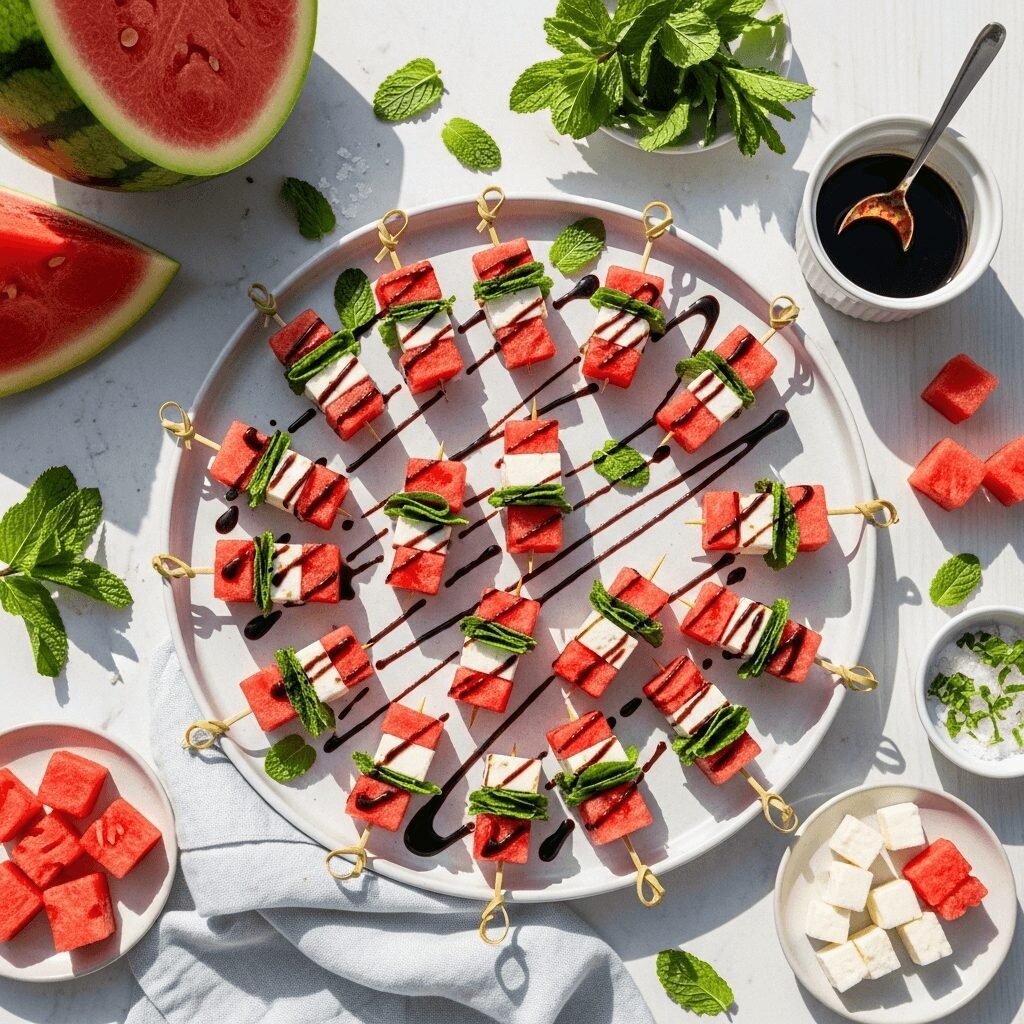
Watermelon Feta Skewers: Easy Fresh Summer Appetizer Recipe
Watermelon feta skewers are the ultimate fresh summer appetizer—sweet, juicy watermelon cubes paired with creamy, tangy feta cheese, fresh mint, and a drizzle of balsamic glaze, all threaded onto convenient skewers for easy serving. These easy watermelon appetizer skewers combine contrasting flavors and textures in a way that’s surprisingly sophisticated yet incredibly simple to prepare. Whether you’re hosting a backyard BBQ, pool party, summer potluck, or looking for a light and refreshing snack, these colorful watermelon bites deliver impressive presentation with minimal effort.
What makes these watermelon feta appetizers so special is the perfect balance of sweet and savory flavors. The naturally sweet, refreshing watermelon provides a juicy burst of summer flavor, while the salty, creamy feta adds richness and depth. Fresh mint brings an aromatic brightness that ties everything together, and the balsamic glaze adds a sweet-tart complexity that elevates the entire combination. Each bite is refreshing, flavorful, and surprisingly addictive—guests always come back for more!
These fresh watermelon feta bites work beautifully for countless occasions—summer cookouts, Fourth of July parties, bridal or baby showers, outdoor weddings, picnics, potlucks, or anytime you want a light appetizer that won’t weigh people down in warm weather. They’re naturally vegetarian and gluten-free, making them inclusive for various dietary needs. Best of all, these skewers take just 15 minutes to assemble, require no cooking, and can be partially prepped ahead, making entertaining stress-free while delivering restaurant-quality results that look as impressive as they taste.
History / Background
The combination of watermelon and feta is a relatively modern culinary pairing that has become a beloved staple of contemporary summer cuisine, particularly in Mediterranean-inspired cooking. While watermelon has been cultivated for thousands of years across Africa and the Mediterranean, and feta cheese has ancient roots in Greek cuisine dating back to Homer’s Odyssey, the deliberate pairing of these two ingredients is a more recent innovation that reflects modern fusion cooking trends.
The watermelon-feta combination likely emerged in the late 20th century as chefs and home cooks began exploring unexpected flavor pairings that balanced sweet and savory elements. This approach to contrasting flavors has roots in various culinary traditions—Middle Eastern cuisine often pairs fruit with cheese (think dates with labneh), and Mediterranean cooking has long celebrated the combination of fresh produce with quality dairy products.
The specific pairing gained significant popularity in the 1990s and 2000s as food culture became more adventurous and chefs began deconstructing traditional salads into new formats. The classic watermelon feta salad—tossed with mint, olive oil, and sometimes balsamic vinegar—became a fixture on restaurant menus during summer months, celebrated for its refreshing qualities and beautiful presentation.
The skewer format represents the evolution of this salad into party-friendly finger food. As entertaining culture shifted toward more casual, grazing-style gatherings, appetizers on skewers became increasingly popular for their convenience, portion control, and visual appeal. Skewers eliminate the need for plates and forks, making them ideal for outdoor entertaining, cocktail parties, and situations where guests are mingling rather than sitting at tables.
Today, watermelon feta skewers embody several important food trends: they’re Instagram-worthy with their vibrant colors, they celebrate fresh, seasonal ingredients, they offer an elegant presentation with minimal preparation, and they provide a lighter alternative to heavy appetizers. The combination has become so beloved that it appears at everything from upscale catered events to casual backyard gatherings, proving that sometimes the simplest flavor combinations are the most memorable.
The dish also reflects the growing appreciation for Mediterranean-style eating in American culture—emphasizing fresh vegetables, quality cheese, herbs, and bright flavors that celebrate ingredients rather than masking them. In this way, watermelon feta skewers are both a modern innovation and a tribute to timeless Mediterranean culinary principles.
Why You’ll Love This Recipe
These watermelon feta skewers are about to become your go-to summer appetizer, and here’s why. This easy no-cook recipe delivers stunning presentation and complex flavors using just a handful of simple ingredients, making you look like a gourmet chef with almost zero effort. Whether you’re an experienced cook or just starting out, you’ll appreciate how these fresh summer skewers impress guests while keeping your time in the kitchen minimal.
Here’s why this recipe deserves a permanent spot in your summer entertaining repertoire:
- Lightning Fast – Ready in just 15 minutes with zero cooking required, perfect for last-minute gatherings
- No-Cook Convenience – Keeps your kitchen cool during hot summer months—no oven or stove needed
- Visually Stunning – Vibrant colors and elegant presentation make these Instagram-worthy appetizers
- Perfectly Portioned – Individual skewers make serving and eating easy with no plates or utensils needed
- Refreshing & Light – Won’t weigh guests down in summer heat like heavy appetizers do
- Sweet & Savory Balance – Sophisticated flavor combination that appeals to adventurous and traditional eaters alike
- Dietary-Friendly – Naturally vegetarian and gluten-free, accommodating various dietary needs
- Budget-Friendly – Uses affordable seasonal ingredients when watermelon is at its peak
- Make-Ahead Friendly – Components can be prepped hours in advance for stress-free entertaining
- Crowd-Pleasing – Unique enough to feel special, familiar enough to appeal to all ages
- Customizable – Easily adapted with different herbs, cheeses, or drizzles to suit preferences
- Conversation Starter – The unexpected pairing sparks interest and gets guests talking
Ingredient Notes
Understanding your ingredients helps you make the best watermelon feta skewers possible. Let’s break down each component:
Watermelon – The star of the show. Choose a ripe, sweet watermelon that’s heavy for its size with a yellow spot on one side (where it sat on the ground while ripening). When you tap it, it should sound hollow. Seedless watermelon is most convenient for skewers, though you can use seeded varieties and remove seeds when cutting. The watermelon should be cold from the refrigerator for the most refreshing experience. Cut into 1-inch cubes—large enough to be substantial but small enough to fit comfortably on skewers and in one bite.
Feta Cheese – Provides the essential salty, tangy, creamy contrast to sweet watermelon. Use block feta packed in brine (usually found in the deli section) rather than pre-crumbled feta, which is often drier and less flavorful. Greek or Bulgarian feta tends to be creamier and less salty than other varieties. Cut into 1-inch cubes similar in size to watermelon for visual balance. If feta is too salty for your taste, rinse briefly under cold water and pat dry. For dairy-free version, use plant-based feta alternatives, though the flavor will differ.
Fresh Mint – Adds aromatic brightness and a cooling effect that enhances both watermelon and feta. Use fresh mint leaves only—dried mint doesn’t provide the same vibrant flavor or visual appeal. Italian or spearmint varieties work beautifully. Choose leaves that are medium-sized (not tiny or huge) so they fit nicely on skewers and don’t overpower. Wash and pat completely dry before using. Basil can substitute for a different herbal note, though mint is traditional.
Balsamic Glaze – Provides sweet-tart complexity that ties all flavors together. Balsamic glaze (also called balsamic reduction) is thicker and sweeter than regular balsamic vinegar, specifically designed for drizzling. You can buy it pre-made at grocery stores, or make your own by simmering regular balsamic vinegar until reduced by half and slightly syrupy. The glaze adds a beautiful finishing touch and depth of flavor. Honey can be mixed with a little balsamic vinegar as an alternative.
Optional Add-Ons:
- Extra Virgin Olive Oil – A light drizzle adds richness and helps flavors meld
- Sea Salt and Black Pepper – Enhances flavors; use sparingly as feta is already salty
- Lime Juice – Adds brightness and prevents watermelon from becoming watery
- Red Pepper Flakes – Provides a subtle heat that some find addictive
Equipment Needed
You’ll need these simple tools to make perfect watermelon feta skewers:
- Sharp Knife – Essential for cutting watermelon and feta into clean, uniform cubes
- Large Cutting Board – Provides stable surface for cutting watermelon safely
- Small Skewers or Toothpicks – Wooden or bamboo skewers (6-inch cocktail size) or decorative toothpicks work perfectly
- Serving Platter – For arranging finished skewers attractively
- Paper Towels – For patting feta and mint dry
- Small Bowl – For holding balsamic glaze during drizzling
- Spoon – For drizzling balsamic glaze over skewers
That’s it! This recipe requires minimal equipment, making it perfect for those who prefer simple, no-fuss cooking.
Print
Watermelon Feta Skewers
Fresh watermelon feta skewers combine sweet watermelon cubes with tangy feta cheese, fresh mint, and balsamic glaze for an easy, elegant summer appetizer. These no-cook skewers are ready in 15 minutes!
- Total Time: 15 minutes
- Yield: 16-20 skewers (serves 8-10 as appetizers) 1x
Ingredients
For the Skewers:
- 4 cups watermelon, cut into 1-inch cubes (about ¼ of a medium watermelon)
- 8 oz block feta cheese, cut into 1-inch cubes
- 20-24 fresh mint leaves, medium-sized
- 2-3 tablespoons balsamic glaze
- Optional: extra virgin olive oil for drizzling
- Optional: flaky sea salt and black pepper
For Serving:
- Additional mint leaves for garnish
- Extra balsamic glaze for serving
Instructions
- Prepare Watermelon: Cut watermelon into 1-inch cubes, removing any seeds if using seeded watermelon. You’ll need about 40-50 cubes total. Pat dry gently with paper towels if they’re very wet—this helps prevent watery skewers.
- Prepare Feta: Drain feta from brine and pat dry with paper towels. Cut into 1-inch cubes similar in size to watermelon cubes. You’ll need about 20-24 pieces. If feta is very salty, you can rinse briefly under cold water and pat dry.
- Wash Herbs: Rinse mint leaves under cold water and pat completely dry with paper towels. Select medium-sized, unblemished leaves for the prettiest presentation.
- Assemble Skewers: Thread ingredients onto small skewers or sturdy toothpicks in this order: watermelon cube, folded mint leaf (fold in half for easier skewering), feta cube, another watermelon cube. The watermelon-mint-feta-watermelon pattern creates nice balance and presentation.
- Arrange on Platter: Place assembled skewers on a serving platter in a single layer or slightly overlapping in an attractive pattern.
- Drizzle with Balsamic: Just before serving, drizzle balsamic glaze over all skewers using a spoon or squeeze bottle. Use a zigzag pattern for visual appeal. Start with about 2 tablespoons and add more to taste.
- Optional Finishing Touches: For extra flavor, add a very light drizzle of olive oil over skewers. Sprinkle with a pinch of flaky sea salt and freshly cracked black pepper if desired. Garnish platter with additional mint leaves.
- Serve Immediately: These are best served within 1-2 hours of assembly. Keep refrigerated until serving time, then let sit at room temperature for 5-10 minutes before serving for best flavor.
Notes
- Choose ripe, sweet watermelon for best results—it should be deep red and smell sweet.
- Cut ingredients into similar-sized cubes for even bites and attractive presentation.
- Pat watermelon and feta dry to prevent watery skewers.
- Add balsamic glaze just before serving to prevent sogginess.
- For easier eating, keep skewers to 4 ingredients max—too many items makes them difficult to eat.
- These don’t keep well overnight—assemble day-of for freshest results.
- If making ahead, prep components separately and assemble 1-2 hours before serving.
- Prep Time: 15 minutes
- Cook Time: 0 minutes
- Category: Appetizer
- Method: No-Cook Assembly
- Cuisine: Mediterranean-Inspired
- Diet: Vegetarian
Nutrition
- Serving Size: 2 skewers
- Calories: 78
- Sugar: 6g
- Sodium: 198mg
- Fat: 4g
- Saturated Fat: 3g
- Unsaturated Fat: 1g
- Trans Fat: 0g
- Carbohydrates: 8g
- Fiber: 0g
- Protein: 3g
- Cholesterol: 17mg
Tips & Variations
Transform your watermelon feta skewers to match any preference with these creative variations:
Caprese-Style Watermelon Skewers: Replace feta with fresh mozzarella balls (bocconcini or ciliegine), swap mint for fresh basil leaves, and use balsamic glaze as directed. This creates an Italian-inspired variation that’s equally delicious.
Spicy Watermelon Feta Skewers: Add a small slice of fresh jalapeño between the watermelon and feta, or sprinkle finished skewers with red pepper flakes and a squeeze of lime juice for a spicy-sweet-tangy combination that’s incredibly addictive.
Prosciutto-Wrapped Variation: Wrap a thin strip of prosciutto around each watermelon cube before skewering for a salty, savory contrast. This adds protein and creates a more substantial appetizer that appeals to meat-lovers.
Cucumber Watermelon Skewers: Alternate watermelon and feta with cucumber chunks for added crunch and a more substantial skewer. The cucumber adds refreshing flavor and interesting texture contrast.
Herb Variations: Try fresh basil, cilantro, or micro herbs instead of mint for different flavor profiles. Each herb brings its own unique character to the combination.
Honey Lime Drizzle: Instead of balsamic glaze, mix honey with fresh lime juice and drizzle over skewers. Add lime zest for extra citrus brightness. This creates a tropical twist on the classic.
Greek-Style Skewers: Use Kalamata olives alongside watermelon and feta, drizzle with olive oil and lemon juice instead of balsamic, and add a sprinkle of dried oregano for Mediterranean flair.
Vegan/Dairy-Free Version: Use plant-based feta alternatives (several brands make excellent versions) and proceed with recipe as directed. The combination still works beautifully without traditional dairy.
Pro Chef Tips
Elevate your watermelon feta skewers from good to restaurant-quality with these professional techniques:
Choose Watermelon at Peak Ripeness: The quality of your watermelon makes or breaks this recipe. Look for a melon that’s heavy for its size (indicates juiciness), has a yellow spot on one side (where it ripened on the ground), and makes a hollow sound when tapped. Avoid melons with soft spots or cracks. The flesh should be deep red, firm, and sweet—pale pink watermelon lacks flavor.
Cut Uniform Cubes: Professional presentation comes from consistency. Take time to cut watermelon and feta into similar-sized 1-inch cubes. Uniform pieces look more polished, ensure even flavor distribution, and make eating easier. Use a sharp knife and steady, confident cuts for clean edges rather than ragged ones.
Pat Everything Dry: Excess moisture is the enemy of these skewers. Watermelon naturally releases juice, and feta is packed in brine—both add unwanted liquid. Pat watermelon cubes gently with paper towels after cutting. Drain feta thoroughly and pat dry. This prevents watery pooling on your serving platter and helps balsamic glaze adhere better.
Chill Ingredients Before Assembly: All components should be cold when you assemble skewers—this creates the most refreshing eating experience. Refrigerate cut watermelon for at least 30 minutes before assembly. Cold ingredients also hold together better and don’t become mushy as quickly.
Add Balsamic at the Last Minute: Don’t drizzle balsamic glaze until 10-15 minutes before serving maximum. The acidity in balsamic causes watermelon to release juice and feta to soften if sitting too long. For best results, assemble skewers early but wait to add the glaze until just before guests arrive.
Consider Skewer Size and Balance: Use skewers that are long enough to hold ingredients securely but not so long they’re awkward to handle. Cocktail-size skewers (6 inches) work perfectly. Thread items close enough that they stay together but not so tightly packed that ingredients get squished. Aim for visual balance with watermelon bookending the feta and mint in the middle.
Taste and Adjust Seasoning: Before serving, taste a complete skewer. If feta is too salty, you can reduce the amount per skewer. If the combination needs brightness, add more lime juice or increase balsamic glaze. A tiny pinch of flaky salt on sweet watermelon can actually enhance its sweetness. Adjust based on your taste preferences.
Common Mistakes to Avoid
Sidestep these frequent pitfalls for perfect watermelon feta skewers every time:
Using Overripe or Underripe Watermelon: Overripe watermelon becomes mushy and mealy, falling apart when skewered. Underripe watermelon is pale, hard, and flavorless. The perfect watermelon should be firm enough to hold its shape when cubed but juicy and sweet. Always choose watermelon at peak ripeness during summer months when it’s naturally sweetest.
Cutting Ingredients Too Large or Too Small: Cubes that are too large (over 1.5 inches) make skewers difficult to eat in one bite and look oversized. Cubes that are too small (under ¾ inch) are hard to skewer without falling apart and don’t provide enough flavor impact. Stick to 1-inch cubes for the ideal size that looks attractive and eats comfortably.
Adding Balsamic Too Early: Drizzling balsamic glaze hours before serving causes watermelon to release liquid and creates a watery mess on your platter. The glaze also dissolves into the juice rather than providing that beautiful drizzle effect. Always add balsamic within 15 minutes of serving for best presentation and texture.
Using Pre-Crumbled Feta: Pre-crumbled feta is drier, saltier, and less flavorful than block feta. It also doesn’t cut into nice cubes—it crumbles when you try to skewer it, creating messy, unprofessional-looking appetizers. Always buy feta in block form packed in brine for superior flavor, texture, and presentation.
Skipping the Herb Component: Mint (or basil) isn’t just decorative—it adds essential aromatic brightness that balances the richness of feta and sweetness of watermelon. Without it, the combination tastes flat and one-dimensional. Don’t omit the fresh herbs; they’re crucial to the recipe’s success.
Making Too Far in Advance: While you can prep components ahead, don’t assemble skewers more than 2-3 hours before serving. The longer they sit, the more watermelon releases juice and feta becomes waterlogged. The skewers lose their fresh, vibrant appeal and become soggy. For best results, assemble within a few hours of serving time.
Storage & Meal Prep
Here’s how to handle storage and prep for watermelon feta skewers:
Immediate Serving is Best: Watermelon feta skewers are designed to be served fresh and don’t keep well once assembled. The watermelon releases juice, feta absorbs moisture and becomes soft, and the overall presentation degrades. Plan to serve these within 1-2 hours of assembly for optimal taste and appearance.
Short-Term Storage (Assembled Skewers): If you must store assembled skewers briefly, arrange them in a single layer on a platter, cover loosely with plastic wrap, and refrigerate for up to 2-3 hours maximum. Don’t add balsamic glaze until right before serving. The skewers will still be good but will be slightly less crisp and fresh than immediately after assembly.
Component Storage (Best Approach): For maximum flexibility, prep components separately and store:
- Watermelon cubes: Store in airtight container in refrigerator for up to 24 hours
- Feta cubes: Store in airtight container with a bit of brine or water in refrigerator for up to 3 days
- Mint leaves: Wrap in damp paper towel, place in zip-top bag, refrigerate for up to 2 days
- Balsamic glaze: Store at room temperature in squeeze bottle or jar
Assembly Timeline: For parties, cut watermelon and feta in the morning, store separately, then assemble skewers 1-2 hours before guests arrive. Add balsamic glaze 10-15 minutes before serving. This timeline ensures fresh, beautiful presentation with minimal last-minute work.
Leftover Components: If you have leftover watermelon and feta, don’t try to save assembled skewers. Instead, toss components together as a watermelon feta salad with mint, olive oil, and balsamic—it keeps much better than skewers and tastes delicious for 1-2 days.
Make-Ahead & Freezer Notes
Here’s the reality about making watermelon feta skewers ahead:
Component Prep (Best Make-Ahead Strategy): While assembled skewers don’t hold well, you can absolutely prep all components in advance:
- 24 hours ahead: Cut watermelon and feta into cubes, store separately in airtight containers in refrigerator
- 2 days ahead: Wash and dry mint leaves, store wrapped in damp paper towel in refrigerator
- 1 week ahead: Purchase balsamic glaze (store at room temperature) or make your own reduction
Assembly Timeline: Assemble skewers 1-3 hours before your event. Any earlier and they become watery; any later and you’ll feel rushed. This window provides the perfect balance of fresh presentation and advance preparation.
Freezing: Unfortunately, watermelon feta skewers cannot be frozen. Watermelon has high water content—when frozen and thawed, it becomes mushy, grainy, and loses all structural integrity. Feta cheese also doesn’t freeze well in cube form, becoming crumbly and losing its creamy texture. This is strictly a fresh preparation recipe.
Serving from Refrigerator: If skewers have been refrigerated (after assembly or component storage), remove them 10-15 minutes before serving. Slightly cool (not ice-cold) ingredients have better flavor and the feta becomes creamy rather than hard. However, don’t let them sit at room temperature too long in warm weather.
Party Planning Strategy: For stress-free entertaining, follow this timeline:
- Morning of party: Cut watermelon and feta, store separately
- 2 hours before: Assemble skewers, refrigerate
- 15 minutes before serving: Arrange on platter, drizzle with balsamic, add any optional garnishes
This approach maximizes freshness while minimizing day-of stress.
Serving Suggestions
Create memorable spreads and complete the watermelon feta skewers experience with these serving ideas:
Summer BBQ or Cookout: Serve as a light, refreshing appetizer before grilled burgers, hot dogs, chicken, or ribs. The fresh, cooling skewers provide perfect contrast to smoky grilled meats and heavy sides like potato salad and baked beans.
Pool Party or Outdoor Gathering: These skewers are ideal for poolside entertaining—they’re light, refreshing, hand-held (no plates needed), and won’t weigh guests down in the heat. Arrange on a large platter near other cold appetizers and drinks.
Brunch or Bridal/Baby Shower: The elegant presentation makes these perfect for daytime celebrations. Serve alongside quiche, fruit salad, croissants, mimosas, and other brunch favorites for a sophisticated spread.
Appetizer Board: Create a Mediterranean-inspired grazing board with watermelon feta skewers as the centerpiece, surrounded by hummus, pita chips, olives, stuffed grape leaves, fresh vegetables, and crackers.
Light Summer Dinner: Serve several skewers per person as a light main course alongside grilled fish or chicken, quinoa salad, and crusty bread. This works beautifully for warm evenings when heavy meals feel unappealing.
Potluck Contribution: These travel well for short distances and always stand out at potlucks. Arrange on a platter, cover loosely, transport in a cooler, and add balsamic drizzle upon arrival.
Beverage Pairings: These fresh, light skewers pair beautifully with crisp white wines (Sauvignon Blanc, Pinot Grigio), rosé, prosecco or champagne for celebrations, sparkling water with lemon or cucumber, iced tea, or light beer. The refreshing flavors complement each other perfectly.
Complementary Appetizers: Pair with other summer favorites like caprese salad, bruschetta, grilled vegetables, shrimp cocktail, or cheese and crackers for a complete appetizer spread that offers variety.
FAQs Section
Q: Can I make watermelon feta skewers the night before?
A: Not assembled—watermelon releases juice and feta becomes waterlogged overnight, creating soggy skewers. Instead, prep components separately (cut watermelon and feta, wash mint) and store in refrigerator. Assemble 1-3 hours before serving for best results. The fresh assembly makes all the difference in taste and presentation.
Q: What if I can’t find balsamic glaze?
A: You can make your own by simmering regular balsamic vinegar in a small saucepan over medium heat until reduced by half and syrupy (about 10-15 minutes). Let cool before using. Alternatively, use honey mixed with a splash of balsamic vinegar, or simply omit the drizzle and rely on the natural flavors.
Q: Can I use a different cheese instead of feta?
A: Yes! Fresh mozzarella (bocconcini or ciliegine), goat cheese, or halloumi all work beautifully. Each creates a different flavor profile—mozzarella is milder and creamier, goat cheese is tangier, and halloumi is firmer and saltier. The sweet-salty contrast works with any of these options.
Q: Why do my skewers get watery?
A: Watermelon naturally releases juice, especially if very ripe or not patted dry after cutting. To minimize this: choose firm-ripe watermelon, pat cubes dry after cutting, drain and dry feta thoroughly, and don’t assemble more than 2-3 hours before serving. Also, add balsamic glaze just before serving rather than in advance.
Q: Can kids eat these?
A: Absolutely! Kids often love the sweet watermelon and the fun skewer format. If they’re hesitant about feta, you can make some skewers with just watermelon and mint, or substitute mild cheese like mozzarella. Remove wooden skewers for very young children or use food-safe toothpicks.
Q: How do I pick a ripe watermelon?
A: Look for a watermelon that’s heavy for its size, has a yellow “field spot” on one side (where it sat while ripening), and sounds hollow when tapped. Avoid melons with soft spots, cracks, or that feel light. The stem should be dried and brown, not green. At the grocery store, don’t be shy about tapping and lifting several before choosing!
Q: Can I make these vegan/dairy-free?
A: Yes! Several brands now make plant-based feta cheese alternatives that work well. Look for ones labeled “feta-style” in the vegan cheese section. Violife and Follow Your Heart both make good options. The texture and flavor differ slightly from dairy feta but still create a delicious sweet-salty-savory combination.
Q: How many skewers should I plan per person?
A: For appetizers before a meal, plan 2-3 skewers per person. For a party with multiple appetizers, 1-2 skewers per person is sufficient. If these are the main appetizer, increase to 3-4 per person. Adjust based on what else you’re serving and how large your gathering is.
Conclusion
There you have it—everything you need to create stunning, delicious watermelon feta skewers that will make you the star of every summer gathering! These easy no-cook appetizers prove that impressive entertaining doesn’t require complicated recipes or hours in the kitchen—just quality seasonal ingredients prepared with care and attention to presentation. The unexpected combination of sweet watermelon, salty feta, fresh mint, and tangy balsamic creates a flavor experience that’s both sophisticated and approachable, appealing to adventurous eaters and traditionalists alike.
Remember the keys to success: choose ripe, sweet watermelon, cut uniform 1-inch cubes, pat everything dry to prevent watery skewers, assemble within a few hours of serving, and add balsamic glaze at the last minute for maximum impact. Master these simple techniques and you’ll create appetizers that look and taste like they came from a professional caterer.
The beauty of this watermelon feta skewer recipe lies in its incredible versatility and simplicity. Customize with different herbs, add prosciutto for meat-lovers, try various cheese options, or experiment with different drizzles to make them your own. These skewers adapt beautifully to your preferences while remaining quick, easy, and absolutely delicious.
Ready to become the go-to person for bringing the best appetizers to summer gatherings? Pin this recipe to your favorite Pinterest board so you’ll always have it ready when entertaining season arrives! Make these watermelon feta skewers this weekend and let me know in the comments how they turned out. Did guests love them? What variations did you try? I absolutely love hearing about your cooking adventures and seeing your beautiful creations!
Don’t forget to snap a photo of your gorgeous skewers—especially arranged on a beautiful platter—and share it on social media. Tag me so I can see your masterpiece and celebrate with you! Here’s to fresh summer flavors, easy entertaining, and recipes that make you look like a culinary genius with minimal effort! 🍉