Easy Greek Layer Dip Recipe: Mediterranean Appetizer

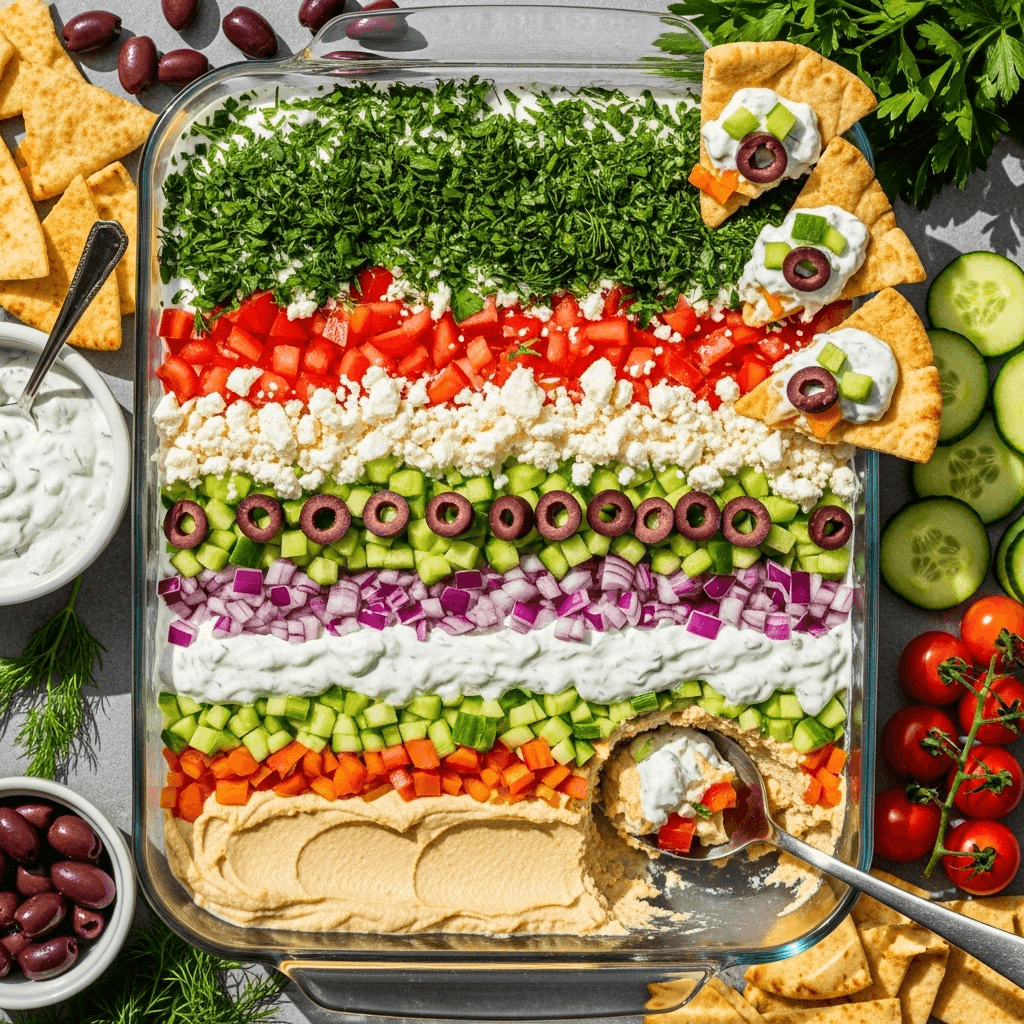
Greek layer dip is the ultimate Mediterranean-inspired party appetizer—colorful layers of creamy hummus, tangy tzatziki, fresh vegetables, feta cheese, and olives stacked in a beautiful dish that’s as visually stunning as it is delicious. This easy Greek layer dip recipe transforms classic Greek flavors into a shareable, no-cook appetizer perfect for entertaining, potlucks, or game day gatherings. Whether you’re hosting a summer party, looking for healthy appetizer ideas, or simply craving fresh Mediterranean flavors, this Greek dip recipe delivers impressive presentation with minimal effort and maximum flavor.
What makes this Mediterranean layer dip so irresistible is how it captures the bright, fresh flavors of Greek cuisine in an accessible, crowd-friendly format. Each layer offers something different: creamy hummus provides a rich base, cool tzatziki adds tangy freshness, crisp vegetables contribute crunch, briny olives and feta deliver authentic Mediterranean punch, and fresh herbs tie everything together. Every scoop on a pita chip delivers multiple flavors and textures, making this dip endlessly interesting and completely addictive.
This Greek appetizer dip works beautifully for countless occasions—summer barbecues, holiday parties, bridal showers, game day spreads, picnics, or anytime you want something fresh, healthy, and guaranteed to disappear. It’s naturally vegetarian, can easily be made vegan, requires zero cooking, comes together in 15 minutes, and serves a crowd. Best of all, this layered Greek dip proves that impressive entertaining doesn’t require hours in the kitchen—just quality ingredients arranged beautifully.
History / Background
Greek layer dip represents the delicious fusion of traditional Mediterranean cuisine with American party food culture, specifically the beloved “layer dip” format that became a staple of casual entertaining in the United States during the mid-to-late 20th century. To understand this dish, we need to explore both its Greek culinary roots and how American entertaining traditions transformed these flavors into the layer dip we know today.
Greek cuisine itself has ancient origins, with influences from the Mediterranean, Middle East, and thousands of years of agricultural tradition. Key components of Greek layer dip—hummus (chickpea spread), tzatziki (yogurt and cucumber sauce), feta cheese, olives, and fresh vegetables—have been staples of Greek and broader Mediterranean diets for centuries. These ingredients reflect the region’s abundance of olive trees, dairy from sheep and goats, fresh vegetables, and legumes.
The concept of “layer dips,” however, is distinctly American. The most famous example is the “7-layer dip” (Mexican-inspired with beans, sour cream, cheese, etc.) which gained popularity in the 1970s-1980s as casual entertaining became more common and hosts sought impressive yet easy appetizers. The visual appeal of colorful layers in a clear dish, combined with the convenience of make-ahead prep, made layer dips wildly popular for parties, potlucks, and game day gatherings.
Greek layer dip specifically emerged in the 1990s-2000s as Americans’ interest in Mediterranean cuisine grew. As hummus moved from specialty stores to mainstream supermarkets, and ingredients like feta cheese and tzatziki became widely available, creative home cooks began adapting the layer dip format with Greek ingredients. The result was a healthier alternative to traditional layer dips while maintaining that impressive presentation and crowd-pleasing appeal.
The recipe gained significant traction on food blogs and Pinterest in the 2010s, perfectly aligned with several trends: the growing popularity of Mediterranean diets for health, the rise of mezze-style dining (small plates and sharing), increased vegetarian eating, and the Instagram/Pinterest aesthetic that valued colorful, photogenic food. Today, Greek layer dip has become a staple of healthy entertaining, proving that sometimes the best recipes come from cross-cultural fusion that respects traditional flavors while adapting them to contemporary eating styles.
Why You’ll Love This Recipe
This Greek layer dip is about to become your go-to party appetizer. This easy Mediterranean dip recipe delivers restaurant-quality presentation and authentic Greek flavors using simple, fresh ingredients and requiring absolutely no cooking. Whether you’re an experienced entertainer or hosting your first party, you’ll appreciate how this healthy Greek appetizer creates impressive results with minimal effort.
Here’s why this recipe deserves a permanent spot in your entertaining repertoire:
- No Cooking Required – Everything is assembled fresh, keeping your kitchen cool
- Lightning Fast – Ready in just 15 minutes from start to finish
- Naturally Healthy – Packed with vegetables, protein, and Mediterranean goodness
- Visually Stunning – Colorful layers create beautiful, Instagram-worthy presentation
- Crowd-Pleasing – Appeals to vegetarians, health-conscious eaters, and everyone in between
- Budget-Friendly – Uses affordable ingredients available at any grocery store
- Dietary-Friendly – Naturally vegetarian and easily made vegan or gluten-free
- Make-Ahead Perfect – Assemble hours or a day ahead for stress-free entertaining
- Scales Easily – Double or triple for large gatherings
- Always Disappears – This is always the first appetizer to vanish at parties
- Versatile Serving – Works with pita chips, vegetables, crackers, or bread
- Impressive Yet Easy – Looks gourmet despite being incredibly simple
Ingredient Notes
Understanding your ingredients helps you make the best Greek layer dip possible. Let’s break down each component:
Hummus – The creamy, protein-rich base layer. Use store-bought hummus (plain, roasted red pepper, or garlic) for convenience, about 2 cups. Classic hummus works best, but flavored varieties add variety. For homemade, blend chickpeas with tahini, lemon juice, garlic, and olive oil. The hummus provides substance and Mediterranean authenticity.
Tzatziki Sauce – The cool, tangy layer that defines Greek flavor. Use store-bought tzatziki (1½-2 cups) or make your own with Greek yogurt, grated cucumber (squeezed dry), garlic, lemon juice, and dill. The yogurt-cucumber combination adds refreshing contrast and authentic Greek taste. For dairy-free, use dairy-free Greek yogurt or skip this layer.
Cucumbers – Add fresh crunch and authentic Greek salad elements. Dice about 1 cup English cucumber or regular cucumber (seeded). English cucumbers have fewer seeds and thinner skin, making them ideal. Pat dry after dicing to prevent watery layers.
Tomatoes – Provide juicy sweetness and vibrant color. Use 1 cup diced cherry tomatoes or Roma tomatoes (seeded). Cherry tomatoes are sweeter and less watery. Remove seeds from larger tomatoes to prevent excess moisture that makes the dip watery.
Red Onion – Adds sharp bite and beautiful purple color. Use ¼-½ cup finely diced red onion. Red onions are milder and prettier than white or yellow. For less bite, soak diced onion in cold water for 10 minutes, then drain and pat dry.
Kalamata Olives – Deliver briny, authentic Mediterranean flavor. Use ½-¾ cup pitted, sliced Kalamata olives. These dark purple Greek olives have rich, fruity flavor that’s essential to authentic taste. Green olives can substitute but won’t provide the same depth.
Feta Cheese – Provides salty, tangy, creamy richness. Use 1 cup crumbled feta cheese. Quality matters—authentic Greek feta (sheep’s milk) has the best flavor and texture, though cow’s milk feta is more widely available. For vegan versions, use dairy-free feta or omit.
Fresh Herbs – Finish with aromatic brightness. Use chopped fresh parsley, dill, or a combination (about ¼ cup). Fresh herbs are essential—dried can’t replicate the vibrant quality needed. The herbs add color and fresh flavor that ties everything together.
Optional Add-ins – Artichoke hearts, roasted red peppers, pine nuts, or chickpeas can customize your dip. These additions create different flavor profiles while maintaining Mediterranean spirit.
Equipment Needed
You’ll need these simple tools to make perfect Greek layer dip:
- Clear Glass Dish – 8×8-inch or 9×13-inch baking dish or trifle bowl for beautiful layer display
- Cutting Board – For chopping vegetables
- Sharp Knife – For dicing vegetables and herbs
- Measuring Cups – For portioning ingredients
- Spoon or Spatula – For spreading layers evenly
- Colander – For draining olives and rinsing vegetables
- Paper Towels – For patting vegetables dry
- Plastic Wrap – For covering if making ahead
Greek Layer Dip Recipe
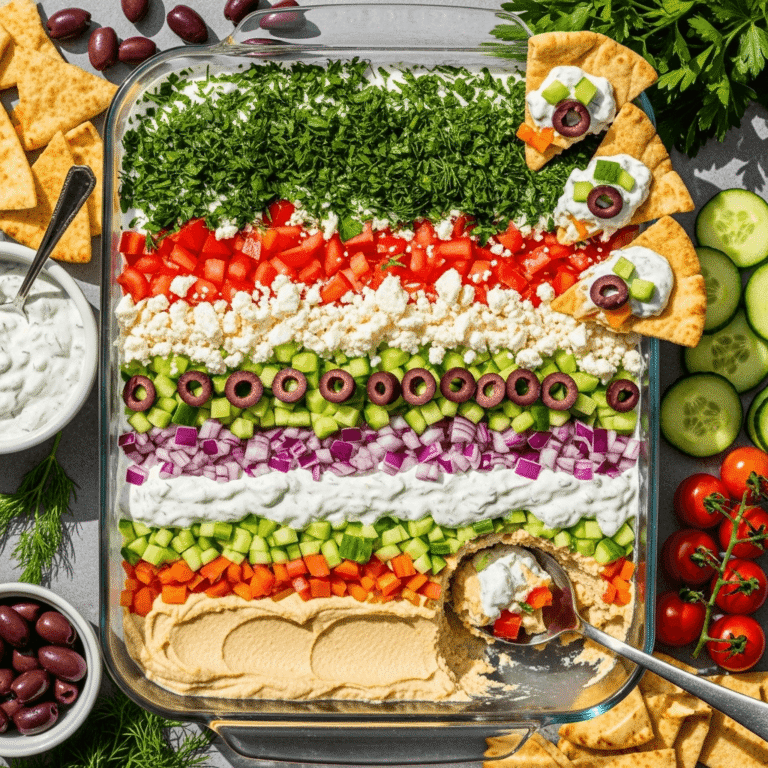
Greek layer dip features colorful layers of hummus, tzatziki, fresh vegetables, feta cheese, olives, and herbs. This easy, healthy Mediterranean appetizer is perfect for parties and requires no cooking!
- Total Time: 15 minutes
- Yield: 10-12 servings 1x
Ingredients
For the Layers:
- 2 cups hummus (plain or flavored)
- 1½-2 cups tzatziki sauce
- 1 cup English cucumber, diced and patted dry
- 1 cup cherry tomatoes, halved or diced Roma tomatoes (seeded)
- ½ cup red onion, finely diced
- ¾ cup Kalamata olives, pitted and sliced
- 1 cup feta cheese, crumbled
- ¼ cup fresh parsley, chopped
- 2 tablespoons fresh dill, chopped (optional)
- 2 tablespoons olive oil for drizzling (optional)
For Serving:
- Pita chips, pita bread, naan, crackers, or fresh vegetables
Instructions
- Prepare Vegetables: Dice cucumber and pat very dry with paper towels. Dice tomatoes and if using larger tomatoes, remove seeds to prevent excess moisture. Finely dice red onion. Slice olives. Chop fresh herbs. Have all ingredients prepped and ready.
- First Layer – Hummus: Spread hummus evenly across the bottom of an 8×8-inch or 9×13-inch clear glass dish. Use a spoon or spatula to create a smooth, even layer that covers the entire bottom.
- Second Layer – Tzatziki: Carefully spread tzatziki sauce over the hummus layer, being gentle to avoid mixing the layers. Spread evenly to the edges.
- Third Layer – Vegetables: Sprinkle diced cucumbers evenly over the tzatziki. Follow with diced tomatoes, distributing evenly.
- Fourth Layer – Toppings: Sprinkle diced red onion across the vegetables. Add sliced Kalamata olives, distributing evenly. Sprinkle crumbled feta cheese generously over everything.
- Garnish: Top with chopped fresh parsley and dill. If desired, drizzle lightly with olive oil for extra richness and shine.
- Chill (Optional): For best flavor, cover and refrigerate for 30 minutes to 2 hours to allow flavors to meld. Can be made up to 24 hours ahead.
- Serve: Serve chilled with pita chips, pita bread, crackers, or fresh vegetables for dipping
Notes
- Use a clear glass dish to show off the beautiful layers.
- Pat all vegetables very dry—excess moisture makes the dip watery.
- Don’t mix the layers; keep them distinct for visual appeal.
- Can be assembled up to 24 hours ahead; cover tightly and refrigerate.
- For vegan version, skip feta or use dairy-free feta, and ensure tzatziki is dairy-free.
- Customize layers based on preference—add or omit ingredients as desired.
- Prep Time: 15 minutes
- Cook Time: 0 minutes
- Category: Appetizer
- Method: No-Cook
- Cuisine: Greek
- Diet: Vegetarian
Nutrition
- Serving Size: About ¾ cup
- Calories: 145
- Sugar: 3g
- Sodium: 485mg
- Fat: 9g
- Saturated Fat: 3g
- Unsaturated Fat: 6g
- Trans Fat: 0g
- Carbohydrates: 12g
- Fiber: 3g
- Protein: 6g
- Cholesterol: 15mg
Tips & Variations
Transform your Greek layer dip to match any preference with these creative variations:
Vegan Greek Layer Dip: Use dairy-free tzatziki (made with dairy-free yogurt), omit feta or use vegan feta, and ensure hummus contains no dairy. All other layers remain the same for fully plant-based version.
Greek 7-Layer Dip: Add two extra layers—spread a layer of Greek yogurt mixed with lemon juice between hummus and tzatziki, and add a layer of chickpeas or white beans for extra protein and texture.
Spicy Mediterranean Dip: Add diced jalapeños or pepperoncini peppers to the vegetable layers, use spicy hummus, and sprinkle with red pepper flakes for heat.
Sun-Dried Tomato Greek Dip: Add a layer of chopped sun-dried tomatoes (oil-packed, drained) for intense, concentrated tomato flavor.
Artichoke Greek Dip: Add chopped marinated artichoke hearts (well-drained) as an additional layer for tangy, Mediterranean flavor.
Greek Pizza Dip: Add a thin layer of marinara sauce between hummus and tzatziki, and sprinkle with mozzarella along with feta for Greek-Italian fusion.
Loaded Greek Dip: Add chickpeas, roasted red peppers, pine nuts, and extra vegetables for an even heartier, more substantial dip.
Individual Greek Cups: Assemble in small clear cups or jars for individual servings perfect for parties and picnics.
Pro Chef Tips
Elevate your Greek layer dip from good to restaurant-quality with these professional techniques:
Dry Your Vegetables Thoroughly: The single most important step for success. Excess moisture from cucumbers, tomatoes, or other vegetables makes layers watery and causes them to bleed into each other. After dicing vegetables, pat them completely dry with paper towels. For cucumbers, you can even salt them lightly, let sit 10 minutes, then squeeze out moisture.
Use a Clear Glass Dish: Half the appeal of layer dips is the visual presentation of distinct, colorful layers. A clear glass dish (rectangular baking dish or trifle bowl) shows off your work beautifully. Opaque dishes hide the layers and reduce visual impact dramatically.
Spread Layers Gently: When adding each layer, use a gentle hand to avoid mixing with the layer below. Use the back of a spoon or offset spatula to carefully spread without pressing too hard. This maintains distinct, Instagram-worthy layers.
Quality Ingredients Matter: Since this is a no-cook dish with simple ingredients, quality shines through. Use good hummus (homemade or high-quality store-bought), authentic Greek feta, real Kalamata olives, and fresh herbs. The difference between average and excellent ingredients is very noticeable here.
Chill Before Serving: While you can serve immediately, chilling for 30 minutes to 2 hours allows flavors to meld and marry beautifully. The cold temperature also firms up the layers slightly, making them less likely to mix when scooping.
Fresh Herbs are Non-Negotiable: Dried herbs cannot replicate the bright, fresh quality of fresh parsley and dill. These herbs provide visual pop and aromatic freshness that defines the dish. If you can’t get fresh herbs, the dip is better with just one fresh herb than dried substitutes.
Consider Layer Order: The order matters for both visual appeal and structural integrity. Sturdy, thick layers (hummus, tzatziki) go on bottom; lighter, looser toppings (vegetables, cheese, herbs) go on top. This prevents dense layers from crushing delicate ones.
Common Mistakes to Avoid
Sidestep these frequent pitfalls for perfect Greek layer dip every time:
Not Drying Vegetables Properly: Wet vegetables are the most common reason this dip fails. Excess moisture creates a watery, soupy mess instead of distinct layers. Always pat cucumbers and tomatoes completely dry, and consider seeding tomatoes to remove watery gel.
Mixing the Layers: Vigorous spreading or pressing too hard causes layers to mix together, eliminating the visual appeal that makes layer dips special. Always spread gently and carefully, especially when adding tzatziki over hummus.
Using Wrong Type of Dish: Opaque dishes hide the beautiful layers. Dishes that are too shallow don’t allow proper layering. Use a clear glass dish that’s at least 2 inches deep to showcase your work properly.
Skipping the Chill Time: While you can serve immediately, the dip tastes significantly better after chilling for at least 30 minutes. The flavors meld, components firm up slightly, and everything tastes more cohesive. Plan ahead when possible.
Using Old or Dried-Out Feta: Feta should be creamy, tangy, and slightly moist—not dried out and crumbly like Parmesan. Buy feta packed in brine for freshest flavor and texture. Dry, old feta tastes sharp and unpleasant.
Overloading Layers: More isn’t always better. Too-thick layers make the dip difficult to scoop and unbalanced. Each layer should be substantial but not overwhelming—you want multiple flavors in each bite, not one dominant layer.
Storage & Meal Prep
Here’s how to handle storage and prep for Greek layer dip:
Room Temperature: Do not leave Greek layer dip at room temperature for more than 2 hours. The dairy (tzatziki, feta) and fresh vegetables make this a perishable dish that needs refrigeration.
Refrigerator Storage: Store covered tightly with plastic wrap in the refrigerator for up to 3 days. The vegetables may release some moisture over time, making the dip slightly wetter, but it remains delicious. Stir gently before serving if liquid has accumulated.
Component Storage: For longest freshness, you can store components separately and layer just before serving. Store hummus, tzatziki, chopped vegetables, feta, and olives in separate containers for up to 5 days, then assemble when ready.
Preventing Sogginess: If making more than 4-6 hours ahead, wait to add the most watery ingredients (tomatoes, cucumbers) until closer to serving time. Layer the hummus, tzatziki, and other components, then add fresh vegetables within a few hours.
Draining Excess Liquid: If liquid accumulates on top after storage, carefully tilt the dish and pour off excess, or dab with paper towels before serving.
Make-Ahead & Freezer Notes
Plan ahead with these time-saving strategies for Greek layer dip:
Best Make-Ahead Method: Greek layer dip is an excellent make-ahead appetizer. Assemble completely up to 24 hours before your party, cover tightly with plastic wrap, and refrigerate. The flavors actually improve as they meld together. Just remove from refrigerator 15-20 minutes before serving to take the chill off.
Component Prep: For maximum freshness, prep all components 1-2 days ahead:
- Make or buy hummus and tzatziki
- Dice vegetables and store separately in airtight containers
- Crumble feta and chop herbs
- Assemble layers 4-24 hours before serving
Day-of Assembly: If you prefer, layer everything except tomatoes and cucumbers up to 6-8 hours ahead. Add these watery vegetables within 2-3 hours of serving to prevent excess moisture.
Freezing: Not recommended. The fresh vegetables, tzatziki, and feta don’t freeze well—they become watery and separated when thawed, completely ruining texture. This dip must be made fresh or refrigerated for short periods.
Party Timeline: For stress-free entertaining:
- Day before: Prep all components separately
- Morning of party: Assemble dip completely, cover, refrigerate
- 30 minutes before guests: Remove from refrigerator
- Just before serving: Check for excess liquid, garnish with extra herbs if needed
This approach ensures maximum flavor while minimizing party-day stress.
Serving Suggestions
Create memorable spreads and complete the Greek layer dip experience with these serving ideas:
Classic Pita Chips: Serve with store-bought or homemade pita chips for authentic Mediterranean pairing. Toast pita bread cut into triangles for fresh, warm chips.
Fresh Vegetables: Offer cucumber rounds, bell pepper strips, carrot sticks, celery, and cherry tomatoes for lighter, healthier dipping options.
Warm Pita Bread: Serve with warm, soft pita bread or naan cut into wedges for scooping. The warm bread contrasts beautifully with cold dip.
Crackers: Provide water crackers, multigrain crackers, or flatbread crackers for variety.
Mediterranean Spread: Include Greek layer dip as part of a larger mezze spread with hummus, baba ganoush, dolmas, falafel, and warm pita.
Greek Dinner Party: Serve as appetizer before Greek main courses like moussaka, souvlaki, or Greek lemon chicken with roasted potatoes.
Summer BBQ: Perfect for outdoor gatherings alongside grilled meats, Greek salad, spanakopita, and watermelon.
Game Day Spread: Include with other dips and finger foods for sports watching—this provides a healthier option alongside traditional game day fare.
Beverage Pairings: Greek layer dip pairs wonderfully with:
- White wine (Assyrtiko, Sauvignon Blanc, Pinot Grigio)
- Rosé wine
- Greek beer (Mythos, Fix)
- Ouzo or raki (for adventurous guests)
- Sparkling water with lemon
- Iced tea with mint
FAQs Section
Q: Can I make Greek layer dip ahead of time?
A: Yes! This is an excellent make-ahead appetizer. Assemble completely up to 24 hours before serving, cover tightly, and refrigerate. The flavors actually improve as they meld. For best results with watery vegetables, add tomatoes and cucumbers within 4-6 hours of serving.
Q: How do I make this dip vegan?
A: Use dairy-free tzatziki made with plant-based Greek yogurt, omit feta or substitute vegan feta cheese, and ensure your hummus is dairy-free (most are). All other layers remain the same for a delicious vegan version.
Q: Why is my Greek layer dip watery?
A: Almost always because vegetables weren’t dried properly. Cucumbers and tomatoes contain lots of moisture. Always pat them completely dry with paper towels after dicing. Seeding tomatoes also helps reduce moisture.
Q: Can I use regular yogurt instead of tzatziki?
A: You can make your own tzatziki with Greek yogurt, but regular yogurt is too thin and will make the dip runny. Greek yogurt’s thick consistency is essential. Mix Greek yogurt with grated cucumber (squeezed dry), garlic, lemon juice, and dill for homemade tzatziki.
Q: What’s the best dish to use for layer dips?
A: A clear glass rectangular baking dish (8×8 or 9×13-inch) or trifle bowl shows off the beautiful layers. The clear glass is essential for visual impact—half the appeal is seeing the colorful layers.
Q: How long does Greek layer dip last?
A: Properly stored in the refrigerator, it keeps for 2-3 days. The vegetables may release some moisture over time, making it slightly wetter, but it remains safe and delicious. Always refrigerate within 2 hours of assembly.
Q: Can I customize the layers?
A: Absolutely! Add or omit ingredients based on preference. Popular additions include artichoke hearts, roasted red peppers, chickpeas, or pine nuts. The beauty of layer dips is their flexibility—make it your own!
Q: Is Greek layer dip gluten-free?
A: The dip itself is naturally gluten-free. Just ensure your hummus doesn’t contain gluten (most don’t), and serve with gluten-free crackers, vegetables, or gluten-free pita chips instead of regular pita bread.
Conclusion
There you have it—everything you need to create a stunning, delicious Greek layer dip that will make you the star of every party! This easy Mediterranean layer dip recipe proves that impressive entertaining doesn’t require hours of work or complicated techniques—just quality ingredients arranged beautifully. The combination of creamy hummus, tangy tzatziki, fresh vegetables, briny olives, and authentic feta creates an appetizer that’s both healthy and genuinely crave-worthy.
Remember the keys to success: dry all vegetables thoroughly, spread layers gently to keep them distinct, use a clear glass dish for beautiful presentation, chill before serving when possible, and don’t skip the fresh herbs. Master these fundamentals and you’ll create a Greek dip recipe that rivals any restaurant while being significantly healthier than traditional layer dips.
The beauty of this Greek appetizer dip lies in its perfect balance of impressive presentation and simple preparation. Make it ahead to eliminate stress, customize with your favorite Mediterranean ingredients, serve it at any gathering from casual to elegant—this versatile recipe adapts beautifully while always delivering fresh, vibrant flavors that transport you straight to the Greek islands.
Ready to add the ultimate healthy party appetizer to your entertaining arsenal? Pin this recipe to your favorite Pinterest board so you’ll always have it ready when guests are coming! Make this Greek layer dip this weekend and let me know in the comments how it turned out. Did you add any creative variations? I absolutely love hearing about your cooking adventures and seeing your beautiful creations!
Don’t forget to snap a photo of your gorgeous layered dip and share it on social media. Tag me so I can see your masterpiece and celebrate with you! Here’s to easy entertaining, Mediterranean flavors, and recipes that make healthy eating feel like a celebration!