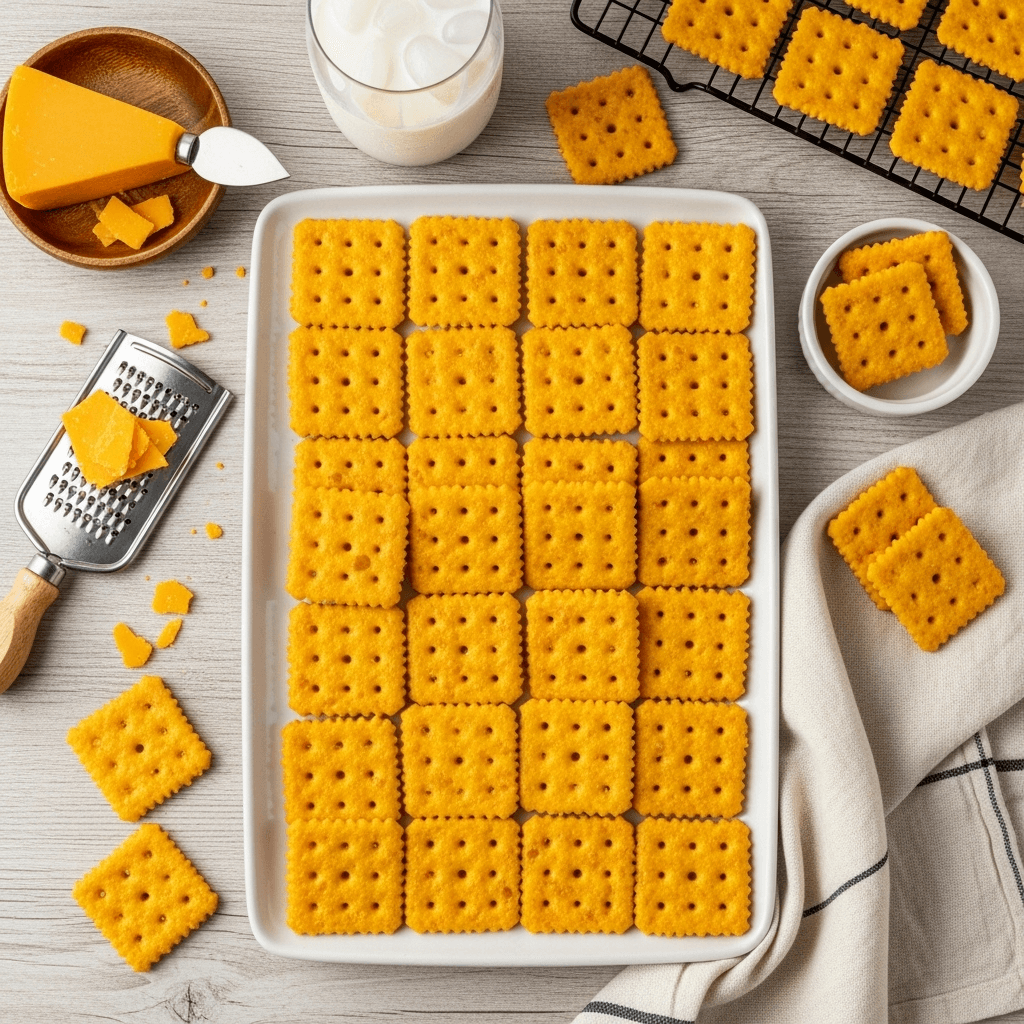
Homemade Cheez-Its – Crispy, Cheesy & Way Better Than Store-Bought!

Get ready to fall in love with the most addictive homemade snack you’ll ever make! These homemade Cheez-Its are crispy, buttery, intensely cheesy crackers that taste even better than the iconic orange box from your childhood. If you’ve been looking for a fun baking project that delivers serious flavor and impresses everyone, these easy cheese crackers are about to become your new obsession!
These copycat Cheez-It crackers have taken the home baking world by storm, and it’s easy to see why. They’re surprisingly simple to make with just a handful of ingredients, yet they deliver that authentic sharp cheddar flavor and satisfying crunch we all crave. I make these constantly because they’re perfect for snacking, lunchboxes, parties, and they’re so much fresher than anything you can buy at the store. Plus, there’s something incredibly satisfying about biting into a warm, fresh-from-the-oven cheese cracker that you made yourself!
Perfect for afternoon snacks, kids’ lunchboxes, game day gatherings, holiday gift-giving, movie nights, or any time you want a wholesome homemade treat, these versatile cheese crackers work for absolutely any occasion. Serve them plain for pure cheesy goodness, or customize them with different seasonings and cheese varieties. The best part? You control exactly what goes into them—no artificial colors, preservatives, or mystery ingredients. Just real cheese, butter, flour, and spices creating snackable perfection!
History / Background
To understand homemade Cheez-Its, we need to explore the fascinating history of cheese crackers in American snack culture and how they became such beloved comfort food.
The story begins in 1921 in Dayton, Ohio, when the Green & Green Company created Cheez-It crackers. The company was founded by the Green family, who already ran a successful cracker business. Their innovation was creating a crispy, square cracker made with real cheese—at the time, a novelty in the snack world. The original Cheez-It featured sharp cheddar cheese baked directly into the cracker dough, creating that distinctive savory, tangy flavor that would captivate generations.
The name “Cheez-It” was clever marketing—it told consumers exactly what they were getting: cheese in a cracker (or “cheese in it”). The iconic square shape with a hole punched in the center wasn’t just decorative; the hole allowed steam to escape during baking, creating a crispier, flakier texture. The bright orange-red color came from annatto, a natural food coloring derived from achiote seeds, which has been used for centuries.
Cheez-Its gained popularity throughout the mid-20th century as American snack culture exploded. The post-World War II era saw enormous growth in packaged convenience foods, and cheese crackers fit perfectly into this trend. They were shelf-stable, portable, satisfying, and appealed to both children and adults. By the 1960s and 70s, Cheez-Its had become a lunchbox staple and party snack essential across America.
The Sunshine Biscuits company acquired Green & Green in 1932, and Cheez-Its became one of their flagship products. Through various corporate acquisitions over the decades, the brand eventually landed with Kellogg’s, who owns it today. Despite corporate changes, the basic recipe remained remarkably consistent, testament to the original formula’s perfection.
The homemade Cheez-It movement emerged in the 2000s and 2010s as part of broader trends toward artisanal baking, clean eating, and DIY food projects. Food bloggers began sharing recipes that recreated that distinctive Cheez-It experience using simple, real ingredients. Home cooks discovered that making cheese crackers from scratch was surprisingly straightforward and yielded fresher, more flavorful results than commercial versions.
What makes homemade cheese crackers particularly special is how they honor the simplicity of the original concept while allowing for creativity and customization. The basic formula—sharp cheddar cheese, butter, flour, and salt—is remarkably similar to what the Green family used over 100 years ago. However, home bakers can now experiment with different cheese varieties (white cheddar, smoked cheddar, pepper jack), add custom seasonings (ranch, everything bagel, spicy), or adjust salt levels to personal preference.
Today, homemade Cheez-Its represent the best of both worlds: they capture the nostalgic flavor we remember from childhood while offering the quality, freshness, and ingredient control that modern home cooks value. They prove that sometimes the best innovations aren’t complicated—just simple, quality ingredients prepared with care. Making them at home connects us to a century-old American snack tradition while creating something entirely personal and special.
Why You’ll Love This Recipe
These homemade cheese crackers are about to revolutionize your snacking life! I’ve been making these for years, and they never fail to impress—whether I’m packing them in my kids’ lunches, serving them at parties, or just munching on them straight from the cooling rack (guilty!). The incredible sharp cheddar flavor combined with that perfect crispy-crunchy texture makes them dangerously addictive in the best possible way.
Here’s why these copycat Cheez-Its will become your new favorite:
- Tastes better than store-bought – Fresher, more intense cheese flavor with no artificial ingredients
- Surprisingly simple – Just 5 basic ingredients and straightforward technique
- Budget-friendly – Costs less per ounce than buying name-brand crackers
- Customizable flavor – Adjust cheese, spices, and seasonings to your preference
- Kid-friendly project – Fun to make with children (they love using cookie cutters!)
- No weird ingredients – You know exactly what’s in them—real food only
- Impressively giftable – Package in jars for thoughtful homemade gifts
- Stores beautifully – Stays crispy for weeks in airtight container
- Portion control friendly – Make smaller batches to avoid overindulging
- Freezer-friendly dough – Make dough ahead, bake fresh when needed
- Versatile snacking – Perfect for lunchboxes, parties, road trips, or anytime
- Satisfaction guaranteed – The pride of saying “I made these!” is unbeatable
Ingredient Notes
The magic of perfect homemade Cheez-Its lies in using quality ingredients and understanding their roles. Here’s what you need to know:
Sharp Cheddar Cheese – The star ingredient! Use a good-quality sharp cheddar for that authentic tangy, savory flavor that defines Cheez-Its. The sharper the cheddar, the more pronounced the flavor will be. Pre-shredded cheese works but freshly grated cheese melts better and creates superior texture. For the most authentic orange color, use orange cheddar (colored with annatto). White cheddar makes equally delicious crackers with a slightly milder flavor and pale color. Extra-sharp or aged cheddar creates intensely flavored crackers for true cheese lovers.
Butter – Provides richness, flakiness, and helps bind the dough. Always use real unsalted butter (not margarine) for best flavor and texture. Cold butter creates flakier crackers, so keep it refrigerated until ready to use. The butter content is why homemade cheese crackers taste so much better than commercial versions—real butter makes all the difference!
All-Purpose Flour – Creates the structure and crispness. All-purpose flour works perfectly for this recipe. For gluten-free crackers, use a 1:1 gluten-free baking flour blend, though texture will be slightly different. Whole wheat flour can replace up to half the all-purpose flour for nuttier flavor and more fiber, though crackers will be denser.
Salt – Essential for bringing out the cheese flavor and creating that addictive savory taste. Fine sea salt or table salt works best for even distribution. Kosher salt can be used but dissolves differently. You can adjust salt to taste, but don’t skip it entirely—these need proper seasoning to taste like Cheez-Its.
Cayenne Pepper – Just a tiny pinch adds subtle warmth and complexity without making them spicy. This is the secret ingredient that makes homemade versions taste remarkably close to the original! You won’t taste “spice,” but it enhances the overall flavor profile. Omit if making for very young children or those sensitive to heat.
Ice Water – Helps bring the dough together without warming it. Cold water keeps the butter from melting prematurely, which maintains flakiness. You’ll only need 2-4 tablespoons—add gradually until dough just comes together.
Optional Add-Ins – Get creative with ranch seasoning powder, everything bagel seasoning, smoked paprika, garlic powder, onion powder, dried herbs (rosemary, thyme), or even a sprinkle of parmesan cheese.
Equipment Needed
You’ll need basic kitchen equipment—nothing fancy or specialized required!
Essential Tools:
- Food processor – Makes mixing the dough quick and easy (or use a pastry cutter and mix by hand)
- Rolling pin – For rolling dough to uniform thickness
- Sharp knife or pizza cutter – For cutting crackers into squares
- Baking sheets – Two large baking sheets for baking multiple batches
- Parchment paper or silicone baking mats – Prevents sticking and ensures even baking
- Box grater or food processor – For grating cheese (if starting with a block)
- Measuring cups and spoons – For accurate ingredient amounts
- Small straw or chopstick – For poking holes in cracker centers (authentic detail!)
Optional but Helpful:
- Pastry mat or ruler – Helps measure and cut uniform squares
- Bench scraper – Makes lifting and transferring dough easier
- Wire cooling racks – For cooling crackers completely
- Airtight containers – For storing finished crackers
- Small cookie cutters – For fun shapes (especially fun for kids!)
Homemade Cheez-Its – Crispy, Cheesy & Way Better Than Store-Bought!
These homemade Cheez-Its are crispy, cheesy, buttery crackers made with real sharp cheddar cheese. They taste even better than the store-bought version and contain only simple, wholesome ingredients. Perfect for snacking, lunchboxes, or gifting!
- Total Time: 35 minutes
- Yield: About 60-80 crackers (depending on size) 1x
Ingredients
- 8 ounces sharp cheddar cheese, freshly grated (about 2 cups grated)
- 4 tablespoons (½ stick) unsalted butter, cold and cut into small cubes
- 1 cup all-purpose flour
- ½ teaspoon fine sea salt (or table salt)
- ⅛ teaspoon cayenne pepper (optional but recommended)
- 2-4 tablespoons ice cold water
- Coarse sea salt or flaky salt for topping (optional)
Instructions
- Prepare ingredients: If your cheese isn’t already grated, grate it using a box grater or food processor. Cut cold butter into small ½-inch cubes. Fill a small glass with ice water and set aside.
- Make the dough (food processor method): Add flour, salt, and cayenne pepper (if using) to food processor. Pulse a few times to combine. Add grated cheese and pulse 8-10 times until mixture resembles coarse crumbs. Add cold butter cubes and pulse another 10-15 times until mixture looks like wet sand with butter pieces no larger than peas. With processor running, drizzle in ice water 1 tablespoon at a time, stopping as soon as dough begins to clump together (you may need 2-4 tablespoons total). Don’t over-process—dough should be crumbly but hold together when pressed.
- Make the dough (by hand method): In a large bowl, whisk together flour, salt, and cayenne. Add grated cheese and toss with your fingers to combine. Add cold butter cubes and use a pastry cutter or two knives to cut butter into flour mixture until it resembles coarse crumbs. Drizzle in ice water 1 tablespoon at a time, mixing with a fork, until dough just comes together when pressed.
- Form the dough: Turn dough out onto a clean surface and gently knead 2-3 times just until it forms a cohesive ball. Flatten into a disk, wrap tightly in plastic wrap, and refrigerate for at least 30 minutes (or up to 2 days). This rest period allows flour to hydrate and butter to firm up, making rolling easier.
- Preheat oven: Preheat your oven to 375°F (190°C). Line two baking sheets with parchment paper or silicone baking mats.
- Roll out the dough: Remove dough from refrigerator and let sit for 5 minutes to soften slightly. On a lightly floured surface, roll dough to approximately ⅛-inch thickness (thinner crackers are crispier; thicker ones are more tender). For best results, aim for uniform thickness. If dough cracks, press it back together and continue rolling.
- Cut into squares: Using a sharp knife, pizza cutter, or pastry wheel, cut dough into 1-inch squares (or desired size). Don’t separate squares yet. Using a straw, chopstick, or toothpick, poke a hole in the center of each square—this is the signature Cheez-It touch and helps prevent puffing during baking!
- Transfer to baking sheets: Carefully transfer cut squares to prepared baking sheets, placing them about ¼ inch apart (they don’t spread much). If desired, lightly brush tops with water and sprinkle with coarse salt.
- Bake: Bake for 15-18 minutes, until crackers are firm, lightly golden around edges, and dry to the touch. Watch carefully during the last few minutes—they can go from perfect to burnt quickly! For extra-crispy crackers, bake an additional 2-3 minutes. Different areas of the pan may brown at different rates—remove any that brown early.
- Cool completely: Remove from oven and let crackers cool completely on the baking sheet (they’ll continue to crisp as they cool). Once fully cooled, transfer to a wire rack or airtight container. Re-roll any dough scraps and repeat the process.
Notes
- Cheese matters: Use good-quality sharp cheddar for best flavor. Pre-shredded cheese contains anti-caking agents that can affect texture.
- Cold ingredients: Keep butter and water cold for flakiest texture. Warm ingredients make tough, dense crackers.
- Don’t over-process: Mix dough just until it comes together. Overworking develops gluten, creating tough crackers.
- Uniform thickness: Consistent thickness (⅛ inch) ensures even baking. Thick spots stay soft while thin spots burn.
- Watch oven timing: Every oven is different. Start checking at 13 minutes, especially for thinner crackers.
- Cool completely: Crackers crisp up significantly as they cool. Don’t judge doneness until fully cooled.
- Storage: Store in airtight container at room temperature for 2-3 weeks for maximum crispness.
- Prep Time: 20 minutes
- Cook Time: 15 minutes
- Category: Snack
- Method: Baking
- Cuisine: American
- Diet: Vegetarian
Nutrition
- Serving Size: About 10 crackers
- Calories: 145
- Sugar: 0g
- Sodium: 190mg
- Fat: 10g
- Saturated Fat: 6g
- Unsaturated Fat: 3g
- Trans Fat: 0g
- Carbohydrates: 10g
- Fiber: 0g
- Protein: 5g
- Cholesterol: 30mg
Tips & Variations
The beauty of homemade cheese crackers is their incredible versatility! Here are endless ways to customize them:
Cheese Variations:
- White Cheddar: Milder flavor, pale color, still delicious
- Extra-Sharp Cheddar: Intensely cheesy, aged flavor for serious cheese lovers
- Smoked Cheddar: Adds wonderful smoky depth
- Pepper Jack: Spicy kick with visible pepper pieces
- Gruyère: Sophisticated, nutty, slightly sweet
- Parmesan: Super crispy, intensely savory (use half Parmesan, half cheddar)
- Mixed Cheese: Combine cheddar with Monterey Jack, Colby, or Asiago
Flavor Add-Ins:
- Ranch: Mix in 2 tablespoons dry ranch seasoning
- Everything Bagel: Sprinkle tops with everything bagel seasoning
- Garlic Herb: Add 1 teaspoon garlic powder and ½ teaspoon dried herbs
- Spicy: Increase cayenne to ¼ teaspoon, add red pepper flakes
- Pizza: Add Italian seasoning, garlic powder, and dried oregano
- BBQ: Mix in BBQ seasoning or smoked paprika
- Rosemary Parmesan: Add finely chopped fresh rosemary and parmesan
Shape Variations:
- Goldfish style: Use mini fish-shaped cookie cutters
- Holiday themed: Use seasonal cookie cutters (stars, hearts, trees)
- Rectangles: Cut into cracker-sized rectangles instead of squares
- Strips: Cut into thin strips like cheese straws
Texture Modifications:
- Extra crispy: Roll thinner (closer to 1/16 inch) and bake slightly longer
- Tender and flaky: Roll slightly thicker (about 3/16 inch) for softer bite
- Rustic: Cut with knife instead of ruler for irregular, artisan appearance
Dietary Modifications:
- Gluten-Free: Use 1:1 gluten-free flour blend (texture will differ slightly)
- Reduced Sodium: Omit salt from dough, sprinkle sparingly on top only
- Whole Grain: Replace up to ½ cup flour with whole wheat flour
Pro Chef Tips
Want bakery-quality cheese crackers? These professional techniques make all the difference:
1. Grate your own cheese for superior results. Pre-shredded cheese contains cellulose (an anti-caking agent) that prevents proper melting and creates grainy texture. Freshly grated cheese melts smoothly into the dough, creating that cohesive, flaky texture that makes homemade crackers exceptional. Take the extra three minutes to grate a block of cheese—you’ll taste the difference immediately.
2. Keep everything cold for maximum flakiness. This is the golden rule of pastry-making that applies to crackers too. Cold butter creates steam pockets during baking, resulting in flaky, layered texture. If your kitchen is warm, refrigerate the grated cheese and flour mixture for 10 minutes before adding butter. Work quickly and avoid handling dough with warm hands excessively.
3. The dough should look shaggy, not smooth. Unlike cookie dough that comes together in a ball, cracker dough should look crumbly and rough when it’s ready. It should just barely hold together when pressed but look fairly dry. Over-mixed, smooth dough develops too much gluten, creating tough, chewy crackers instead of crisp, snappy ones.
4. Chill the rolled dough before cutting for cleanest edges. After rolling to ⅛-inch thickness, slide the entire sheet of dough (still on parchment or your work surface) onto a baking sheet and refrigerate for 10-15 minutes. This firms up the butter, making cutting dramatically easier and cleaner. Chilled dough cuts into perfect squares without stretching or distorting.
5. Uniform thickness is more important than perfect squares. Inconsistent thickness means some crackers burn while others remain undercooked. Use a ruler or dough guides (wooden dowels) beside your rolling pin to ensure consistent ⅛-inch thickness across the entire sheet. Uneven thickness is the #1 cause of baking problems.
6. The center hole isn’t just decorative—it’s functional. Poking a hole in each cracker allows steam to escape during baking, preventing excessive puffing and ensuring even crisping. Without the hole, crackers may bubble up or bake unevenly. This simple step creates professional-looking, evenly baked crackers.
7. Rotate baking sheets halfway through for even browning. Most ovens have hot spots that create uneven baking. Rotating the pan 180 degrees halfway through baking time ensures all crackers brown evenly. If baking two sheets simultaneously, also switch rack positions.
8. Let crackers cool completely on the pan. Resist the urge to transfer crackers to a cooling rack while hot—they’re too fragile and will break. They continue crisping as they cool on the hot baking sheet. Once completely cool (about 15 minutes), they’ll be sturdy enough to transfer and will have developed maximum crunch.
Common Mistakes to Avoid
Even experienced bakers can stumble with crackers. Here’s what to watch out for:
1. Using pre-shredded cheese. This is the most common mistake that compromises results! Pre-shredded cheese contains anti-caking additives (usually cellulose or potato starch) that prevent it from melting smoothly into the dough. The result is grainy, crumbly crackers that don’t hold together well. Always grate cheese fresh from a block—it only takes a few minutes and makes an enormous difference in texture and flavor.
2. Adding too much water. Water is needed to bring the dough together, but too much creates tough, dense crackers. Add water gradually, one tablespoon at a time, stopping as soon as the dough begins to clump when pressed. The dough should look quite dry and crumbly, not smooth and cohesive like cookie dough. When in doubt, add less—you can always add more, but you can’t take it out.
3. Rolling dough too thick. Thick crackers won’t crisp properly—they’ll be chewy or soft in the center instead of crispy throughout. Aim for consistent ⅛-inch thickness (about two stacked pennies). Thicker than this and you’re making cheese biscuits, not crackers! Use a ruler to check thickness until you develop an eye for it.
4. Crowding crackers on the baking sheet. While these crackers don’t spread much during baking, they need air circulation for even crisping. Place cut crackers about ¼ inch apart. Crackers touching each other will have pale, soft edges where they connect instead of golden, crispy edges all around.
5. Not cooling completely before storing. This is crucial! Storing warm crackers in an airtight container traps moisture, which immediately makes them soft and chewy. Always let crackers cool completely to room temperature—at least 30 minutes after baking. They’ll continue crisping as they cool. Once fully cool and crispy, then you can store them airtight.
Storage & Meal Prep
These homemade Cheez-Its store beautifully, making them perfect for meal prep and snacking throughout the week!
Room Temperature Storage: Store completely cooled crackers in an airtight container at room temperature for 2-3 weeks. The key to maintaining crispness is ensuring they’re 100% cool before storing and keeping them in a truly airtight container. Mason jars, plastic containers with tight lids, or zip-top bags all work well. Add a small silica gel packet (food-safe) to absorb any moisture if you live in a humid climate.
Maintaining Maximum Crispness:
- Make sure crackers are completely cool before storing (test one—it should be crispy, not warm)
- Store in smallest container possible to minimize air space
- Don’t mix fresh crackers with older ones (older ones may have absorbed moisture)
- Keep container away from heat sources and direct sunlight
- If crackers soften, re-crisp in a 300°F oven for 5 minutes, then cool again
Signs They’ve Gone Soft: If crackers lose their crispness but haven’t gone stale, you can revive them! Spread on a baking sheet and bake at 300°F for 5-8 minutes. Let cool completely. They’ll be crispy again!
Gifting and Packaging: Homemade cheese crackers make wonderful gifts! Package in:
- Mason jars with decorative lids and ribbon
- Clear cellophane bags tied with twine
- Decorative tins lined with parchment paper
- Small paper bags with custom labels
Include a “best by” date (2-3 weeks from baking) and storage instructions with gifts.
Make-Ahead & Freezer Notes
Great news—both the dough and finished crackers are excellent for making ahead!
Make-Ahead Dough:
Refrigerator (Best for Short-Term):
- Make dough through step 4 (formed into disk)
- Wrap tightly in plastic wrap
- Refrigerate up to 3 days
- When ready to bake, let sit at room temperature 10-15 minutes to soften slightly before rolling
Freezer (Best for Long-Term):
- Wrap disk of dough tightly in plastic wrap, then aluminum foil
- Label with date and contents
- Freeze up to 3 months
- To use: Thaw overnight in refrigerator, then let sit 10-15 minutes at room temperature before rolling
- Can also roll out dough, cut into squares, freeze on baking sheet, then transfer frozen unbaked crackers to freezer bags. Bake directly from frozen, adding 2-3 minutes to baking time.
Freezing Baked Crackers:
- Cool baked crackers completely
- Layer between parchment paper in airtight freezer container
- Freeze up to 2 months
- To serve: Thaw at room temperature for 30 minutes, or refresh in 300°F oven for 5 minutes
Best Make-Ahead Strategy: For freshest results, make the dough ahead and freeze it, then roll and bake fresh when needed. This gives you the convenience of make-ahead with the quality of freshly baked crackers.
Meal Prep Timeline:
- Sunday: Make 2-3 batches of dough, freeze in disks
- Throughout the week: Thaw one disk overnight, roll and bake fresh in 30 minutes
- Result: Fresh crackers whenever you want them without starting from scratch each time!
Serving Suggestions
These versatile homemade cheese crackers work in so many delicious ways! Here’s how to serve them:
Snacking Options:
- Plain: Simply perfect on their own for pure cheesy goodness
- With dips: Hummus, spinach artichoke dip, ranch dip, or cheese dip
- Cheese board: Part of an elegant cheese and charcuterie board
- Soup accompaniment: Serve alongside tomato soup, chili, or bisque instead of regular crackers
Lunchbox Ideas:
- Pack portion-sized servings (about 15-20 crackers) in small containers
- Pair with cheese cubes, grapes, and baby carrots
- Include in bento boxes as a crunchy element
- Pack with turkey rollups or cheese sticks
Party and Entertaining:
- Appetizer platter: Arrange with various cheeses, grapes, nuts, and salami
- Snack bowls: Fill decorative bowls for easy party grazing
- Kids’ party: Let kids decorate their own using shaped cutters
- Wine pairing: Serve with wine as elevated bar snack
Creative Uses:
- Salad topper: Crush and sprinkle over salads like croutons
- Soup topping: Float a few on top of creamy soups
- Crushed coating: Process into crumbs for chicken coating
- Gift baskets: Include in homemade food gift collections
Beverage Pairings:
- Cold milk (especially for kids—classic combo!)
- Wine (white wines, especially Chardonnay, pair beautifully)
- Beer (lagers and pilsners complement the cheese flavor)
- Sparkling water with lemon
- Iced tea or hot tea
Occasions Perfect for These:
- After-school snacks
- Movie night munchies
- Road trip provisions
- Office lunch accompaniment
- Holiday gift-giving
- Game day spreads
- Picnics and outdoor gatherings
FAQs Section
Q: Can I make these without a food processor? A: Absolutely! You can make excellent cheese crackers by hand. Whisk together the dry ingredients in a bowl, add grated cheese and toss, then use a pastry cutter or two knives to cut in the cold butter until the mixture resembles coarse crumbs. Add ice water gradually while mixing with a fork. It takes a few extra minutes but works beautifully. A stand mixer with paddle attachment also works—just mix on low speed.
Q: Why did my crackers turn out tough instead of crispy? A: Tough crackers usually result from: (1) Adding too much water, which overdevelops gluten, (2) Over-mixing or over-kneading the dough, (3) Rolling the dough too thick, or (4) Baking at too low a temperature. For crispiest results, add minimal water (dough should look crumbly), handle dough gently, roll to ⅛-inch thickness, and bake at 375°F. Also, make sure crackers cool completely—they continue crisping as they cool.
Q: Can I use different types of cheese? A: Yes! While sharp cheddar is closest to original Cheez-Its, you can use almost any hard cheese. Try white cheddar, smoked cheddar, pepper jack, Gruyère, Asiago, or even Parmesan (though Parmesan alone is quite salty—mix it half and half with a milder cheese). Avoid very soft cheeses like brie or fresh mozzarella, which have too much moisture. Aged, harder cheeses work best for crackers.
Q: How thin should I roll the dough? A: Aim for ⅛-inch thickness—about two stacked pennies or the thickness of two credit cards. This thickness creates crackers that are crispy throughout with a satisfying snap. Thinner (1/16 inch) makes extra-crispy, delicate crackers but they burn easily. Thicker (¼ inch) creates tender, softer crackers that are more like cheese biscuits. Consistency matters more than exact measurement—just make sure thickness is uniform across the entire sheet.
Q: Why do some of my crackers puff up while baking? A: Puffing happens when steam gets trapped inside the dough during baking. This is why poking a hole in the center of each cracker is important—it provides an escape route for steam. If you skipped this step, crackers may puff up. Also, make sure your dough is rolled uniformly—thick spots are more prone to puffing. If crackers puff during baking, you can gently press them flat with a spatula immediately after removing from the oven.
Q: How do I know when they’re done baking? A: Properly baked cheese crackers should be firm to the touch, dry-looking (not shiny or wet), and lightly golden around the edges. The centers may still look pale—that’s fine! They’ll continue to crisp and darken slightly as they cool. Start checking at 13 minutes. If edges are browning quickly but centers seem underdone, reduce temperature to 350°F and continue baking. Remember, they crisp significantly during cooling, so don’t over-bake trying to achieve crispness in the oven.
Q: Can I make these ahead and freeze them? A: Yes! You have two options: (1) Freeze the dough (wrapped tightly) for up to 3 months, then thaw, roll, and bake fresh, or (2) Freeze fully baked and cooled crackers for up to 2 months. I prefer freezing the dough because freshly baked crackers taste better, but frozen baked crackers are incredibly convenient—just thaw at room temperature and they’re ready to eat. For maximum freshness with frozen baked crackers, warm them in a 300°F oven for 5 minutes after thawing.
Q: Why are my crackers unevenly browned? A: Uneven browning typically indicates: (1) Inconsistent dough thickness—thicker areas stay pale while thinner areas brown quickly, (2) Oven hot spots—most ovens heat unevenly, or (3) Crowded baking sheet preventing even air circulation. To fix: roll dough to uniform thickness, rotate your baking sheet 180 degrees halfway through baking, and ensure crackers aren’t touching on the pan. If using multiple pans, switch rack positions halfway through.
Conclusion
There you have it—everything you need to know to make the most delicious, addictive homemade Cheez-Its that taste even better than the iconic store-bought version! These copycat cheese crackers prove that with just five simple ingredients and a little time, you can create snackable perfection that’s fresher, more flavorful, and made with ingredients you can actually pronounce.
The beauty of these easy cheese crackers is their incredible versatility and universal appeal. They’re perfect for everyday snacking, special enough for gift-giving, fun to make with kids, and endlessly customizable with different cheeses and seasonings. Whether you’re packing lunchboxes, entertaining guests, or just satisfying your own cheese cracker cravings, these homemade beauties deliver every single time. Plus, the satisfaction of pulling a tray of golden, cheesy crackers from your own oven is truly unbeatable!
I’d love to hear about your homemade Cheez-It adventures! What cheese did you use? Did you try any creative seasonings or shapes? Did your family devour them as quickly as mine does? Drop a comment below and share your experience—I read every comment and love hearing about your variations, favorite serving ideas, and which batch disappeared the fastest!
If this recipe made you realize that homemade really is better (and easier than you thought!), please save it to your favorite Pinterest board so you can find it whenever the cheese cracker craving hits. Share it with friends who love to bake, parents looking for wholesome snack ideas, or anyone who remembers the joy of that little orange box from childhood—they’ll be amazed that making these at home is so simple and delicious!
Happy baking, and here’s to many batches of these crispy, cheesy, impossibly addictive homemade Cheez-Its filling your snack drawer and making you the hero of snack time! 🧀✨