Easy Caramelized Onion Tart Recipe: French Onion Tart

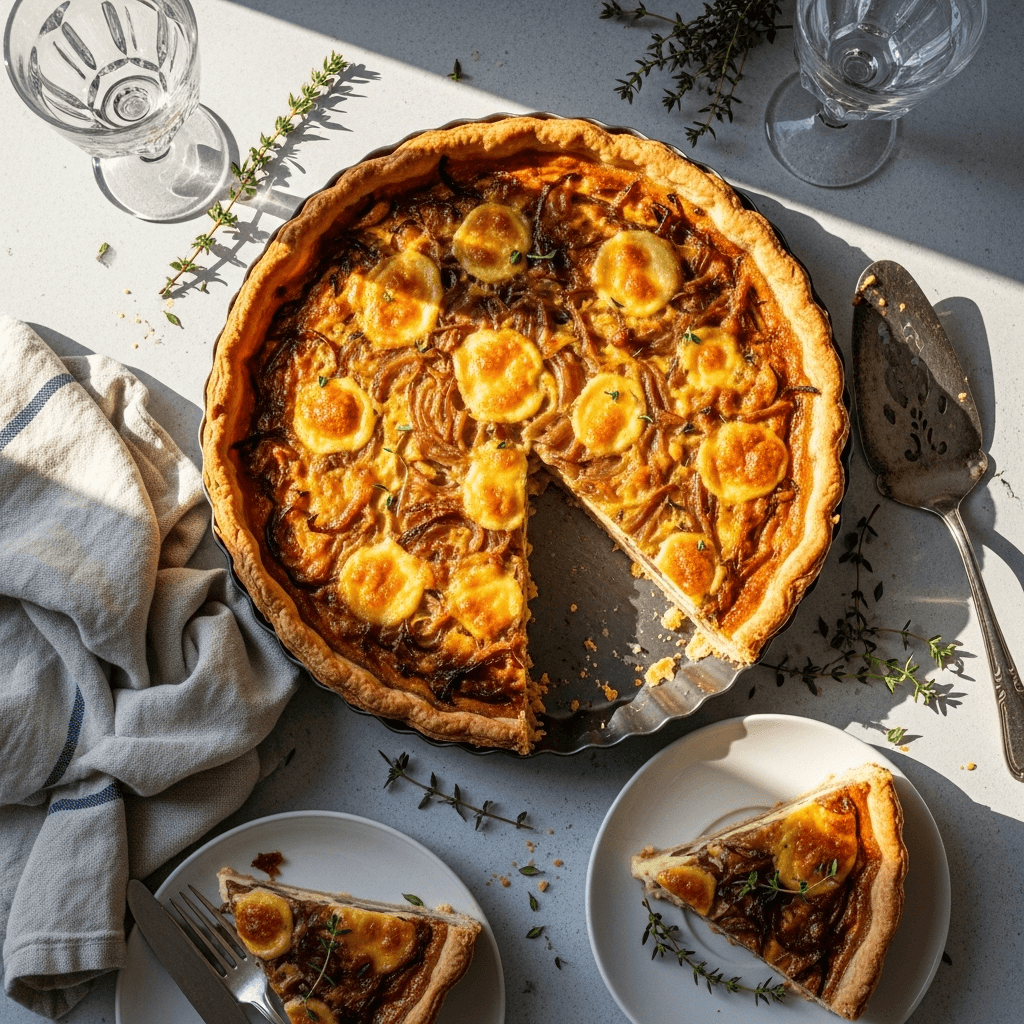
Caramelized onion tart is an elegant French-inspired dish featuring sweet, golden caramelized onions nestled in a buttery pastry crust with creamy custard and cheese, creating a sophisticated appetizer or light meal that tastes absolutely divine. This easy onion tart recipe transforms humble onions into something extraordinary through slow caramelization, which concentrates their natural sugars and develops deep, complex flavors that pair beautifully with tangy Gruyère cheese and rich cream. Whether you’re hosting a dinner party, need an impressive brunch dish, or want to elevate a casual meal, this French onion tart delivers restaurant-quality results with straightforward techniques that any home cook can master.
What makes this savory onion tart so irresistible is the perfect balance of sweet and savory—the caramelized onions become jammy and deeply flavored, providing a sweet-savory base that’s enhanced by nutty Gruyère cheese, aromatic thyme, and a silky custard that binds everything together. The buttery, flaky crust provides textural contrast while the filling stays creamy and luscious. Each slice offers layers of flavor that feel indulgent yet surprisingly light, making it perfect for any time of day from brunch to dinner.
This caramelized onion tart recipe works beautifully for countless occasions—elegant brunches, dinner parties, holiday appetizers, light lunches with salad, wine and cheese gatherings, or anytime you want to impress with minimal effort. It’s vegetarian, can be made ahead and reheated, looks stunning on any table, and uses simple, affordable ingredients transformed through technique. Best of all, this French onion tart proves that impressive entertaining doesn’t require complicated recipes—just quality ingredients and a little patience!
History / Background
Caramelized onion tart, known in France as “tarte à l’oignon” or “tarte aux oignons,” has deep roots in French cuisine, particularly in the Alsace region near the German border where onion cultivation and savory tarts are culinary traditions. To understand this tart, we need to explore both the French love of savory tarts and how caramelized onions became a cornerstone of refined home cooking.
Savory tarts have been central to French cuisine for centuries, evolving from medieval pastries into the sophisticated preparations we know today. In France, tarts aren’t relegated to dessert—savory versions feature prominently in everyday meals and special occasions alike. The quiche (from Alsace-Lorraine) is perhaps the most famous, but countless regional variations exist, each showcasing local ingredients and traditions.
The Alsace region, specifically, has a long tradition of onion tarts that dates back several centuries. This area, which has historically shifted between French and German control, developed a unique culinary identity blending both influences. Alsatian cuisine emphasizes hearty, flavorful dishes using accessible ingredients, and onions—which grow abundantly in the region—feature prominently. The traditional Alsatian “tarte à l’oignon” typically includes caramelized onions, cream, eggs, and sometimes bacon (lardons), all baked in a pastry crust.
The technique of caramelizing onions has been practiced for millennia—cooking onions slowly until their natural sugars break down and caramelize transforms them from sharp and pungent to sweet, jammy, and deeply savory. This process, while time-consuming, became a hallmark of French home cooking, demonstrating the philosophy that simple ingredients treated with care and patience yield extraordinary results.
The recipe gained international popularity in the late 20th century as French cuisine became aspirational for home cooks worldwide. Food magazines, cooking shows, and eventually food blogs introduced caramelized onion tart to American audiences in the 1980s-2000s. The dish aligned perfectly with several trends: interest in French cuisine, the farm-to-table movement emphasizing seasonal vegetables, and the desire for elegant yet approachable entertaining dishes.
Today, caramelized onion tart has become a modern classic beyond France, representing how traditional regional dishes can achieve universal appeal through their delicious simplicity and elegant presentation.
Why You’ll Love This Recipe
This caramelized onion tart is about to become your signature dish for elegant entertaining. This easy onion tart recipe delivers sophisticated French flavors using simple ingredients and techniques that any home cook can master—no culinary school required! Whether you’re hosting a brunch, need an impressive appetizer, or want a light dinner option, you’ll appreciate how this French onion tart creates restaurant-quality results with approachable preparation.
Here’s why this recipe deserves a permanent spot in your entertaining repertoire:
- Impressive Yet Easy – Looks gourmet but uses straightforward techniques
- Make-Ahead Friendly – Can be prepared in stages to reduce stress
- Vegetarian – Perfect for meatless meals and mixed dietary gatherings
- Budget-Friendly – Uses affordable ingredients transformed through technique
- Versatile Serving – Works for breakfast, lunch, dinner, or appetizers
- Crowd-Pleasing – Sweet caramelized onions appeal to virtually everyone
- Elegant Presentation – Always elicits impressed reactions from guests
- Customizable – Easy to adapt with different cheeses or add-ins
- Serves a Crowd – One tart feeds 6-8 people as appetizer or 4-6 as main
- Room Temperature Friendly – Delicious warm or at room temperature
- French Bistro Vibes – Brings that Parisian café feeling to your table
- Perfect for Wine Pairing – Pairs beautifully with white wine
Ingredient Notes
Understanding your ingredients helps you make the best caramelized onion tart possible. Let’s break down each component:
Yellow Onions – The star ingredient that provides sweet, jammy flavor. Use 4-5 large yellow onions (about 2½-3 pounds), thinly sliced. Yellow onions have the perfect balance of sweetness and structure for caramelizing. Sweet onions (Vidalia, Walla Walla) work but may be too sweet; red onions work but add different flavor; white onions are too sharp. The onions will reduce dramatically during caramelization—what seems like too many onions cooks down to the perfect amount.
Butter and Olive Oil – For caramelizing onions. Use 2 tablespoons butter and 2 tablespoons olive oil. The combination provides butter’s rich flavor while olive oil’s higher smoke point prevents burning during the long cooking process. All butter works but risks burning; all oil works but lacks richness.
Pastry Crust – The buttery foundation. Use store-bought puff pastry or pie crust for convenience, or make homemade pâte brisée (buttery tart dough) for traditional French results. One standard pie crust or half a puff pastry sheet works for a 9-inch tart pan.
Gruyère Cheese – Provides nutty, savory depth. Use 1-1½ cups grated Gruyère cheese. Gruyère is traditional in French onion preparations—its nutty, slightly sweet flavor complements caramelized onions perfectly. Swiss cheese, Comté, or aged cheddar can substitute, though flavor will differ.
Heavy Cream – Creates the rich custard base. Use ¾-1 cup heavy cream (or half-and-half for lighter version). The cream binds ingredients and adds luxurious texture.
Eggs – Provide structure to the custard. Use 2-3 large eggs. The eggs set the cream into custard that holds the tart together when sliced.
Fresh Thyme – Adds aromatic, earthy notes. Use 1-2 teaspoons fresh thyme leaves. Fresh thyme is preferred over dried for better flavor. Dried thyme can substitute using half the amount.
Salt and Pepper – Essential for seasoning throughout. Use salt during caramelization and season the custard well.
Equipment Needed
You’ll need these tools to make perfect caramelized onion tart:
- 9-10 inch Tart Pan with Removable Bottom – For baking and elegant presentation
- Large Heavy-Bottomed Skillet – For caramelizing onions evenly
- Sharp Knife and Cutting Board – For slicing onions
- Wooden Spoon – For stirring onions during caramelization
- Mixing Bowl – For whisking custard
- Whisk – For combining eggs and cream
- Measuring Cups and Spoons – For accurate measurements
- Grater – For shredding cheese
- Parchment Paper – For blind baking crust
- Pie Weights or Dried Beans – For blind baking
- Cooling Rack – For cooling tart
Easy Caramelized Onion Tart Recipe
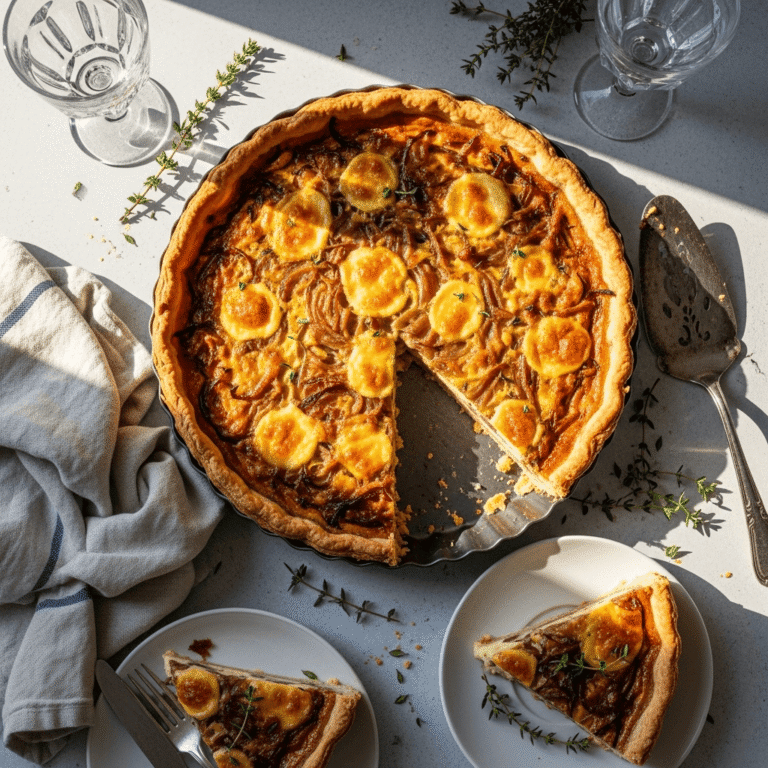
Caramelized onion tart features sweet, golden onions in buttery pastry with Gruyère cheese and creamy custard. This elegant French onion tart is perfect for brunch, dinner parties, or entertaining!
- Total Time: 1 hour 35 minutes
- Yield: 6-8 servings 1x
Ingredients
For the Caramelized Onions:
- 4-5 large yellow onions (about 2½-3 lbs), thinly sliced
- 2 tablespoons butter
- 2 tablespoons olive oil
- 1 teaspoon salt
- 1 teaspoon sugar (optional, helps caramelization)
- 2 teaspoons fresh thyme leaves (or 1 teaspoon dried)
For the Tart:
- 1 pie crust or puff pastry sheet (store-bought or homemade)
- 1-1½ cups grated Gruyère cheese
- 3 large eggs
- ¾ cup heavy cream (or half-and-half)
- ½ teaspoon salt
- ¼ teaspoon black pepper
- ¼ teaspoon nutmeg (optional)
Instructions
Caramelize the Onions:
- Slice Onions: Peel and thinly slice onions into ¼-inch half-moons. Uniform slicing ensures even cooking.
- Start Cooking: Heat butter and olive oil in a large skillet over medium heat. Add sliced onions and salt. Stir to coat onions in fat.
- Caramelize: Cook onions for 40-50 minutes, stirring every 5-10 minutes, reducing heat to medium-low after 15 minutes. Onions should become golden brown, jammy, and sweet. If onions stick or brown too quickly, add 1-2 tablespoons water and reduce heat. Add sugar if using in the last 10 minutes to enhance caramelization.
- Add Thyme: In the final 5 minutes of cooking, stir in fresh thyme. Remove from heat and let cool slightly.
Prepare the Tart:
- Preheat Oven: Preheat oven to 375°F (190°C).
- Prepare Crust: Press pie crust or puff pastry into a 9-10 inch tart pan with removable bottom, trimming excess. Prick bottom with fork. Line with parchment paper and fill with pie weights or dried beans.
- Blind Bake: Bake crust for 15 minutes. Remove weights and parchment, bake 5 more minutes until lightly golden. Remove from oven.
- Make Custard: In a bowl, whisk together eggs, heavy cream, salt, pepper, and nutmeg if using until well combined.
- Assemble Tart: Sprinkle half the Gruyère cheese over the bottom of the pre-baked crust. Spread caramelized onions evenly over cheese. Top with remaining cheese. Pour custard mixture over onions, ensuring it fills the gaps.
- Bake: Bake for 30-35 minutes until custard is set (slight jiggle in center is okay) and top is golden brown.
- Cool and Serve: Let tart cool for 10-15 minutes before removing from pan. Serve warm or at room temperature.
Notes
- Caramelizing onions properly takes 40-50 minutes—don’t rush! Low and slow is key.
- Pre-baking (blind baking) the crust prevents soggy bottom.
- Tart can be assembled several hours ahead and baked when ready.
- Serve warm or at room temperature—both are delicious.
- Store leftovers covered in refrigerator for up to 3 days; reheat in 350°F oven.
- For richer flavor, add 2-3 strips cooked, crumbled bacon to filling.
- Prep Time: 20 minutes
- Cook Time: 1 hour 15 minutes
- Category: Appetizer
- Method: Baking
- Cuisine: French
- Diet: Vegetarian
Nutrition
- Serving Size: 1 slice (⅛ of tart)
- Calories: 285
- Sugar: 5g
- Sodium: 385mg
- Fat: 20g
- Saturated Fat: 10g
- Unsaturated Fat: 9g
- Trans Fat: 0g
- Carbohydrates: 20g
- Fiber: 2g
- Protein: 8g
- Cholesterol: 95mg
Tips & Variations
Transform your caramelized onion tart to match any preference with these creative variations:
Bacon and Onion Tart: Add 4-6 strips cooked, crumbled bacon to the filling for traditional Alsatian “tarte flambée” style.
Mushroom Onion Tart: Sauté 8 oz sliced mushrooms and add to caramelized onions for earthy depth.
Goat Cheese Variation: Replace half the Gruyère with crumbled goat cheese for tangy, creamy contrast.
Herb-Crusted: Add fresh rosemary or sage to caramelized onions for different aromatic profile.
Blue Cheese Version: Use crumbled blue cheese instead of Gruyère for bold, pungent flavor.
Caramelized Shallot Tart: Replace onions with shallots for more delicate, refined flavor (reduce cooking time to 30 minutes).
Vegan Adaptation: Use vegan puff pastry, replace cream with cashew cream, and omit cheese or use vegan cheese.
Gluten-Free: Use gluten-free pie crust or puff pastry for celiac-friendly version.
Pro Chef Tips
Elevate your caramelized onion tart from good to absolutely perfect with these professional techniques:
Patience is Essential for Caramelization: Proper caramelization takes 40-50 minutes minimum. Rushing this step by using high heat creates burned, bitter onions rather than sweet, jammy perfection. Low and slow heat allows onions’ natural sugars to break down and caramelize properly, developing complex, sweet flavors. This is the most important step—don’t skip or rush it.
Deglaze for Maximum Flavor: As onions cook, brown bits (fond) accumulate on the pan bottom. Every 10-15 minutes, add 1-2 tablespoons water or white wine and scrape up these bits with your wooden spoon. This fond contains concentrated flavor—deglazing incorporates it back into the onions rather than letting it burn.
Pre-Bake the Crust Thoroughly: Blind baking (pre-baking with weights) is crucial for preventing soggy bottom crust. The weights keep the crust from puffing up, while pre-baking creates a sealed barrier that prevents the wet filling from soaking through. Bake until edges are lightly golden—underbaked crust will be soggy; properly baked stays crisp.
Room Temperature Eggs and Cream: Cold eggs and cream don’t incorporate smoothly into custard. Let them sit at room temperature for 30 minutes before mixing, or warm cream slightly. Room temperature ingredients create silkier, more homogeneous custard.
Don’t Overbake the Custard: The tart is done when the custard is mostly set with a slight jiggle in the very center (like Jell-O). It continues cooking from residual heat after removing from oven. Overbaked custard becomes rubbery and watery instead of creamy.
Cool Before Slicing: Let tart cool at least 10-15 minutes before slicing. Hot tart is too soft and will fall apart. Cooling allows custard to set properly for clean, beautiful slices.
Serve Slightly Warm or Room Temperature: This tart is actually best served warm (not hot) or at room temperature. The flavors are more pronounced when not piping hot, and the texture is perfect.
Common Mistakes to Avoid
Sidestep these frequent pitfalls for perfect caramelized onion tart every time:
Rushing the Caramelization: This is the most common and critical mistake. High heat creates burned, bitter onions instead of sweet, caramelized perfection. True caramelization takes 40-50 minutes minimum. If you don’t have time, don’t make this recipe—the slow caramelization is what makes it special.
Skipping Blind Baking: Raw crust filled with wet custard results in soggy, undercooked pastry. Pre-baking with weights is essential for crisp, flaky crust that holds up to the filling.
Overfilling the Tart: Too much filling causes overflow and messy, unevenly cooked results. The filling should come just to the top of the crust rim, not above it. When in doubt, use slightly less custard rather than too much.
Not Seasoning Enough: Caramelized onions need salt during cooking, and the custard needs adequate seasoning. Taste the custard before pouring—it should taste well-seasoned. Under-seasoned custard makes bland tart.
Cutting While Too Hot: Slicing into hot tart causes it to fall apart and ooze. Always cool at least 10-15 minutes to let custard set properly before attempting to slice.
Using Pre-Shredded Cheese: Pre-shredded cheese contains anti-caking agents that prevent smooth melting. Always shred Gruyère from a block for best texture and flavor.
Storage & Meal Prep
Here’s how to handle storage and prep for caramelized onion tart:
Room Temperature: Cooked tart can sit at room temperature for up to 2 hours. This is actually when it tastes best—slightly warm or room temperature brings out all the flavors.
Refrigerator Storage: Store leftover tart covered in plastic wrap or in an airtight container in the refrigerator for up to 3 days. The crust will soften slightly when refrigerated but is still delicious.
Reheating: Reheat individual slices in a 350°F oven for 10-12 minutes until warmed through. You can also reheat the whole tart for 15-20 minutes. Avoid microwaving, which makes crust soggy.
Best Served: This tart is best the day it’s made, served warm or at room temperature. While still good the next day, the crust loses some crispness.
Component Storage: Caramelized onions can be made 2-3 days ahead and refrigerated. Bring to room temperature before assembling tart.
Make-Ahead & Freezer Notes
Plan ahead with these time-saving strategies for caramelized onion tart:
Best Make-Ahead Strategy (Components): Caramelize onions up to 3 days ahead and refrigerate. Prepare and blind-bake crust day before, store at room temperature wrapped. Day of serving, assemble and bake fresh—this produces best results.
Assembled Unbaked: Assemble tart completely up to 4 hours ahead, cover, and refrigerate. Bake just before serving, adding 5 extra minutes to baking time since starting cold.
Freezing Caramelized Onions: Onions freeze beautifully! Cool completely, portion into freezer bags, and freeze for up to 3 months. Thaw overnight in refrigerator before using.
Freezing Baked Tart: Cool completely, wrap tightly in plastic wrap then foil, and freeze for up to 2 months. Thaw overnight in refrigerator. Reheat in 350°F oven for 20-25 minutes. Quality is good but not quite as perfect as fresh.
Not Recommended: Freezing unbaked assembled tart. The custard doesn’t freeze well raw, and results are unpredictable.
Party Timeline: For stress-free entertaining:
- 3 days before: Caramelize onions, refrigerate
- Day before: Blind bake crust, store at room temperature
- 4 hours before guests: Assemble tart, refrigerate
- 1 hour before serving: Bake tart
- 15 minutes before serving: Remove from oven, cool slightly
Serving Suggestions
Create memorable meals and complete the caramelized onion tart experience with these serving ideas:
Elegant Brunch: Serve as centerpiece alongside:
- Mixed green salad with vinaigrette
- Fresh fruit platter
- Croissants or French bread
- Mimosas or sparkling wine
- Coffee or tea
Light Lunch: Pair with:
- Arugula salad with lemon dressing
- Cup of soup (tomato or French onion)
- Crusty baguette
- White wine (Sauvignon Blanc or Chardonnay)
Dinner Party Appetizer: Slice into small wedges and serve as elegant first course before:
- Roasted chicken or beef
- Sautéed vegetables
- Rice pilaf or roasted potatoes
Wine and Cheese Party: Include on charcuterie board with:
- Various cheeses
- Cured meats
- Fresh and dried fruits
- Crackers and bread
- Olives and pickles
Complete French Dinner:
- Caramelized onion tart (starter)
- French onion soup or salad
- Coq au vin or beef bourguignon
- Crusty bread
- Crème brûlée or tarte tatin (dessert)
Wine Pairings: This savory tart pairs beautifully with:
- Sauvignon Blanc
- Dry Riesling
- Pinot Grigio
- Light Pinot Noir
- Champagne or sparkling wine
Beverage Pairings: Also works with iced tea, sparkling water with lemon, or French cider.
FAQs Section
Q: Can I use store-bought caramelized onions?
A: You can, but homemade tastes significantly better. Store-bought often contains preservatives and lacks the depth of flavor that comes from proper caramelization. If short on time, look for high-quality jarred caramelized onions.
Q: How do I know when onions are properly caramelized?
A: Properly caramelized onions are deep golden brown (almost mahogany color), jammy in texture, sweet in flavor, and reduced to about ¼ of their original volume. This takes 40-50 minutes minimum. If they’re still pale or have sharp onion flavor, keep cooking.
Q: Can I make this without a tart pan?
A: Yes! Use a 9-inch pie pan or even a cast iron skillet. The presentation won’t be as elegant without the removable bottom, but flavor will be just as good.
Q: Why is my crust soggy?
A: Either you skipped blind baking, didn’t blind bake long enough, or added too much liquid filling. Always pre-bake the crust with weights until lightly golden before adding filling.
Q: Can I make this dairy-free?
A: The caramelized onions can be dairy-free (use all olive oil), but the custard requires cream and cheese for structure and flavor. Vegan versions using cashew cream and vegan cheese are possible but significantly different.
Q: How do I prevent the custard from curdling?
A: Don’t overbake! Remove tart when custard still has a slight jiggle in the center. Also, don’t use oven temperatures above 375°F, which can cause eggs to cook too quickly and curdle.
Q: Can I add meat to this tart?
A: Absolutely! Cooked, crumbled bacon is traditional. You can also add diced ham or prosciutto. Cook and drain meat completely before adding to prevent excess grease.
Q: What’s the difference between this and quiche?
A: Very similar! This tart has more onions and less custard than traditional quiche, making onions the star rather than the custard. The ratio creates a more rustic, vegetable-forward dish.
Conclusion
There you have it—everything you need to create an absolutely stunning, restaurant-quality caramelized onion tart that will make you the hero of every gathering! This easy onion tart recipe proves that French elegance is totally achievable in your home kitchen with simple ingredients, straightforward techniques, and a little patience. The combination of sweet, jammy caramelized onions, nutty Gruyère cheese, and silky custard in a buttery pastry crust creates a sophisticated dish that tastes as impressive as it looks.
Remember the keys to success: take your time caramelizing the onions properly (40-50 minutes minimum), blind bake the crust for a crisp foundation, don’t overbake the custard, and let the tart cool before slicing. Master these fundamentals and you’ll create a French onion tart that rivals anything from a Parisian bistro.
The beauty of this savory onion tart lies in its incredible versatility and timeless appeal. Serve it for elegant brunches, dinner parties, light lunches, or wine and cheese gatherings—customize with bacon, mushrooms, or different cheeses—make components ahead for stress-free entertaining—this caramelized onion tart adapts beautifully while always delivering that perfect combination of rustic French charm and sophisticated flavors.
Ready to bring French bistro elegance to your table? Pin this recipe to your favorite Pinterest board so you’ll always have it ready for your next special occasion! Make this caramelized onion tart this weekend and let me know in the comments how it turned out. What did you serve it with? I absolutely love hearing about your cooking adventures and seeing your delicious creations!
Don’t forget to snap a photo of that gorgeous golden tart and share it on social media. Tag me so I can see your masterpiece and celebrate with you! Here’s to French-inspired cooking, impressive entertaining, and recipes that make every meal feel special! 🥧🧅