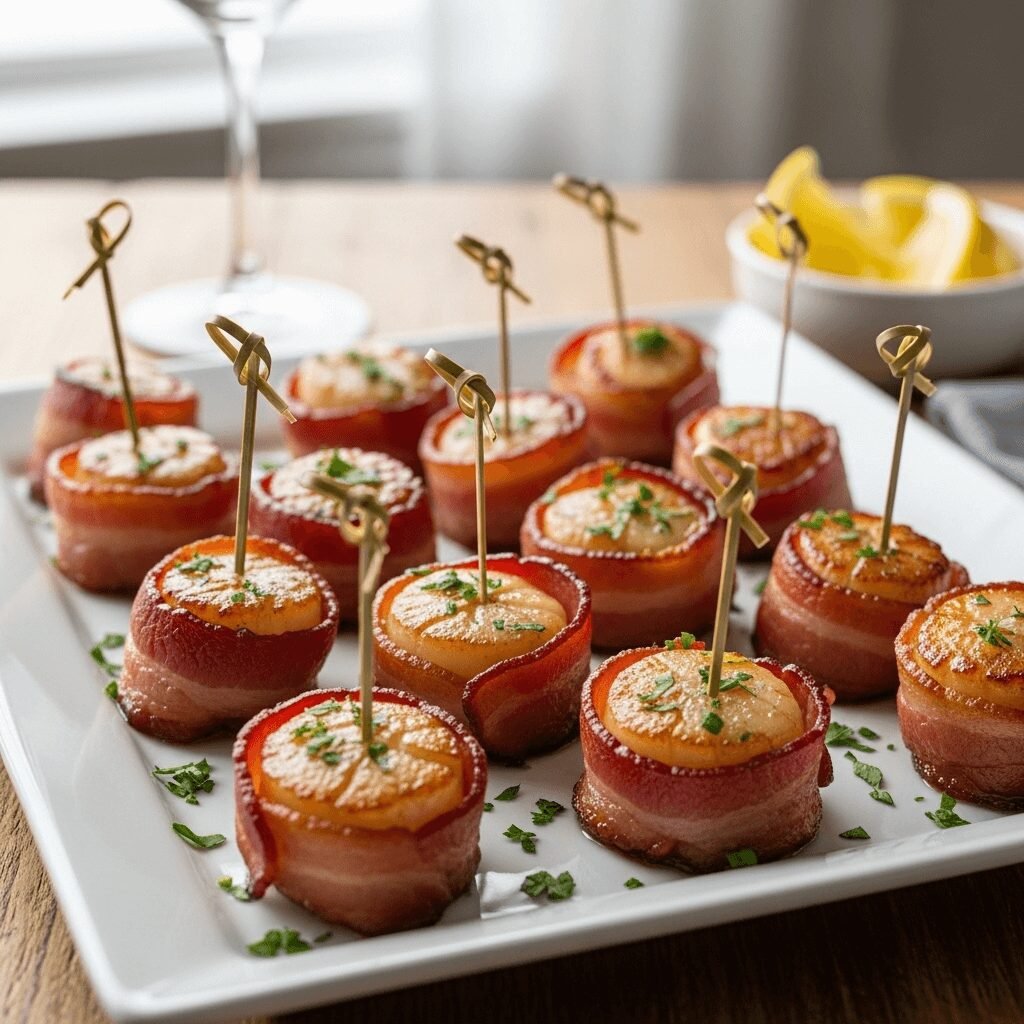
Perfect Bacon Wrapped Scallops – Easy Elegant Appetizer in 20 Minutes!
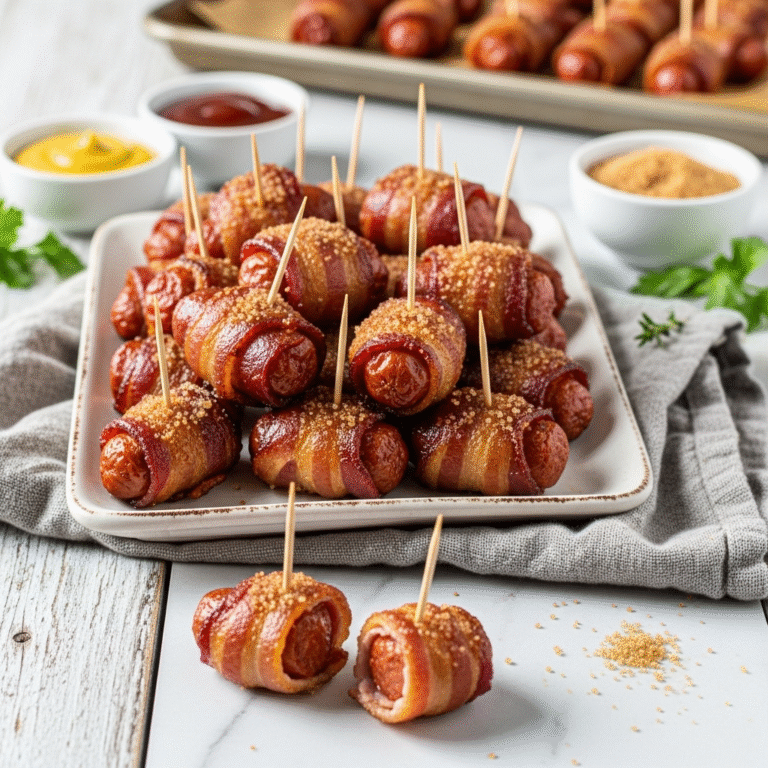
Get ready to make the most impressive appetizer that looks like it came from a five-star restaurant but is actually incredibly simple to make at home! These Bacon Wrapped Scallops are the ultimate combination of sweet, succulent sea scallops wrapped in crispy, savory bacon, creating a flavor explosion that will have your guests absolutely swooning. Each bite delivers tender, buttery scallop paired with smoky, salty bacon – it’s a match made in culinary heaven.
What makes this bacon wrapped scallops recipe so special is how it delivers maximum wow-factor with minimal effort. In just 20 minutes, you can create an elegant appetizer that’s perfect for holiday parties, dinner parties, romantic date nights, or any occasion when you want to impress without spending hours in the kitchen. These beautifully caramelized scallops with their crispy bacon exterior look absolutely stunning on any table and taste even better than they look.
Whether you’re hosting Thanksgiving dinner, preparing for a New Year’s Eve celebration, planning a Valentine’s Day dinner, or simply treating yourself to something special, these easy bacon wrapped scallops are your secret weapon. They’re also incredibly versatile – serve them as an elegant appetizer, include them in a surf-and-turf dinner, or offer them as part of a seafood feast. The best part? While they taste gourmet and restaurant-quality, they require just two main ingredients and come together faster than you’d ever imagine. This is the kind of recipe that makes you look like a culinary genius without actually having to be one!
History / Background
The marriage of bacon and scallops is a relatively modern culinary creation, though both ingredients have rich histories on their own. Sea scallops have been harvested and enjoyed for thousands of years, with evidence of scallop consumption dating back to prehistoric times. The scallop shell itself became an important symbol in Christianity during the Middle Ages, associated with St. James and the pilgrimage to Santiago de Compostela, which helped spread scallop cuisine throughout Europe.
Bacon, or cured pork belly, has an even longer history, with evidence of pig domestication and meat curing dating back over 3,000 years in China. The word “bacon” itself comes from various Germanic and French dialects. In America, bacon became a breakfast staple during the early 20th century, thanks in part to an aggressive marketing campaign by the pork industry.
The concept of wrapping one food in another – particularly wrapping seafood or vegetables in bacon – likely has its roots in French cuisine, where the technique is called “barding.” However, the specific combination of bacon-wrapped scallops as we know it today is distinctly American, emerging from the mid-20th century cocktail party culture of the 1950s and 1960s.
During this era, elaborate appetizers and “fancy finger foods” became essential for entertaining. Home cooks and caterers began experimenting with bacon-wrapped everything – water chestnuts, dates, shrimp, and eventually scallops. The bacon-wrapped scallop quickly became a steakhouse and upscale restaurant favorite, appearing on menus alongside other surf-and-turf offerings.
What made bacon wrapped scallops particularly popular was the perfect balance they offered: the bacon provided richness, smokiness, and crispy texture, while the scallops contributed delicate sweetness and tender, almost buttery texture. The bacon’s fat also helped keep the lean scallop meat moist during cooking, solving one of the main challenges with preparing scallops.
By the 1980s and 1990s, bacon wrapped scallops had become a signature dish at wedding receptions, holiday parties, and special celebrations across America. They represented affordable luxury – a way to serve something that felt elegant and special without breaking the bank. Today, they remain one of the most requested appetizers for catering and are a staple at upscale gatherings, proving that this classic combination has serious staying power. The dish has also evolved with modern cooking techniques, with chefs experimenting with different bacon varieties, glazes, and cooking methods to elevate this already-perfect pairing.
Why You’ll Love This Recipe
This Bacon Wrapped Scallops recipe is genuinely one of those magical dishes that exceeds expectations on every level. It’s the kind of recipe that makes you feel like a professional chef, even if you’ve never worked with scallops before!
Let me tell you why this recipe is absolutely brilliant and why it needs to be in your entertaining arsenal. First, it’s deceptively simple – we’re talking about just two main ingredients here, yet the result is something that looks and tastes like it came from an expensive restaurant. The natural sweetness of the scallops provides the perfect contrast to the salty, smoky bacon, and when cooked properly, the textures are out of this world – tender, almost creamy scallop centers wrapped in crispy, caramelized bacon.
This recipe is also incredibly forgiving for home cooks. Unlike some seafood dishes that require precise timing and technique, these bacon wrapped scallops have a comfortable window for achieving perfection. The bacon acts as a protective layer, keeping the scallops moist while adding incredible flavor.
Here’s why you’ll absolutely love making these Bacon Wrapped Scallops:
- Restaurant-quality results at home – Impress everyone with gourmet appetizers that rival any steakhouse
- Only 2 main ingredients – Scallops and bacon, plus optional seasonings and glaze
- Ready in 20 minutes – From start to finish, including prep time
- Perfect for entertaining – Can be prepared ahead and cooked just before serving
- Elegant presentation – Looks stunning on any table with minimal styling needed
- Naturally gluten-free and low-carb – Fits multiple dietary preferences
- Budget-friendly luxury – More affordable than many other “fancy” appetizers
- Minimal cleanup – Uses just one pan or baking sheet
- Crowd-pleasing flavor – Even non-seafood lovers often enjoy these
- Versatile serving options – Works as appetizer, main course component, or party food
- Great for special occasions – Perfect for holidays, date nights, and celebrations
- Foolproof technique – Hard to mess up with clear visual cues for doneness
- Customizable – Easy to add your own flavor twists with glazes and seasonings
- Make-ahead friendly – Prep earlier in the day and cook when needed
Ingredient Notes
The beauty of this recipe lies in its simplicity, but choosing quality ingredients makes all the difference. Let’s break down what you need and why it matters:
Sea Scallops: These are the stars of our show! Sea scallops are larger than bay scallops (about 1-1½ inches in diameter) and have a sweet, delicate flavor with a tender, almost buttery texture when cooked properly. Look for “dry-packed” scallops rather than “wet-packed” – dry-packed scallops haven’t been treated with chemical preservatives and will sear beautifully and develop better caramelization. They should smell fresh and oceanic, not fishy. Fresh scallops are ideal, but high-quality frozen scallops (thawed properly) work wonderfully too. Plan on 1-2 scallops per person for appetizers, or 3-4 per person for a main course. If you can’t find sea scallops, you can use jumbo shrimp or prawns as a substitute, though the cooking time may vary slightly.
Bacon: Regular-cut bacon works best for this recipe – not thick-cut, which won’t crisp properly in the cooking time, and not thin-cut, which can become too crispy or burnt. Choose a good-quality bacon with a nice balance of fat to meat for the best flavor and texture. Standard pork bacon is traditional, but turkey bacon can work as a lighter alternative (though it won’t get quite as crispy). Applewood-smoked or maple bacon adds wonderful flavor complexity. Each scallop needs about one half-strip of bacon to wrap around it comfortably. Avoid pre-cooked bacon as it won’t have the right texture.
Toothpicks: You’ll need wooden toothpicks or small skewers to secure the bacon around each scallop. Soak them in water for 10-15 minutes before using to prevent burning during cooking. Metal cocktail picks work too and don’t require soaking.
Olive Oil or Butter: Just a touch of oil or butter in your pan helps with browning and prevents sticking. Olive oil has a higher smoke point, while butter adds richness. You can also use avocado oil or ghee.
Optional Brown Sugar or Maple Glaze: A light brushing of brown sugar, maple syrup, or honey on the bacon before cooking creates a beautiful caramelization and adds a sweet-savory balance that’s absolutely divine. This is optional but highly recommended for that restaurant-quality finish.
Seasonings: Simple black pepper is often all you need since bacon provides plenty of salt. Some cooks add a tiny pinch of paprika, garlic powder, or cayenne for extra flavor, but keep seasonings minimal to let the natural flavors shine. Fresh herbs like thyme or a squeeze of lemon juice after cooking can add a bright finishing touch.
Optional Glaze Ingredients: For an elevated version, consider a balsamic reduction, teriyaki glaze, honey-sriracha mixture, or garlic butter. These are drizzled or brushed on just before serving or in the final minutes of cooking.
Equipment Needed
You won’t need any special equipment for these bacon wrapped scallops – just basic kitchen tools:
- Large oven-safe skillet (cast iron works beautifully) OR rimmed baking sheet – depending on your cooking method
- Paper towels – crucial for patting scallops completely dry
- Sharp knife and cutting board – for cutting bacon strips in half
- Small bowl – for any glaze or seasoning mixtures
- Wooden toothpicks or small skewers – to secure bacon around scallops
- Tongs or spatula – for flipping scallops during cooking
- Pastry brush (optional) – for applying glaze or brown sugar mixture
- Wire cooling rack (optional) – if baking, placing rack on baking sheet allows air circulation for crispier bacon
- Meat thermometer (optional but helpful) – scallops are done at 120-130°F internal temperature
- Serving platter – for presenting your beautiful creation
- Small bowl with water – for soaking toothpicks to prevent burning
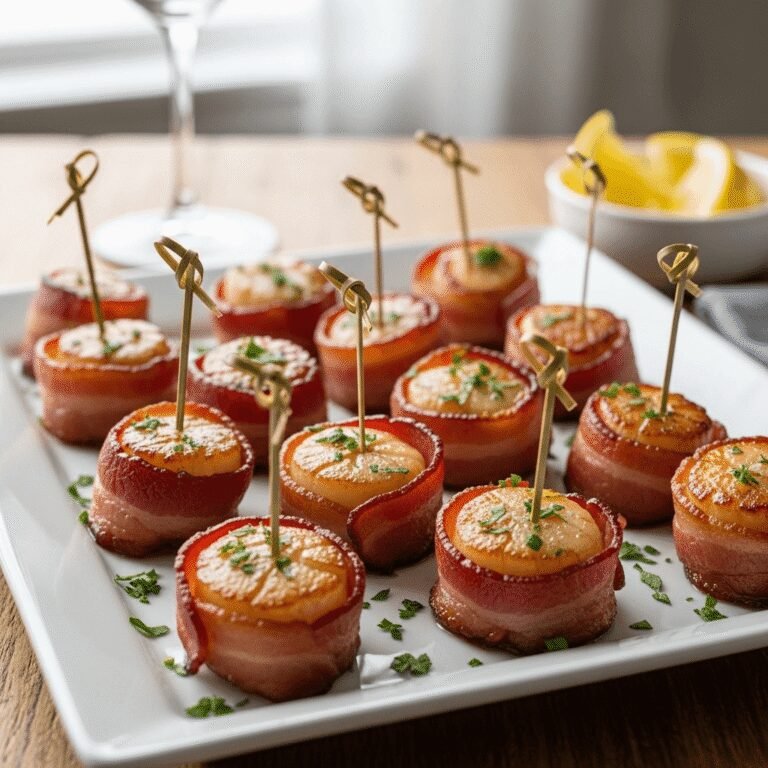
Bacon Wrapped Scallops
These elegant Bacon Wrapped Scallops feature sweet, tender sea scallops wrapped in crispy bacon and cooked to perfection in just 20 minutes. With optional brown sugar glaze for caramelization, they’re the ultimate impressive appetizer that’s surprisingly easy to make. Perfect for holidays, dinner parties, or any special occasion!
- Total Time: 20 minutes
- Yield: 4 servings (12 scallops) 1x
Ingredients
- 12 large sea scallops (about 1-1½ pounds), side muscle removed
- 6 strips regular-cut bacon, cut in half crosswise
- 2 tablespoons olive oil or melted butter (for pan method)
- 2 tablespoons brown sugar or maple syrup (optional, for glaze)
- ¼ teaspoon freshly ground black pepper
- Pinch of smoked paprika (optional)
- 12 wooden toothpicks, soaked in water for 10 minutes
- Fresh lemon wedges (for serving)
- Fresh parsley, chopped (for garnish)
Optional Glaze:
- 2 tablespoons balsamic vinegar or balsamic glaze
- 1 tablespoon honey
- 1 clove garlic, minced
Instructions
- Prepare the scallops: Remove scallops from refrigerator and packaging. Rinse under cold water and check for the small side muscle (a small rectangular tag of tissue on the side) – remove it by pinching and pulling it off, as it becomes tough when cooked. Pat the scallops completely dry with paper towels on all sides. This step is crucial for achieving proper searing and caramelization. Let them sit at room temperature for 10 minutes while you prepare other ingredients.
- Prepare the bacon: Cut each bacon strip in half crosswise so you have 12 half-strips. If desired, partially cook the bacon in a skillet for 2-3 minutes per side until it’s just beginning to render fat but is still very pliable (not crispy). This optional step helps ensure the bacon crisps properly in the same time it takes to cook the scallops. Drain on paper towels if you’ve partially cooked it.
- Season the scallops: Lightly season each scallop with a tiny amount of black pepper and optional paprika on both sides. Remember, bacon is salty, so don’t add salt. If using brown sugar glaze, mix brown sugar (or maple syrup) with a tiny bit of water in a small bowl to create a thin paste.
- Wrap the scallops: Take one half-strip of bacon and wrap it around the circumference of each scallop, with the ends meeting on one flat side. Secure with a soaked toothpick, inserting it horizontally through the bacon and scallop so the scallop will sit flat. If using brown sugar glaze, lightly brush the bacon with the mixture now. Repeat with all scallops.
- Pan-searing method (recommended for crispiest results): Heat a large oven-safe skillet (cast iron works great) over medium-high heat. Add 1 tablespoon of olive oil or butter. Once the pan is very hot and oil is shimmering, carefully place scallops in the pan with the bacon seam-side down first. Don’t overcrowd – work in batches if necessary. Sear for 2-3 minutes without moving them until bacon is crispy and golden brown. Flip scallops to the other flat side and cook another 2-3 minutes. Then stand them on their sides to crisp the bacon all around, about 1-2 minutes per side. Total cooking time: 8-10 minutes. Scallops should be opaque and firm but still slightly translucent in the very center.
- Oven-baking method (easier hands-off approach): Preheat oven to 425°F (220°C). Place a wire rack on a rimmed baking sheet and spray with cooking spray. Arrange wrapped scallops on the rack with space between each one. If using brown sugar glaze, brush bacon lightly. Bake for 10-12 minutes, flipping once halfway through, until bacon is crispy and scallops are opaque and cooked through. For extra-crispy bacon, broil for the last 1-2 minutes, watching carefully.
- Optional glaze finish: If making a balsamic or other glaze, combine glaze ingredients in a small saucepan and simmer for 3-4 minutes until slightly thickened. Drizzle over cooked scallops just before serving.
- Serve immediately: Transfer bacon wrapped scallops to a serving platter. Remove toothpicks if desired, or leave them for easy eating. Garnish with fresh chopped parsley and serve with lemon wedges for squeezing. These are best served hot and fresh from the pan.
Notes
- Dry scallops are essential: Moisture prevents proper searing and caramelization. Pat scallops extremely dry with paper towels before wrapping.
- Don’t overcook: Scallops cook quickly! Overcooked scallops become rubbery. They’re done when opaque and just slightly translucent in the center (120-130°F internal temperature).
- Bacon crispiness: If bacon isn’t crisping enough, partially pre-cook it for 2-3 minutes before wrapping, or finish under the broiler for 1-2 minutes.
- Size matters: Choose large, uniform-sized scallops so they all cook evenly.
- Make ahead: Wrap scallops in bacon up to 4 hours ahead, cover, and refrigerate. Bring to room temperature for 15 minutes before cooking.
- Scaling up: This recipe easily doubles or triples for larger gatherings.
- Prep Time: 10 minutes
- Cook Time: 10 minutes
- Category: Appetizer
- Method: Pan-Seared or Baked
- Cuisine: American
- Diet: Gluten Free
Nutrition
- Serving Size: 3 scallops
- Calories: 245
- Sugar: 3g
- Sodium: 680mg
- Fat: 14g
- Saturated Fat: 4g
- Unsaturated Fat: 8g
- Trans Fat: 0g
- Carbohydrates: 4g
- Fiber: 0g
- Protein: 24g
- Cholesterol: 65mg
Tips & Variations
The basic bacon wrapped scallops are perfection on their own, but here are some delicious ways to customize them:
Sweet & Spicy Version: Brush the bacon with a mixture of honey and sriracha or cayenne pepper before cooking for a sweet-heat combination that’s addictive. Add a pinch of red pepper flakes to the brown sugar glaze.
Maple Glazed: Use pure maple syrup instead of brown sugar, and add a tiny splash of bourbon or whiskey for depth. This creates beautiful caramelization and adds complex flavor notes.
Asian-Inspired: Marinate scallops briefly in a mixture of soy sauce, ginger, and sesame oil before wrapping. Brush bacon with teriyaki glaze and garnish with sesame seeds and sliced scallions.
Garlic Herb Butter: Top each cooked scallop with a small pat of compound butter made with minced garlic, fresh parsley, and lemon zest. The butter melts over the hot scallop creating an incredible sauce.
Balsamic Reduction: Drizzle finished scallops with a thick balsamic reduction or balsamic glaze. The tangy-sweet flavor complements the bacon perfectly.
Cajun Spiced: Season scallops with Cajun or blackening seasoning before wrapping for a spicy kick. Serve with remoulade sauce for dipping.
Prosciutto Instead of Bacon: For a more delicate, Italian-inspired version, wrap scallops in thin prosciutto instead of bacon. It won’t get as crispy but offers a different flavor profile.
Stuffed Scallops: Before wrapping, make a small slit in each scallop and insert a thin slice of jalapeño, a piece of sun-dried tomato, or a basil leaf for extra flavor.
BBQ Glazed: Brush with your favorite BBQ sauce in the last 2 minutes of cooking for a smoky-sweet finish.
Citrus Herb: Add fresh thyme leaves or rosemary needles to the bacon before wrapping, and finish with a generous squeeze of fresh lemon or lime juice.
Pro Chef Tips
Want restaurant-quality bacon wrapped scallops? Here are professional secrets:
Buy the best scallops you can afford: Quality matters enormously with scallops. Look for “dry-packed” or “day boat” scallops, which haven’t been treated with sodium tripolyphosphate (STP). Wet-packed scallops are treated with this preservative, which makes them absorb water, meaning they won’t sear properly and you’re paying for water weight. Dry scallops are more expensive per pound but actually give you more edible product and far better results.
Perfect dryness is non-negotiable: This cannot be stressed enough – pat your scallops aggressively dry with paper towels on all sides. Then wait 5 minutes and pat them dry again. Any surface moisture will steam the scallops rather than searing them, preventing that gorgeous golden crust. Some chefs even let scallops air-dry in the refrigerator uncovered for an hour before cooking.
Stretch the bacon slightly: When wrapping your bacon around each scallop, stretch it gently as you wrap. This helps it stay taut and crisp better during cooking. Tuck the loose end of the bacon underneath where you’re placing the toothpick for a cleaner look.
Use a screaming hot pan: For the pan-seared method, your skillet should be hot enough that a drop of water immediately sizzles and evaporates. This high heat is essential for getting a proper sear on both the scallop and the bacon. Don’t move the scallops once you place them in the pan – let them develop that beautiful crust.
The hand test for doneness: Gently press the side of a scallop with your finger or tongs. It should feel firm but still have a slight give, similar to pressing the fleshy part of your palm below your thumb when you touch your thumb to your middle finger. If it feels mushy, it needs more time. If it feels completely firm with no give, you’ve overcooked it.
Let them rest briefly: Once cooked, let the scallops rest on the serving platter for 1-2 minutes before serving. This allows the juices to redistribute and ensures they stay tender.
Control bacon rendering: If your bacon isn’t crisping before the scallops are done, you can briefly flash them under a hot broiler for 30-60 seconds to crisp the bacon without overcooking the scallops. Watch them carefully!
Consider par-cooking the bacon: Many professional chefs partially cook their bacon for 2-3 minutes per side before wrapping the scallops. This head start helps ensure the bacon crisps perfectly in the same time it takes to cook the scallops through.
Season strategically: Since bacon is quite salty, be very careful with additional salt. Focus on pepper, herbs, and sweet elements to balance the saltiness rather than adding more salt.
Common Mistakes to Avoid
Even experienced cooks can stumble with bacon wrapped scallops. Here are the most common pitfalls:
Using wet-packed scallops: As mentioned earlier, scallops treated with preservatives won’t sear properly. They’ll release liquid, steam themselves, and never develop that beautiful caramelized crust. Always seek out dry-packed scallops, or at least thoroughly rinse and obsessively dry wet-packed ones.
Not drying the scallops thoroughly enough: This is the #1 mistake home cooks make! Any moisture on the surface prevents browning and creates steam instead of a sear. Even if you think they’re dry, pat them again. Then one more time. Some moisture will also render out of the scallops during cooking, so starting bone-dry is essential. You simply cannot over-dry scallops before cooking.
Overcooking the scallops: Scallops go from perfectly cooked to rubbery in just 30-60 seconds. They should be opaque on the outside but still slightly translucent and creamy in the very center. Remember they’ll continue cooking slightly from residual heat after you remove them from the pan. It’s better to slightly undercook than overcook.
Using thick-cut bacon: Thick bacon won’t crisp up in the relatively short cooking time needed for scallops. You’ll end up with rubbery, chewy bacon and overcooked scallops. Regular-cut bacon is the sweet spot – thin enough to crisp quickly but substantial enough to wrap securely.
Overcrowding the pan: When pan-searing, leaving space between each scallop is crucial. Crowding causes them to steam rather than sear as they release moisture that can’t evaporate quickly enough. Work in batches if necessary, keeping the first batch warm in a low oven while you cook the rest.
Forgetting to remove the side muscle: That small, tough rectangular piece of tissue on the side of the scallop becomes very chewy when cooked. Always check for it and remove it before cooking – it pulls right off easily.
Moving scallops too soon: When you first place scallops in a hot pan, resist the urge to peek underneath or move them. Let them sear undisturbed for the full 2-3 minutes to develop a proper crust. If they’re sticking, they’re not ready to flip yet – properly seared scallops will release easily from the pan.
Storage & Meal Prep
While bacon wrapped scallops are absolutely best served fresh and hot, here’s what you need to know about storage:
Storing Cooked Scallops: If you somehow have leftovers (unlikely!), store them in an airtight container in the refrigerator for up to 1 day. Be aware that the texture won’t be the same as fresh – scallops tend to become firmer and the bacon will soften. The flavor will still be good, but the textural magic will be diminished.
Reheating: To reheat, place scallops on a baking sheet and warm in a 350°F oven for 5-7 minutes until heated through. You can also briefly flash them under the broiler for 1-2 minutes to re-crisp the bacon. Avoid microwaving as it will make the scallops rubbery and the bacon soggy.
Prep-Ahead Strategy: The best make-ahead approach is to wrap the raw scallops in bacon up to 4-6 hours before cooking. Arrange them on a plate, cover tightly with plastic wrap, and refrigerate. Remove from the fridge 15-20 minutes before cooking to take the chill off, then cook as directed. This allows you to do all your prep work early while still serving them fresh and hot.
Storing Uncooked Wrapped Scallops: Raw scallops wrapped in bacon should be cooked within 24 hours for best quality and food safety. Keep them refrigerated until ready to cook, and ensure raw scallops were fresh when you purchased them.
Not Recommended for Long Storage: Because scallops are delicate seafood, I don’t recommend storing bacon wrapped scallops (cooked or uncooked) for more than 1 day. The quality degrades quickly, and seafood safety is important.
Make-Ahead & Freezer Notes
Planning for a party? Here’s how to prep ahead:
Best Make-Ahead Method: Wrap your scallops in bacon, secure with toothpicks, and arrange on a baking sheet lined with parchment paper. Cover tightly with plastic wrap and refrigerate for up to 6 hours before cooking. This is perfect for dinner parties – you can have everything ready to go and just pop them in the oven or pan when guests arrive. Let them sit at room temperature for 15 minutes before cooking.
Can You Freeze Them?: You can freeze raw bacon-wrapped scallops, though I generally don’t recommend it as the texture of scallops can suffer. If you must freeze them:
- Wrap each scallop-bacon bundle individually in plastic wrap
- Place in a freezer-safe container or bag
- Freeze for up to 1 month
- Thaw overnight in the refrigerator before cooking
- Pat completely dry before cooking as they’ll release extra moisture
Freezing Already-Cooked Scallops: I don’t recommend freezing cooked bacon wrapped scallops. The texture deteriorates significantly upon thawing and reheating, and they simply won’t taste nearly as good as fresh.
Purchasing Frozen Scallops: If you’re starting with frozen raw scallops (which are often flash-frozen on the boat and can be excellent quality), thaw them overnight in the refrigerator, never at room temperature or in warm water. Pat them very thoroughly dry, as frozen scallops tend to release more moisture than fresh ones.
Party Timing Strategy: For entertaining, wrap scallops 2-4 hours ahead and refrigerate. About 30 minutes before you want to serve, start preheating your oven or skillet. Cook them 10 minutes before you plan to serve so they come to the table hot.
Serving Suggestions
Bacon wrapped scallops are incredibly versatile! Here’s how to serve them for various occasions:
As an Elegant Appetizer: Serve on a beautiful platter with toothpicks inserted for easy grabbing. Provide small appetizer plates and cocktail napkins. Offer lemon wedges for squeezing and perhaps a dipping sauce like garlic aioli, remoulade, or cocktail sauce on the side. Garnish the platter with fresh herbs and lemon slices for a restaurant-style presentation.
As Part of a Surf-and-Turf Dinner: Serve 4-5 scallops per person alongside a perfectly cooked steak (filet mignon pairs beautifully), with classic sides like garlic mashed potatoes, roasted asparagus, and a Caesar salad. This is an impressive Valentine’s Day or anniversary dinner!
Holiday Party Appetizer: These shine at Christmas parties, New Year’s Eve celebrations, and Thanksgiving pre-dinner appetizers. Arrange on a large platter and serve alongside other passed appetizers. They’re substantial enough to satisfy guests without filling them up before the main meal.
Wine and Beverage Pairings:
- White Wine: Chardonnay (buttery varieties complement the richness), Sauvignon Blanc (crisp acidity cuts through the bacon fat), or Champagne (elegant and festive)
- Red Wine: Light Pinot Noir works if you prefer red
- Cocktails: Dirty martinis, champagne cocktails, or a classic Old Fashioned
- Non-alcoholic: Sparkling water with lemon, cranberry spritzer, or iced tea
Side Dish Pairings:
- Creamy garlic mashed potatoes or cauliflower mash
- Roasted Brussels sprouts with balsamic glaze
- Grilled or roasted asparagus with parmesan
- Wild rice pilaf or risotto
- Mixed green salad with vinaigrette
- Roasted cherry tomatoes
- Creamy polenta
- Sautéed green beans with almonds
- Twice-baked potatoes
- Crusty bread for soaking up any pan juices
Sauce and Dipping Options:
- Lemon garlic aioli
- Remoulade sauce
- Cocktail sauce with horseradish
- Balsamic reduction
- Garlic butter for drizzling
- Hollandaise sauce (if you’re feeling fancy!)
- Spicy mayo or sriracha aioli
- Tartar sauce
Presentation Ideas: For a stunning presentation, serve on a bed of arugula or mixed greens, arrange in a circular pattern on a white platter, or place each scallop on an individual spoon for passed appetizers at cocktail parties. Garnish with microgreens, edible flowers, or fresh herb sprigs for extra visual appeal.
FAQs Section
Q: Can I use bay scallops instead of sea scallops for this recipe?
A: While technically possible, I don’t recommend it. Bay scallops are much smaller (about ½ inch diameter) and would be difficult to wrap with bacon – you’d need to wrap several together, which affects cooking time and presentation. They also cook much faster than sea scallops and could easily overcook. If you only have bay scallops, consider making them differently (perhaps pan-seared without bacon, or in a pasta dish). Stick with large sea scallops for bacon wrapping – they’re worth seeking out for this recipe.
Q: How do I know when the scallops are perfectly cooked?
A: Perfectly cooked scallops are opaque on the outside but still slightly translucent and glossy in the very center when you cut one open. They should feel firm but still have a slight give when gently pressed, similar to pressing the fleshy part of your palm below your thumb. Using a meat thermometer, the internal temperature should reach 120-130°F. Visually, they’ll change from translucent gray/pink to opaque white. The entire cooking time is usually only 8-10 minutes total. When in doubt, slightly undercook rather than overcook – you can always give them another minute, but you can’t undo rubbery, overcooked scallops.
Q: Why is my bacon not getting crispy?
A: This is usually due to one of several issues: using thick-cut bacon (use regular-cut instead), not cooking at high enough heat, too much moisture from the scallops (pat them VERY dry), or simply not cooking long enough. To fix it, you can partially pre-cook the bacon for 2-3 minutes per side before wrapping the scallops, which gives it a head start. Alternatively, finish the wrapped scallops under a hot broiler for 1-2 minutes to crisp the bacon without overcooking the scallops. Make sure your pan is very hot before adding the scallops, and don’t move them around too much – let them sear properly.
Q: What’s the difference between dry and wet scallops, and why does it matter?
A: “Wet” scallops have been treated with sodium tripolyphosphate (STP), a preservative that makes them absorb water. This treatment extends shelf life but significantly affects cooking. Wet scallops release excess moisture when heated, preventing proper searing and browning. They also have a slightly chemical taste and you’re essentially paying for water weight. “Dry” scallops are untreated, natural scallops that sear beautifully and develop a gorgeous caramelized crust. They’re more expensive per pound but give better results and more actual scallop meat. Look for labels saying “dry,” “chemical-free,” or “day boat” scallops. If you can only find wet scallops, rinse them well and pat extremely dry – this helps but won’t completely solve the issue.
Q: Can I make these without toothpicks?
A: While toothpicks make things easier, you can cook bacon wrapped scallops without them if you’re careful. The key is ensuring the bacon overlap/seam is on the bottom (touching the pan) when you start cooking – the bacon will stick to itself as it cooks and the rendered fat acts like glue. Once you flip to the other side, the bacon should stay in place. This method works better with the oven method on a rack, as gravity helps keep things together. For pan-searing, toothpicks provide more security when flipping.