Spicy Garlic Edamame Recipe (Ready in 10 Minutes!)

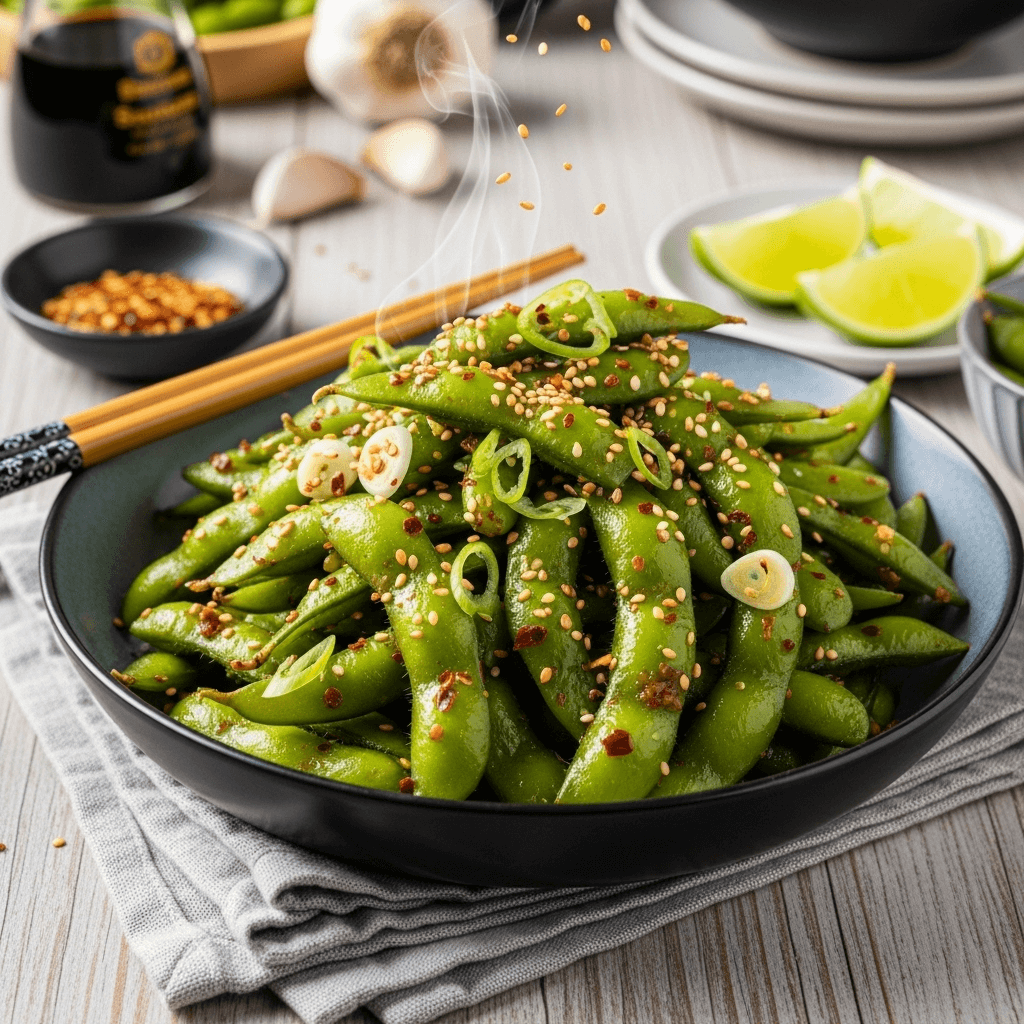
Spicy garlic edamame is the ultimate quick and healthy snack that delivers bold Asian-inspired flavors in just 10 minutes. These tender, bright green soybeans are tossed in a mouthwatering combination of fragrant garlic, fiery chili flakes, savory soy sauce, and toasted sesame oil, creating an addictive appetizer that’s impossible to stop eating. Each pod is perfectly seasoned on the outside while the beans inside remain tender and slightly sweet.
This easy garlic edamame recipe is perfect for so many occasions—serve it as a healthy appetizer before dinner, pack it for lunch boxes, enjoy it as a protein-packed snack while watching movies, or add it to your party spread for a nutritious option guests will love. It’s become wildly popular at Japanese restaurants and izakayas, but making spicy edamame at home is surprisingly simple and costs a fraction of restaurant prices.
The best part? You probably already have most of the ingredients in your pantry, and the whole recipe comes together faster than ordering takeout. Whether you’re meal prepping for the week, looking for a healthy after-school snack, or entertaining friends, this spicy garlic edamame recipe is about to become your new go-to. Once you taste how much better homemade edamame is compared to plain steamed versions, you’ll never go back!
History / Background
Edamame, which literally means “beans on branches” in Japanese, has been cultivated and enjoyed in East Asia for over 2,000 years. These young soybeans are harvested while still green and tender, before they fully mature into the hard, dried soybeans used for tofu and soy milk. The practice of eating fresh soybeans dates back to ancient China during the Zhou Dynasty (1046-256 BCE), where they were considered both a valuable crop and a nutritious food source.
In Japan, edamame became particularly popular during the Edo period (1603-1868). Street vendors would sell boiled edamame as a convenient snack, and it became a beloved accompaniment to sake in taverns and teahouses. The tradition of serving edamame with drinks continues today in izakayas (Japanese pubs) throughout Japan, where the salty, protein-rich beans help balance alcohol consumption and keep patrons satisfied.
For centuries, edamame was simply prepared—boiled in salted water and eaten plain. The beans would be popped directly from the pod into the mouth, making them a fun, interactive snack. This traditional preparation method remained largely unchanged for generations, as the natural sweetness and buttery texture of fresh edamame needed little enhancement.
The evolution to spicy garlic edamame represents a modern fusion twist on this ancient food. As Asian cuisines gained popularity worldwide in the late 20th century, chefs began experimenting with bolder seasonings to appeal to Western palates that craved more intense flavors. Japanese-American restaurants and fusion establishments started introducing variations with garlic, chili oil, sesame, and spices, transforming the humble edamame into a flavor-packed appetizer.
Edamame didn’t become widely available in American supermarkets until the 1990s, but once it did, it quickly became a health food darling. Nutritionists praised its high protein content, fiber, and essential nutrients, making it a favorite among vegetarians, vegans, and health-conscious eaters. Today, spicy garlic edamame bridges traditional Japanese simplicity with contemporary bold flavors, representing the beautiful evolution of global cuisine. It’s a perfect example of how traditional ingredients can be reimagined for modern tastes while still honoring their cultural roots.
Why You’ll Love This Recipe
This homemade spicy garlic edamame recipe is going to revolutionize your snacking game, and I’m not exaggerating. It combines incredible flavor with serious nutrition, all while being ridiculously easy to make—and that’s a winning combination in any kitchen.
Here’s why this recipe deserves a permanent spot in your rotation:
- Lightning-fast preparation – From freezer to table in just 10 minutes, making it perfect for busy weeknights or unexpected guests
- Restaurant-quality flavor at home – Tastes just like your favorite Japanese restaurant’s version but costs pennies per serving
- Incredibly healthy – Packed with plant-based protein (17g per cup!), fiber, vitamins, and minerals while being naturally low in calories
- Customizable heat level – Easily adjust the spiciness to suit your preference, from mild to fire-breathing hot
- Vegan and gluten-free friendly – With simple substitutions, this works for virtually any dietary restriction
- Kid-approved (mild version) – Children love the interactive nature of eating edamame from pods, making it a fun way to introduce healthy foods
- Budget-friendly snacking – Frozen edamame is inexpensive and always available, making this an economical choice
- Meal prep champion – Make a large batch and enjoy throughout the week as a grab-and-go protein snack
- No special skills required – If you can boil water and mince garlic, you can make this recipe perfectly
- Versatile serving options – Works as an appetizer, side dish, snack, or protein addition to grain bowls and salads
- Impressive yet effortless – Looks and tastes like you spent way more effort than you actually did
The addictive combination of spicy, garlicky, savory, and slightly sweet flavors makes these beans dangerously easy to devour. Plus, knowing you’re eating something genuinely good for you makes the snacking guilt-free!
Ingredient Notes
Understanding your ingredients helps you make smart substitutions and achieve the best results. Let’s break down everything you need for perfect spicy garlic edamame.
Frozen Edamame in Pods: Look for edamame still in their pods rather than shelled edamame—eating them from the pod is half the fun! Both organic and conventional options work great. You don’t need to thaw them before cooking; they go straight from freezer to boiling water. If you can find fresh edamame at farmers markets during summer, they’re absolutely incredible, but frozen works perfectly year-round and is much more convenient.
Garlic: Fresh garlic is essential for this recipe—it provides that pungent, aromatic flavor that makes this dish irresistible. You’ll need 4-5 large cloves, minced finely. Don’t substitute with garlic powder here; fresh garlic creates a completely different flavor profile. For the best results, mince the garlic just before using to preserve its potent oils and aroma.
Soy Sauce: Provides the essential umami saltiness that makes Asian flavors sing. Regular soy sauce works perfectly, but you can use low-sodium soy sauce if watching salt intake (though you may need to add a pinch of extra salt). Tamari is an excellent gluten-free substitute that tastes nearly identical. Coconut aminos work for soy-free diets but will be slightly sweeter and less salty.
Sesame Oil: Toasted sesame oil is crucial—don’t skip it or substitute with regular vegetable oil. This ingredient adds that distinctive nutty, aromatic flavor that makes the dish taste authentically Asian. A little goes a long way; you only need 1-2 teaspoons. Store sesame oil in the refrigerator after opening to prevent it from going rancid.
Red Pepper Flakes: These provide the “spicy” in spicy garlic edamame. Start with ½-1 teaspoon and adjust based on your heat tolerance. Korean gochugaru (red pepper flakes) adds a slightly different flavor profile and beautiful color. Fresh sliced red chilies or sriracha can substitute if that’s what you have available.
Rice Vinegar: Adds brightness and acidity that balances the richness of sesame oil and saltiness of soy sauce. Rice vinegar is milder and slightly sweeter than other vinegars, making it perfect for Asian dishes. White wine vinegar or apple cider vinegar can substitute in a pinch, though use slightly less as they’re more acidic.
Sugar or Honey: Just a small amount (½-1 teaspoon) balances the salt and heat while enhancing the natural sweetness of edamame. Granulated sugar, brown sugar, honey, or maple syrup all work. Omit if you prefer a purely savory version.
Kosher Salt: For seasoning the cooking water—this is important for flavoring the beans themselves, not just the coating. Sea salt or table salt work but adjust quantities (use less table salt as it’s more concentrated).
Optional Additions: Toasted sesame seeds for garnish and crunch, fresh lime juice for extra brightness, sliced green onions for color and mild onion flavor, or a drizzle of chili oil for additional heat and flavor.
Equipment Needed
This recipe requires minimal equipment, which is part of what makes it so accessible and easy. Here’s what you’ll need:
- Large pot – At least 4-quart capacity for boiling the edamame with plenty of water
- Colander or strainer – For draining the cooked edamame quickly
- Large mixing bowl – For tossing the edamame with the garlic sauce mixture
- Small saucepan or skillet – For toasting the garlic in oil (optional but recommended)
- Sharp knife and cutting board – For mincing garlic finely
- Measuring spoons – For accurate measurements of sauce ingredients
- Wooden spoon or spatula – For tossing and stirring
- Serving bowl or plate – Choose something that shows off the vibrant green color
- Small prep bowls – Helpful for organizing ingredients before cooking (mise en place)
- Garlic press (optional) – Makes mincing garlic even faster, though knife-minced works great too
- Kitchen tongs or large spoon – For tossing edamame thoroughly with sauce
Spicy Garlic Edamame Recipe
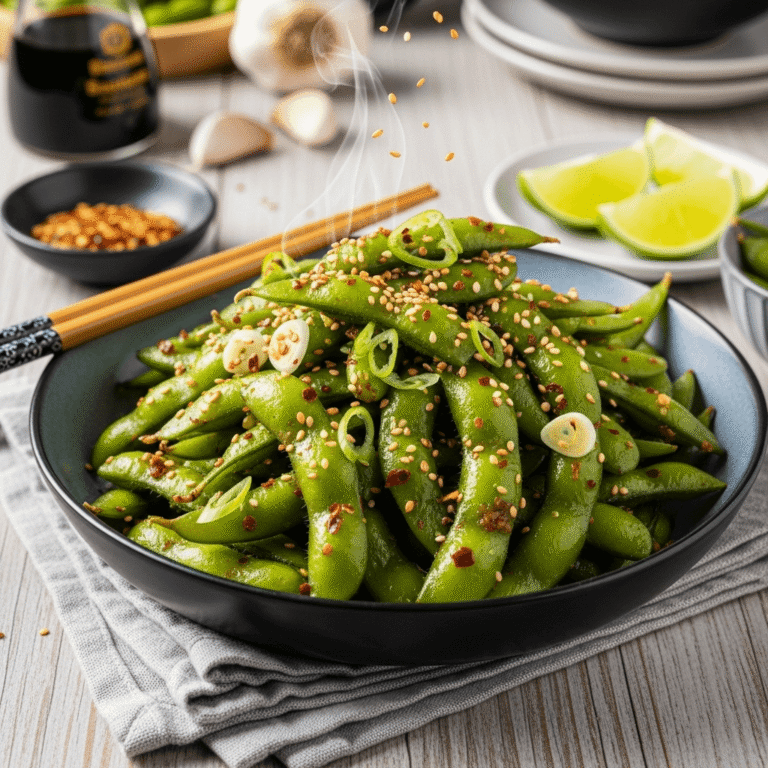
Quick and easy spicy garlic edamame tossed in a savory Asian sauce with fresh garlic, red pepper flakes, soy sauce, and sesame oil. This healthy, protein-packed snack is ready in just 10 minutes and tastes better than any restaurant version!
- Total Time: 10 minutes
- Yield: 4 servings 1x
Ingredients
- 1 pound frozen edamame in pods (about 4 cups)
- 2 tablespoons kosher salt (for cooking water)
- 2 tablespoons vegetable oil or olive oil
- 4-5 large garlic cloves, minced finely
- 2 tablespoons soy sauce (or tamari for gluten-free)
- 1½ teaspoons toasted sesame oil
- 1 teaspoon rice vinegar
- ½-1 teaspoon red pepper flakes (adjust to heat preference)
- ½ teaspoon granulated sugar or honey
- 1 tablespoon toasted sesame seeds (optional, for garnish)
- 2 green onions, sliced thin (optional, for garnish)
- Lime wedges for serving (optional)
Instructions
- Boil the edamame: Fill a large pot with water and add 2 tablespoons kosher salt. Bring to a rolling boil over high heat. Add frozen edamame directly from the freezer and cook for 4-5 minutes until pods are bright green and tender. Don’t overcook or they’ll become mushy.
- Prepare the garlic sauce: While edamame cooks, heat 2 tablespoons vegetable oil in a small saucepan over medium heat. Add minced garlic and cook for 30-60 seconds, stirring constantly, until fragrant and just beginning to turn golden. Don’t let it brown or it will taste bitter. Remove from heat immediately.
- Mix the sauce ingredients: In a large mixing bowl, combine the toasted garlic and oil with soy sauce, sesame oil, rice vinegar, red pepper flakes, and sugar. Whisk together until sugar dissolves and everything is well combined.
- Drain the edamame: When edamame is done cooking, drain immediately in a colander. Shake off excess water but don’t rinse—you want them hot and slightly wet so the sauce adheres better.
- Toss with sauce: Transfer the hot, drained edamame to the bowl with the garlic sauce. Toss thoroughly for 1-2 minutes, making sure every pod gets coated with the flavorful mixture. The residual heat will help the flavors meld together beautifully.
- Garnish and serve: Transfer to a serving bowl and sprinkle with toasted sesame seeds and sliced green onions if using. Serve immediately while hot, with lime wedges on the side and a small empty bowl for discarded pods.
Notes
- Heat level: Start with ½ teaspoon red pepper flakes for mild heat, or use 1 teaspoon for medium-spicy. Add more at the end if desired.
- Gluten-free option: Use tamari instead of regular soy sauce for a gluten-free version.
- Raw vs. cooked garlic: For more intense garlic flavor, skip cooking the garlic and add it raw to the sauce. Cooked garlic is milder and sweeter.
- Sauce adjustment: If edamame seems dry, add an extra drizzle of sesame oil or soy sauce.
- Storage: Store leftovers in an airtight container in the refrigerator for up to 4 days. Enjoy cold or reheat briefly.
- Prep Time: 5 minutes
- Cook Time: 5 minutes
- Category: Appetizer
- Method: Stovetop
- Cuisine: Japanese-American
- Diet: Gluten Free
Nutrition
- Serving Size: 1 cup (approximately ¼ of recipe)
- Calories: 210
- Sugar: 3g
- Sodium: 650mg
- Fat: 12g
- Saturated Fat: 1g
- Unsaturated Fat: 10g
- Trans Fat: 0g
- Carbohydrates: 14g
- Fiber: 6g
- Protein: 17g
- Cholesterol: 0mg
Tips & Variations
Spice Level Variations:
- Mild version: Use just ¼ teaspoon red pepper flakes or omit entirely for a kid-friendly garlic edamame
- Medium heat: Stick with the recommended ½-1 teaspoon red pepper flakes
- Extra spicy: Add 1-2 teaspoons red pepper flakes plus a drizzle of sriracha or chili oil
- Smoky heat: Use chipotle powder instead of red pepper flakes for smoky spiciness
Flavor Variations:
- Lemon garlic edamame: Add fresh lemon zest and juice along with extra garlic for bright, zesty flavor
- Ginger garlic version: Add 1 tablespoon freshly grated ginger to the sauce for extra zing
- Sweet and spicy: Increase sugar to 1 tablespoon and add a splash of mirin for sweet-savory balance
- Sesame-crusted: Double the sesame seeds and toss edamame while still hot so seeds stick
- Herb-infused: Add fresh cilantro, basil, or mint after tossing with sauce
Oil Variations:
- Try chili oil instead of vegetable oil for extra heat and flavor
- Use garlic-infused oil for even more garlic intensity
- Coconut oil adds a subtle tropical note
Soy Sauce Alternatives:
- Tamari for gluten-free
- Coconut aminos for soy-free (reduce salt as it’s less salty)
- Low-sodium soy sauce plus extra salt to taste
Additional Mix-ins:
- Add ¼ cup chopped roasted peanuts or cashews for crunch
- Toss in diced cucumber for freshness
- Mix with cooked quinoa or brown rice for a protein bowl base
- Add crispy fried shallots or garlic chips on top
Pro Chef Tips
Salt the cooking water generously: Professional kitchens know that seasoning the cooking liquid is crucial for flavoring from the inside out. The edamame absorbs salt while boiling, ensuring the beans inside the pods are seasoned, not just the exterior. Use more salt than you think—the water should taste like seawater.
Toast your garlic carefully: The difference between perfect golden garlic and burnt, bitter garlic is literally seconds. Watch it constantly and use medium (not high) heat. Remove the pan from heat while the garlic is still light golden—it will continue cooking from residual heat. Burnt garlic ruins the entire dish.
Toss while hot: Professional chefs always sauce hot ingredients because heat helps flavors penetrate and stick. The residual moisture on hot edamame acts as a carrier for the sauce, ensuring even coating. Cold edamame won’t absorb flavors as effectively.
Layer your seasonings: Instead of adding all the garlic at once, some chefs add half the minced garlic to the hot oil (cooked, mellow flavor) and half raw at the end (sharp, pungent bite). This creates depth and complexity.
Don’t overcook edamame: Overcooked edamame becomes mushy and loses its pleasant firm-tender texture. Set a timer for exactly 4-5 minutes. The pods should be bright green and beans tender but not falling apart.
Finish with acid: A squeeze of fresh lime or lemon juice right before serving brightens all the flavors and makes them pop. Restaurants always finish dishes with acid—it’s a secret weapon for making food taste more vibrant and delicious.
Taste and adjust: Professional cooks constantly taste and adjust seasoning. After tossing with sauce, taste a pod and adjust—add more soy sauce for saltiness, more vinegar for tang, more sesame oil for richness, or more red pepper flakes for heat.
Serve in wide, shallow bowls: This allows air circulation so edamame doesn’t steam itself and become soggy. Presentation matters—piling edamame in a beautiful bowl with garnishes makes it look restaurant-quality.
Common Mistakes to Avoid
Using shelled edamame instead of pods: This completely changes the eating experience and texture. Part of the appeal is squeezing the beans from pods directly into your mouth. Shelled edamame is better suited for salads and grain bowls, not this recipe.
Rinsing edamame after boiling: Many home cooks rinse vegetables after boiling, but don’t do this with edamame. Rinsing washes away the salt you carefully added to the cooking water and cools down the pods too much. The sauce won’t adhere properly to cold, wet edamame. Just drain and immediately toss with sauce while hot.
Burning the garlic: This is the number one mistake that ruins the dish. Garlic burns quickly and turns acrid and bitter. Use medium heat, not high, and watch it constantly. Remove from heat the moment it becomes fragrant and light golden—don’t wait for deep browning.
Under-salting the cooking water: Timid seasoning leads to bland edamame. You need 2 tablespoons of kosher salt for a large pot of water—yes, it seems like a lot, but most of it stays in the water. Under-salted edamame means the beans inside the pods will be flavorless.
Making the sauce too far in advance: Garlic flavor intensifies and can become harsh if the sauce sits for hours. Make the sauce while edamame boils, then use immediately. Fresh garlic flavor is best when it’s just been prepared.
Not adjusting heat level to preference: The ½-1 teaspoon red pepper flakes recommendation is a guideline, not a rule. Some people find this too spicy, others find it too mild. Start conservatively and add more—you can always make it spicier but can’t make it less spicy once added.
Storage & Meal Prep
Refrigerator Storage: Store leftover spicy garlic edamame in an airtight container in the refrigerator for up to 4 days. The flavors actually intensify and meld together overnight, making day-two edamame sometimes even more delicious than freshly made. The pods will soften slightly but remain perfectly edible and tasty.
Best Storage Method: Layer edamame in a container with a paper towel on the bottom to absorb excess moisture, which prevents sogginess. If you have a lot of leftover sauce pooled in the bottom, drain some off before storing to prevent the pods from becoming too salty.
Serving Leftovers: Leftover spicy garlic edamame is delicious served cold, straight from the refrigerator—many people actually prefer it this way as a refreshing snack. If you prefer warm edamame, you have several reheating options:
Reheating Methods:
- Microwave (quickest): Place in a microwave-safe bowl, cover loosely, and heat for 30-60 seconds until warm. Toss before serving.
- Stovetop: Heat a skillet over medium heat, add edamame, and toss for 2-3 minutes until heated through.
- Oven: Spread on a baking sheet and warm at 350°F for 5-7 minutes. This method restores some of the texture better than microwave.
Meal Prep Applications: Make a large batch at the beginning of the week and portion into individual containers for grab-and-go snacks. Pack 1 cup portions for work lunches, after-workout protein snacks, or afternoon munchies. The high protein content makes edamame incredibly satisfying and helps keep you full between meals.
Adding to Other Dishes: Leftover spicy garlic edamame is fantastic added to grain bowls, salads, stir-fries, and noodle dishes. Shell the beans and toss them into quinoa bowls, fried rice, or mixed green salads for an instant protein boost and flavor punch.
Make-Ahead & Freezer Notes
Make-Ahead Strategy: While this recipe is so quick that make-ahead isn’t really necessary, you can absolutely prepare components in advance for even faster assembly:
Garlic Sauce Prep: Make the garlic sauce (without tossing with edamame) up to 3 days ahead and store in the refrigerator in an airtight container. The garlic flavor will intensify, which many people love. Bring to room temperature or warm gently before tossing with freshly cooked edamame.
Par-Cooked Method: Boil edamame according to directions, drain, and chill completely. Store in the refrigerator for up to 3 days. When ready to serve, quickly blanch in boiling water for 1 minute to reheat, drain, and immediately toss with sauce. This works great for parties when you want to minimize last-minute cooking.
Freezer Storage: The good news is that edamame comes frozen, so you always have it on hand! Keep several bags in your freezer for quick snacks anytime.
Freezing Prepared Edamame: You can freeze already-cooked and seasoned spicy garlic edamame, though the texture of the pods will soften considerably. Store in freezer-safe containers or bags for up to 2 months. Thaw in the refrigerator overnight and serve cold, or reheat gently.
Best Practice: Because this recipe takes only 10 minutes start to finish, freezing prepared edamame isn’t particularly advantageous. It’s just as easy to make fresh from frozen edamame whenever you want it.
Party Planning: For entertaining, prep all your ingredients (mince garlic, measure sauce ingredients, portion edamame) a few hours ahead. Store everything separately in the refrigerator. When guests arrive, it takes just 10 minutes to boil, drain, toss, and serve hot, fresh edamame that will impress everyone.
Serving Suggestions
Spicy garlic edamame is incredibly versatile and pairs beautifully with numerous dishes and beverages. Here’s how to serve it for maximum enjoyment:
As an Appetizer: Serve spicy edamame as the opening act before Japanese, Chinese, Korean, or pan-Asian main courses. It pairs perfectly before sushi, ramen, teriyaki chicken, Korean BBQ, or Thai curries. The protein-rich beans help curb appetite while guests wait for the main event.
Snacking Occasions:
- Movie night alternative to popcorn or chips
- After-school snack for kids and teenagers
- Post-workout protein boost
- Afternoon desk snack at work
- Happy hour appetizer with drinks
- Game day healthier option alongside wings and nachos
In Meal Bowls: Shell the beans and add to:
- Buddha bowls with quinoa, roasted vegetables, and tahini dressing
- Asian noodle bowls with soba, udon, or rice noodles
- Sushi bowls with rice, avocado, cucumber, and salmon
- Grain bowls with brown rice, edamame, teriyaki tofu, and pickled vegetables
- Salad bowls with mixed greens, sesame dressing, and mandarin oranges
Beverage Pairings:
- Japanese beer – Sapporo, Asahi, or Kirin complement the salty-spicy flavors perfectly
- Sake – Traditional pairing in Japan; try warm or chilled sake
- White wine – Crisp Sauvignon Blanc or dry Riesling
- Green tea – Hot or iced, for a non-alcoholic refreshing option
- Light lagers – Any light, crisp beer balances the spiciness
- Sparkling water with lime – Cleanses the palate between bites
Complete Meal Ideas: Serve spicy garlic edamame alongside:
- Miso soup and California rolls
- Chicken yakitori skewers and steamed rice
- Vegetable stir-fry with tofu
- Grilled teriyaki salmon with Asian slaw
- Poke bowls with tuna and avocado
- Spring rolls (fresh or fried) with peanut sauce
Presentation Tips: Serve in a wide, shallow bowl or on a large plate to showcase the vibrant green color. Garnish generously with sesame seeds and sliced green onions. Provide a small empty bowl for discarded pods and napkins—eating edamame is a hands-on experience! Lime wedges on the side add fresh brightness and look beautiful.
FAQs Section
Can I use fresh edamame instead of frozen? Absolutely! Fresh edamame is wonderful if you can find it at farmers markets or Asian grocery stores during summer months. The cooking time remains the same (4-5 minutes in boiling salted water). Fresh edamame has a slightly sweeter, more delicate flavor, but frozen works perfectly year-round and is much more convenient. There’s no need to thaw frozen edamame—cook directly from frozen.
Is edamame healthy? Yes! Edamame is incredibly nutritious and considered a superfood. One cup provides 17g of plant-based protein, 8g of fiber, and only 190 calories. It’s rich in folate, vitamin K, iron, magnesium, and calcium. Edamame is a complete protein (contains all nine essential amino acids), making it especially valuable for vegetarians and vegans. It’s naturally low in saturated fat and cholesterol-free. The fiber content supports digestive health and helps you feel satisfied longer.
Can I make this recipe less spicy for kids? Definitely! Simply reduce or completely omit the red pepper flakes to create a mild garlic edamame that’s perfect for children. Kids often love the interactive nature of eating beans from pods—it feels like a fun game. You can also serve plain edamame on the side for very young children and keep the spicy version for adults. Some parents make two batches: mild for kids and spicy for grown-ups.
What’s the difference between edamame and regular soybeans? Edamame are young, green soybeans harvested before they fully mature. They’re picked while still tender and sweet, then typically frozen immediately to preserve freshness. Mature soybeans are left on the plant to dry completely until hard, then used to make tofu, soy milk, soy sauce, and other soy products. Edamame has a buttery, slightly sweet flavor and tender texture that’s completely different from dried soybeans.
Do I eat the whole pod? No! The pods are fibrous and tough—they’re not meant to be eaten. Instead, hold the pod between your teeth, squeeze the pod gently, and pull to pop the beans directly into your mouth. Discard the empty pods in a separate bowl. It’s a fun, interactive eating experience. The pods serve as natural packaging and help protect the beans during cooking.
Can I make this oil-free for a lower-calorie version? Yes, though the texture and flavor will be slightly different. Instead of cooking garlic in oil, bloom it briefly in a small amount of vegetable broth or water in a non-stick pan. Increase the sesame oil by ½ teaspoon to maintain some of that essential flavor, or use tahini thinned with water as a substitute for oil. The coating won’t be quite as glossy but will still taste delicious.
How do I know when edamame is done cooking? Properly cooked edamame is bright green (not dull or olive-colored), tender when squeezed, and the beans inside easily pop out when you bite the pod. After 4-5 minutes of boiling, test one pod—the beans should be tender but not mushy. Overcooked edamame becomes soft and loses its pleasant firm texture. If you’re unsure, it’s better to slightly undercook than overcook.
Can I use this same sauce on other vegetables? Absolutely! This spicy garlic sauce is fantastic on steamed broccoli, green beans, snap peas, asparagus, bok choy, or Brussels sprouts. It also works beautifully as a dressing for Asian slaws or as a marinade for tofu before baking or grilling. The versatile sauce can transform any simple steamed vegetable into something special.
Conclusion
And there you have it—the easiest, most delicious spicy garlic edamame recipe that’s about to become your new favorite healthy snack! In just 10 minutes, you can create restaurant-quality edamame bursting with bold garlic flavor, subtle heat, and that irresistible savory-sweet balance that makes these little green beans absolutely addictive.
The beauty of this easy garlic edamame recipe is its incredible versatility. Make it exactly as written for perfectly balanced flavors, or customize it with your preferred heat level, extra garlic, fresh herbs, or creative garnishes. It works beautifully as a quick weeknight snack, impressive party appetizer, meal prep protein source, or healthy alternative to less nutritious munchies.
Plus, knowing you’re eating something genuinely nutritious—packed with plant-based protein, fiber, and essential vitamins—makes every bite guilt-free and satisfying. The combination of health benefits and incredible taste is rare, and this spicy edamame delivers both beautifully.
Ready to make this amazing spicy garlic edamame recipe? I’d love to hear how it turns out! Drop a comment below sharing your experience, any creative variations you tried, or what you served it with. Did you adjust the spice level? Add any special ingredients? I read every comment and love connecting with fellow home cooks.
Don’t forget to PIN this recipe to your appetizer, healthy snacks, or Asian recipes board on Pinterest! That way you’ll have it saved whenever the edamame craving hits (and trust me, it will). Share it with friends who love easy, healthy recipes, and tag me in your photos—seeing your creations makes my day!
Now grab that bag of frozen edamame from your freezer and let’s get cooking. Your taste buds (and body) will thank you! Happy snacking, friends!