
Golden Crispy Arancini: Authentic Italian Rice Balls Recipe

There’s something utterly magical about biting into a perfectly golden arancini—that satisfying crunch giving way to creamy, cheesy risotto with a melty mozzarella center. These Italian rice balls are the ultimate comfort food that turns leftover risotto into something extraordinary. Whether you’re looking for an impressive appetizer for your next dinner party, a crowd-pleasing game day snack, or just want to experience a taste of Sicily in your own kitchen, this arancini recipe will become your new favorite way to enjoy Italian cuisine at home.
Introduction of Recipe
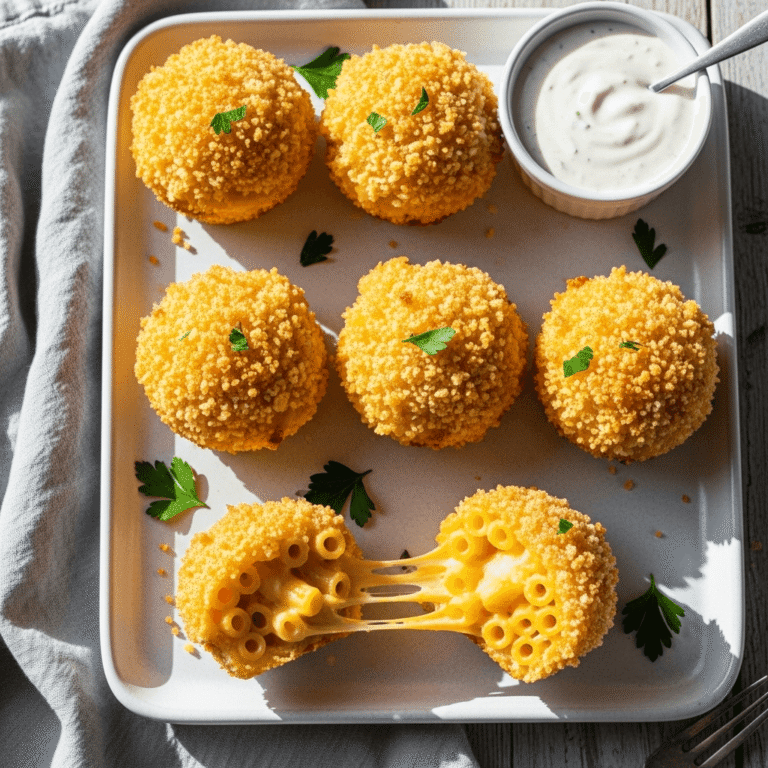
Arancini (pronounced ah-rahn-CHEE-nee) are traditional Italian rice balls that are stuffed with cheese, coated in crispy breadcrumbs, and deep-fried to golden perfection. The name literally means “little oranges” in Italian, referring to their round shape and golden color that resembles small oranges. These savory treats are typically made with leftover risotto mixed with eggs and cheese, formed into balls around a mozzarella center, then breaded and fried until irresistibly crispy.
Arancini are incredibly versatile and can be served as an appetizer at elegant dinner parties, a satisfying snack for casual gatherings, or even as a main course alongside a fresh salad. They’re perfect for game day spreads, potlucks, holiday entertaining, or whenever you want to impress your guests with something special. The beautiful contrast between the crunchy exterior and the creamy, cheesy interior makes every bite an experience worth savoring.
History / Background
Arancini have a rich history dating back to 10th century Sicily when the island was under Arab rule. The Arabs introduced rice cultivation to Sicily and brought with them the technique of shaping and frying rice. The original arancini were simpler than today’s versions—just seasoned rice formed into balls and fried as a portable meal for travelers and workers.
The classic arancini we know today evolved in Sicily over centuries, with different regions developing their own variations. In eastern Sicily, particularly around Catania, arancini are traditionally cone-shaped and often called “arancine” (the feminine form). In western Sicily, around Palermo, they’re round like oranges and called “arancini” (masculine). This linguistic debate about gender has sparked friendly rivalry between Sicilian cities for generations!
The filling traditionally includes a meat ragù with peas, but modern variations have expanded to include countless combinations—from simple cheese to seafood, vegetables, and even sweet versions. Arancini became particularly popular as a way to use leftover risotto, transforming yesterday’s dinner into today’s delicious snack. They’re traditionally eaten on December 13th for the feast of Saint Lucia, but Sicilians enjoy them year-round from street vendors, cafes, and home kitchens.
Today, arancini have traveled far beyond Sicily and can be found in Italian restaurants and home kitchens worldwide. They represent the beautiful Italian principle of “cucina povera”—peasant cooking that transforms simple, humble ingredients into something absolutely extraordinary.
Why You’ll Love This Recipe
This homemade arancini recipe brings authentic Italian flavor right to your kitchen, and you’ll be amazed at how something so impressive can be surprisingly approachable for home cooks. While arancini might seem intimidating at first glance, this recipe breaks down every step clearly, making it totally achievable even if you’ve never made them before.
Here’s why you’ll fall in love with this recipe:
- Restaurant-quality results at home – Achieve that perfect golden crust and creamy center that rivals any Italian trattoria
- Great for meal prep and batch cooking – Make a large batch and freeze them for easy entertaining or quick snacks anytime
- Budget-friendly – Uses affordable ingredients and is an excellent way to transform leftover risotto into something special
- Crowd-pleasing appetizer – Everyone loves these crispy, cheesy bites—perfect for parties, potlucks, or game day
- Customizable fillings – Easy to adapt with your favorite ingredients, from classic mozzarella to creative variations
- Impressive but approachable – Looks fancy enough to wow guests but straightforward enough for weeknight cooking
- Freezer-friendly – Prepare ahead and fry from frozen for last-minute entertaining
- Kid-approved – The crispy coating and gooey cheese make these irresistible to even picky eaters
Ingredient Notes
Understanding your ingredients is key to making perfect arancini. Here’s what you’ll need and why each component matters:
Arborio Rice – This short-grain Italian rice is essential for authentic arancini because it’s high in starch, which creates that creamy texture and helps the rice balls hold together. Carnaroli rice is an excellent alternative. Regular long-grain rice won’t work as well because it doesn’t have the same starchy, sticky quality.
Chicken or Vegetable Broth – Provides flavor for cooking the rice. Homemade or quality store-bought both work beautifully. You can substitute with water, but broth adds much more depth.
Parmesan Cheese – Freshly grated Parmigiano-Reggiano adds savory, nutty flavor throughout the rice. Don’t use the pre-grated kind from a can—freshly grated makes a noticeable difference in taste and texture.
Mozzarella Cheese – The star of the filling! Use whole milk mozzarella cut into small cubes. Fresh mozzarella works but can be watery, so pat it very dry. Low-moisture mozzarella is actually ideal for arancini.
Eggs – Used both in the risotto mixture to bind everything together and in the breading station. They help the breadcrumbs adhere and give structure to the rice balls.
Breadcrumbs – Plain or Italian-seasoned breadcrumbs both work. Panko breadcrumbs create an extra crispy coating if you prefer more crunch. For a golden color, you can toast plain breadcrumbs lightly before using.
Butter and Olive Oil – Butter adds richness to the risotto, while olive oil is used for sautéing. The combination creates better flavor than using just one.
Onion and Garlic – Aromatics that build the flavor foundation. White or yellow onion works best, and fresh garlic is essential.
White Wine (optional) – Adds acidity and depth to the risotto. You can substitute with additional broth and a splash of lemon juice if you prefer to skip the wine.
Saffron (optional) – Traditional in Sicilian arancini, it adds a beautiful golden color and subtle earthy flavor. It’s pricey but a little goes a long way. You can omit it without affecting the structure.
Oil for Frying – Vegetable oil, canola oil, or peanut oil all work well for deep frying. You need an oil with a high smoke point that can reach 350°F without burning.
Equipment Needed
Having the right tools makes the arancini-making process much smoother. Here’s what you’ll need:
- Large heavy-bottomed saucepan or Dutch oven – For making the risotto and maintaining even heat
- Wooden spoon or silicone spatula – For stirring the risotto constantly
- Large mixing bowl – For cooling and working with the rice mixture
- Small sharp knife – For cubing the mozzarella cheese
- Three shallow bowls or plates – For the breading station (flour, egg wash, breadcrumbs)
- Baking sheet lined with parchment paper – For holding the formed arancini before frying
- Deep heavy pot, Dutch oven, or deep fryer – For frying the arancini
- Deep-fry or candy thermometer – Essential for monitoring oil temperature
- Spider strainer or slotted spoon – For safely removing arancini from hot oil
- Paper towel-lined plate – For draining excess oil after frying
- Measuring cups and spoons – For accurate ingredient measurements
- Cheese grater – For freshly grating Parmesan

Golden Crispy Arancini
Golden, crispy Italian rice balls filled with melty mozzarella cheese. These authentic Sicilian arancini feature creamy saffron risotto coated in crunchy breadcrumbs and fried to perfection. Perfect as an appetizer, snack, or party food that everyone will love!
- Total Time: 3 hours 15 minutes
- Yield: 20-24 arancini 1x
Ingredients
For the Risotto:
- 2 cups Arborio rice
- 4 cups chicken or vegetable broth (warmed)
- 1 cup dry white wine (optional, can use additional broth)
- 1 medium yellow onion, finely diced
- 3 cloves garlic, minced
- 3 tablespoons butter
- 2 tablespoons olive oil
- 1 cup freshly grated Parmesan cheese
- 2 large eggs, beaten
- Pinch of saffron threads (optional)
- 1 teaspoon salt
- ½ teaspoon black pepper
For the Filling:
- 8 ounces low-moisture mozzarella cheese, cut into ½-inch cubes
For Breading:
- 1 cup all-purpose flour
- 3 large eggs, beaten with 2 tablespoons water
- 2 cups Italian breadcrumbs (or panko for extra crunch)
- Vegetable oil for deep frying (about 2 quarts)
For Serving:
- Marinara sauce, warmed
- Fresh basil leaves
- Extra grated Parmesan
Instructions
Make the Risotto:
- Prepare your mise en place: Warm the broth in a separate saucepan and keep it hot on low heat. If using saffron, steep it in the warm broth. Have all your ingredients measured and ready—risotto requires constant attention once you start.
- Sauté the aromatics: In a large heavy-bottomed saucepan or Dutch oven, heat the olive oil and 1 tablespoon of butter over medium heat. Add the diced onion and cook for 3-4 minutes until softened and translucent. Add the minced garlic and cook for another 30 seconds until fragrant, being careful not to let it burn.
- Toast the rice: Add the Arborio rice to the pan and stir constantly for 2-3 minutes. The rice should become slightly translucent around the edges and smell slightly nutty. This toasting step is crucial for flavor development and helps the rice absorb the liquid better.
- Add the wine: If using wine, pour it in now and stir constantly until it’s almost completely absorbed by the rice. The alcohol will cook off, leaving behind wonderful flavor and acidity.
- Cook the risotto: Begin adding the warm broth one ladle at a time (about ½ cup), stirring constantly. Wait until each addition is almost completely absorbed before adding the next ladle of broth. This process takes patience—about 18-22 minutes total. The risotto is done when the rice is tender but still has a slight bite (al dente) and the mixture is creamy.
- Finish the risotto: Remove from heat and immediately stir in the remaining 2 tablespoons of butter, the grated Parmesan cheese, salt, and pepper. Stir vigorously for a minute to incorporate everything and create a creamy texture. Let the risotto cool for about 10 minutes, then stir in the 2 beaten eggs. The eggs will help bind the arancini together.
- Chill the risotto: Spread the risotto mixture onto a large baking sheet to cool more quickly, or transfer to a large bowl. Cover and refrigerate for at least 2 hours or overnight. Cold risotto is much easier to shape and will hold together better.
Form and Bread the Arancini:
- Set up your breading station: Place the flour in one shallow bowl, the beaten eggs with water in a second bowl, and the breadcrumbs in a third bowl. Line a baking sheet with parchment paper for the formed arancini.
- Shape the rice balls: With slightly damp hands (this prevents sticking), scoop about 2-3 tablespoons of cold risotto into your palm. Flatten it slightly, place a cube of mozzarella in the center, then fold the rice around the cheese and roll into a smooth ball about the size of a golf ball. Make sure the cheese is completely enclosed with no holes. Place on the prepared baking sheet and repeat with remaining rice and cheese.
- Bread the arancini: Working with one arancini at a time, roll it first in flour (shaking off excess), then dip in the egg wash (letting excess drip off), and finally coat thoroughly in breadcrumbs, pressing gently to adhere. Place back on the baking sheet. Repeat with all arancini. For an extra crispy coating, you can double-bread by dipping in egg and breadcrumbs a second time.
Fry the Arancini:
- Heat the oil: In a deep heavy pot or Dutch oven, heat about 3-4 inches of vegetable oil to 350°F (175°C). Use a deep-fry thermometer to monitor the temperature—this is crucial for perfectly fried arancini. If the oil is too hot, they’ll burn on the outside before heating through; too cool, and they’ll be greasy.
- Fry in batches: Carefully lower 3-4 arancini into the hot oil using a spider strainer or slotted spoon. Don’t overcrowd the pot, as this will lower the oil temperature. Fry for 4-5 minutes, turning occasionally with the strainer, until deep golden brown on all sides. The interior should be heated through and the cheese melted.
- Drain and repeat: Remove the fried arancini to a paper towel-lined plate to drain excess oil. Let the oil return to 350°F between batches. Repeat until all arancini are fried.
- Serve immediately: Serve the hot arancini with warm marinara sauce for dipping, garnished with fresh basil and extra Parmesan if desired. They’re best enjoyed within 20-30 minutes of frying while still hot and crispy.
Notes
- Make-ahead tip: You can form and bread the arancini up to 24 hours in advance. Keep them refrigerated on a baking sheet covered with plastic wrap until ready to fry.
- Freezing instructions: Freeze uncooked, breaded arancini on a baking sheet until solid, then transfer to a freezer bag for up to 3 months. Fry directly from frozen, adding 1-2 extra minutes to the cooking time.
- Oil temperature is critical: If you don’t have a thermometer, test the oil by dropping in a small piece of bread—it should sizzle immediately and turn golden in about 60 seconds at the right temperature.
- Size matters: Keep your arancini uniform in size so they cook evenly. Golf ball size is ideal—large enough to be satisfying but small enough to cook through properly.
- Rice texture: The risotto should be slightly on the firm side for arancini—you want it creamy but not soupy. If your leftover risotto is too loose, you can cook it a bit longer to evaporate excess moisture before chilling.
- Prep Time: 30 minutes (plus 2 hours chilling time)
- Cook Time: 45 minutes
- Category: Appetizer
- Method: Stovetop
- Cuisine: Italian
- Diet: Vegetarian
Nutrition
- Serving Size: 1 arancini
- Calories: 185
- Sugar: 2g
- Sodium: 280mg
- Fat: 9g
- Saturated Fat: 3g
- Unsaturated Fat: 5g
- Trans Fat: 0g
- Carbohydrates: 18g
- Fiber: 8g
- Protein: 7g
- Cholesterol: 45mg
Tips & Variations
Flavor Variations:
- Classic Ragù Arancini: Add cooked ground beef or Italian sausage with tomato sauce to the center along with the mozzarella for the traditional Sicilian style
- Mushroom & Truffle: Mix sautéed mushrooms into the risotto and add a drizzle of truffle oil for an earthy, luxurious version
- Spinach & Ricotta: Fold cooked spinach into the rice and use a mixture of ricotta and mozzarella for the filling
- Prosciutto & Peas: Add diced prosciutto and frozen peas (thawed) to the cooled risotto before forming
- Spicy Arancini: Mix red pepper flakes into the risotto and use pepper jack cheese for the filling
Dietary Modifications:
- Gluten-Free: Use gluten-free breadcrumbs and substitute cornstarch for the all-purpose flour in the breading station
- Baked Version: While not traditional, you can bake arancini at 400°F for 25-30 minutes, turning halfway through and spraying with cooking oil for crispiness
- Vegetarian/Vegan: Use vegetable broth and substitute nutritional yeast for Parmesan. For vegan arancini, use vegan cheese and flax eggs
Size Options:
- Mini Arancini: Make bite-sized balls (about 1 tablespoon of rice) for cocktail parties—they’ll fry in just 2-3 minutes
- Stuffed Meal Size: Form larger arancini (about ½ cup rice) for a main course portion, increasing frying time to 6-8 minutes
Pro Chef Tips
Perfect Risotto Texture: The key to great arancini starts with properly cooked risotto. It should be creamy and slightly firm, not mushy or soupy. When you spread it on the baking sheet to cool, it should hold its shape rather than spread out completely. If your risotto is too loose, return it to the heat and cook for a few more minutes to evaporate excess liquid.
Cold is Essential: Never try to form arancini with warm or room-temperature rice—it simply won’t hold together and will fall apart during frying. The overnight chill time allows the starches to set and makes forming the balls exponentially easier. Professional Italian cooks often make risotto specifically for arancini the day before.
Oil Temperature Mastery: Invest in a good deep-fry thermometer and monitor your oil temperature constantly. At 350°F, the arancini will develop a crispy, golden crust while the interior heats through and the cheese melts perfectly. Too hot (above 375°F) and the exterior burns before the center warms; too cool (below 325°F) and they absorb too much oil and become greasy. Between batches, let the oil return to temperature.
The Two-Hand Method: When forming arancini, keep one hand for handling the rice (this will get messy) and the other for picking up cheese cubes and working with the breading station. This prevents both hands from becoming completely coated in rice and breadcrumbs.
Double-Breading for Extra Crunch: For an especially crispy exterior that rivals the best Italian street vendors, do a double bread: after the first coat of egg and breadcrumbs, dip again in egg and breadcrumbs. This creates a thicker, crunchier shell that stays crispy longer.
Avoid Cheese Blowouts: Make absolutely sure your mozzarella cubes are completely sealed inside the rice with no gaps or thin spots. Even a tiny hole can cause the cheese to burst out during frying, which is disappointing after all your hard work. Pat and press the rice firmly around the cheese.
Common Mistakes to Avoid
Using Rice That’s Too Wet: If your risotto is too liquidy, your arancini will fall apart during frying. The mixture should be thick enough to hold its shape when scooped. Fix this by cooking the risotto a bit longer to reduce excess moisture, or by spreading it out on a baking sheet to allow some evaporation as it cools.
Not Chilling Long Enough: Trying to rush the process by forming arancini with warm or barely-chilled rice is a recipe for disaster. Warm rice won’t hold together, will be difficult to shape, and will likely fall apart in the hot oil. Plan ahead and give yourself that crucial 2+ hours of refrigeration time, or better yet, make the risotto a day ahead.
Overcrowding the Frying Pot: Adding too many arancini at once causes the oil temperature to drop dramatically, resulting in greasy, soggy rice balls instead of crispy golden ones. Fry in small batches of 3-4 at a time, allowing the oil to return to 350°F between batches.
Skipping the Flour Step: Some people think they can skip straight to the egg wash, but the flour coating is essential—it helps the egg adhere to the rice, which in turn helps the breadcrumbs stick. Without it, you’ll end up with bare patches and uneven coating.
Using Fresh Mozzarella Without Draining: Fresh mozzarella is packed with moisture that can make your arancini soggy from the inside out and cause steam explosions during frying. If you want to use fresh mozzarella, cube it and drain on paper towels for at least 30 minutes, or better yet, use low-moisture mozzarella.
Storage & Meal Prep
Refrigerator Storage: Cooked arancini can be stored in an airtight container in the refrigerator for up to 3 days. However, they’re really best enjoyed fresh, as the coating tends to soften over time. To refresh them, reheat in a 375°F oven for 10-15 minutes until crispy and heated through. Avoid microwaving, as this will make them soggy.
Reheating Instructions: For best results, reheat leftover arancini in the oven or air fryer rather than the microwave. Place them on a baking sheet and heat at 375°F for 12-15 minutes until heated through and the exterior crisps up again. In an air fryer, heat at 350°F for 6-8 minutes, shaking the basket halfway through.
Prep-Ahead Tips: The beauty of arancini is that they’re perfect for advance preparation. You can make the risotto up to 2 days ahead and keep it refrigerated. Once formed and breaded, the arancini can sit in the refrigerator for up to 24 hours before frying, making them ideal for party planning.
Leftover Risotto: This recipe is actually a perfect use for leftover risotto from another meal. If you’re using day-old risotto, you may need to add an extra beaten egg to help bind it together, as it tends to dry out in the refrigerator.
Make-Ahead & Freezer Notes
Freezing Uncooked Arancini: This is the absolute best make-ahead method for arancini. Once formed and breaded, place the arancini on a parchment-lined baking sheet and freeze until solid (about 2-3 hours). Then transfer them to a freezer-safe bag or container, removing as much air as possible. They’ll keep beautifully for up to 3 months.
Frying From Frozen: You can fry arancini directly from frozen—no need to thaw! Just add 1-2 extra minutes to the frying time and make sure the oil temperature is steady at 350°F. The frozen arancini will cool the oil more than room-temperature ones, so don’t overcrowd the pot. Fry for 5-6 minutes total until deep golden and heated through.
Freezing Cooked Arancini: While you can freeze already-fried arancini, they won’t be quite as crispy when reheated. If you do this, cool them completely, then freeze in a single layer before transferring to a container. Reheat from frozen in a 375°F oven for 20-25 minutes.
Party Prep Strategy: For stress-free entertaining, make your arancini up to a week ahead and freeze them. On party day, you can fry them fresh, and your guests will enjoy them at peak crispiness. Start frying about an hour before guests arrive, working in batches, and keep the finished ones warm in a 200°F oven.
Serving Suggestions
Arancini are incredibly versatile and can be served in many different ways depending on the occasion:
Classic Italian Style: Serve your golden arancini as an antipasto (appetizer) with warm marinara sauce or a spicy arrabbiata sauce for dipping. Arrange them on a platter lined with fresh basil leaves and provide small appetizer plates and napkins. This is perfect for dinner parties or Italian-themed gatherings.
Aperitivo Hour: Create an Italian happy hour spread by serving arancini alongside other antipasti like marinated olives, sliced prosciutto, fresh mozzarella with tomatoes, bruschetta, and Italian cheeses. Pour Prosecco or Aperol Spritz for an authentic aperitivo experience.
Main Course: For a more substantial meal, serve 3-4 arancini per person as a main course alongside a crisp Italian salad (arugula with shaved Parmesan and lemon vinaigrette) and crusty bread. This makes a satisfying vegetarian dinner.
Game Day Spread: Arancini are perfect party food for watching sports. Serve them hot from the fryer on a large platter with multiple dipping sauces—marinara, spicy aioli, pesto mayo, or even a creamy truffle dip. They’re substantial enough to satisfy hungry fans.
Complementary Sides: Pair arancini with roasted vegetables, sautéed broccoli rabe, a fresh caprese salad, Caesar salad, or minestrone soup. The crispy, rich arancini contrast beautifully with fresh, light sides.
Sauce Options: While marinara is traditional, try serving arancini with different dipping sauces for variety: creamy pesto, romesco sauce, spicy aioli, garlic butter, or even a simple herb-infused olive oil for dipping.
FAQs Section
Can I use leftover risotto to make arancini? Absolutely! Arancini are traditionally made with leftover risotto, making them a brilliant way to repurpose yesterday’s dinner. If your leftover risotto seems dry, mix in an extra beaten egg to help bind it. If it’s too loose, you can cook it briefly on the stovetop to reduce excess moisture before chilling and forming into balls.
Do I have to deep fry arancini, or can I bake them? While deep frying creates the most authentic crispy texture, you can bake arancini for a lighter version. Place breaded arancini on a parchment-lined baking sheet, spray generously with cooking oil, and bake at 400°F for 25-30 minutes, turning them halfway through and spraying again. They won’t be quite as crispy as fried versions, but they’re still delicious and much lower in fat.
Why did my arancini fall apart while frying? This usually happens because the rice wasn’t cold enough, the mixture was too wet, or there wasn’t enough egg to bind everything together. Make sure your risotto is thoroughly chilled (at least 2 hours, preferably overnight), that it’s thick rather than soupy, and that you’ve mixed in beaten eggs while it’s still slightly warm so they distribute evenly throughout the rice.
Can I make arancini with regular long-grain rice? It’s not recommended. Arborio or other short-grain risotto rice is high in starch, which creates the creamy texture and helps the rice balls hold together. Long-grain rice doesn’t have enough starch to bind properly, and your arancini will likely fall apart. If you can’t find Arborio, look for Carnaroli or other short-grain Italian rice varieties.
How do I know when the oil is hot enough for frying? The best method is using a deep-fry or candy thermometer to monitor the oil temperature, aiming for 350°F (175°C). If you don’t have a thermometer, drop a small cube of bread into the oil—if it sizzles immediately and turns golden brown in about 60 seconds, the oil is ready. If the bread browns too quickly, the oil is too hot; if it doesn’t sizzle much, it’s not hot enough.
What’s the best type of mozzarella to use for the filling? Low-moisture mozzarella works best for arancini because it has less water content, which means less risk of steam explosions during frying and a better melted texture. If you prefer fresh mozzarella, cut it into cubes and drain on paper towels for at least 30 minutes before using. Pat it very dry to remove as much moisture as possible.
How can I prevent the cheese from leaking out during frying? Make sure the mozzarella cubes are completely sealed inside the rice with no thin spots or holes. Use damp hands when forming the balls and press the rice firmly around the cheese. Check each arancini after forming—if you see any cheese peeking through, add more rice to cover it completely. The double-breading technique also helps create a stronger seal.
Conclusion
There’s truly nothing like the satisfaction of biting into a homemade arancini that you’ve crafted yourself—that golden, crackling exterior giving way to creamy risotto and a molten mozzarella center that stretches as you pull it apart. While these Italian rice balls might seem intimidating at first, this recipe breaks down every step to make them totally achievable in your home kitchen. Yes, they take a bit of time and patience, but the results are absolutely worth it, and your friends and family will be incredibly impressed.
The beauty of arancini lies not just in their delicious taste, but in their versatility and make-ahead convenience. Whether you’re planning an elegant dinner party, need a show-stopping appetizer, or just want to treat yourself to a taste of Sicily, these golden treasures deliver every time. And once you’ve mastered the basic technique, you can experiment with endless filling combinations to make them your own.
So gather your ingredients, set aside a leisurely afternoon, and treat yourself to the magic of making authentic Italian arancini at home. Your kitchen will smell amazing, your taste buds will thank you, and you’ll have a new skill to show off at your next gathering. Don’t forget to snap a photo of your beautiful golden arancini and pin it to your Pinterest boards—and if you make this recipe, I’d love to hear how it turned out! Leave a comment below with your experience, any creative variations you tried, or questions you have. Happy cooking, and buon appetito!