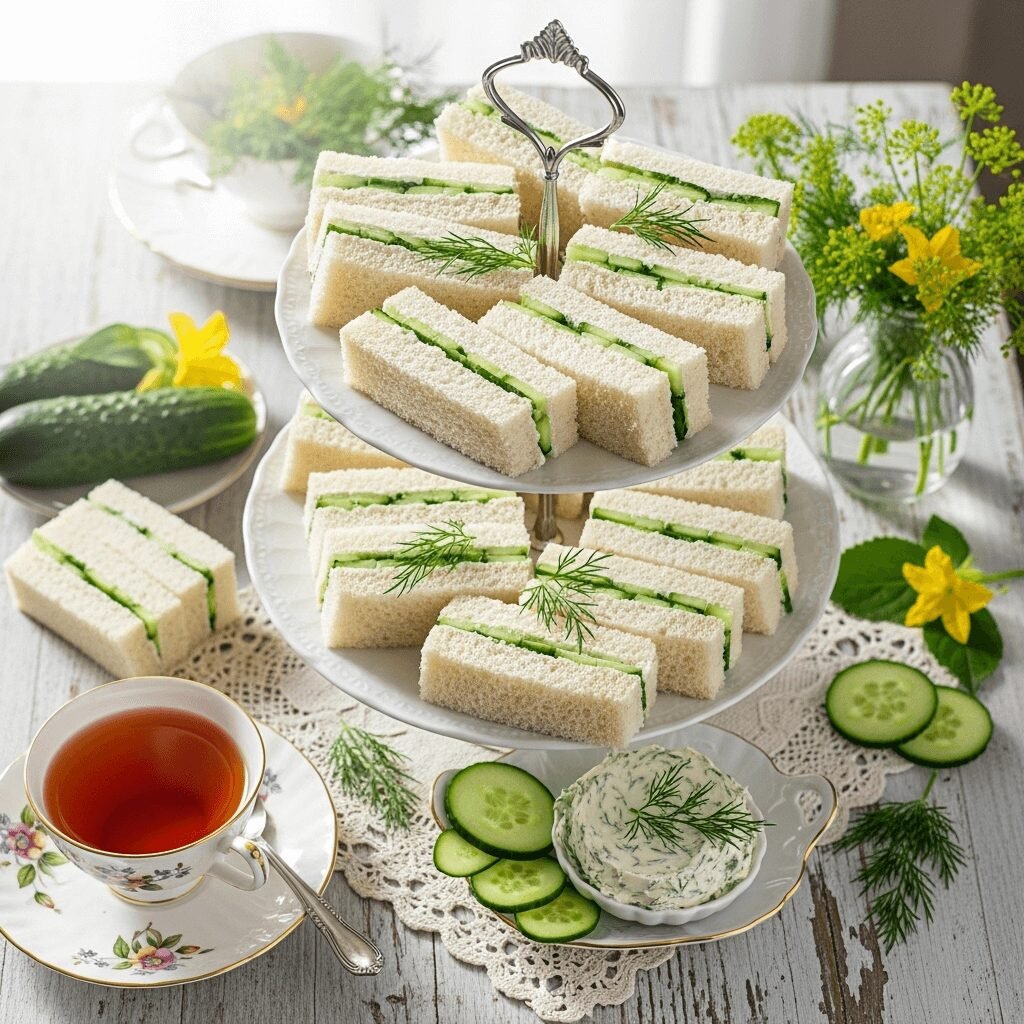
Classic Cucumber Sandwiches – Light, Elegant, and Perfectly Refreshing!

There’s something wonderfully nostalgic and effortlessly elegant about cucumber sandwiches. These delicate, crustless finger sandwiches are the epitome of simple sophistication—thin slices of cool, crisp cucumber nestled between soft white bread spread with creamy, herb-infused butter. They’re light, refreshing, and incredibly addictive despite their simplicity.
Perfect for afternoon tea parties, baby showers, bridal showers, garden parties, or any gathering where you want something elegant yet approachable, these classic tea sandwiches are a crowd-pleaser that never goes out of style. I love making these easy cucumber tea sandwiches for spring and summer entertaining because they’re incredibly quick to prepare, look beautiful on a serving platter, and offer a refreshing contrast to heavier party foods.
What makes this recipe special is that while it appears fancy and restaurant-worthy, it requires absolutely no cooking skills beyond spreading butter and slicing bread! In just 15 minutes, you can create a platter of stunning finger sandwiches that will have your guests thinking you spent hours in the kitchen. They’re light enough that people can enjoy several without feeling stuffed, making them ideal for events where you’ll be serving multiple appetizers or courses.
Whether you’re hosting a proper afternoon tea, planning a sophisticated brunch, or simply want a light lunch on a hot summer day, these refreshing cucumber sandwiches deliver elegance in every bite. The combination of buttery bread, cool cucumber, and bright herbs creates a flavor profile that’s both subtle and satisfying—proof that sometimes the simplest recipes are truly the best.
History / Background
The cucumber sandwich holds a special place in British culinary history and has become synonymous with Victorian-era afternoon tea culture. While cucumbers have been cultivated for thousands of years across Asia and the Mediterranean, the cucumber sandwich as we know it today emerged in England during the 1800s.
During the Victorian era, afternoon tea became a fashionable social ritual among the British upper classes, popularized by Anna, the Duchess of Bedford, around 1840. She began requesting light sandwiches and tea in the afternoon to ward off hunger between lunch and the late dinner hour (which often didn’t occur until 8 or 9 PM). This practice quickly caught on among aristocratic circles and eventually spread throughout British society.
Cucumber sandwiches became the quintessential afternoon tea offering for several interesting reasons. First, cucumbers were expensive to grow in England’s cooler climate, requiring heated greenhouses—making them a luxury item that signified wealth and status. Serving cucumber sandwiches was essentially a way of showing off your prosperity and refined taste.
Second, the delicate nature of these sandwiches appealed to Victorian sensibilities about proper etiquette and refined dining. The sandwiches were small, dainty, and could be eaten without making a mess—perfect for ladies in elaborate dresses engaging in polite conversation. The white bread (crusts removed, of course) with its soft texture and mild flavor provided the perfect vehicle for showcasing the fresh, clean taste of cucumber.
The combination also had practical appeal: cucumbers were cooling and refreshing, making them perfect for summer garden parties and warm-weather entertaining. The light nature of the sandwich meant it wouldn’t spoil appetites before dinner or sit too heavily during afternoon socializing.
Oscar Wilde famously satirized the upper-class obsession with cucumber sandwiches in his 1895 play “The Importance of Being Earnest,” where the character Algernon devours all the cucumber sandwiches meant for his aunt’s tea party, establishing these sandwiches as an iconic symbol of British propriety and social customs.
Today, cucumber sandwiches have transcended their aristocratic origins and are beloved worldwide, particularly in the United States where they’re a staple at Southern tea parties, baby showers, and elegant brunches. While the basic concept remains unchanged, modern variations have emerged with different breads, spreads, and creative additions—but the classic version still reigns supreme for its pure, simple elegance.
Why You’ll Love This Recipe
These easy cucumber sandwiches are about to become your secret weapon for stress-free entertaining! They’re one of those rare recipes that look impressive but require minimal effort, making them perfect for busy hosts who want maximum impact.
Here’s why this recipe will become your go-to for elegant entertaining:
- Ridiculously Quick – From start to finish, you can have a beautiful platter ready in just 15-20 minutes with no cooking required
- No-Cook Convenience – Perfect for hot summer days when you don’t want to turn on the oven or when you need to prepare food without a full kitchen
- Budget-Friendly – Uses inexpensive, readily available ingredients that won’t break the bank, even when feeding a crowd
- Make-Ahead Friendly – Prepare components in advance and assemble quickly before serving, saving precious party-day time
- Universally Appealing – The mild, refreshing flavor profile pleases almost everyone, including picky eaters and children
- Elegant Presentation – Looks sophisticated and tea-party worthy with minimal styling effort
- Light and Refreshing – Won’t weigh guests down, making them perfect for warm weather or as part of a larger spread
- Easily Customizable – Simple to adapt with different herbs, spreads, or bread choices to match your personal preferences
- Vegetarian-Friendly – Naturally vegetarian and can easily be made vegan with simple substitutions
- Perfect Portion Control – Small finger sandwiches allow guests to enjoy just the right amount without overindulging
The beauty of this recipe lies in its simplicity. You’re not trying to mask mediocre ingredients with heavy sauces or complicated techniques—you’re showcasing fresh cucumbers at their best with just enough support from quality bread and butter. This minimalist approach means each ingredient matters, but it also means there’s less that can go wrong. Even if you’ve never made tea sandwiches before, you’ll nail these on your first try!
Ingredient Notes
The secret to exceptional cucumber tea sandwiches is using quality ingredients. Since this recipe is so simple, each component really shines through. Let’s talk about what you’ll need:
English Cucumbers – Also called hothouse or seedless cucumbers, these are your best choice for sandwiches. They have thinner skins (often unwaxed), smaller seeds, and a mild, less bitter flavor than regular cucumbers. The longer, slender shape also makes them easier to slice evenly. If you can only find regular cucumbers, that’s okay—just peel them and scoop out the seeds with a spoon before slicing. One large English cucumber yields enough for about 12-16 sandwiches.
White Sandwich Bread – Traditional cucumber sandwiches use soft white bread because its mild flavor doesn’t compete with the delicate cucumber. Look for thin-sliced bread if possible, which creates more elegant sandwiches. The bread should be fresh and soft, not dried out. While whole wheat can be used, it has a stronger flavor that changes the classic profile. For best results, slightly firm bread works better than ultra-soft bread, which can get soggy.
Butter – Use real, high-quality butter at room temperature for easy spreading. European-style butter with higher fat content creates an even richer flavor. The butter serves multiple purposes: it adds richness, creates a moisture barrier that prevents the bread from getting soggy, and helps the cucumber slices adhere. Don’t use margarine or spreads—they don’t provide the same flavor or protection. Salted butter works fine, but if using unsalted, add a pinch of salt to your butter mixture.
Cream Cheese – Many modern versions blend cream cheese with butter for extra richness and tang. This creates a more substantial spread that holds the sandwiches together beautifully. Use full-fat cream cheese at room temperature so it blends smoothly. Light or whipped cream cheese can make the spread too thin.
Fresh Herbs – Dill is the most traditional choice, offering a bright, slightly anise-like flavor that complements cucumber perfectly. Fresh chives add mild onion flavor, while mint provides a cool, refreshing note. Parsley works for a milder, more neutral herb presence. Always use fresh herbs, not dried—the flavor is incomparably better and the visual appeal is worth it.
Lemon Juice – Just a squeeze brightens everything and prevents the spread from tasting too heavy. Fresh lemon juice tastes better than bottled. The acidity also helps prevent the cucumbers from releasing too much moisture.
Salt and White Pepper – Essential for bringing out the flavors. White pepper is traditional because it doesn’t leave black specks in the elegant white spread, but black pepper works fine if that’s what you have. Fine sea salt or kosher salt both work well.
Optional: Mayonnaise – Some recipes include a small amount of mayo for extra creaminess and tang. This is more common in American versions than traditional British recipes.
Equipment Needed
You won’t need any fancy equipment for these simple cucumber sandwiches! Here’s everything you’ll need:
- Sharp Knife – Essential for clean cucumber slices and neat bread trimming; a serrated bread knife works best for crusts
- Cutting Board – For slicing cucumbers and trimming bread
- Small Mixing Bowl – For preparing your herb butter spread
- Spatula or Butter Knife – For spreading the butter mixture smoothly and evenly
- Mandoline Slicer (Optional) – Creates perfectly uniform, paper-thin cucumber slices, but a sharp knife works fine too
- Paper Towels or Clean Kitchen Towels – For patting cucumbers dry (very important!)
- Measuring Spoons – For accurate ingredient portions
- Small Spoon or Fork – For mixing your butter spread
- Serving Platter – For elegant presentation
Optional but helpful:
- Sandwich Cutter – Creates uniform shapes (triangles, squares, or rectangles)
- Pastry Brush – For applying butter to bread edges if making open-faced versions
- Damp Kitchen Towel – For covering assembled sandwiches to keep them fresh
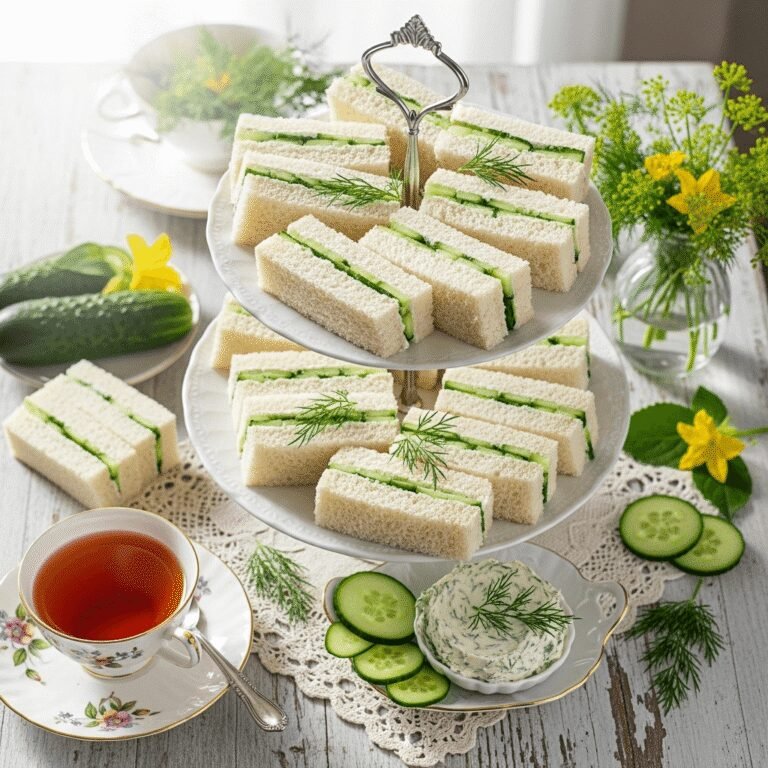
Classic Cucumber Sandwiches
These classic cucumber sandwiches feature paper-thin slices of crisp cucumber layered between soft white bread spread with herbed butter. Perfect for afternoon tea, bridal showers, or elegant entertaining, these delicate finger sandwiches are refreshing, light, and beautifully simple. Ready in just 15 minutes with no cooking required!
- Total Time: 15 minutes
- Yield: 12 finger sandwiches (24 pieces) 1x
Ingredients
For the Herb Butter Spread:
- 4 tablespoons (½ stick) unsalted butter, softened to room temperature
- 2 oz cream cheese, softened to room temperature
- 1 tablespoon fresh dill, finely chopped (or 2 teaspoons fresh chives)
- 1 teaspoon fresh lemon juice
- ¼ teaspoon salt
- ⅛ teaspoon white pepper (or black pepper)
- Optional: 1 teaspoon mayonnaise for extra creaminess
For the Sandwiches:
- 1 large English cucumber (about 12 inches long)
- 12 slices thin white sandwich bread
- Fresh dill sprigs for garnish (optional)
- Extra salt for sprinkling on cucumbers
Instructions
- Prepare the Herb Butter: In a small mixing bowl, combine the softened butter, cream cheese, chopped fresh dill, lemon juice, salt, and white pepper. Using a fork or small spatula, mix vigorously until completely smooth and well-blended with no lumps remaining. The mixture should be light, fluffy, and easy to spread. Taste and adjust seasonings if needed. Set aside at room temperature while you prepare the cucumbers.
- Slice the Cucumbers: Wash your English cucumber thoroughly but do not peel it (the skin adds color, texture, and nutrients). Using a sharp knife or mandoline slicer, cut the cucumber into very thin slices—about ⅛ inch thick or thinner. You want them thin enough to be tender but thick enough to provide some crunch. Aim for uniform thickness so each bite is consistent.
- Remove Excess Moisture: This step is CRUCIAL for preventing soggy sandwiches! Lay your cucumber slices in a single layer on paper towels or a clean kitchen towel. Sprinkle very lightly with salt (this draws out moisture). Let them sit for 5-10 minutes. Pat the tops thoroughly with another paper towel to absorb any moisture that’s been released. This extra step makes all the difference between crispy and soggy sandwiches!
- Prepare the Bread: While cucumbers are draining, lay out your bread slices on a clean work surface. If your bread seems slightly dry or stale, you can skip this, but if it’s very fresh and soft, you might want to let it sit uncovered for 5-10 minutes to firm up slightly, making it easier to work with.
- Spread the Herb Butter: Take your herb butter mixture and spread it evenly across each slice of bread, going all the way to the edges. Use about 1-2 teaspoons per slice—you want a visible layer but not so thick it overwhelms the delicate cucumber flavor. The butter creates a moisture barrier that protects the bread from getting soggy.
- Assemble the Sandwiches: On 6 slices of the buttered bread, arrange cucumber slices in a single, overlapping layer to cover the entire surface. Don’t stack them more than one layer high or the sandwiches will be difficult to cut and eat. Top with the remaining 6 bread slices, buttered side down, pressing gently to help them adhere.
- Trim the Crusts: Using a sharp serrated knife, carefully trim off all four crusts from each sandwich. Use a gentle sawing motion rather than pressing down hard, which can compress the bread. Wipe your knife clean between cuts for the neatest edges.
- Cut into Fingers: Cut each crustless sandwich into 4 rectangular fingers (or triangles if you prefer). You can also cut them into small squares for a different presentation. Arrange on a serving platter with the cut sides facing up to show the beautiful layers.
- Garnish and Serve: If desired, garnish your platter with small sprigs of fresh dill for a beautiful presentation. Serve immediately, or cover with a lightly dampened paper towel and plastic wrap to keep fresh for up to 1-2 hours before serving.
Notes
- Room Temperature Ingredients: Make sure your butter and cream cheese are truly soft—cold spreads will tear the delicate bread.
- Cucumber Thickness: The thinner you can slice your cucumbers, the more elegant and easier to eat your sandwiches will be. A mandoline helps achieve consistent, paper-thin slices.
- Moisture Management: Don’t skip the step of salting and draining the cucumbers—this prevents soggy bread, which is the number one complaint about homemade cucumber sandwiches.
- Bread Freshness: Use bread that’s 1-2 days old if possible—it’s slightly firmer and easier to work with than same-day fresh bread.
- Herb Variations: Feel free to experiment with different herb combinations like dill + mint, or chives + parsley.
- Serving Size: Plan on 3-4 finger sandwiches per person if serving as part of an afternoon tea spread, or 6-8 per person if these are the main offering.
- Prep Time: 15 minutes
- Cook Time: 0 minutes
- Category: Appetizer
- Method: No-Cook Assembly
- Cuisine: British
- Diet: Vegetarian
Nutrition
- Serving Size: 2 finger sandwiches
- Calories: 145
- Sugar: 2g
- Sodium: 245mg
- Fat: 8g
- Saturated Fat: 5g
- Unsaturated Fat: 2g
- Trans Fat: 0g
- Carbohydrates: 15g
- Fiber: 1g
- Protein: 3g
- Cholesterol: 21mg
Tips & Variations
These traditional cucumber sandwiches are wonderfully versatile! Here are some delicious ways to customize them:
Cream Cheese Dominant Version: Use 4 oz cream cheese and only 2 tablespoons butter for a tangier, more spreadable filling that’s especially popular in American versions.
English Garden Style: Add very thinly sliced radishes alongside the cucumbers for a peppery bite and beautiful pink color contrast.
Smoked Salmon Upgrade: Add a thin layer of smoked salmon between the cucumber and bread for an elegant protein boost that turns these into more substantial fare.
Watercress Addition: Layer fresh watercress leaves with the cucumbers for a traditional British touch with a slightly peppery flavor.
Everything Bagel Twist: Mix everything bagel seasoning into your butter spread and use very thin pumpernickel or rye bread for a modern, flavorful variation.
Mint and Lemon: Replace dill with fresh mint and add extra lemon zest to the butter for a bright, summery flavor profile perfect for garden parties.
Vegan Version: Use vegan butter and vegan cream cheese (or hummus) for a plant-based option that’s equally delicious.
Open-Faced Presentation: Skip the top slice of bread and serve as open-faced canapés topped with a small dill sprig for an elegant cocktail party presentation.
Mediterranean Style: Mix in a bit of crumbled feta cheese with your spread and use Greek herbs like oregano and parsley.
Spicy Kick: Add a tiny pinch of cayenne pepper or wasabi paste to your butter mixture for subtle heat.
Whole Grain Health Boost: Use whole wheat or multigrain bread for added nutrition and fiber—just know it changes the classic delicate flavor profile.
Pro Chef Tips
Want to elevate your elegant cucumber sandwiches from good to absolutely perfect? Here are professional secrets:
Salt Cucumbers in Advance: The absolute best method is to salt your sliced cucumbers and let them drain in a colander for 15-30 minutes, weighted down with a plate. This removes significantly more moisture than just patting them dry, resulting in sandwiches that stay crisp for hours.
Use a Mandoline for Perfect Slices: If you make these often, invest in an inexpensive mandoline slicer. The uniform, paper-thin slices make a huge difference in both appearance and texture. Professional caterers always use mandolines for cucumber sandwiches.
Work with Cold Ingredients: After spreading your butter, refrigerate the bread for 10 minutes before assembling. The cold butter firms up and creates an even better moisture barrier. Your assembled sandwiches will hold together better and stay fresher longer.
The Ribbon Technique: For extra-elegant presentation, use a vegetable peeler to create long, thin cucumber ribbons instead of rounds. Fold these into loose rosettes on the bread for a stunning look that impresses at formal events.
Freeze Your Bread Briefly: If your bread is too soft and squishes when you try to spread butter, pop the slices in the freezer for 2-3 minutes. This firms them up just enough to work with while still remaining soft to eat.
Compound Butter in Advance: Make a large batch of your herb butter, roll it into a log in parchment paper, and freeze. You can slice off perfectly portioned rounds whenever you need to make sandwiches—this is how professional caterers save time.
The Paper Towel Method: After assembling sandwiches, wrap them loosely in barely damp (not wet!) paper towels, then cover with plastic wrap. This keeps them at the perfect moisture level without drying out or getting soggy.
Diagonal Cuts for Elegance: Cut sandwiches diagonally to create triangles rather than rectangles—this traditional presentation looks more elegant and feels more substantial to eat despite being the same amount of food.
Common Mistakes to Avoid
Even with a simple recipe like classic tea sandwiches, a few common pitfalls can affect your results. Here’s what to watch out for:
Using Wet Cucumbers: This is the biggest mistake! Cucumbers are over 95% water. If you don’t remove excess moisture before assembling, you’ll end up with disappointing, soggy sandwiches within an hour. Always salt and drain your cucumbers, then pat them completely dry before using.
Cold Butter Tears the Bread: Nothing ruins delicate white bread faster than trying to spread cold, hard butter across it. Always bring butter and cream cheese to room temperature—leave them out for at least 30-60 minutes before starting. You should be able to easily press your finger into the butter.
Assembling Too Far in Advance: While components can be prepped ahead, assembled sandwiches are best made no more than 2-3 hours before serving, even with proper storage. The longer they sit, the more likely the bread will absorb moisture despite your best prevention efforts.
Cutting with a Dull Knife: A dull knife compresses and tears the bread instead of slicing cleanly through it. Use a sharp serrated bread knife and a gentle sawing motion for clean, professional-looking edges. Wipe the blade clean between cuts.
Skipping the Butter-to-Edge: If you don’t spread your butter all the way to the edges of the bread, moisture from the cucumber can seep into those unprotected corners, creating soggy spots. Every bit of bread should have a butter barrier.
Overloading with Cucumbers: More isn’t better here! A single layer of cucumber slices is perfect. Stacking them makes sandwiches difficult to bite through neatly and can cause the filling to squish out the sides when you cut them.
Using the Wrong Cucumber: Regular garden cucumbers have thick, often waxed skins, large seeds, and more bitter compounds than English cucumbers. If you must use them, definitely peel them and scoop out the seeds—but English cucumbers really do make a noticeable difference.
Storage & Meal Prep
Proper storage is key to keeping your finger sandwiches fresh and appetizing!
Short-Term Storage (1-2 hours before serving): The best method is to arrange sandwiches on a serving platter, cover with a very lightly dampened (not wet) paper towel, then wrap the entire platter snugly with plastic wrap. The slight moisture from the paper towel prevents the bread from drying out without making it soggy. Keep refrigerated until 10-15 minutes before serving.
Longer Storage (up to 6 hours): Place sandwiches in a single layer in an airtight container lined with slightly damp paper towels. Place another layer of damp paper towel on top before sealing. Refrigerate. Check after a few hours and replace paper towels if they’ve dried out completely. These sandwiches are truly best within 4-6 hours of assembly.
What NOT to Do: Don’t store cucumber sandwiches overnight—the bread will inevitably become soggy and unappetizing no matter what precautions you take. Don’t freeze assembled sandwiches as both the bread texture and cucumber quality will be ruined upon thawing.
Leftover Sandwiches: If you have leftovers, they’re still edible the next day but won’t have that perfect fresh texture. Use them as a quick breakfast or snack rather than serving to guests. You can also remove the cucumber, toast the bread, and use it for something else.
Room Temperature Note: While sandwiches should be stored cold, remove them from the refrigerator 10-15 minutes before serving. Cold bread isn’t as flavorful or appealing as bread at cool room temperature.
Make-Ahead & Freezer Notes
Smart advance preparation makes serving cucumber tea sandwiches for a crowd completely manageable!
Best Make-Ahead Strategy (Highly Recommended): Prepare all your components separately up to 24 hours in advance:
- Make herb butter, store in an airtight container, refrigerate (bring to room temp before using)
- Slice cucumbers, salt and drain them, pat dry thoroughly, store in an airtight container with paper towels, refrigerate
- Trim crusts from bread, store in zip-top bags with air removed, refrigerate
Then assemble sandwiches 1-2 hours before your event. This gives you all the convenience of advance prep without any loss of quality.
Herb Butter Freezing: The herb butter spreads beautifully for freezing! Make a large batch, roll it into a log in parchment paper, then wrap in plastic wrap and freeze for up to 3 months. Slice off what you need and thaw in the refrigerator overnight before using.
Bread Preparation: You can trim crusts from bread and freeze the crustless slices in zip-top bags for up to 1 month. Thaw completely at room temperature before using. This is handy if you want to buy bread on sale or prep for a large event.
Assembled Sandwiches: As mentioned before, do NOT freeze assembled cucumber sandwiches. The cucumber releases water when thawed, and the bread becomes unappealingly soggy and mushy. This is one recipe where freezing the finished product simply doesn’t work.
Party Planning Timeline:
- 1 month ahead: Make and freeze herb butter
- 1 day ahead: Thaw butter, prep cucumbers, trim bread crusts
- 2-3 hours ahead: Assemble sandwiches, store properly
- 15 minutes before serving: Remove from refrigerator, arrange on platter
Serving Suggestions
Cucumber sandwiches are incredibly versatile! Here’s how to serve them beautifully:
Classic Afternoon Tea Spread:
- Scones with clotted cream and jam
- Assorted tea sandwiches (cucumber, egg salad, chicken salad)
- Petit fours or small pastries
- Fresh strawberries
- Hot tea (Earl Grey, English Breakfast, or chamomile)
Garden Party or Bridal Shower:
- Cucumber sandwiches as part of a tiered sandwich platter
- Fresh fruit salad or fruit skewers
- Caprese salad skewers
- Lemon bars or macarons
- Sparkling wine, champagne, or iced tea with fresh mint
Light Lunch Plate:
- Cucumber sandwiches (4-6 pieces per person)
- Simple mixed green salad with vinaigrette
- Tomato soup or gazpacho
- Fresh fruit
- Iced tea or lemonade
Cocktail Party Appetizers:
- Cucumber sandwiches arranged elegantly on a tiered stand
- Cheese and charcuterie board
- Stuffed mushrooms
- Shrimp cocktail
- Prosecco, white wine, or cucumber-mint cocktails
Kids’ Tea Party:
- Cucumber sandwiches (kids love the dainty size!)
- PB&J sandwiches cut into shapes
- Cheese and crackers
- Fresh berries
- Juice boxes or pink lemonade
Beverage Pairings:
- Hot teas: Earl Grey, English Breakfast, chamomile, or mint tea
- Cold drinks: Cucumber water, lemonade, iced tea, or Pimm’s Cup
- Wine: Sparkling wine, Sauvignon Blanc, or Pinot Grigio
- Cocktails: Cucumber-gin cocktails, champagne cocktails, or elderflower spritzers
FAQs Section
Q: Why do my cucumber sandwiches always get soggy?
A: Soggy sandwiches happen when cucumber moisture seeps into the bread. The solution is two-fold: First, always salt your sliced cucumbers and let them drain for 5-10 minutes, then pat them completely dry. Second, spread butter all the way to the edges of your bread—this creates a moisture barrier. Follow these steps and your sandwiches will stay crisp for several hours!
Q: Can I make cucumber sandwiches the night before?
A: Unfortunately, no. Even with perfect storage techniques, assembled cucumber sandwiches don’t hold well overnight—the bread will become soggy. However, you CAN prep all the components (herb butter, sliced drained cucumbers, trimmed bread) the night before and store them separately. Then quickly assemble 1-2 hours before serving.
Q: What’s the best bread to use for cucumber sandwiches?
A: Traditional cucumber sandwiches use soft white sandwich bread, which has a mild flavor that doesn’t compete with the delicate cucumber. Thin-sliced white bread is ideal. However, whole wheat, pumpernickel, or even rye can be used for more robust flavor—just know this changes the classic profile. Whatever bread you choose, it should be soft, fresh, and sliceable without crumbling.
Q: Do I have to remove the crusts?
A: While not absolutely required, removing crusts is traditional and creates a more elegant, tea-party-appropriate presentation. Crustless sandwiches are also easier to eat in small bites. If you’re making these for a casual lunch or kids, you can certainly leave the crusts on. The sandwiches will still taste delicious!
Q: Can I use regular cucumbers instead of English cucumbers?
A: Yes, but you’ll need to peel them (the skin is often thick and waxed) and scoop out the seeds with a spoon before slicing. Regular cucumbers also tend to be more bitter and watery than English cucumbers, so you may need to salt them longer. English cucumbers really do make better sandwiches, but regular cucumbers work in a pinch.
Q: How many sandwiches should I plan per person?
A: It depends on the context! For afternoon tea where you’re serving multiple courses, plan 3-4 finger sandwiches per person. If cucumber sandwiches are the main offering at a light lunch, plan 6-8 pieces per person. For a cocktail party with many appetizers, 2-3 pieces per person is sufficient.
Q: What herbs work best in cucumber sandwiches?
A: Fresh dill is the most traditional and pairs beautifully with cucumber. Fresh chives offer mild onion flavor, while fresh mint provides a cool, refreshing taste. You can also use a combination! Parsley works for a more neutral option. Always use fresh herbs rather than dried—the flavor difference is dramatic in such a simple recipe.
Conclusion
And there you have it—everything you need to know to make absolutely perfect cucumber sandwiches that would make any British grandmother proud! These elegant tea sandwiches prove that the best recipes don’t have to be complicated. With just a handful of quality ingredients and a few simple techniques, you can create something truly special that impresses guests every single time.
What I love most about this recipe is its timeless appeal. Whether you’re hosting a fancy afternoon tea, planning a baby shower, or just want a light, refreshing lunch on a warm day, these dainty sandwiches fit the bill perfectly. There’s something wonderfully civilized about sitting down with a plate of beautiful finger sandwiches and a cup of tea—it’s a simple pleasure that never goes out of style.
The key to success is in the details: paper-thin cucumber slices, properly drained to prevent sogginess, quality butter spread all the way to the edges, and fresh herbs that bring everything to life. Master these basics and you’ll have a recipe you can turn to again and again for effortless elegance.
Ready to make these classic beauties? I’d love to hear how they turn out for you! Leave a comment below telling me about your experience, what occasion you made them for, or any creative variations you tried. If this recipe brings a little elegance to your table, please save it to your Pinterest boards so you can find it easily next time you’re planning a special gathering. And don’t forget to share it with friends who love traditional recipes and elegant entertaining—they’ll thank you!